
One of the most captivating and timeless ghost stories in American folklore is the Bell Witch legend. This fabled haunting supposedly tormented the Bell family for about four years, beginning in Adams, Tennessee, in the early 19th century. For the past 200 years, the occurrences surrounding the Bell Witch have generated a great deal of conjecture and research because they defy easy explanation.

The Bell Witch Story
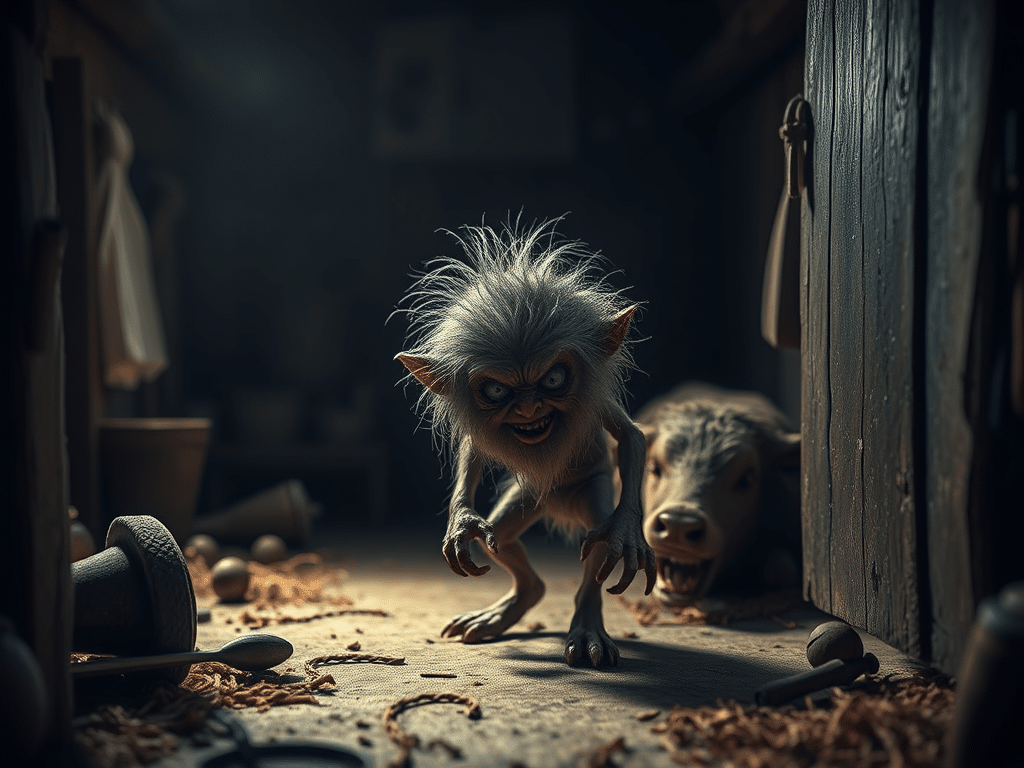
Strange noises and gnawing sounds are believed to have originated from the Bell family’s corn cribs in 1817, signaling the beginning of the otherworldly suffering. Events quickly escalated, leading to the flinging of objects across rooms, the physical assault of the Bell children, and the appearance of a menacing entity with a voice akin to a ringing bell. Some stories described the apparition as a brownish-green person with a luminous tail, while others described it as a disembodied spirit (Hudson & McCarter, 1934).
The spirit frequently attacked the Bell children and made crude, ridiculing remarks. It behaved in a frightening and confrontational manner. Some people trusted it, while others found it terrifying since it reliably made forecasts and revealed well-held secrets. The thing once struck the eldest Bell son with a large stick, severely injuring him. Guardian neighbors surrounded their house with muskets and farm implements, temporarily frightening the ghost away.
The family patriarch John Bell Sr. and his daughter Betsy Bell were two major characters in the Bell Witch mythology. In 1804, John Bell, a prosperous farmer and teacher, relocated his family from North Carolina to the Tennessee region around the Red River. In what is now Adams, Tennessee, he constructed a large mansion and land, on which the haunting would eventually occur.
John Bell took the brunt of the witch’s abuse and attacks right from the start of the unrest in 1817. The entity often physically abused him, caused psychological suffering through its mockery and disclosure of private information, and occasionally threatened his life. Over the course of the four years, John, in spite of his fervent religious beliefs, was unable to put an end to the haunting by prayer or any other means (Welsh, 1973).
Betsy, John’s daughter, was also quite important. The witch appeared to target Betsy specifically, focusing a considerable deal of its wrath and torturous actions on her. Other stories suggest that the witch was a rejected suitor seeking revenge on Betsy. People claimed that the witch’s voice occasionally resembled Betsy’s, even mimicking her chuckle. As a result, Betsy faced intense scrutiny for potentially being the source of the hoax or a willing participant in witchcraft.
Many believe the haunting caused John Bell’s death in 1820, and Betsy was the witch’s primary target and victim until it left later that year. Like the rest of her family, Betsy insisted on her innocence and said she was a victim of the entity. Because of how traumatizing her experiences were, she spent the majority of the rest of her life avoiding public discussions about the haunting.
The opposing roles of father John Bell, who remained steadfast in his faith despite the witch’s attacks, and his daughter Betsy, who became the center of the torture and faced accusations of involvement, are two of the most significant personal elements of this historic haunting. Their personas captivated the attention of onlookers and narrators, contributing to the persistence of the Bell Witch myth.

Reaction
This unique case immediately captivated America in the 19th century. The large number of credible witnesses and the great difficulties of faking such an elaborate haunting over a four-year period persuaded many of the happenings to be paranormal, while others dismissed it as a hoax or mass hysteria. The narrative portrayed the conflict between the new rationalist ideologies that emerged with the Enlightenment and the ancient beliefs carried by immigrants.
A well-known component of the Bell Witch mythology is the supposed visitation of future President Andrew Jackson to the Bell family residence. The legends state that during his brief stay at the Bell residence in 1819, Jackson was able to personally witness the haunting phenomenon while attending to local legal concerns. According to accounts, Jackson saw an unseen force hurl objects violently around the room. He supposedly shot the thing several times with his gun, but to no avail. Reports suggest that the witch ridiculed Jackson and cursed at him during her presence. In one account, Jackson got annoyed that he tried to hit the ghost with a hot iron rod from the fireplace, but something stopped him in his tracks.
According to Jackson, he told John Bell to leave the house and grounds following this terrifying encounter because he didn’t think the haunting could be put to an end. According to legend, Jackson was extremely agitated and frightened by his meeting with the Bell Witch creature, even though he was a man renowned for his bravery and lack of fear. Although some historians have questioned Jackson’s meeting with the Bell Witch because he left no written documents about it, it is nevertheless one of the most frequently repeated parts of the Bell Witch story (Fitzhugh, 2009). When one imagines a tough, no-nonsense future president helpless against a poltergeist entity torturing the Bells, the eerie assertions gain credibility and historical weight.
Jackson’s role in the Bell Witch stories is an intriguing aspect of folklore because of his legendary reputation and the first-hand witnessing attributed to him. His visit captures the helplessness that even the hardest-charging skeptics experienced when confronted with the truth of the unexplainable happenings that befell the Bell family over those four horrifying years. However, it is a part of the story likely added later.
The Bell Witch mythology greatly influenced the local customs and culture in the vicinity of Adams, Tennessee, the site of the purported haunting. The people ingrained the story in their oral traditions and collective consciousness. The Bell Witch haunting became nearly legendary for the local families and towns that either had relatives who saw the occurrences or personally experienced the haunting. The phenomenon’s terrifying, unexplained character contradicted the era’s rational and religious beliefs. It fanned preconceived notions about witchcraft, the paranormal, and the possibility of evil preying on the good.
Several local families used storytelling to pass on their own adaptations and interpretations of the Bell Witch narrative from one generation to the next. Over time, these imaginings and retellings altered some features of the original case, adding whimsical details or unique twists based on the perspectives of the teller. With each repetition, the entity’s behaviors and manifestations grew increasingly ugly and exaggerated.
The area’s rural populace incorporated the fable into their folk traditions and vernacular. The tale gave rise to regional vernaculars and euphemisms, such as calling a naughty child “old Bell Witch” or cautioning against misbehaving for fear that it would “conjure the Bell Witch.” Kids learned morals from tales of caution about the haunting.
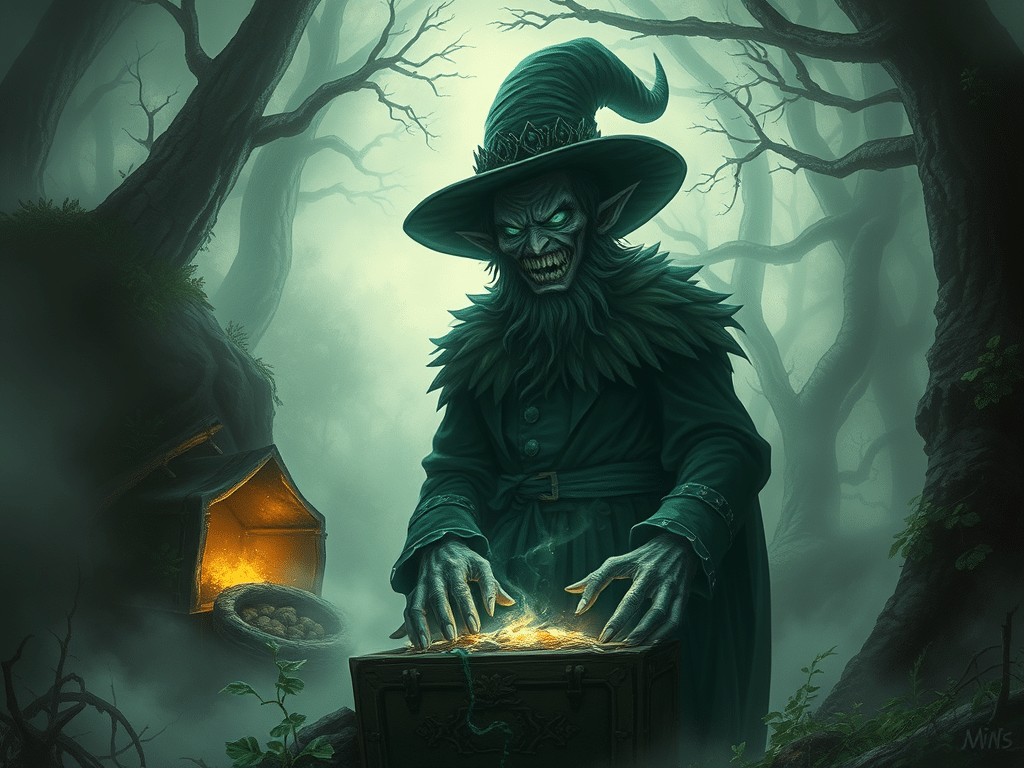
The case’s enduring air of mystery and horror also aided a profitable tourism industry. The carved Bell Witch cave and other memorial locations have drawn inquisitive tourists and paranormal enthusiasts for more than a century, many in hopes of having their own unexplained encounters. Stories and legends of lost treasure, cursed areas, and lingering ghostly presences further enhanced the fascination (Gregory, 2023).
Conclusion
In many ways, the Bell Witch embodies the classic American legend, a deeply ingrained tale of the paranormal colliding with reason, intricately woven into society through countless innovative retellings and interpretations passed down through the ages. The tale’s tenacious grip on regional folklore demonstrates the powerful capacity of an otherworldly tale to transcend its place of origin. This is a story that has been remembered.
American popular culture and legend have deeply ingrained the story of the Bell Witch haunting, believed to have occurred centuries ago. The persistent mystery has inspired numerous plays, movies, video games, novels, and an infinite variety of mementos and goods. Year after year, the tale brings intrepid paranormal investigators and ghost hunters to Adams in the hopes of recording or encountering paranormal activity connected to the notorious Bell Witch. This story will always have an impact, even if the whole story remains unrevealed (Pulliam & Fonseca, 2016).
The Bell Witch story shows how a historical, documented paranormal case may become an enduring folklore and inspire generations of researchers. With its uncanny blend of the explainable and the inexplicable, the Bell Witch mythology has captivated audiences from its beginnings as a horrific example of the supernatural to its current status as a celebrated enigma. The Bell Witch remains famous.
References
Fitzhugh, P. (2009). The Bell Witch: The Full Account. The Armand Press.
Gregory, R. (2023). The Bell Witch in Myth and Memory: From Local Legend to International Folktale. Univ. of Tennessee Press.
Hudson, A. P., & McCarter, P. K. (1934). The Bell Witch of Tennessee and Mississippi: A Folk Legend. The Journal of American Folklore, 47(183), 45-63.
Pulliam, J. M., & Fonseca, A. J. (Eds.). (2016). Ghosts in popular culture and legend. Bloomsbury Publishing USA.
Welsh, J. (1973). The Bell Witch. Kentucky Folklore Record, 19(4), 112.


Leave a Reply