Podcast can be accessed above. Transcript with light editing below.
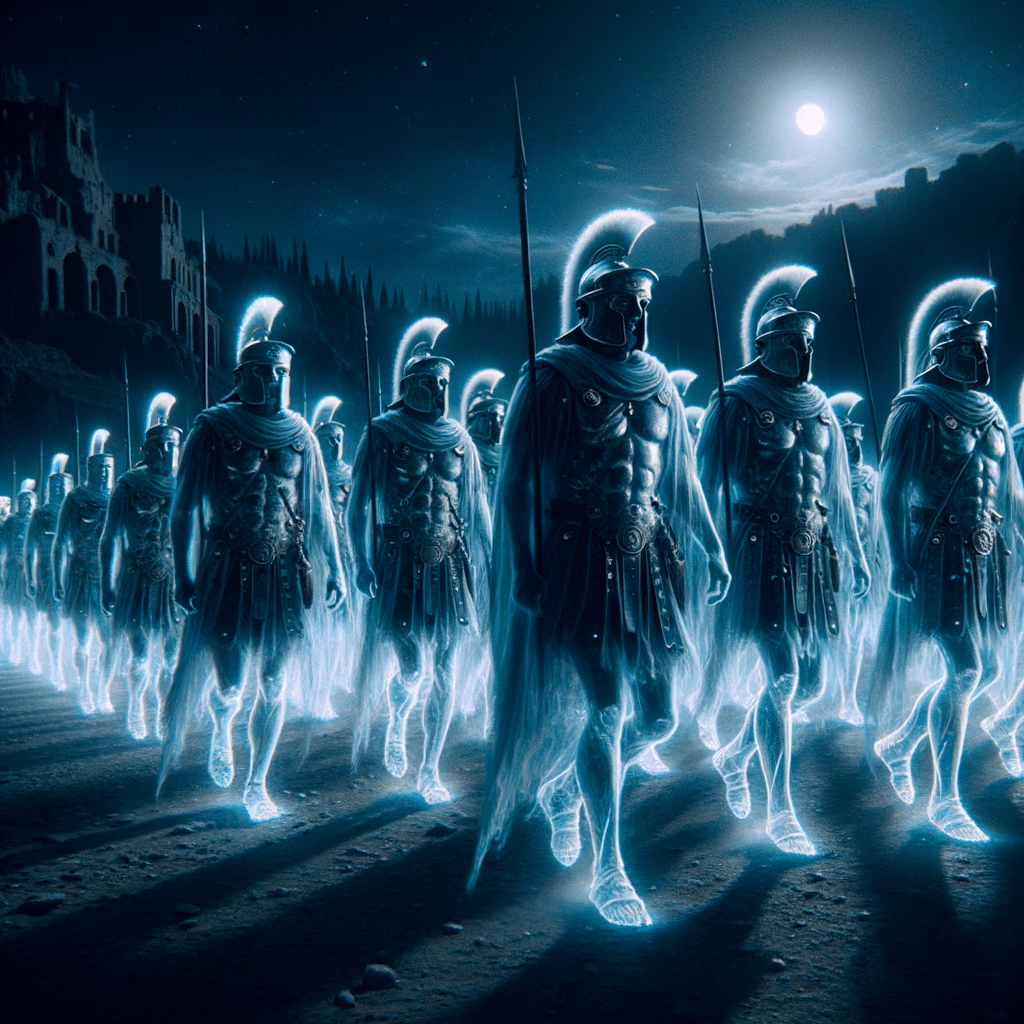
This podcast is about Greek and Roman Ghost Stories by Lacy Collison-Morley, published in 1912, delves into the ancient world’s beliefs about the afterlife and ghostly encounters. The book examines the power attributed to the dead, exploring how they were perceived to return to the living. It begins by discussing the Roman belief in the Manes, the spirits of the deceased, and how they were thought to reside in tombs and occasionally return to their former homes. The author then investigates the different types of spirits, including Lemures and Larvae, explaining their specific attributes and the rituals associated with them. The text continues with a detailed exploration of ghost stories in Greek and Roman literature, analyzing tales of haunting, necromancy, and visions of the dead in sleep. In particular, it presents narratives about the haunted battlefields of ancient Greece, the spirits of Homeric heroes, and the practice of summoning the dead for guidance. The author draws parallels between these ancient beliefs and modern ghost stories, highlighting similarities in themes of apparitions, warning spirits, and the continued impact of the deceased on the living. The overall aim of the excerpt is to provide a scholarly account of the complex and multifaceted ways in which ghosts and spirits were perceived and understood in ancient Greek and Roman culture.

[Tammy]
Ready for some ghost stories.
[Joe]
The ancient kind.
[Tammy]
Always up for a good ghost story. Especially when it’s more than just a spooky tale, right?
[Joe]
Exactly. We’re going deep into ancient Greek and Roman ghost stories to see what they tell us about how they viewed death, the afterlife, all that good stuff.
[Tammy]
It’s like a window into their culture, their beliefs, and their fears. What did they think happened after you crossed over to the other side?
[Joe]
Right, it’s all there in their stories. And to guide our deep dive this time, we’re turning to Greek and Roman ghost stories by Lacey Collison Morley.
[Tammy]
Great choice. That book’s like a crash course in ancient ghost lore, packed with fascinating details.
[Joe]
Okay, so let’s dive in. What’s one thing that jumps out at you about how the Greeks and Romans viewed ghosts and the afterlife?
[Tammy]
Well, unlike today, where it’s all a bit, you know, out there. For them, it was woven into their daily lives.
[Joe]
Really? Like, how so? Give me an example.
[Tammy]
Take the Roman concept of the Mundus. It was literally a designated entrance to the underworld.
[Joe]
Hold up. An entrance to the underworld. Like a trapdoor to Hades right there in Rome.
Not just in Rome. Every Roman town had one.
[Tammy]
Every town. That’s a lot of underworld access. What do they do with these Mundus things?
[Joe]
On certain days, August 25th, October 5th, and November 8th, they’d open them up.
[Tammy]
Open them. Like, come on in, ghosts. Welcome back.
What was the point of that?
[Joe]
It wasn’t about something coming through necessarily. It was about maintaining a connection. Acknowledging that the dead were still present in some way.
[Tammy]
So it was more about recognizing the link between the living and the dead, not just sealing them off.
[Joe]
Precisely. It wasn’t meant to be this clean break. Death wasn’t the end of the story.
And you see this in other aspects of their culture too.
[Tammy]
Like what? Give me another example.
[Joe]
Their burial practices. The Romans often put tombs along roadsides so people passing by could greet the dead.
[Tammy]
That’s a little creepy, isn’t it? Hey, how’s the afterlife treating you?
[Joe]
Not in a morbid way. It was about acknowledging the continued presence of those who’d passed. They were still part of the community.
[Tammy]
So death wasn’t an absolute separation. Fascinating. But did that mean all ghosts were treated equally?
Were there different types?
[Joe]
Oh, absolutely. They had categories, just like we categorize it. Well, everything.
[Tammy]
Okay, so like, what, a good ghost, bad ghost system? Tell me more.
[Joe]
They had the manes. Think of them as the good ghosts. They got the proper burial rites.
And they were generally chill in the afterlife.
[Tammy]
So they just hung out, enjoyed eternity. No haunting people for these guys.
[Joe]
Pretty much. They had a more peaceful afterlife. Then there were the Lemurs.
They were like the general unhappy spirits. The ones who might stir up trouble.
[Tammy]
Right. The ones who didn’t read the How to Be a Chill Ghost handbook. Any other categories in this ghost hierarchy?
[Joe]
Oh, yeah. They also had the larvae. Those were the spirits known specifically for haunting houses.
[Tammy]
Hold on. House haunting ghosts. That’s specific.
Did they have, like, pamphlets on how to deal with those?
[Joe]
Maybe not pamphlets, but definitely rituals and beliefs. But what’s really interesting is what happened to those who didn’t get a proper burial. They were the ones you really had to worry about.
[Tammy]
Oh, no. What happened to them? Were they stuck as larvae forever, rattling chains and whatnot?
[Joe]
It was considered really bad luck. Imagine being stuck between worlds, unable to find peace. They became cautionary tales.
[Tammy]
That’s a rough afterlife. So these burial rites weren’t just about respect. They were like a one-way ticket to a peaceful afterlife.
[Joe]
Exactly. And that brings us to the whole concept of haunted places. If you’re worried about restless spirits, it makes sense to be wary of places where the veil between the worlds is thin.
[Tammy]
Okay. Yeah, that makes sense. So did ancient Greece and Rome have, like, haunted hot spots?
Places where you were more likely to run into a ghost?
[Joe]
Absolutely. Think about places they believed were actual entrances to the underworld, gateways to the land of the dead.
[Tammy]
Like an underworld travel agency. Where could you find one of these places?
[Joe]
Well, they often identified these spots by looking for places with sulfurous fumes, like the Grotto del Canne. You can still visit it today, actually.
[Tammy]
Sulfurous fumes, like rotten eggs. That’s a dead giveaway.
[Joe]
They saw those fumes as a sure sign of a connection to the underworld. It makes sense if you think about it, fire and brimstone, the whole package.
[Tammy]
Okay, that tracks. But did people actually go to these places? I’d be terrified.
[Joe]
They were terrifying, sure. But they were also seen as incredibly powerful places. People believed they could communicate with the dead there, receive prophecies, and even influence their own fate.
[Tammy]
Wow, so high risk, high reward. It’s like a cosmic gamble. Imagine being the priest in charge of one of those places.
[Joe]
Talk about a high-pressure job. You’re basically the designated communicator with the underworld. And it wasn’t just these places either.
They had a whole system for calling on the dead.
[Tammy]
Like a spiritual phone book. How did they do that?
[Joe]
Temples, specific locations, even a whole category of oracles of the dead dedicated to this very thing.
[Tammy]
Oracles of the dead. That’s way cooler than any psychic hotline. So what did these oracles do?
Were they just dishing out doom and gloom prophecies all day long?
[Joe]
It was a whole process, very ritualistic and formal, almost like a business transaction with the afterlife. They’d consult them for all sorts of things, from prophecies to personal anxieties.
[Tammy]
Personal anxieties. You mean like, hey, oracle of the dead, should I ask my crush to the chariot races?
[Joe]
There’s a hilarious story from Lucian about a woman who returns to her husband after death, not with a chilling message from beyond, but to complain about a golden slipper he forgot to burn with her other belongings.
[Tammy]
Wait, seriously, she came back to haunt him over a lost shoe. Okay, that’s both hilarious and kind of sweet.
[Joe]
It just goes to show, even in death, they were still worried about the stuff they left behind. Those everyday concerns could follow you into the afterlife.
[Tammy]
So it wasn’t always about grand pronouncements or epic prophecies. Sometimes it was about tying up loose ends. Do we have any other examples of these more, shall we say, relatable ghost stories?
[Joe]
Oh, tons. Many of the stories revolve around this idea of unfinished business or unresolved issues. Ghosts returning for revenge, to right a wrong, or even just to check on loved ones.
[Tammy]
It’s like the ultimate I told you so moment from beyond the grave.
[Joe]
Exactly. And that’s something that really connects these ancient tales to the ghost stories we still tell today. This idea of unfinished business, a soul yearning for resolution, transcends time and cultures.
[Tammy]
You’re right. Whether it’s a misplaced golden slipper or a broken heart, these ghosts seem driven to reach out from beyond the grave.
[Joe]
It makes you wonder, doesn’t it? What would we ourselves want to say if we could speak to someone from our past?
[Tammy]
That’s a profound question. But before we get too introspective, let’s get back to those haunted hotspots. Did any specific locations pop up a lot in these ancient ghost stories?
[Joe]
Oh, absolutely. We have Pliny the Younger, for instance, writing to his friend about a haunted house in Athens. That’s a classic.
[Tammy]
The one with the rattling chains and the ghostly figure in the courtyard?
[Joe]
That’s the one. What’s interesting about Pliny is that he approached these stories with a very logical, almost skeptical mindset. He was like the original ghost hunter, looking for a rational explanation.
[Tammy]
I can relate to that. I love a good ghost story, but I like a bit of evidence-based haunting. What other spooky spots did Pliny check out?
[Joe]
He wrote about Lake Avernus, which, remember, was believed to be a real entrance to the underworld. They say you could hear the voices of the dead there.
[Tammy]
Lake Avernus, yes. Didn’t they also say it was like a natural form of ventriloquism? The acoustics made it sound like the voices were coming from everywhere.
[Joe]
Exactly. It was a truly spooky place.
[Tammy]
Talk about special effects. Centuries before Hollywood, were there any other famous haunted locations in these ancient tales?
[Joe]
Oh, definitely. There’s the story of Achilles and Helen on the Isle of Wight. Legend has it that the island rose from the sea just for them.
[Tammy]
Ooh, Achilles and Helen. As in the hero of the Trojan War and the woman who launched a thousand ships. What a power couple.
[Joe]
Right. And the story says that if you sail by the islands at night, you can hear their voices singing together, echoing across the water.
[Tammy]
Whoa, that’s both beautiful and kind of eerie.
[Joe]
It’s a really haunting image. And it highlights how these ancient stories weren’t just about fear or superstition. They were about love, loss, and the enduring power of memory.
[Tammy]
That’s a great point. Okay, so we’ve got ghosts concerned about lost footwear, ghosts returning for love, ghosts haunting entire islands, it seems. The ancient Greeks and Romans had a ghost for every occasion.
So ghosts returning for lost shoes? It’s not your typical horror movie, is it?
[Joe]
Right. But it speaks to those little details that stick with us, even after death. It makes you wonder what you’d be worried about.
[Tammy]
I’d probably come back to haunt someone about my coffee mug collection, honestly. But let’s talk more about those relatable ghost stories, the ones that aren’t just about chills and thrills.
[Joe]
Oh, there is so many. Many of them revolve around love, actually.
[Tammy]
Love. Ghosts and romance. That’s an interesting combination.
Tell me about one of those stories.
[Joe]
Well, there’s the story of Felinian and Machetes. It’s a bit of a tragic one.
[Tammy]
Tragic romance. Those always hit hard. What happens?
[Joe]
Felinian’s a young woman who tragically dies shortly after getting married.
[Tammy]
Oh no, that’s awful.
[Joe]
It is. But here’s the thing. She comes back from the dead.
[Tammy]
Wait, she comes back to be with her husband? That’s kind of sweet.
[Joe]
It is, but it doesn’t end well, unfortunately. Her family interferes, and it ruins their second chance at love.
[Tammy]
Oh no, that’s heartbreaking. So much for a ghostly happily ever after.
[Joe]
I know, right? But it really emphasizes how these stories aren’t just about spooky encounters. They’re about those universal themes.
Love. Loss. The things we carry with us.
[Tammy]
You’re right. It’s like those themes resonate even across the centuries. Even into the afterlife, apparently.
[Joe]
Exactly. And that connection to deeper emotions—it’s something you see a lot in these ancient ghost stories.
[Tammy]
So it seems these ancient ghosts weren’t just there to scare people. They were trying to tell us something about ourselves.
[Joe]
Exactly. It’s as if they’re saying, hey, even in death, these things still matter. Makes you think, doesn’t it?
[Tammy]
It does. It makes you wonder what messages we might be missing from our own past. But let’s get back to those haunted locations for a minute.
We were talking about Pliny the Younger earlier. Did he have any other ghostly encounters?
[Joe]
Oh, did he ever? He was like a ghost magnet. Remember we were talking about Lake Avernus?
[Tammy]
The supposed entrance to the underworld? Yeah, spooky stuff.
[Joe]
Well, Pliny wrote about it. He said people believed you could hear the voices of the dead there.
[Tammy]
As in actual voices? Or was it more like, you know, spooky whispers on the wind?
[Joe]
They believed they were real voices, yes. And what’s even creepier, there are these weird acoustics at Lake Avernus.
[Tammy]
Acoustics? Like an ancient echo chamber?
[Joe]
Something like that. They said it was almost like natural ventriloquism, the way the sounds bounce around.
[Tammy]
So you’d hear these disembodied voices seemingly coming from nowhere. I can see why they thought it was the underworld.
[Joe]
Right. It’s like nature itself was playing tricks on them. Or maybe it really was the spirits trying to get their message across.
[Tammy]
Gives me goosebumps just thinking about it. Okay, so we’ve got haunted houses, gateways to the underworld. So we’ve got ghosts singing love songs, ghosts haunting houses, and even ghosts concerned about their footwear.
It seems like the ancient Greeks and Romans really did have a story for every occasion. But all this talk about different types of ghosts makes you wonder where those who died too young or violently fit in. They couldn’t have just hung out with the manes, right?
[Joe]
Yeah, they were a different story. The ones who died before their time, especially those who didn’t get a proper burial or, like you said, died violently. They were seen as restless spirits, often stuck in the places where they died.
[Tammy]
That’s kind of sad, honestly. Forever tied to the place where their life was cut short. No wonder they were considered dangerous.
Did the ancients have any way to deal with these more vengeful spirits?
[Joe]
Well, remember those lead curse tablets we talked about? Yeah. They weren’t just for getting back at your enemies.
[Tammy]
Oh, right. The ancient equivalent of sticking pins in a Voodoo doll. Creepy stuff.
[Joe]
Exactly. People believed they could use these tablets to appease the restless dead. It was like they were trying to bargain with the spirits.
[Tammy]
Here’s a curse for the guy who wronged you. Now, please leave us alone. When it comes to ghosts, you’ve got to try everything.
[Joe]
Right. And that’s what makes these stories so fascinating. They show us a time when the line between the living and the dead was so blurry.
The spirits of the past weren’t just stories. They were a real presence in people’s lives.
[Tammy]
It definitely makes you think twice about those creaky noises in the middle of the night. But on a more serious note, I think what we’ve uncovered today is that these ancient ghost stories, they weren’t just about fear or superstition. They were about trying to understand something bigger than ourselves.
[Joe]
They were about honoring the dead, grappling with loss, and finding a way to live alongside the unknown.
[Tammy]
Mysteries that still resonate with us today, thousands of years later. Well, folks, we’ve explored haunted hotspots from roadside tombs to islands echoing with ghostly songs. We’ve met friendly ghosts, mischievous ghosts, and even ghosts who just want their favorite slippers back.
It seems the ancients had a story for every occasion. And on that note, we’re wrapping up our deep dive into the world of ancient Greek and Roman ghosts. But before we go, we’d love to hear from you.
Which of these ghostly tales resonated most with you? And if you could speak to a ghost from your past, what would you ask them? Let us know in the comments below.
Until next time, keep exploring the mysteries of history and remember, sometimes the most incredible stories are the ones whispered from beyond the grave. See you next time.




Leave a Reply