
Dream eaters are legendary beings that are thought to eat people’s dreams while they sleep. People also refer to them as dream devourers or oneirophages. These mysterious creatures, which have existed in many forms throughout many cultures and belief systems, have captured people’s imaginations for millennia. This article will cover the idea of dream eaters, their historical roots, cultural depictions, and their impact on contemporary popular culture.

Description
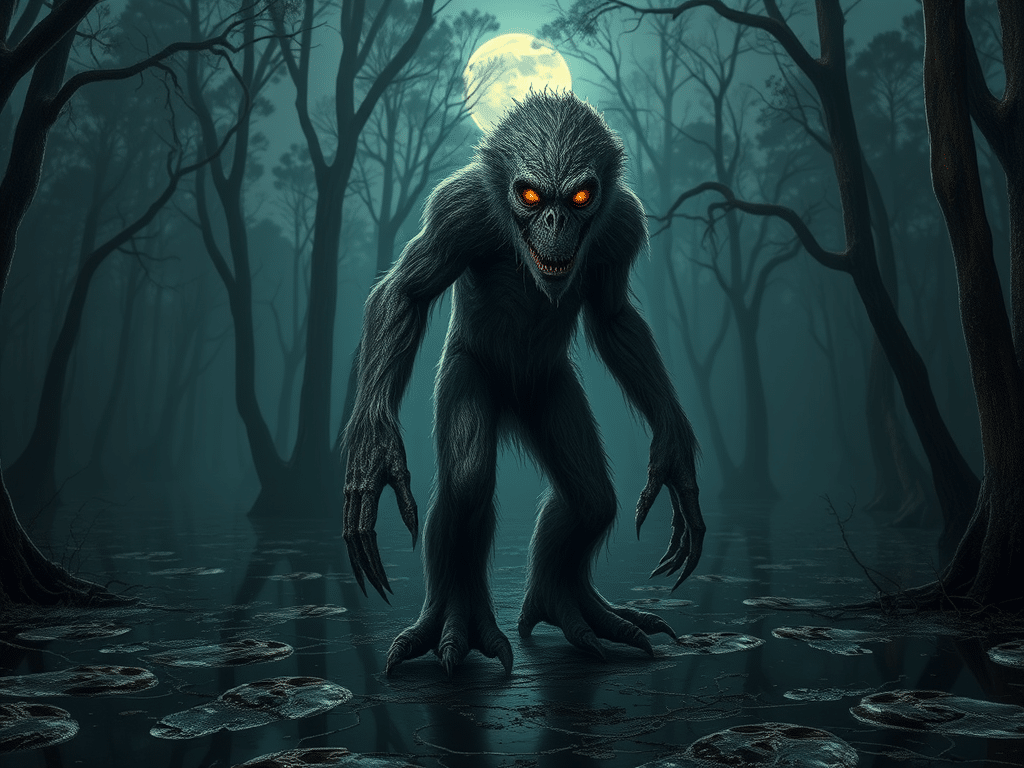
Dreaming is a universal human experience, and the enigmatic nature of the subconscious mind is where the idea of dream eaters originates. People frequently depict these beings as evil spirits that devour the substance of dreams, leaving their victims depleted, perplexed, or unable to recall their experiences. According to some stories, dream eaters steal beneficial dreams or give nightmares, while according to others, they may have a more ambiguous or even helpful function by absorbing adverse dreams and shielding sleepers from unwanted thoughts.
The concept of beings that consume dreams dates back to the prehistoric era. The demon Asag was associated in Mesopotamian mythology with nightmares and sleep disturbances (Abusch, 2020). Ancient Egyptians held a similar belief, worshipping the god Bes, who was associated with protecting sleepers from bad spirits that might enter their dreams despite his general goodness (Szpakowska, 2001). Later cultures developed more specialized dream-eating creatures as a result of these early beliefs.
Dream eaters take on diverse shapes in several cultural contexts. The baku is a chimera-like creature that has the legs of a tiger, the body of a lion, and the trunk of an elephant, according to Japanese tradition. People claim that when they invoke its name after waking up from a bad dream, it devours nightmares and bestows good fortune upon them.
The Slavic Mare
Many Slavic civilizations hold the Mare, also known as the Mara, as a fascinating and dangerous creature deeply ingrained in their collective psyche. This nocturnal entity embodies the terror and helplessness experienced during these uncomfortable nighttime occurrences, primarily associated with nightmares and sleep paralysis (Hufford, 1976).
Slavic mythology typically portrays the Mare as a demonic or evil female ghost that haunts individuals attempting to sleep in the middle of the night. Numerous languages, including the Old English word maere, which became the current English word, relate the term nightmare to the name Mare. This etymological relationship highlights the creature’s main purpose in folklore, which is to frighten and torture sleepers with crippling fear and unpleasant dreams.
It’s well known that Mare manifests as a stunning woman with long, dark hair. Despite her seductive appearance, her evil personality remains hidden. Legend has it that the Mare causes a sleeping person to feel as though they are under a lot of pressure, immobilizing them when they sit or lie on their chest. This sums up exactly what it’s like to have sleep paralysis, which is the condition in which a person cannot move or talk for a few seconds or minutes after waking up or going to sleep.
The idea that the Mare ride her victims, akin to a horse, is mentioned in various folkloric forms, which contributes to the victim’s sense of weight and control. People believe that this riding causes victims to experience nightmares and exhausts them upon awakening. People commonly associate the Mare with knotted or tangled hair because they frequently wake up with tangled hair after a visit from the monster.
The idea of the Mare is not exclusive to cultures in the Slavic world. Numerous European folktales feature similar creatures, such as the German Alp, the English Old Hag, or the French Cauchemar. This pervasive belief in a nighttime tormentor points to a universal human experience of nightmares and sleep paralysis that cuts across cultural boundaries.
According to many Slavic beliefs, the Mare is the soul of a live person, usually a lady, who departs from her body at night to torture people who are asleep. Occasionally, this superstition led to accusations of witchcraft against women believed to be Mares. People fended off the Mare by hanging horseshoes over the bed or placing different objects, such as a dagger or scissors, under the pillow.
The Mare has influenced contemporary popular culture in addition to conventional folklore. The idea has influenced numerous literary, artistic, and cinematic creations, often serving as a metaphor for mental health issues or an expression of suppressed desires and fears. Henry Fuseli’s 1781 painting The Nightmare features a renowned illustration of a devil sitting on a sleeper’s breast. The Devil in this case is a dream eater.
Even if there is less belief in the Mare as a real-life apparition these days, the legend has remained potent as a representation of night terrors and the precarious state of sleep. It acts as a reminder of the anxiety and helplessness that all people feel when faced with the unknown, especially when it comes to dreams and the subconscious mind.
The persistent interest with the Mare in Slavic folklore is a reflection of humanity’s continuous quest to comprehend and deal with the enigmatic and frequently terrifying features of dreaming and sleep. The Mare continues to be a potent cultural touchstone, connecting old concerns with contemporary knowledge of the human brain, even as science works to comprehend the complexity of sleep disorders and parasomnias.

Dream Catchers
In Native American tradition, dream catchers are very important, especially for the Ojibwe tribe. These elaborate artifacts have their origins in Ojibwe tradition. People claim that Asibikaashi, also known as Spider Woman, a spiritual guardian who cared for the land’s inhabitants and children, inspired them. Dream catchers as we know them now originated from the magical webs that Asibikaashi instructed mothers and grandmothers to weave as the Ojibwe Nation spread over North America (Jenkins, 2004).
Handcrafted from natural materials, dream catchers hold significant symbolic meanings. The willow hoop symbolizes the wheel of life, while the web traps negative dreams and allows positive ones to pass through. You can add sacred objects like beads or stones to feathers to enhance their significance. Feathers serve as gentle ladders for pleasant dreams to descend upon the sleeper. Dream catchers are not just for protection; they are also valuable cultural instruments that help pass on information and customs, represent the relationship between the material and spiritual worlds, and, through their making, strengthen communal ties.
The Ojibwe tribe first used dream catchers, but they have since spread to become a well-known emblem of Native American culture among many other tribes. They contribute to cultural preservation initiatives and offer forums for learning about Native American history and current affairs. Dream catcher-making and instruction not only contribute to the preservation of Native American culture and handicrafts, but also facilitate broader cross-cultural dialogue.
Dream catchers have become very popular, although this has caused controversy among Native American groups. While some regard it as a chance for cultural interchange and financial gain for Native artists, others see it as cultural appropriation and the trivialization of holy artifacts. This topic sheds light on the complex concerns surrounding mainstream society’s adoption of cultural emblems.
Despite these arguments, dream catchers continue to hold great significance for many Native Americans, representing their spiritual beliefs, cultural legacy, and the enduring relationship between dreams and everyday life. Despite the fact that their fame has surpassed all boundaries, they remain a potent representation of Native American spirituality and customs. Dream catchers are sacred objects with deep cultural and spiritual significance for a large number of people, beyond their use as ornamental pieces.
Modern Influence
The concept of dream eaters has significantly influenced modern popular culture. Literary works such as Neil Gaiman’s The Sandman comics explore the concept of entities capable of controlling and feeding on dreams (Rauch, 2003). Video games feature a type of creature known as Dream Eaters. These folklore creatures can serve as both allies and enemies. The Kingdom Hearts series showcases one such creature. Dream-eating characters have also appeared in movies and TV series, either serving as plot elements in supernatural stories or as metaphors for psychological issues.
The media’s ongoing fascination with dream eaters reflects humanity’s ongoing obsession with the nature of dreams and the subconscious mind. These animals, which represent our hopes, fears, and the enigmatic parts of our brain that we find difficult to comprehend, act as a link between the material world and the abstract domain of dreams.
Conclusion
Dream eaters are an intriguing idea that has developed historically and throughout civilizations. These mysterious creatures have inspired and intrigued people from classical mythology to contemporary pop culture. Whether we perceive them as evil spirits, protective beings, or symbolic representations of our inner battles, dream eaters continue to serve as a potent reminder of the everlasting mystery of the human mind and the shared experience of dreaming. The notion of dream eaters will probably endure as we go farther into our awareness, morphing into fresh cultural settings and grabbing the interest of future generations.
References
Abusch, T. (2020). Illnesses and Other Crises: Mesopotamia. In Further Studies on Mesopotamian Witchcraft Beliefs and Literature (pp. 203-208). Brill.
Hufford, D. (1976). A new approach to the” Old Hag”: The nightmare tradition reexamined. University of California Press.
Jenkins, P. (2004). Dream catchers: How mainstream America discovered Native spirituality. Oxford University Press.
Rauch, S. (2003). Neil Gaiman’s The Sandman and Joseph Campbell: In search of the modern myth. Wildside Press LLC.
Szpakowska, K. (2001). Through the looking glass: Dreams in ancient Egypt. In Dreams: A reader on religious, cultural, and psychological dimensions of dreaming (pp. 29-43). New York: Palgrave Macmillan US.
Leave a Reply