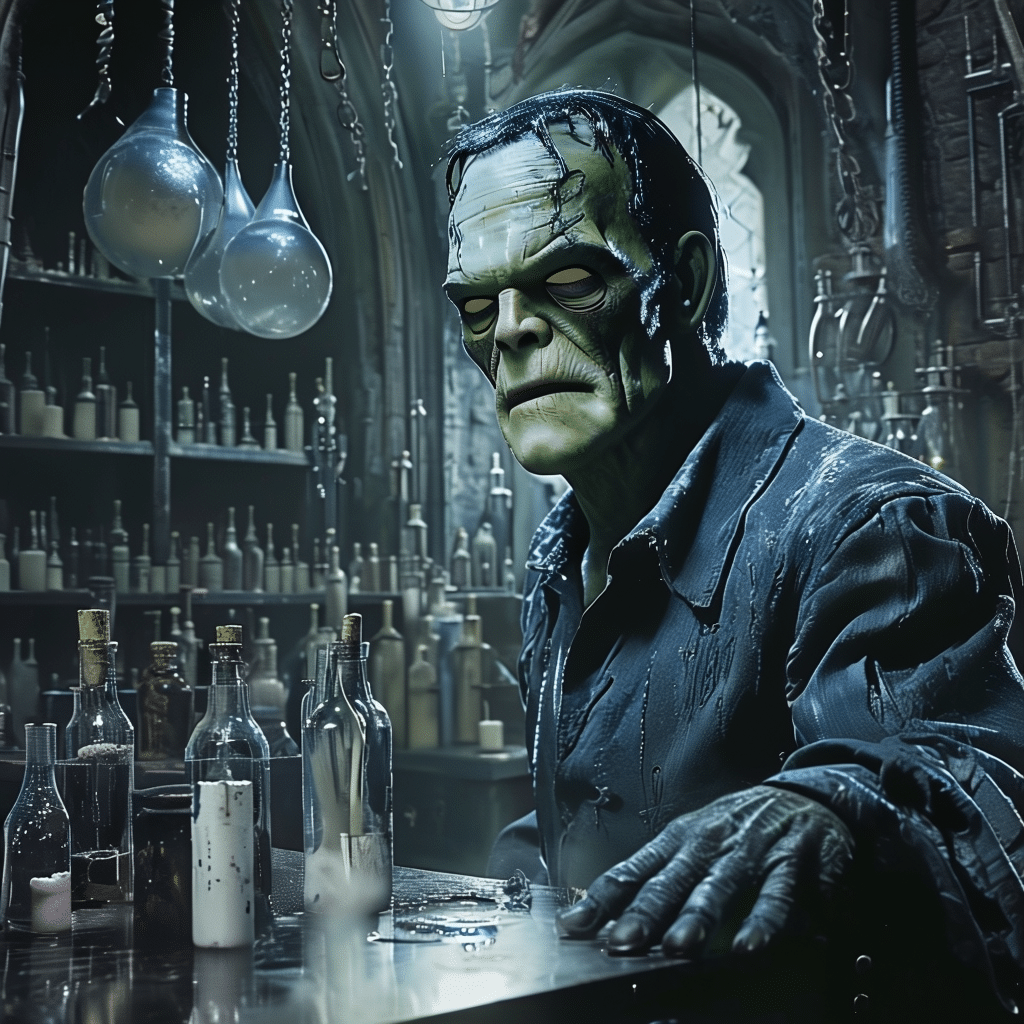
The 1818 novel Frankenstein, by Mary Shelley, serves as a foreboding cautionary tale about the moral ramifications of human ambition and scientific progress. The book, which took its inspiration from a soggy summer ghost story contest in Switzerland, has developed into a potent allegory for current discussions about cloning, genetic engineering, and the limits of scientific inquiry. The story continues to question our conception of scientific accountability and the ethical ramifications of creating or altering life through its timeless storyline.

The Frankenstein Story
The protagonist of the story is Victor Frankenstein, a gifted scientist who becomes obsessed with unraveling the mystery of life. He successfully makes a live entity from assembled corpse parts through his unrelenting quest for knowledge, only to be appalled by his creation. The creature suffers from extreme social rejection and loneliness after its creator abandons it, triggering a tragic chain of events that ultimately destroys both the maker and the creation. The story is a warning about the repercussions of unbridled scientific ambition and the obligation scientists have to their creations (Hitchcock, 2007).
Mary Shelley’s own experiences greatly influenced the subjects of the book. Born to radical political philosopher William Godwin and feminist philosopher Mary Wollstonecraft, who passed away soon after her birth, Shelley was exposed to progressive concepts and scientific debates at a young age. At the age of 18, she wrote the book during a time when science was making great strides and people were becoming more interested in galvanism and the nature of life in general. Her work expressed her concerns about scientific advancement and its potential to disrupt the natural order.
From a Gothic novel, the Frankenstein narrative has developed into a foundational paradigm that contemporary ethicists, scientists, and policymakers use to analyze new technology. Conversations about synthetic biology, biotechnology, and artificial intelligence have significantly focused on this phenomenon, commonly referred to as “the Frankenstein effect” or “Frankenstein syndrome.” It has many contemporary implications.

Cloning and Genetic Modification
There are clear similarities between Frankenstein’s invention and contemporary cloning and genetic manipulation. Victor Frankenstein and other modern scientists are empowered to alter life at its most basic level. Advancements in technologies like CRISPR gene editing, cloning, and synthetic biology raise similar ethical concerns about the limits of scientific study and the potential repercussions of producing or altering life forms (Hellsten, 2000). Like in Shelley’s day, the fear of “playing God” and the possibility of unforeseen repercussions are still there today. The fact that the word Frankenfood first appeared in discussions concerning genetically modified organisms (GMOs) in the 1990s shows how ingrained Shelley’s story is in our societal perception of biotechnology.
Modern genetic manipulation has already made significant progress, including the development of disease-resistant crops and potential cures for genetic illnesses. However, contentious uses like designer babies and human germline modification have generated heated ethical discussions. Reiterating Frankenstein’s themes of scientific accountability and the possible risks of pushing biological boundaries too far, the announcement in 2018 that China had produced the first gene-edited newborns sparked widespread outcry.
Similar to Shelley’s novel, cloning technology continues to pose ethical questions, from Dolly the sheep to present therapeutic cloning studies. Cloning raises concerns about the ethical standing of cloned organisms and the psychological effects of making genetic duplicates of living things, even though it may have medical advantages like producing replacement organs or protecting endangered species. Like Frankenstein’s monster, the fear of creating something we cannot fully comprehend or control is still a major worry.
The novel is relevant to issues of synthetic biology and artificial intelligence in addition to scientific ethics. The more complex artificial intelligence systems and synthetic organisms we make, the more relevant Shelley’s examination of the creator-create relationship becomes. The ethical implications of creating sentient beings, the potential for unforeseen repercussions, and the responsibility of scientists towards their creations are all highly relevant topics in today’s technological development debates.
Frankenstein and AI
When discussing the possibility of creating conscious AI systems, ethicists and researchers studying artificial intelligence specifically cite Frankenstein. A paradigm for analyzing the responsibilities of AI developers toward their creations is the relationship between Victor Frankenstein and his monster (DiCarlo, 2016). In his talks on AI safety, Stuart Russell, a well-known AI researcher at UC Berkeley, has specifically brought up Frankenstein, citing the book to highlight how crucial it is to create AI systems that reflect human values and preferences.
Craig Venter’s group created the first synthetic cell in the field of synthetic biology in 2010, which sparked numerous allusions to Frankenstein in both popular and scientific media. Scientists like George Church, who works on human genome engineering and synthetic biology at Harvard, have directly addressed the Frankenstein myth in their public statements. Scientists such as George Church, who works on human genome engineering and synthetic biology at Harvard, have acknowledged the ethical issues raised by the story and have attempted to draw a distinction between the reality of contemporary biotechnology and the fictional cautionary tale.
The creation of human-animal chimeras for organ transplantation research has specifically referenced Frankenstein. In 2017, when researchers at the Salk Institute produced human-pig chimeric embryos, bioethicists drew on Shelley’s writings to frame debates over the ethical limits of biological study and the moral standing of such beings. The story addresses concerns around the creation of entities that fall between human and non-human.
Neuroscience and consciousness studies frequently use Frankenstein, particularly when discussing brain organoids and consciousness. After Yale University researchers restored some cellular activity in pig brains hours after death in 2019, the Frankenstein story provided a framework for discussing the moral implications of this type of research and the meaning of death itself. The narrative has affected how scientists explain their studies to the general audience. For example, the Human Genome Project’s ELSI (Ethical, Legal, and Social Implications) program specifically addressed Frankenstein fears in its public education campaigns. Since the Frankenstein story affects how the general public views scientific research, scientists have learned to proactively address these issues (Yesley, 2008).
Modern bioethicists like Sheila Jasanoff have utilized Frankenstein to develop frameworks for ethical innovation. In her essay on socially robust science, she used the novel to highlight how crucial it is to take social and ethical considerations into account at every stage of the research process rather than after the fact (Jasanoff, 2015). Similar to Frankenstein, the European Union’s science policy’s Responsible Research and Innovation (RRI) concept emphasizes the significance of foreseeing and mitigating any potential harmful effects of scientific endeavors.
When discussing the uncanny valley—the phenomenon where human-like machines create discomfort or revulsion—researchers in the fields of robotics and human-machine interaction bring up Frankenstein. The creature’s resemblance to a person and its impact on other people provide a point of reference for comprehending how people react to artificial beings and humanoid robots. The narrative has also affected the way ethics committees and institutional review boards handle new technology. Particularly in cutting-edge domains like synthetic biology and brain engineering, the novel’s themes regarding the significance of taking long-term effects into account and the creators’ obligation to their creations have found their way into frameworks for assessing scientific research proposals.
Conclusion
Today, sectors beyond traditional science, such as autonomous weapons systems and social media algorithms, utilize the Frankenstein story. Using the story, tech ethicists talk about how systems can grow beyond the control of their designers and how important it is to include protections from the start.
Therefore, Frankenstein remains not only a warning story but also a complex framework for comprehending the relationship between creators and their creations, the obligations of scientists, and the possible repercussions of pushing the boundaries of technology. Its lasting value comes from its ability to clarify and analyze difficult moral dilemmas pertaining to human desire and scientific progress in a time of ever-increasing technical capacity.
To sum up, Frankenstein remains an essential prism through which we consider the moral ramifications of technological progress. The novel’s themes of scientific accountability, the fallout from unbridled ambition, and the creator-create relationship are still startlingly pertinent in today’s discussions surrounding cloning and genetic manipulation. Shelley’s cautionary tale serves as a reminder to us as we continue to push the limits of scientific potential that we must think about the ethical consequences of our scientific activities and our obligation to the life forms we create or modify. The narrative pushes us to strike a balance between moral obligation and scientific advancement, a problem that gets more pressing as our technological prowess grows.
References
DiCarlo, C. (2016). How to avoid a robotic Apocalypse: A consideration on the future developments of AI, emergent consciousness, and the Frankenstein effect. IEEE Technology and Society Magazine, 35(4), 56-61.
Hellsten, I. (2000). Dolly: Scientific breakthrough or Frankenstein’s monster? Journalistic and scientific metaphors of cloning. Metaphor and Symbol, 15(4), 213-221.
Hitchcock, S. T. (2007). Frankenstein: a cultural history. WW Norton & Company.
Jasanoff, S. (2015). Future imperfect: Science, technology, and the imaginations of modernity. Dreamscapes of modernity: Sociotechnical imaginaries and the fabrication of power, 1-33.
Yesley, M. S. (2008). What’s ELSI got to do with it? Bioethics and the human genome project. New Genetics and Society, 27(1), 1-6.




Leave a Reply