
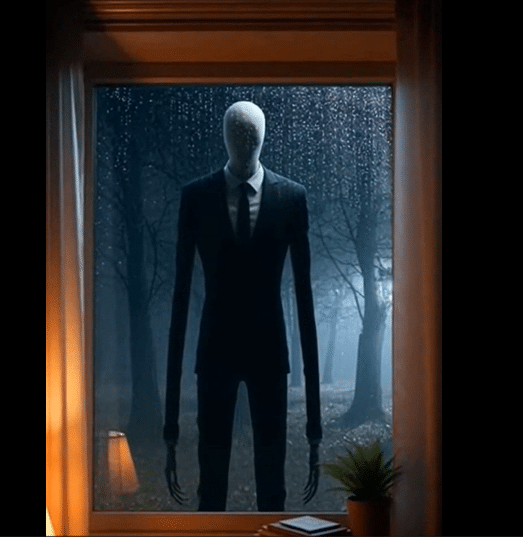
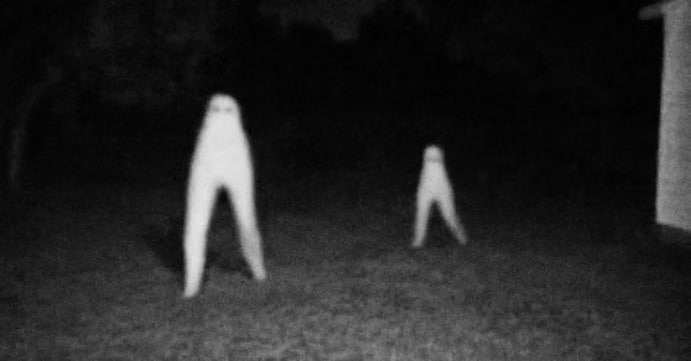
The Bigfoot type cryptid known as the Chatawa Monster has captured the interest of both locals and tourists in the little Mississippi town of Chatawa. Local folklore and storytelling have made this creature, which is frequently characterized as a big, humanoid figure with an eerie presence, a central theme. Reports state that the Chatawa Monster is more than seven feet tall, with luminous eyes, matted fur, and a howling sound that reverberates across the surrounding dense forest. In addition to describing this creature’s intimidating physical attributes, the stories also emphasize a feeling of mystery and terror that has merged with Chatawa’s own personality.

Description
Legend and conjecture surround the Chatawa Monster’s behavior. Eyewitnesses frequently describe it as a nocturnal monster, rarely seen in daylight and lurking in the shadows. Many legends describe encounters where the monster has scared off residents who approach its alleged habitat too closely or chased off strangers, indicating that it is both elusive and territorial. While some stories depict the monster as a woodland guardian, others depict it as a hostile entity that preys on the unwary. People who hear stories about the Chatawa Monster experience a mixture of terror and attraction due to this creature’s dualistic nature (Watson, Batte, Young, & Watson, 024).
Generations have passed down stories of the Chatawa Monster, tracing its history back several decades. Locals frequently relate experiences from the middle of the 20th century, when sightings increased, especially among local hunters and campers. As they started to appear in local newspapers, these tales progressively gained their own identity and changed with each narration. As the legend spread, going into the woods at night and challenging one another to face the alleged beast became a rite of passage for the local youth. The Chatawa Monster is still an essential component of the local culture because of this custom, which has helped preserve folklore (Grayson, 2020).
According to a fascinating legend, the Chatawa Monster had its start when it escaped from a derelict circus train close to the Tangipahoa River. According to this version of events, a train passing through the region many decades ago experienced a disaster that resulted in the release of several exotic animals into the wild. One of these creatures was the Chatawa Monster, a gigantic, humanoid figure that adapted to its new surroundings, avoided human contact, and became a part of local folklore. By depicting the creature as a survivor of a tumultuous occurrence, this story gives a sense of thrill and adventure while permanently changing both its own and the community’s destiny (Herndon & Parker, 2024).
A different theory suggests that the Chatawa Monster could have originated from an escaped monkey from Kramer’s Lodge, a nearby tourist destination renowned for its unique creatures. According to one tale, what people consider a terrifying creature may actually be a mistaken primate that escaped and survived in the nearby woods. The notion that a simple monkey could transform into a legendary monster underscores the power of perception and storytelling, as the mystery and horror magnify the creature’s appearance and behavior.
Some even assert that older students at the adjacent St. Mary’s Institute made up the story of the Chatawa Monster. According to this argument, pupils used the monster story to frighten their younger classmates, which sparked excitement and a sense of unity among them. In this sense, the Chatawa Monster becomes a representation of young ingenuity and mischievousness, showing how a community’s collective imagination may give rise to folklore instead of a single incident or animal.
The complex fabric of legend surrounding the Chatawa Monster is reflected in these disparate origin stories, which demonstrate how myths may change over time and be influenced by many cultural factors. The Chatawa Monster serves as an intriguing focal point for the community’s identity, presenting various interpretations such as an escaped exotic animal, a terrible survivor of a circus accident, or a humorous creation by local youngsters. Every story deepens the legend of the creature, enhancing the folklore and guaranteeing that people will always find it fascinating.

Is it Bigfoot?
There are many different theories about what the Chatawa Monster actually is. Some speculate that it might be an unidentified animal species that has adapted to the dense forest environment, such as a bear or a giant monkey. Others think it might be an expression of regional folklore, a metaphor for the community’s anxieties and uncertainties. In terms of the paranormal, some residents say that the Chatawa Monster might represent the wild aspects of nature and serve as a spirit or protector of the forest. These various hypotheses demonstrate the creature’s capacity to stimulate both mythological and scientific investigation.
People all over North America have sometimes likened the fabled Bigfoot, a creature that has captured their imaginations, to the Chatawa Monster. Similar to Bigfoot, people often associate the Chatawa Monster with remote areas and deep forests. It is characterized as a big, hairy, humanoid figure that is at least seven feet tall. This likeness intriguingly raises the possibility that the Chatawa Monster represents a localized version of the larger Bigfoot mythology.
Witness reports of the Chatawa Monster echo many of the characteristics associated with Bigfoot. People frequently report encounters with both animals during late-night hours, claiming they exhibit elusive behavior and prefer to remain out of human sight. These two creatures may have a shared foundation in North American folklore, as evidenced by the horrifying screams and sounds attributed to the Chatawa Monster and the vocalizations linked with Bigfoot sightings.
Indigenous cultures have long shaped the Bigfoot mythos, evolving over time and gaining popularity with each reported sighting. Similarly, local mythology has shaped the myths about the Chatawa Monster, transforming them into a narrative that emphasizes both intrigue and dread. Given how these myths have changed throughout time, it is possible that both animals are cultural symbols that symbolize both our connection to nature and our curiosity in the unknown.
Similar theories frequently focus on the identities of the Chatawa Monster and Bigfoot. According to some, the animal might be an unidentified ape or hominid species that has adapted to live in the remote southern woodlands. This viewpoint is consistent with scientific investigations on Bigfoot, which investigate the potential for a remnant primate population to persist in isolated locations. The Chatawa Monster may be a unique form of Bigfoot, as evidenced by the parallels between its habitat—rural settings and dense woods.
Associating the Chatawa Monster with Bigfoot has an effect that goes beyond simple curiosity; it enhances the local cultural narrative. Cryptid-themed festivals frequently highlight regional myths, giving local communities a platform to celebrate their own tales while capitalizing on the Bigfoot mythos’ wider popularity. This relationship strengthens the bonds between locals and draws visitors who are keen to discover the secrets of the Chatawa woods, which eventually boosts the local economy.
The similarities between Bigfoot and the Chatawa Monster draw attention to an intriguing point where cultural identity and legend converge. The existence of the Chatawa Monster in popular culture serves as a reminder of people’s ongoing interest with the unknown, even though it may be a regional variant of the fabled creature. The potential that the Chatawa Monster is a singular expression of the larger Bigfoot mythology is still present as tales of it develop, urging more research and debate among cryptid lore enthusiasts.
Conclusion
Because it has become a source of pride and fascination for the community, the Chatawa Monster has had a profound impact on local culture. Residents bond by sharing their personal tales and experiences, and festivals and activities honoring the legend attract tourists from far and wide. Additionally, the Chatawa Monster has impacted local literature, art, and tourism, giving the area a sense of mystery. It serves as a reminder of the stories that define a community’s identity while also promoting exploration and a greater awareness of the natural environment as a symbol of the unknown.
The Chatawa Monster is an intriguing illustration of how folklore can change and influence a community. The remarkable physical descriptions, mysterious behavior, and lengthy history of this creature have ingrained it in Chatawa, Mississippi’s culture. Numerous ideas surrounding its existence enhance its mystique, allowing for further investigation and debate. In the end, the Chatawa Monster guarantees its position in the annals of local legend for many years to come by demonstrating the potency of narrative and the persistent human fascination with the unknown.
References
Grayson, W. (2020, July 17). Focused on Mississippi: Chatawa monster. WJTV. Retrieved November 13, 2024, from Focused on Mississippi: Chatawa Monster | WJTV.
Herndon, E., & Parker, P. (2024). Paddleways of Mississippi: Rivers and People of the Magnolia State. Univ. Press of Mississippi.
Hinds Community College. (2024). The Chatawa monster – Paranormal Mississippi case files: A Halloween LibGuide. Retrieved December 13, 2024, from https://libguides.hindscc.edu/c.php?g=1086426&p=7922540
Watson, A. P., Batte, E., Young, B. W., & Watson, S. A. (2024). Dungeons & Dewey decimals: A D&D-style TTRPG adventure module for outreach and library skills. College & Undergraduate Libraries, 1-17.
Wikipedia contributors. (2024, October 12). Chatawa, Mississippi. In Wikipedia, The Free Encyclopedia. Retrieved 23:04, December 13, 2024, from https://en.wikipedia.org/w/index.php?title=Chatawa,_Mississippi&oldid=1250840067.


Leave a Reply