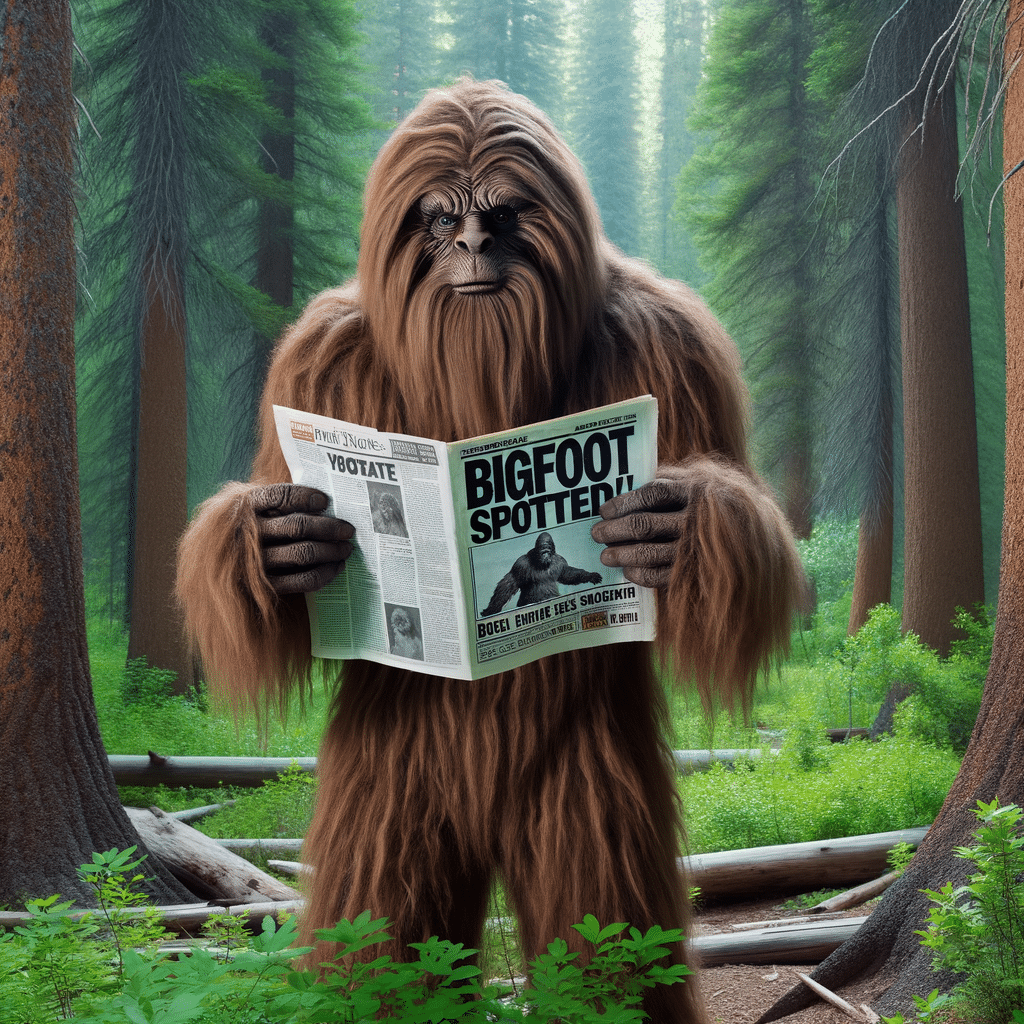
Many 19th century newspapers ran wild man stories which are often seen as evidence of Bigfoot by researchers today. Sensational headlines have reflected and capitalized on societal fears while serving obvious business goals over the two centuries of American journalism. The transition from 19th-century wild man tales to contemporary tabloid Bigfoot stories shows how publishers have continuously made money off of the public’s fascinations and anxieties, modifying their material to reflect shifting social issues while sticking to lucrative storylines. This essay will examine these main sources’ contemporary misinterpretations.

19th Century Tabloids
The American press’s peculiar fascination with “wild men” led to the development of a sensationalized reporting style in the 19th century, which later influenced contemporary tabloid journalism. Newspapers nationwide published these articles from the 1830s until the 1890s. They usually had dramatic headlines like “STRANGE CREATION CAPTURED IN MOUNTAINS” or “WILD MAN OF THE WOODS TERRORIZES VILLAGE.”
These accounts of wild men generally followed the same pattern: in a rural area, a mysterious, frequently hairy humanoid figure would be seen acting ferociously and usually described as being nude or wearing torn clothing. Details of successful captures followed by escapes or unsuccessful capture attempts were common in the stories. Tabloid journalism in the 20th century would later define its liberal use of capital letters and exclamation marks in headlines and narrative structures to achieve the greatest dramatic effect.
There were several factors that contributed to the popularity of these stories. As the era’s newspapers evolved from partisan political vehicles to for-profit businesses, editors found that dramatic articles generated reader interest (Conboy, 2008). In addition to entertaining and satiating curiosity about the unknown, the Wild Man accounts frequently conveyed subliminal moral lessons about civilization versus barbarism. During times of intense industrialization and urbanization, many of these tales may have reflected societal concerns about the nature of development and the loss of wilderness.
The contrast between contemporary tabloids and the societal anxieties portrayed in Wild Man legends reveals a fascinating history of American worries and preoccupations. Wild man tales from the 19th century frequently sprang from fears of urbanization, industrialization, and the end of the American frontier. These stories, which usually portrayed characters who had “gone feral” or rejected civilization, reflected concerns about preserving social order in the face of fast modernity (Davenport, 2020).
The wild man tales frequently surfaced in regions that were undergoing substantial population expansion or industrial development. Their frequent depictions of once “civilized” people who had turned away from society served as a metaphor for anxieties about the psychological toll that urbanization and modernity would take. These fables, which frequently portrayed educated men who had “devolved” into barbaric states, also mirrored concerns about class and social standing.

Modern Tabloids
On the other hand, modern tabloids frequently mirror current anxieties around technology, governmental control, and identity loss. Stories about extraterrestrial abductions, often dealing with themes of medical experimentation and loss of bodily autonomy, reflect concerns about contemporary healthcare and surveillance. Conspiracy theories concerning government cover-ups reflect fears of political power’s reach and mistrust of institutions.
Modern tabloids frequently examine the line separating humans from non-humans, whether through tales of human-alien hybrids or botched genetic research, in contrast to 19th-century tales that centered on the conflict between civilization and wilderness. In the same way that stories about wild men expressed fear of losing control over nature, tabloid articles today frequently express worry about losing control over information and technology.
The concern with outsiders endangering social norms is a commonality between the two genres. While modern tabloid monsters and aliens indicate threats to normalcy from science, technology, or space, the wild man of the 19th century signified a threat to civilized society from the forest. This shift illustrates the evolution of American civilization from a frontier-centric approach to a technology-centric one.
The economic concerns of both periods manifest in distinct ways. Stories about wild men frequently surfaced during times of economic turmoil, indicating anxieties about poverty and social displacement. In response to current worries about wealth disparity and financial instability, modern tabloids usually publish stories about hidden treasures, secret money, and conspiracy theories regarding economic dominance.
These comparable yet distinct anxiety patterns, while maintaining similar narrative structures, demonstrate how sensational media adapts to mirror the distinct social concerns of each era. The shift from wild men to aliens and conspiracies reflects the progression of American fears from the natural to the technical world.
These reports’ structure and tone are remarkably similar to those of contemporary tabloid magazines like the National Enquirer and Weekly World News. Though contemporary tabloids have broadened their focus to include aliens, conspiracies, and supernatural happenings, the same themes of mystery, danger, and the unknown still recur. For example, the story patterns of the 19th-century wild man reports are very similar to the well-known Bigfoot stories from the Weekly World News in the 1990s (Morris, 2007).
Modern Misinterpretations
Contemporary academics and cryptozoology enthusiasts sometimes misinterpret these historical newspaper stories as factual reporting. There are multiple reasons for this misunderstanding. First, readers in the current day find it more difficult to discern editorial tone and aim since 19th-century newspapers’ writing styles differed from those of contemporary journalism. Second, the frequent reproduction of these tales in other newspapers led to a false sense of widespread validation. Third, it is challenging for contemporary readers to discern between genuine reporting and sensationalized articles due to the physical layout of historical newspapers, which have thick text columns and no distinction between news and entertainment (Daegling, 2004).
Newspaper audiences in the 19th century recognized the entertainment value of these stories, a fact that contemporary readers frequently overlook. In American culture, they belonged to a larger heritage of folklore and tall tales. Alongside other obviously fictitious material, including amusing tales and serialized fiction, newspapers would frequently publish articles about wild men. Readers intended to interpret the accounts with a grain of salt, similar to how they react to tabloid headlines about Bigfoot encounters or Elvis sightings today.
Beyond their impact on contemporary tabloid media, these Wild Man accounts have left a lasting legacy. These accounts serve as an early example of how the media can produce and spread contemporary mythology. The accounts established narrative patterns that would subsequently apply to Bigfoot sightings, extraterrestrial encounters, and other paranormal phenomena. They showed how sensational reporting and broad dissemination might turn local legends and isolated instances into national phenomena (Buhs, 2011).
Conclusion
Sensationalized journalism is not a recent development, as the 19th-century Wild Man accounts remind us. By demonstrating how newspapers assisted in transforming regional stories into standardized story formats that still have an impact on popular culture today, they serve as a crucial bridge connecting traditional oral folklore and contemporary mass media entertainment. We may better grasp the development of journalism and the persistent human desire for stories that conflate reality and fiction when we are aware of these historical circumstances.
These historical articles serve as a reminder that media literacy has always been crucial and that, since the beginning of mass media, the capacity to discern between amusement and fact in news sources has been a required skill. Contemporary tabloid journalism, in strikingly similar yet updated ways, now caters to the basic human curiosity about the unknown and unexplained, which is why 19th-century wild man accounts still hold resonance.
References
Buhs, J. B. (2011). Tracking Bigfoot through 1970s North American children’s culture: How mass media, consumerism, and the culture of preadolescence shaped wildman lore. Western folklore, 195-218.
Conboy, M., & Steel, J. (2008). The future of newspapers: Historical perspectives. Journalism Studies, 9(5), 650-661.
Daegling, D. J. (2004). Bigfoot exposed: an anthropologist examines America’s enduring legend. Rowman Altamira.
Davenport, H. M. (2020). The changing face of folkloric transmission: bigfoot and the American psyche (Doctoral dissertation, Montana State University-Bozeman, College of Letters & Science).
Morris, G. L. (2007). Imagining Bigfoot. Western American Literature, 42(3), 277-292.



Leave a Reply