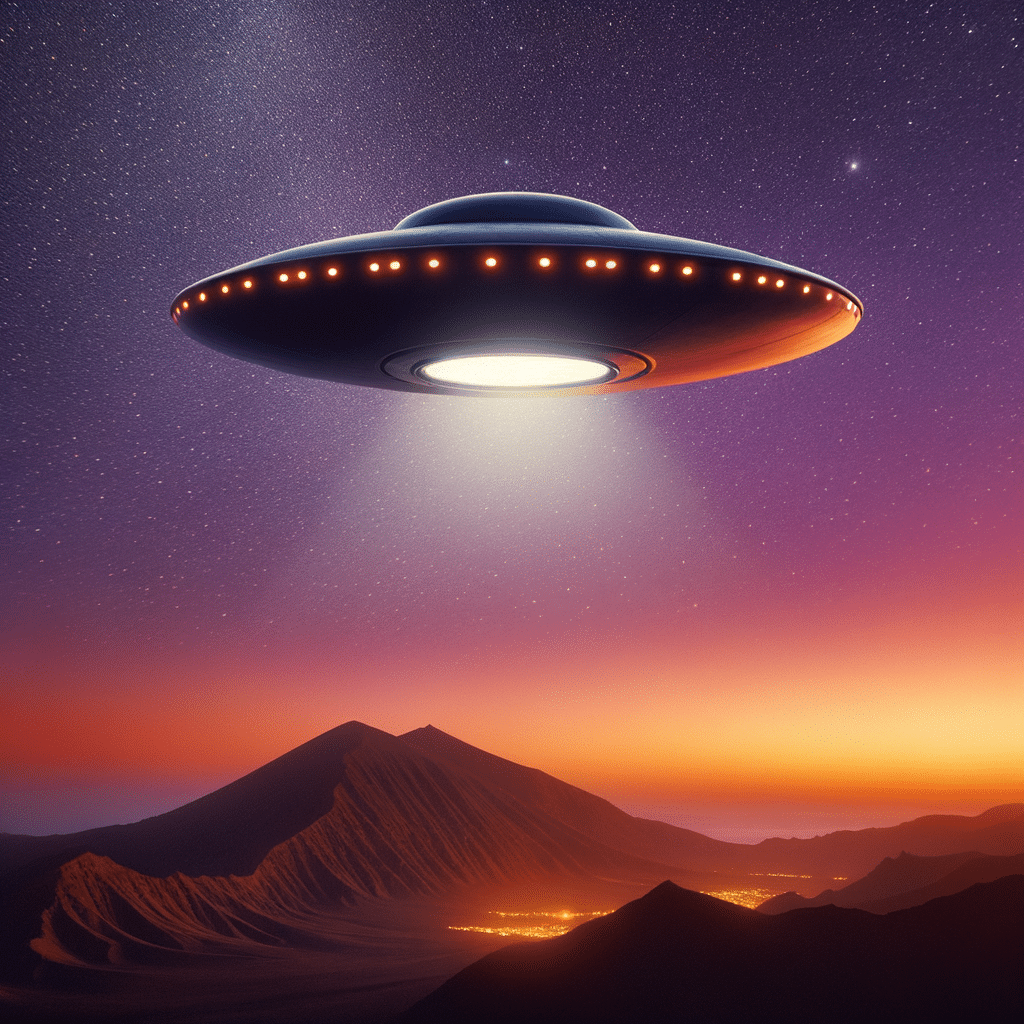
The volcanic vistas, subtropical temperature, and rich cultural legacy of the Canary Islands, an archipelago of seven principal islands off the northwest coast of Africa, have long enthralled tourists. In addition to being popular tourist destinations, these Spanish islands—Tenerife, Gran Canaria, Lanzarote, Fuerteventura, La Palma, La Gomera, and El Hierro—have long captivated researchers and enthusiasts with their purported paranormal activity.
Before the Spanish invasion in the fifteenth century, the indigenous Guanches inhabited the Canary Islands. Spanish conquistadors used the islands as a vital resting place on their journeys to the Americas, resulting in a blending of indigenous and European cultures. The islands’ remote position, distinctive geology, and rich historical background have led to the creation of many myths and inexplicable phenomena.

Ghosts
The enigmatic lights frequently observed over Mount Teide, Spain’s highest summit in Tenerife, are among the most prominent paranormal occurrences documented in the Canary Islands. Witnesses have reported these lights as floating orbs moving in peculiar patterns, defying accepted explanations of airplanes or celestial phenomena. The ancient Guanches revered Mount Teide, seeing it as a portal connecting the material and spiritual realms.
Many ghost encounters have occurred in La Palma, also known as La Isla Bonita (The Beautiful Island), especially in its old buildings and sugar plantations. In these places, locals have reported hearing unexplained noises and seeing apparitions of colonial-era characters. The island’s Cumbre Vieja volcano, known for its major eruption in 2021, has long been associated with strange occurrences like electromagnetic anomalies and inexplicable equipment breakdowns.
Numerous reports of ghost sightings in the colonial-era buildings of Vegueta, Gran Canaria’s old town, have made it famous for its paranormal activity. Numerous paranormal studies have focused on the famous Casa de Colón, a museum honoring Christopher Columbus. Visitors have reported experiencing cold spots, unexplained footsteps, and a sense of surveillance.
UFO sightings and strange electromagnetic phenomena have been linked to Lanzarote’s volcanic landscape, especially the Fire Mountains (Montañas del Fuego). Local tradition mentions strange animals and unexplained lights in the volcanic tubes and caves that crisscross the island. Researchers studying the paranormal have noticed these accounts and hypothesize that the islands’ distinct geological makeup may be a factor in these occurrences (Berliner, 2008).
The Canary Islands’ mysteries also extend to its waterways, where sailors have experienced compass glitches and electronic equipment failures that are similar to the Bermuda Triangle phenomenon. Scientists have hypothesized that natural magnetic anomalies, caused by the islands’ volcanic origins and proximity to major tectonic plates, could explain some of these phenomena (Stewart, 2011).

Atlantis
A number of intriguing similarities between the Canary Islands and speculations regarding the lost civilization of Atlantis have long captivated historians, scholars, and fans. The Canary Islands’ geographic location is very similar to Plato’s original description of Atlantis, an island society of immense might situated beyond the Pillars of Hercules (the present-day Strait of Gibraltar). The myth of Atlantis impacts lots of locations, including the Canary Islands (Balch, 1917).
Numerous scholars cite the volcanic origins and geological past of the islands as proof of the Atlantis connection. Plato’s stories describe Atlantis sinking under the waters after a string of catastrophic catastrophes. The Canary Islands, being the bare summits of a vast underwater mountain range, may represent the final high points of a once-larger landmass. Geological research reveals that erosion and volcanic activity have lost significant parts of the islands to the water over millennia.
The native Guanches of the Canary Islands have also inspired ideas for Atlantis. Despite being close to Africa, European explorers were surprised by the Guanches’ remarkable physical traits when they first met them. Many of them were tall, fair-skinned, and blue-eyed. Some scholars suggest that the Guanches could be descendants of Atlantean survivors who isolated themselves and preserved elements of their ancient culture. Their comprehensive understanding of mummification, which is akin to that of the ancient Egyptians, has sparked conjecture regarding links to more ancient and highly developed societies.
These ideas have benefited from archaeological findings on the islands. The discovery of astronomical alignments, petroglyphs, and ancient stone buildings on several islands suggests a more advanced prehistoric society than previously believed. Although its chronology and provenance are debatable, some scholars have pointed to the step pyramids of Güímar on Tenerife as possible proof of ancient building skills comparable to those ascribed to Atlantis.
There has also been interest in the underwater topography surrounding the Canary Islands. Sophisticated mapping has uncovered extensive underwater formations and buildings, which some believe could be the remnants of human construction. Alternative researchers contend that these characteristics might be proof of sunken cities or buildings from a highly developed prehistoric society, despite orthodox geology explaining them as natural formations.
These Atlantis theories, despite their fascination, remain mostly confined to alternative archaeology and conjecture. However, they still stimulate inquiry and discussion regarding the islands’ prehistoric history and their significance for human prehistory. The Canary Islands’ distinct features and location, along with the eternal mystery of Atlantis, guarantee that these beliefs will continue to play a vital role in the attraction and cultural mythology of the archipelago (Foucrier, 2017).
Ancient Egypt
The fascinating array of historical, cultural, and archeological similarities between the Canary Islands and ancient Egypt has captivated scholars for years. Despite the significant geographical distance between the two civilizations, the native Guanches people’s mummification traditions bear a striking resemblance to ancient Egyptian methods. The Canary Islands appear to have had interactions with Egypt in ancient times.
The Guanches’ mummification method, which is very similar to Egyptian practices, entailed removing the internal organs, drying the body with a mixture of herbs and mineral powders, and wrapping the deceased in animal skins. Similar to Egyptian burial customs, locals frequently positioned these mummies, known locally as xaxos, in cave sanctuaries. Guanche mummies exhibit preservation quality comparable to that of their Egyptian counterparts, indicating advanced understanding of chemical and anatomical processes. The Guanches’ practice of cave burial mirrors some Egyptian burial rituals, arranging bodies in specific orientations and accompanying them with grave items. Additionally, the Guanches produced ceramics and items that, according to some researchers, exhibit design characteristics evocative of the creative forms of ancient Egypt.
Linguistic research has found possible links between the ancient Guanche language and various African languages, including some spoken in ancient Egypt. The Canary Islands include a number of words and place names that seem to have originated in Berber or ancient Egyptian languages. According to some scholars, these language parallels may point to historical migratory trends or cross-cultural interactions between Egypt and the Canary Islands.
Archeological finds have reinforced these ties. Ancient stone constructions discovered on the islands exhibit astronomical alignments reminiscent of Egyptian architecture. Although these statements are still up for debate, several academics have pointed out that some Guanche symbols and rock art resemble Egyptian hieroglyphs. Step pyramid construction, as demonstrated by the Güímar pyramids in Tenerife, has led some scholars to suggest that ancient Egyptian architects shared architectural knowledge (Greensmith, 2004).
Ancient Egyptian ships may have been able to reach the Canary Islands, according to maritime evidence. Some scholars suggest that Egyptian sailors might have been aware of the islands, given that Egyptian records document expeditions to distant western regions. The Canary Islands’ location along historic maritime trade routes may have facilitated contact with Egyptian civilization, either directly or through intermediary cultures.
There are also fascinating similarities between religious and cultural activities. The Guanches possessed beliefs about the afterlife and engaged in a type of sun worship that were somewhat comparable to Egyptian religious ideas. They also employed a comparable astronomical observation-based dating system, which raises the possibility that mathematical and astronomical knowledge originated together.
Recent genetic research has added an additional layer to these links. DNA study of Guanche remains has revealed links to North African people, particularly those from formerly Egyptian-controlled regions. This shows ancient population movements that might have promoted cultural interaction, even though it does not prove direct Egyptian heritage.
As proof of common knowledge between the two societies, some academics highlight parallels in agricultural practices, especially in irrigation methods and the production of specific crops. Some claim that the Guanches’ highly developed agricultural systems bear similarities to those of ancient Egypt. Though these connections are fascinating, it’s vital to remember that many conventional archaeologists contend that some parallels may be the product of parallel growth rather than direct touch. The argument between those who believe the Canary Islands show traces of ancient Egyptian influence and those who believe the parallels are the result of coincidence or separate cultural evolution is still ongoing.
The similarities between ancient Egyptian society and the Canary Islands’ prehistoric culture continue to be an intriguing subject of study, regardless of the precise nature of these relationships. These connections continue to motivate research on ancient maritime capabilities, cultural diffusion, and the intricate network of interconnections that might have existed in the ancient Mediterranean and Atlantic civilizations.
Conclusion
The Canary Islands provide a singular fusion of supernatural mystery and natural grandeur. They continue to attract paranormal investigators and inquisitive tourists from all over the world, even though many of the recorded events are still unexplained. The islands are not just a tourist haven but also a fascinating location for people who are interested in the paranormal because of their volcanic origin, rich history, and cultural significance, which all combine to create an intriguing backdrop for these unexplainable phenomena. These phenomena have become a vital part of the islands’ contemporary mythology and cultural identity, regardless of whether they can be explained by natural causes or continue to be really paranormal.
References
Balch, E. S. (1917). Atlantis or Minoan Crete. Geographical Review, 3(5), 388-392.
Berliner, D. (2008). UFO Briefing Document: The Best Available Evidence. Dell.
Foucrier, C. (2017). The Myth of Atlantis in the 19th Century: Sciene and Imagination. Leidschrift, 32(januari: Verzonken en verheven. Plato’s Atlantis van klassieke mythe tot nazi-utopie), 43-61.
Greensmith, T. (2004). Tenerife–the big pyramid. Geology Today, 20(5), 189-193.
Stewart, M. (2011). Is the Bermuda Triangle Really a Dangerous Place?: And Other Questions about the Ocean. Lerner Publications.


Leave a Reply