
The ancient Romans had werewolves, and it is possible that the Romans invented the concept of the werewolf we have today. One of the first known ideas of shapeshifting creatures in Western literature is the Versipellis, a creature from ancient Roman mythology. The term itself, literally meaning turn-skin or skin-changer, derives from the Latin versare (to turn) and pellis (skin), providing insight into the Romans’ perception of these enigmatic beings.

Description
Although Roman stories differed in their physical characteristics, the majority of them portrayed the Versipellis as creatures with the ability to change between human and wolf forms. Ancient stories depicted their metamorphosis as a smooth, natural process, more like taking off and putting on a new skin than the bone-breaking changes made popular by modern werewolf stories. This contrasts with the horrific transformations frequently depicted in contemporary media. According to some reports, they could be recognized by their odd pallor and perennially exhausted demeanor, yet in human form, they were supposed to look quite normal (Bartra, 2024).
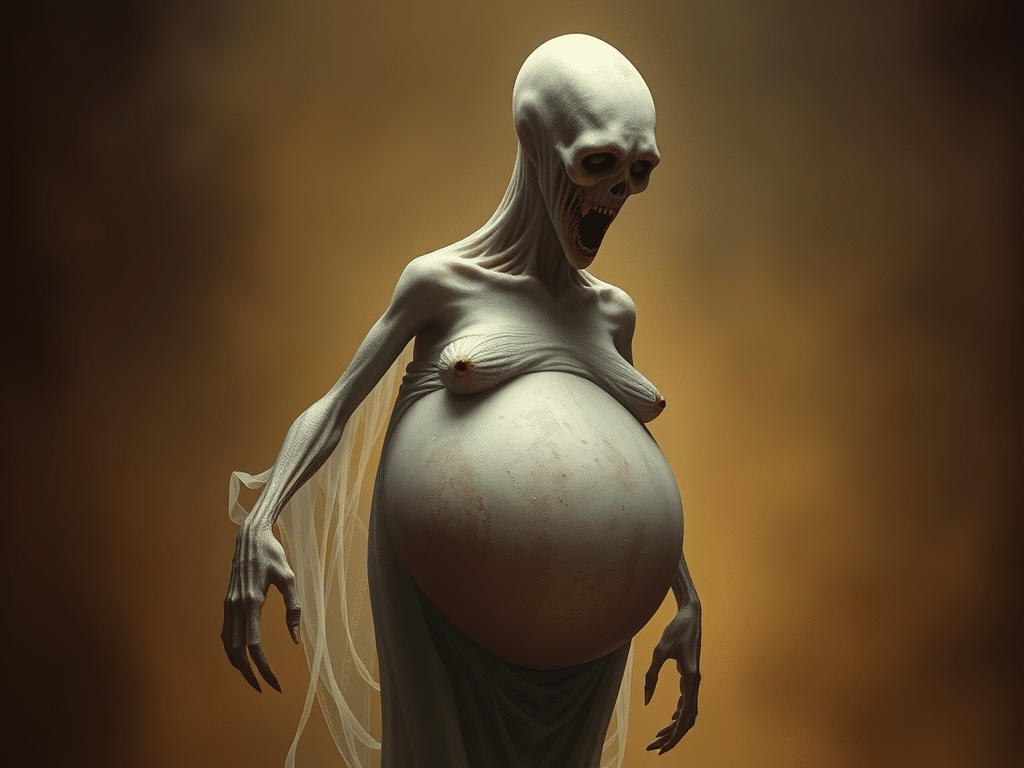
Often depicted as a hybrid of a wolf and a man, the Versipellis embodies the most terrifying traits of both species. Often depicted in its altered form, the Versipellis possesses a humanoid body with extended limbs, pointed claws, and a snout filled with razor-sharp fangs. Often described as burning, either red or yellow, its eyes evoke an unearthly terror. According to reports, the creature’s dark, coarse fur blends in with the night’s shadows, and its motions still have an unsettling balance of animalistic ferocity and human agility. The Versipellis is depicted as being overly huge and frightening, a predator meant to arouse dread, in contrast to a natural wolf. Certain myths further highlight the creature’s unnatural aspect by highlighting its incomplete metamorphosis, which leaves behind disturbing signs of humanity, such as human hands or a half-human visage.
Roman authors attributed sophisticated behaviors to these animals. Unlike dumb creatures, Versipellis, frequently depicted as strategic hunters, retained their human intelligence despite changes. Several tales suggest that they avoid human settlements unless absolutely necessary, and they hunt alone instead of in packs. The werewolf legend would later deeply ingrain the concept that the creatures were most active during the full moon.
Behavior-wise, the Versipellis is often associated with aggression and a loss of moral self-control. According to most tales, becoming a wolf results in the release of primal instincts, such as an unquenchable desire for meat and blood. Most tales portray the animal as a nocturnal predator, stalking its victim at night. This tendency reflects humans’ innate fear of the night, when predators lurk outside the protection of firelight. Nonetheless, in certain tales, the Versipellis is portrayed as a sad character who is cursed to change against its choice and must deal with the consequences of its deeds after reverting to its human form. The creature’s dual nature as a predator and a victim has made it a fascinating character in both fiction and legend.
History
Pliny the Elder’s Natural History (Naturalis Historia) and Petronius’ Satyricon are the two most important Roman works that make reference to the Versipellis. Niceros, a character in the Satyricon, tells a particular story of a soldier who changes into a wolf. While expressing skepticism over such transformations, Pliny’s account in Book VIII of Natural History discusses the belief in versipellis in relation to lycanthropy.
Petronius’ Satyricon presents the tale of the soldier who transforms into a wolf with wonder and terror, but without moral censure. The converted soldier attacks animals like a wolf, but he or she eventually regains human knowledge. We tell the narrative less as a morality tale and more as a supernatural event.
Despite his doubts about such metamorphoses, Pliny the Elder addresses them in a largely neutral manner, describing them as a documented occurrence rather than as malevolent beings. Rather than intentionally harming people, they were mostly characterized by wolf-like behavior, such as hunting and avoiding populated areas.
Later medieval Christian views, which reframed shapeshifters as intrinsically wicked and connected to demonic pacts, stand in stark contrast to this neutral position. The Roman perspective seems to have been more nuanced, considering these changes to be occasionally uncontrollable or even divine retribution as opposed to the product of malevolent purpose. The emergence of Christianity during the Middle Ages in Europe gave the story a darker tone. Widespread dread and persecution resulted from the werewolf’s association with witchcraft and demonic possession (Massey, 2003). Werewolf suspects frequently faced brutal trials and execution, similar to those convicted of witchcraft. The Versipellis has lost most of its association with superstition in the modern day and instead represents inward struggle, repression, and metamorphosis, mirroring the psychological issues of the times.
Though the exact relationship to the Versipellis notion is unclear, the Greeks had a significant impact on Roman werewolf beliefs, especially through the tale of King Lycaon of Arcadia. Despite being Roman, Ovid adapted older Greek sources to write Metamorphoses, which is where the Greek lycanthropy myth is most prominent. According to Greek mythology, Zeus punished King Lycaon for serving human flesh at a banquet by turning him into a wolf. This established key ideas that influenced both Greek and Roman werewolf beliefs, including transformation as divine retribution, the link between werewolves and cannibalism, and the retention of human awareness in wolf form (Takahashi, 2018).
Legends of ritual cannibalism and werewolf transformations were part of the Greeks’ cult of Zeus Lykaios, which was based in Arcadia. Nonetheless, it seems that the Versipellis differ from Greek lycanthropes in a few key ways. Greek traditions primarily emphasize permanent transformations as punishment, whereas Roman tales feature transient, recurring transformations. It’s intriguing to note that, although Greek mythology clearly influenced Roman mythology in many ways, the Versipellis idea appears to have some distinctive features that differ from its Greek forerunners. This suggests that while Greek werewolf stories undoubtedly influenced Roman beliefs, the Versipellis could potentially represent a partially autonomous evolution of Roman folklore. Unfortunately, there is not enough historical evidence to determine with certainty how much Greek impact there was on this particular facet of Roman supernatural beliefs.
As social attitudes have changed over time, so too has belief in the Versipellis. Originally perceived as doomed mortals, the gods later transformed them to symbolize punishment in ancient Rome. As a result of Christian influence during the Middle Ages, this concept gradually changed, portraying them as voluntary servants of Satan who had exchanged their humanity for power. By the Renaissance, the unique concept of the Versipellis had mostly blended with more general European werewolf mythology, although some localized versions retained aspects of ancient Roman beliefs.

Comparative Werewolfology
Although there are some intriguing similarities, the Versipellis had a number of unique traits that distinguished it from shapeshifters in other ancient societies. Unlike Norse shapeshifters such as berserkers and Odin’s followers, who channeled animal spirits while remaining physically human, or hamrammr, who could project their spirits into animal bodies, the Versipellis underwent a complete bodily metamorphosis. This bodily alteration was more akin to the Greek tradition of total metamorphosis, as reflected in mythology such as Zeus’s transformations (Herne, 2024).
Unlike Celtic shapeshifters, who typically associated their transformations with specific locations like wells or the sea, and more frequently with salmon, seals, or birds than with wolves, the Versipellis do not share these associations. Additionally, Celtic shapeshifters sometimes associated their transformations with enchantments or curses that required breaking. The Versipellis transformation seems to have been perceived more as an innate condition or divine punishment than as a learned skill, in contrast to Native American skinwalker traditions where the transformation was usually thought to be the consequence of particular shamanic practices or ritualistic knowledge.
Moreover, the Versipellis differs from the ancient Middle Eastern traditions of shapeshifters, such as those in Mesopotamian mythology, where transformations were often associated with demons or divine entities rather than humans. Instead of humanity having the ability to change themselves, the gods in the Mesopotamian myths usually transformed people as a sort of punishment. One distinctive feature of the Versipellis was that it retained human intelligence while transforming. The Roman narratives explicitly mention that the Versipellis retained human consciousness and reasoning skills while in wolf form, whereas many other cultural traditions portrayed shapeshifters as fully assuming their animal form.
Modern Impact
The Versipellis’ impact on popular culture goes well beyond its historical context. The creature’s fundamental traits have influenced werewolf representations in literature, movies, and television, even if contemporary audiences may not be familiar with the name. Versipellis legend is the direct source of the idea of a thought-aware being caught between human and wolf forms, as opposed to a mindless beast. Although modern translations usually use the more recognizable term werewolf instead of the original Latin moniker, this interpretation has impacted works ranging from classic literature like Ovid’s Metamorphoses to contemporary compositions.
It is impossible to overestimate the Versipellis’ influence on popular culture. The werewolf has become a mainstay of the horror and fantasy genres in both literature and film. Classic works such as The Wolf Man (1941) first presented the current concept of the sad werewolf, destined to change beneath the full moon. Series like Twilight and Harry Potter have recast the werewolf as a multifaceted figure in recent years, demonstrating that despite their monstrous nature, they are capable of love and loyalty. Television shows like Teen Wolf further explore the creature by fusing traditional folklore with contemporary themes of identity and belonging. In addition to providing amusement, the Versipellis has impacted more general cultural conversations concerning the duality of human nature, the interaction between humans and the natural world, and the fear of losing one’s self-control (Jiménez, 2023).
Conclusion
The Versipellis is an important component that connects contemporary werewolf mythology with ancient Roman beliefs in the development of shapeshifter mythology. Despite its lack of widespread usage, the original phrase still influences our understanding and portrayal of shapeshifting creatures in contemporary culture. The creature’s legacy serves as an example of how myths from antiquity may change and endure for millennia, adjusting to shifting cultural circumstances while maintaining their essential capacity to pique people’s interest.
References
Bartra, R. (2024). Werewolves in Antiquity. In The Myth of the Werewolf (pp. 1-12). Cham: Springer Nature Switzerland.
Herne, R. (2024). The Magic of Wolves. John Hunt Publishing.
Jiménez, J. M. (2023). Lycaon and classical versipelles in MTV’s Teen Wolf. thersites. Journal for Transcultural Presences & Diachronic Identities from Antiquity to Date, 17, 212-244.
Massey, J. A. (2003). Corpus Lupi: The medieval werewolf and popular theology. Emory University.
Takahashi, M. (2018). “[A] very pestilent disease”? Werewolves Retold through Narratives of Flesh Consumption and Alteration in Early Modern Natural History. Studies in English Literature: Regional Branches Combined Issue, 11, 123-132.



Leave a Reply