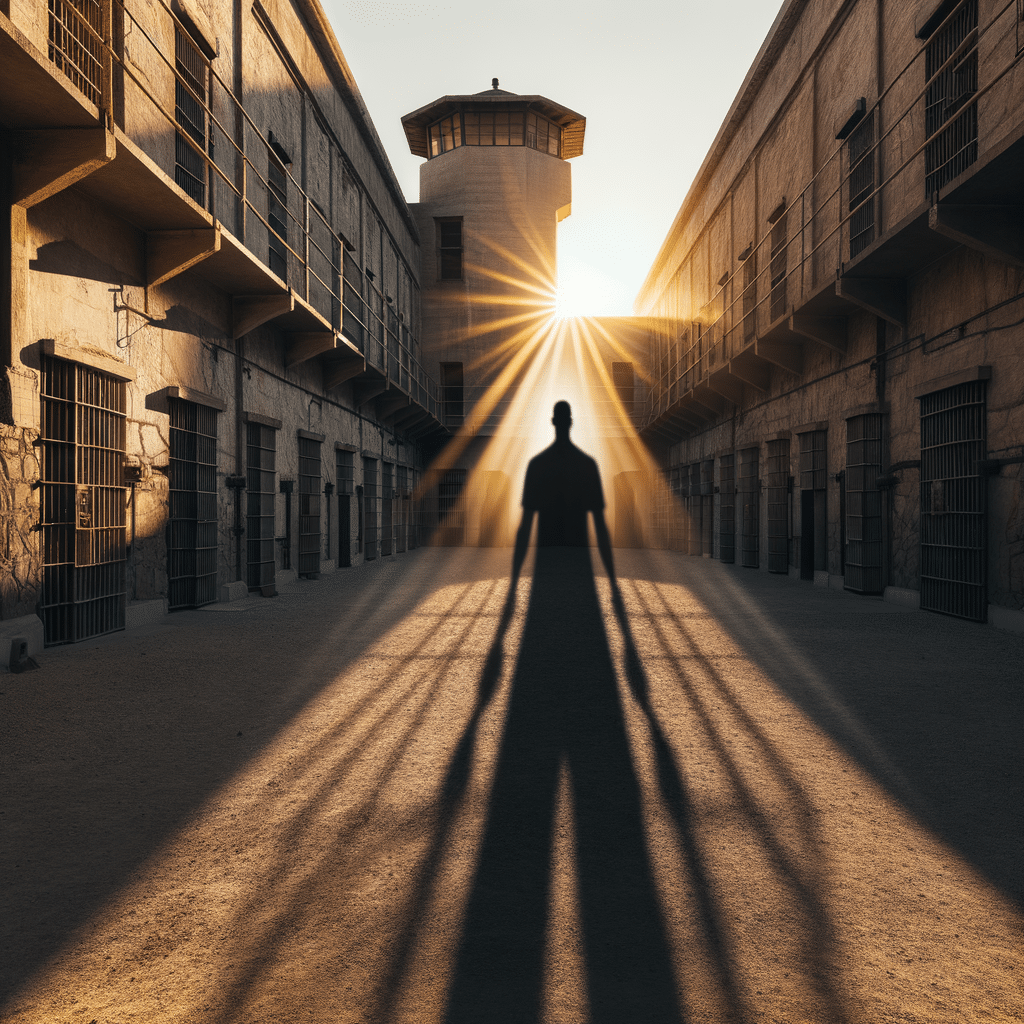
The Yuma Territorial Prison, which operated from 1876 to 1909 in Arizona Territory, is one of the Southwest’s most haunted places and a reminder of frontier justice. The prison’s granite walls, erected by the inmates who would later live there, tower over the Colorado River, reminding visitors of its sad past. This ominous prison, which held over 3,000 convicts, has inspired innumerable ghost stories and paranormal phenomena that still attract visitors.

History
When construction began in 1876, the first seven offenders carved their own cells from the granite rocks, making Yuma Territorial Prison a vital institution in Arizona Territory. Despite its intimidating reputation, the jail was one of the most progressive penal institutions of its day. It included electricity, a library with over 2,000 books, and compulsory education for illiterate inmates decades before it became common (Mallett, 2023).
From 1876 to 1909, the prison imprisoned 3,069 convicts, including 29 women, for crimes ranging from polygamy to murder. It housed Pearl Hart, the legendary female stagecoach thief who received national attention. The institution was fairly humane for its time, despite congestion, desert climate, and illness epidemics (Pagán, 2023).
Due to the dry desert and close quarters, TB was a constant problem at the prison. A full-time doctor treated many illnesses at the prison hospital, but 111 inmates died from disease, suicide, and attempted escape attempts. They moved most of the remains from the prison cemetery.
The prison’s dark cell, a windowless isolation chamber for troublemakers, held them for days. Despite such punishments, the institution offered rehabilitation through employment programs, including a brick factory and Protestant and Catholic chapel services. Inmates published The Prison Times, a territory-wide newspaper.
In 1907, the territorial legislature authorized building a new Florence, Arizona, prison due to congestion. Yuma High School used the Yuma facility from 1910 to 1914 after it closed in 1909. This brief education period gave the institution its nickname, The Criminals, which remains its mascot.
Following the school’s relocation, the prison began to deteriorate and faced the threat of demolition. Local preservation efforts in the 1930s led to the establishment of Yuma Territorial Prison State Historic Park in 1941, ensuring its protection. The Veterans of Foreign Wars served homeless families in part of the building during World War II, adding to its complicated history.
During the Great Depression, impoverished families sought sanctuary in abandoned prisons, forming Hell Hole. This period enhanced the prison’s mystery and spawned ghost stories. Railroad construction in the 1920s damaged the jail cemetery and other structures.
The museum has undergone renovations and improvements since its opening in 1940. Every year, thousands of people visit the prison to learn about territorial justice and prison reform. Community efforts and local administration saved the institution from closure during the 2010 state budget crisis, demonstrating its relevance to Yuma’s culture.

Hauntings
The original cell blocks, guard tower, and dark cell for solitary confinement make the jail impressive. Iron doors and poor ventilation confined the cells, while solid granite walls enclose the main yard. The prison hospital, where many detainees died of tuberculosis and other ailments, retains part of its old equipment, contributing to its ominous ambiance (Wickham, 2012).
Yuma Territorial Prison has a rich history of apparitions, strange sounds, and mysterious sensations dating back over a century. There are full-bodied apparitions and subtle environmental alterations, making it one of the Southwest’s most haunted places. Paranormal activity is highest in the prison’s most notorious dark cell. Visitors report feeling invisible hands tug their clothes and hair, while others express intense melancholy and anxiety that quickly subsides upon departure. Strange wall scraping and male voices crying out in despair have been reported by multiple witnesses. One of the main spirits haunting this place is John Ryan, who died in the gloomy cell in 1886 after a terrible beating (Watkins, 2000).
The cell blocks exhibit numerous supernatural appearances. Cell 14 holds the active murderer Elena Estrada. Some visitors have seen a woman in period jail costumes pacing the cell and heard her humming Spanish lullabies. This location contains so many cold spots that thermal cameras have recorded unaccounted-for temperature decreases of 20 degrees (Turner, 1993).
One of the most haunted areas is the jail hospital. Visitors say Francisco Flores, a young tuberculosis victim who died in 1897, appears in bloodstained clothing. Even when the ward is vacant, staff have seen medical equipment move on its own and heard coughing and laborious breathing. The prison’s early medicinal herb fragrance sometimes appears without explanation.
The guard tower has distinct supernatural phenomena. Multiple witnesses have seen a uniformed man guarding the tower during closing hours. This ghost, believed to be former guard Frank Ingalls, who died in a shooting accident in 1897, appears most often during full moons and departs when confronted.
In the evening, shadow forms flit between buildings in the jail yard. Many visitors have photographed these black humanoid forms moving at unimaginable speeds. Even when the prison is empty, one can observe muffled multilingual discussions and chains scraping across the ground.
A major supernatural event occurs at the prison library. Prisoner John Smith, a former librarian who died of heart failure while sorting books in 1887, has murmured readings, and books fall off shelves without reason. People consistently report temperature and electromagnetic disturbances here.
Modern paranormal studies have yielded compelling proof. EVP recordings include English, Spanish, and Native American voices. Investigators used archival research to confirm these recordings’ prison life and historical references. Visitor psychics and mediums always recognize the same locations and stories without prior information.
Some jail museum objects attract ghostly activity. Visitors feel watched near prisoner photo displays, which often cause equipment failures. Many visitors experience emotional and bodily reactions when they see personal objects of deceased inmates, especially those who were violent.
Supernatural encounters seem to peak around the prison’s death or escape anniversaries. The summer months, when temperatures climb and reflect the severe conditions many prisoners suffered, also increase reported activity. Visitor tales and organized paranormal investigations have confirmed the prison’s reputation as one of America’s most haunted.
Local newspapers and oral recollections chronicle Yuma Prison’s troubled history. Former guards began reporting ghosts shortly after the prison’s closing. In the 1940s, local teens started meeting at the abandoned prison, contributing to its haunted reputation. The first systematic paranormal investigations in the 1960s established the prison’s spooky reputation.
Conclusion
The prison has appeared in several paranormal TV shows and documentaries. The Travel Channel’s Ghost Adventures and other shows have investigated the prison’s spooky elements, as have books and local tourism periodicals. These media appearances have made the jail a nationwide haunted attraction, luring paranormal aficionados from around the country.
Ghost stories at Yuma Territorial Prison depict prisoners’ misery and terrible environment. The stories have kept this important historical monument in the public eye and supported preservation efforts. The truth of the ghostly experiences remains contested, but the prison’s influence on paranormal culture and Arizona history will endure for years.
References
Mallett, D. F. (2023). Haunted Tucson. Arcadia Publishing.
Pagán, E. O. (2023). The Country Club on the Colorado: The Surprisingly Progressive Carceral System of the Arizona Territory. Journal of Arizona History, 64(3), 315-329.
Turner, J. A. B. (1993). Ignored and pardoned: the women of Yuma Prison, 1876-1909. San Jose State University.
Watkins, M. (2000). Yuma Territorial Prison: Connecting past to present. Prescott College.
Wickham, A. (2012). The Dead Roam the Earth: True Stories of the Paranormal from Around the World. Penguin Books.




Leave a Reply