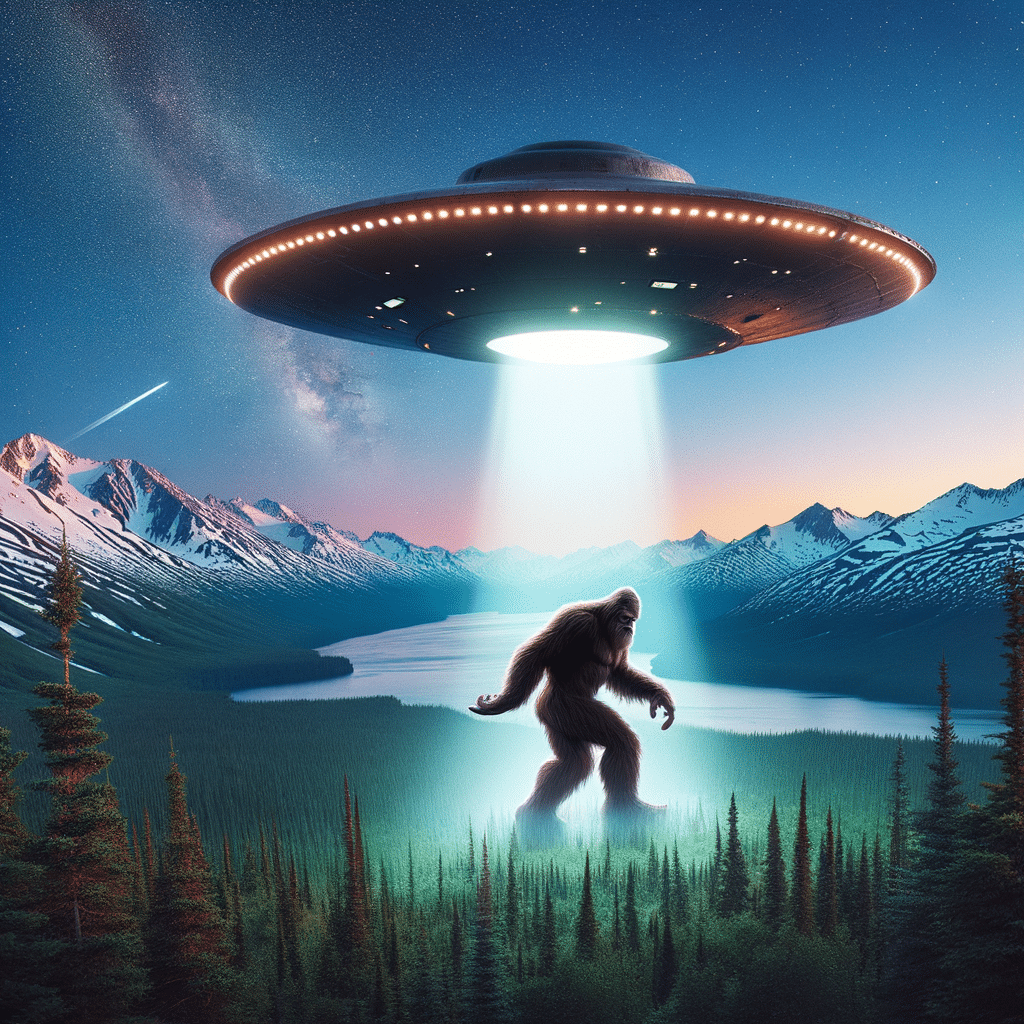
For decades, scholars, adventurers, and mystery buffs have been enthralled by the Alaska Triangle—which stretches from Juneau to Anchorage to Barrow. From the early 1900s, this huge wilderness area—roughly 200,000 square miles—has been the scene of many inexplicable deaths. Various estimates place the disappearance rate of this area more than four times the national norm; many instances remain unresolved to this day.
Although oral stories of the indigenous people define the history of disappearances in the Alaska Triangle, recorded instances first attracted notice in the 1930s. One of the most well-known events happened in 1972 when House Majority Leader Hale Boggs’s jet disappeared during a voyage from Anchorage to Juneau; despite a protracted 39-day search, no sign of the aircraft or its occupants was ever discovered (Ferrell & Haydel, 1994). Another notable occurrence was the 1950 disappearance of a military aircraft carrying 44 people, which likewise produced no wreckage or remains. These well-publicized events have spurred many studies and added to the region’s enigmatic character.

Paranormal Theories
Regarding the Alaska Triangle, paranormal ideas cover a broad spectrum of extraordinary and inexplicable events. Researchers have hypothesized that the convergence of several forms of paranormal activity in this large wilderness acts as a window area wherein the boundary between several worlds or realities becomes faint. The region’s severe and remote character has added to its status as a focal point for inexplicable incidents and enigmatic vanishances (Jones, 2025).
Alaska Triangle literature and firsthand reports abound with UFO hypotheses. Witnesses regularly report silent objects traveling across mountain passes, unexplained lights trailing aircraft, and UFOs apparently rising from or vanishing below glaciers. These sightings have spurred ideas about subterranean extraterrestrial bases inside the ice, with some experts speculating that advanced civilizations might disguise their operations using Alaska’s isolated topography and natural ice formations (Miller, 2021).
Alaska Triangle history revolves mostly on cryptozoological theories—especially those regarding Bigfoot. The extreme remoteness of the region has long been connected with Bigfoot sightings; theories propose that certain disappearances may be caused by these animals either by luring humans into far-off places or by direct engagement. Several scholars speculate that these entities may have sophisticated intelligence or supernatural ability based on multiple stories of big, humanoid figures arriving abruptly on remote paths or traversing snowstorms (Kitmacher, 2024).
Particularly through the myth of the Kushtaka, indigenous mythology is significant in paranormal ideas about the area. Said to transform into otters or humans to entice people to their fate in the forest, these shape-shifting beings from Tlingit folklore Some researchers think that old tribal knowledge may hold important clues about what really happened in the Alaska Triangle. This is because these stories have been passed down from generation to generation and are linked to modern disappearances.
Often combining aspects of theoretical mathematics and quantum physics, interdimensional theories have grown rather popular. Some scientists suggest that the Alaska Triangle has naturally occurring portals or vortexes, maybe affected by the area’s special magnetic qualities and aurora borealis activity. These hypotheses propose that some victims seem to vanish without a trace, even in regions that were extensively searched, maybe because people could unintentionally pass through these portals.
With many reports of temporal irregularities, time slide hypotheses are rather common in Alaska Triangle research. Pilots and hikers regularly claim missing time or finding themselves in places they cannot have reasonably arrived in the time passed. Some witnesses report coming across scenes or buildings that shouldn’t exist, which fuels conjecture about transient overlaps with parallel realms or other time periods.
Environmental interaction theories propose that the area has special qualities that could influence human awareness and perspective. Some of these beliefs link to the strong electromagnetic fields produced by mineral deposits and the aurora borealis, which some claim can change human consciousness or induce hallucinations. Some scientists suggest that these natural events might lead to circumstances whereby people lose their capacity to navigate well or become more prone to ghostly encounters.
Contemporary paranormal researchers have tried to combine these several ideas into thorough answers for the riddles of the Alaska Triangle. Some propose that several forms of paranormal activity could be related, with dimensional anomalies, UFO activity, and Bigfoot sightings all expressing different facets of the same underlying phenomenon. People who hold these beliefs say that the Alaska Triangle is a hub for paranormal activity. Here, different supernatural elements come together and interact in ways that make it easy for strange things to happen and people to disappear without a trace.
New paranormal hypotheses and research are still motivated by the stunning terrain and severe conditions of the Alaska Triangle. Indigenous knowledge, contemporary scientific abnormalities, and many unresolved events taken together provide a rich tapestry of supernatural conjecture. These hypotheses change as new study techniques and technology develop, adding fresh data and viewpoints while preserving the area’s status as among the most mysterious sites on Earth.
Citing the region’s dangerous topography and severe weather, skeptics and experts provide more rooted theories for the vanishances. Vast wilderness, fast-shifting weather patterns, and difficult terrain all together provide ideal conditions for accidents and disorientation. Critics also point out that Alaska’s unique geological features—including magnetic anomalies close to magnetic mineral deposits—may influence compass readings and navigation devices. Furthermore, the remoteness of the place and restricted search tools often hinder rescue operations, thereby maybe increasing the frequency of unresolved cases (Shulski & Wendler, 2007).

Alaskan Triangle vs. Bermuda Triangle
Though they have different traits peculiar to their surroundings, the Alaska Triangle and Bermuda Triangle have some theoretical connections. Though their suggested reasons reflect their varied geographical and climatic settings, both triangular areas have attracted worldwide interest for inexplicable disappearance. With each producing its own corpus of study and theoretical frameworks, these two areas have become focus points for both scientific inquiry and paranormal conjecture (Njau, 1995).
Despite their differences, both sites exhibit magnetic abnormalities. Magnetic changes in the Alaska Triangle are thought to be caused by mineral deposits and activity in the aurora borealis. Magnetic changes in the Bermuda Triangle, on the other hand, are often linked to changes in compass readings and reports of electronic failures at sea. Even though they happen in very different operational situations—obstacles at sea cause Bermuda Triangle events and problems on land cause Alaska Triangle events—these magnetic quirks are used to make similar hypotheses about navigational errors.
Despite regional variations, paranormal theories in both regions often suggest the existence of interdimensional portals and extraterrestrial activities. The Alaska Triangle is thought to be caused by terrestrial cryptids like the Kushtaka, native spirits, and events that happen on land. The Bermuda Triangle, on the other hand, is thought to be caused by underwater bases, USOs (Unidentified Submerged Objects), and time warps. The Bermuda Triangle’s ideas are frequently inspired by nautical mythology and the Alaska Triangle’s by Native American traditions; these variations in paranormal explanations reflect not just the different locations but also the cultural and historical settings of each place.
The surroundings of each area affect the natural explanations for disappearances in both places. Skeptics of the Bermuda Triangle cite tropical storms, rogue waves, methane gas explosions from the ocean floor, and human error in nautical navigation. While both regions’ critics stress how human mistakes and natural events might explain most disappearances, the reasonable explanations of the Alaska Triangle center on extreme weather conditions, avalanches, dangerous terrain, and the difficulties of wilderness survival.
Furthermore, the difference between the two areas is the documentation and inquiry of disappearances. While the Alaska Triangle’s events usually occur in remote wilderness locations with limited monitoring or tracking capability, the Bermuda Triangle’s cases are often more documented because of marine rules and tracking systems. This difference influences the nature of research in every area as well as the quality of the evidence, which influences the strategy used in search and rescue operations and incident recording.
Though the Bermuda Triangle has gained more worldwide attention and media coverage, both triangles have had major cultural influence. Although the Bermuda Triangle has become a worldwide phenomenon seen in many books, films, and television shows since the 1950s, the Alaska Triangle’s secrets have stayed more local and only lately attracted attention via committed documentary series and more media coverage. Both areas continue to captivate new generations of filmmakers, writers, and scholars, contributing to the growing body of work that analyzes these mysterious disappearances.
Though their environments, historical records, and theoretical frameworks make them unique events, both enigmatic areas nevertheless enthrall public imagination. The continuous studies on both triangles have greatly advanced our knowledge of natural events, human behavior under harsh conditions, and the boundaries of our present scientific capacity. Both areas remain rich ground for scientific inquiry and theoretical speculation as technology develops and new research techniques surface, therefore guaranteeing their presence in both scientific debate and popular culture for years to come.
Conclusion
Inspired by many television dramas, documentaries, and books, the Alaska Triangle has permanently changed popular culture. While many other shows have examined the issue under both real and fictional prisms, the History Channel’s Missing in Alaska series devoted several episodes to researching the phenomena. To maintain public interest in this mysterious part of the Last Frontier, social media and internet forums hum with hypotheses and debates concerning the disappearances.
Still one of the most fascinating geographical riddles in North America, the Alaska Triangle is where the line separating natural events from inexplicable occurrences gets progressively stretched. The amazing quantity of missing persons instances in this area cannot be overlooked even as critics and believers argue on the actual character of these vanishances. Though the appeal of the Alaska Triangle as a subject of conjecture and wonder seems likely to last for generations to come, as technology develops and our knowledge of natural events improves, perhaps future studies will finally throw light on the actual causes behind these unexplained vanishings.
References
Ferrell, T. H., & Haydel, J. (1994). Hale and Lindy Boggs: Louisiana’s National Democrats. Louisiana History, 389-402.
Jones, C. (2025, February 10). From Bigfoot to UFOs – The bizarre explanations for 20,000 people going missing in ‘Alaskan Triangle’. The Mirror US. Retrieved from https://www.themirror.com/news/us-news/bigfoot-ufos-bizarre-explanations-20000-965457.
Kitmacher, I. W. (2024). Pacific Northwest Legends & Lore. Arcadia Publishing.
Miller, M. (2021, August 25). Everything you need to know about the Alaska Triangle. Travel Channel. Retrieved from https://www.travelchannel.com/interests/haunted/articles/everything-you-need-to-know-about-the-alaska-triangle-discovery-plus.
Njau, E. C. (1995). The Bermuda Triangle mysteries: an explanation based on the diffraction of heat waves. Renewable energy, 6(8), 1017-1022.
Shulski, M., & Wendler, G. (2007). The climate of Alaska. University of Alaska Press.



Leave a Reply