
Since medieval times, Jenny Greenteeth, a terrible water hag from English mythology especially common in Lancashire and Merseyside, has terrorized generations of children and adults both. Known to lurk in ponds, slow-moving rivers, and still waterways, this terrifying creature is ready to drag unwary victims to their watery tomb. In a time before extensive water safety instruction, the legend of Jenny Greenteeth helps to explain drowning tragedies as well as a warning story to keep youngsters away from hazardous bodies of water.

Description
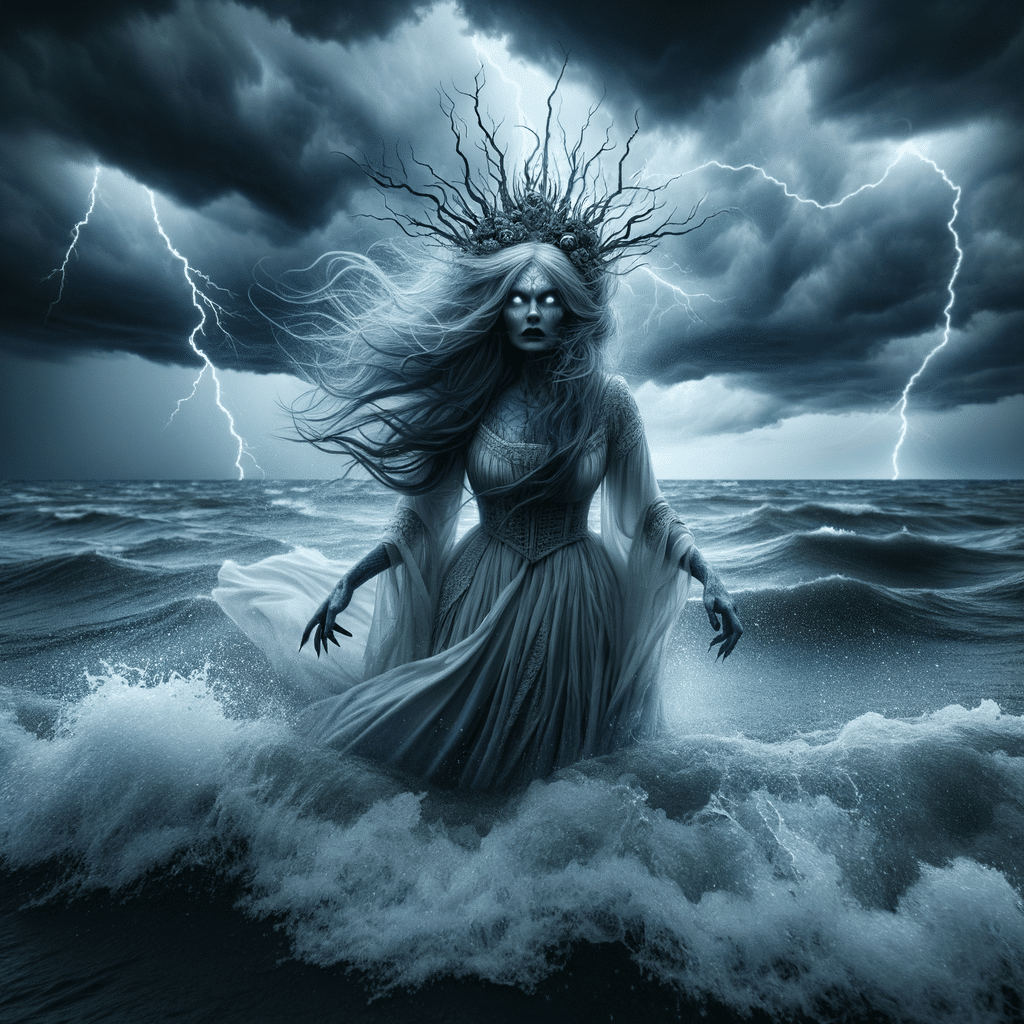
Jenny Greenteeth’s physical description presents a terrible picture of a creature meant to terrify anyone who walks too near the edge of the water. Usually showing as a green-skinned hag with long, tangled hair like waterweeds and sharp, pointed teeth the color of algae, she is Her eyes radiate an eerie green light that occasionally can be seen reflecting off the water at twilight; her fingers are supposed to be extraordinarily long and thin, ideal for gripping ankles from beneath the water’s surface (Young, 2019).
Jenny Greenteeth is blamed for especially aggressive and predatory behavior. She is reported to favor attacking the elderly and young, rising from under the sea to seize their ankles and drag them to death. While some say she used hypnotic skills to entice people to the water’s edge, others say she climbed upon the banks to gather victims who ventured too near. The creature is mainly active around twilight and dawn, when the light is low and the mist emerges from the surface of the sea (Vickery, 1983).
Jenny Greenteeth’s tooth and skin’s green hue have several levels of symbolic significance, reflecting both natural events and more profound psychological anxieties. Her lush appearance reflects the algae, duckweed, and other water plants that may blanket still pools, thus relating to the watery habitat she lives in. This natural association blurs the boundary between the predator and her hunting habitat, making her an embodiment of the deadly waters themselves.
Drawing on mankind’s natural disgust at meals and bodies that have turned green with rot, the green coloring also symbolizes death, disease, and decay. This link with putrefaction is especially strong since drowned victims were frequently discovered with a greenish tinge to their skin, therefore establishing a terrible link between the appearance of the monster and the destiny of her victims. In this context, the color green reflects medieval ideas about the transitory condition between the natural and supernatural worlds, therefore symbolizing the change from life to death.
Her emerald teeth specifically point to corruption and contamination, therefore reflecting the contaminated waters and the deadly germs that proliferate in still pools. Unusual teeth are sometimes used in mythology to represent a creature’s otherworldly nature and predatory attitude, but the green hue adds still another layer of dirt and sickness. This element might also allude to the green staining that results from neglected teeth, therefore tying the creature to themes of degradation and neglect that would have been particularly relevant in times when green-tinged teeth were a regular sight and dental care was lacking.
Green skin and teeth also have great social connotations since Jenny Greenteeth is an outsider and a challenge to the accepted order. Supernatural entities have often been shown with odd coloration to highlight their isolation from human culture, and the green skin of this water hag strongly marks her in the “other.” Her otherness makes her a useful tool for social worries about moral and physical limits as well as the fallout from violating them (Gilchrist, 1919).

Similar Creatures
Though they live far apart, water-dwelling female spirits that hunt people seem to be somewhat similar to Jenny Greenteeth across many civilizations. A more appealing but equally lethal form of the water spirit, the Slavic Rusalka is a lovely young woman who drowned and now draws men to their deaths with her enchanted voice and looks. Rusalkas, like Jenny Greenteeth, are infamous for pulling their captives underwater; however, they use seduction instead of force (White, 2022).
Though not clearly female, the Japanese Kappa offers a fascinating connection as another green-skinned aquatic creature dragging humans under. These yokai that enjoy cucumbers are well-known for drowning adults and children alike; they also show a similar inclination for hunting close to the shore. The Kappa parallels Jenny Greenteeth’s connection with cautionary stories as a warning to youngsters against the risks of unsupervised playing near water.
Some folklorists regard the Grindylow, another water-dwelling creature from Yorkshire that remarkably resembles Jenny Greenteeth, as variants of the same entity based on Celtic mythology. Grindylows drag young youngsters into deep water using their long fingers, just as Jenny does. Usually appearing as a horse, the Scottish Kelpie exhibits how the fear of water danger shows itself across British folklore by sharing the predatory aspect and drowning technique of these other water ghosts.
Though not always evil, Native American customs include animals like the Deer Woman and Water Babies, who share traits with Jenny Greenteeth in their connection with water and their possible harm to people. Particularly the Water Babies of Paiute mythology are renowned for drawing people into the sea with their screams, therefore mirroring a universal human fear about the risks of water to young infants.
Greek mythology offers still another viewpoint using animals like the Sirens and Naiads. Though Sirens are more usually connected with the sea than with inland waters, their lethal appeal to seafarers reflects Jenny Greenteeth’s predatory character. Though sometimes shown as attractive water nymphs, naiads have a darker side in certain stories where they drown people who insult them or come too near their waters, therefore illustrating how even apparently friendly water spirits can hold fatal intentions (Montiglio, 2018).
Germanic tradition adds the Nixie or Neck, water spirits renowned for drowning the naive like Jenny Greenteeth. Often appearing as beautiful women or men enticing victims near the river, these beings hide their actual, terrible nature. Though Jenny Greenteeth’s always terrible appearance contrasts with the link between beauty and danger in these stories, both have the same warning function.
From Southeast Asian mythology comes the Pontianak, who shares Jenny Greenteeth’s predatory character and terrifying appearance even though she is not exclusively a water spirit. Often connected with water, these female vampiric entities target certain victims, especially youngsters, therefore illustrating how different civilizations create similar supernatural threats to handle related social worries.
The amazing parallels between these water creatures from many civilizations point to a shared human experience with the hazards of water and drowning. Whether lovely or ugly, employing force or magic, these beings all personify the lethal power of water and the human need to warn against its threats by means of narrative. This common presence of water spirits also symbolizes humanity’s complex interaction with water as both a life-giving need and a possibly fatal hazard.
Impact
Jenny Greenteeth’s folkloric history has changed dramatically over time to suit shifting societal values and concerns. She was frequently connected to the pagan water spirits in past iterations of the story and might have been related to sacrifice customs. Her tale grew more moralistic throughout the Victorian era, acting as a caution against the risks of unchecked play close to water. Modern readings of her usually relate her to environmental issues; some see her as a guardian spirit punishing those who contaminate rivers.
Jenny Greenteeth’s impact reaches into popular culture, where she has discovered fresh life in several media. Often recreated for modern readers, she has appeared in much children’s literature, horror novels, and video games, always retaining her basic traits as a frightening water spirit. Variations of her mythology have appeared on television shows and movies, and she has grown well-known in contemporary paranormal inquiry projects. From paintings to poetry, her narrative has also motivated a lot of artistic creations, proving the ongoing attraction of this terrifying mythical character.
Conclusion
Jenny Greenteeth’s legacy endures now as a potent reminder of humanity’s complicated relationship with water and the unknown. Her story enthralls and terrifies people, whether they see it as a warning story, a remnant of old beliefs, or a metaphor for the hazards of the natural world. This timeless water hag is evidence of the ability of folklore to adapt and persist over millennia, yet relevant even in our rationalistic, modern society.
References
Gilchrist, A. G. (1919). Note on the” Lady Drest in Green” and Other Fragments of Tragic Ballads and Folk-Tales Preserved amongst Children. Journal of the Folk-Song Society, 80-90.
Montiglio, S. (2018). The song of the Sirens between sound and sense. In Sound and the ancient senses (pp. 171-183). Routledge.
Vickery, R. (1983). Lemna Minor and Jenny Greenteeth. Folklore, 94(2), 247-250.
White, N. S. (2022). Death and the Maiden: The Rusalka Cultural Artifact Re-visioned through Carnival Ritual (Doctoral dissertation, University of Colorado at Boulder).
Young, S. (2019). In Search of Jenny Greenteeth. Gramarye, 16(1), 24-38.

Leave a Reply