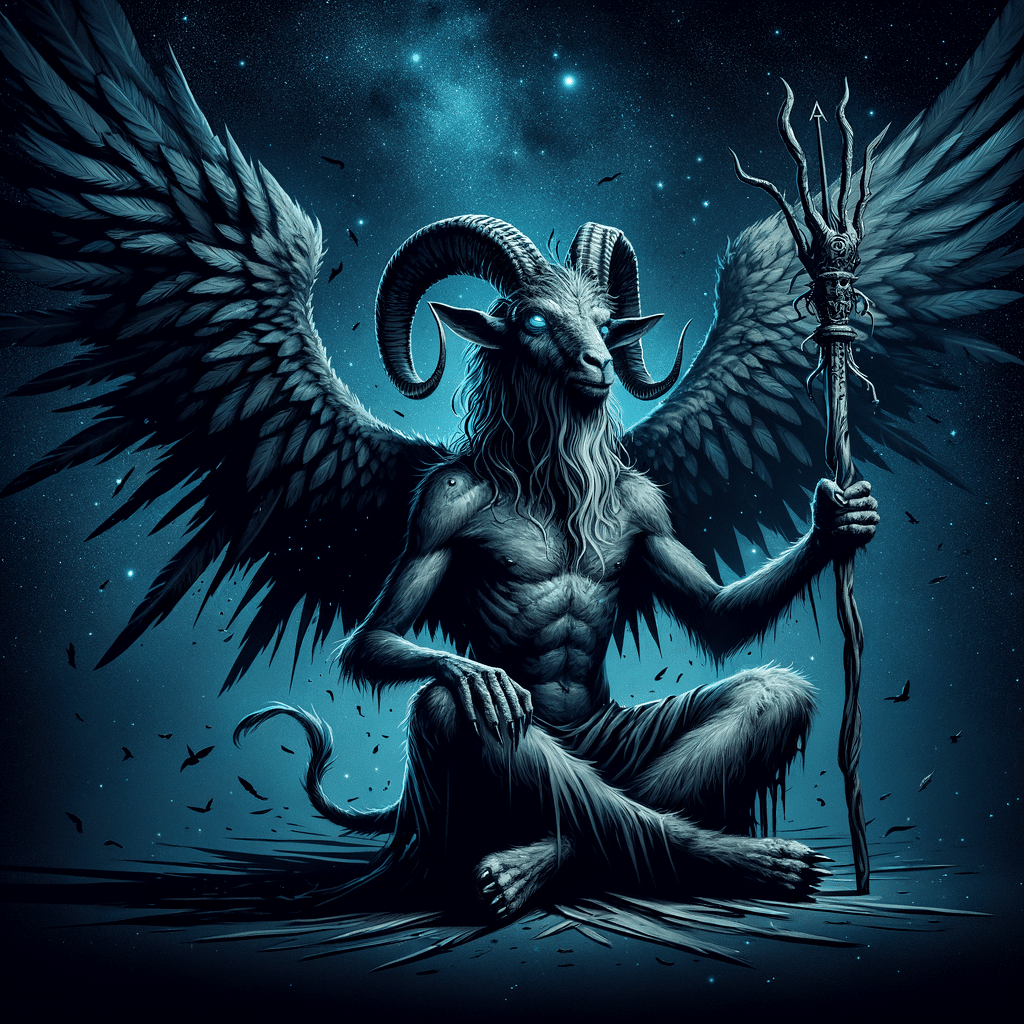
Among the most misunderstood and divisive symbols in Western esoteric tradition is Baphomet. This mysterious entity rose to prominence during the 14th-century persecution of the Knights Templar and has experienced drastic changes in its portrayal and importance over history. From accusations of heresy in the Middle Ages to more modern esoteric interpretations, Baphomet has changed from a symbol of satanic worship to a symbol of cosmic balance and spiritual insight. In this essay, the physical representations, actions attributed to Baphomet, historical connections with the Knights Templar, and changes in the Baphomet myth over thousands of years of cultural transmission and reinterpretation are all looked into.

Overview
Eliphas Lévi’s 1856 picture substantially shapes the modern interpretation of Baphomet by showing a winged, goat-headed hermaphroditic figure with a torch between its horns. Sitting cross-legged, this towering figure shows the Latin phrases “SOLVE” and “COAGULA” engraved over its forearms, hence referring to the alchemical processes of dissolution and coagulation. Emphasizing its dual-gendered aspect, the creature has female breasts and a caduceus in place of a phallus. Its hands signify Hermeticism: one pointing up toward a white moon, the other down toward a dark moon, therefore reflecting the esoteric adage “as above, so below.” The depiction embodies the unification of opposing forces by combining human, animal, and heavenly aspects into a composite being that transcends simple classification (Strube, 2016).
Reflecting the changing character of this symbol, the actions and qualities traditionally given to Baphomet fluctuate greatly among many stories and traditions. Early Templar charges included Baphomet as an idol revered in secret rites, sometimes depicted as a severed head, a cat, or a three-faced god before which knights would prostrate themselves and participate in blasphemy. Later occult readings turned these actions into symbolic ceremonies expressing cosmic knowledge instead of genuine devil worship. Lévi and other occultists of the nineteenth century saw Baphomet as a symbolic depiction of cosmic harmony and esoteric knowledge rather than a creature to be worshipped; they considered it as representing equilibrium, wisdom, and the astral light. The things that people did that were linked to Baphomet changed over time, from supposedly evil rituals to philosophical reflections on the natural balance of energies (Ezzy, 2015).
Early in the 14th century, King Philip IV of France’s drive to eradicate the strong military-religious order set Baphomet in relation to the Knights Templar. Some Templar knights admitted under torture to worshipping an idol known as Baphomet; however, these confessions were almost definitely taken under duress rather than reflecting true Templar practices. The etymology of the name itself is still unresolved; ideas range from corruptions of Mahomet (Muhammad), derived from Greek words meaning “absorption of knowledge,” to links to Gnostic traditions. There isn’t much historical evidence that the Templars ever worshiped such an entity, but the connection stuck in people’s minds. The mysterious Baphomet became linked to the equally mysterious workings of the Templar order, whose quick rise to wealth and power had made people suspicious and envious (Jonas, 2011).

Baphomet Over Time
During the 15th through the 17th century witch-hunt frenzy, Baphomet’s development as a demonic figure acquired great impetus. Demonologists like Johann Weyer and the writers of the Malleus Maleficarum sometimes defined the creature as a demon of wisdom who lured humanity through intellectual pride and included Baphomet in their hierarchy of hell. During this time, the demon started to be connected with the Sabbath of the Witches, supposedly supervising nighttime meetings when witches would receive wicked sacraments and perform inverted rites mocking Christian traditions. Said to show up in several shapes during these meetings, the demonic Baphomet was sometimes a goat, sometimes a man with animal characteristics, and occasionally an amorphous shadow able to seize several individuals simultaneously.
As rationalism questioned established religious doctrine, the demonic Baphomet changed once more in grimoires and magical writings by the 18th and 19th centuries. Occult authors portrayed the entity as a strong demon bound by complex magical formulas and compelled to expose secret knowledge to adequately qualified magicians. These books covered the exact invocation techniques, protective circles, and binding spells required to call forth and keep the demon under control securely. Successful mastery of Baphomet offered benefits in knowledge of past and future events, the whereabouts of hidden treasures, and the capacity to shape the minds of others. These same books cautioned, nevertheless, that the smallest mistake in the summoning process could cause the demon to claim the magician’s soul, therefore stressing the substantial risk involved in seeking such illegal contact (Karlson-Weimann, 2013).
Lévi’s picture inspired subsequent occultists like Aleister Crowley, who saw Baphomet as a symbol of divine androgyny and magical accomplishment, and it became the classic depiction. While sensationalist media and religious critics claimed Baphomet as proof of diabolical activity, it had become a regular feature in Western esoteric traditions by the 20th century. Though with philosophical connotations far distinct from medieval accusations or 19th-century occultism, the sign changed once more in the late 20th century when the Church of Satan and later The Satan Temple embraced variants of the Baphomet image (Snuffin, 2025).
Horror books and movies, where the entity usually appears as a strong enemy or evil puppet master arranging events from the shadows, have greatly shaped the modern view of Baphomet as a demon. Modern fictional narratives usually show Baphomet as an old demon whose power spans secret societies and corrupted people over ages. These stories usually emphasize the demon’s slow and calculated nature—a hunter ready to capture especially prized souls—and span decades or even centuries. The modern demonic Baphomet often symbolizes intellectual evil, corrupting through knowledge rather than simple violence.
Conclusion
Baphomet is a wonderful case study in how symbols change over time, collecting layers of meaning that may differ greatly from their sources. Originally a vague charge against the Knights Templar, what started out as a nebulous allegation became one of the most identifiable and offensive emblems in Western esoteric traditions. Baphomet changed throughout centuries of reinterpretation from an alleged idol of heretical devotion to a sophisticated emblem of cosmic balance and metaphysical understanding. This metamorphosis shows how religious and cultural symbols may transcend their original settings and acquire fresh meaning as they move across several historical periods and philosophical frameworks. Whether considered a philosophical idea, a religious emblem, or a cultural icon, Baphomet still pushes viewers to see beyond simple dualities and contemplate the intricate interaction of conflicting forces defining our reality today.
References
Ezzy, D. (2015). Reassembling religious symbols: The pagan god Baphomet. Religion, 45(1), 24-41.
Jonas, M. (2011). The Templar Spirit: The Esoteric Inspiration, Rituals and Beliefs of the Knights Templar. Temple Lodge Publishing.
Karlson-Weimann, C. (2013). The Baphomet: A discourse analysis of the symbol in three contexts.
Snuffin, M. O. (2025). Baphomet: History, Ritual & Magic of the World’s Most Famous Occult Icon. Llewellyn Worldwide.
Strube, J. (2016). The “Baphomet” of Eliphas Lévi: Its Meaning and Historical Context. Correspondences, 4.




Leave a Reply