
Though many tales exist, few are as lasting as the story of the Moon-Eyed People in the mist-shrouded valleys and ancient woods of Appalachia. These pale, mysterious creatures occupy a strange position in the folklore of the southeastern United States, particularly in Cherokee beliefs and the oral histories of early European immigrants. The Moon-Eyed People, like many cultural legends that endure for decades, are a rich tapestry of historical interactions, cultural transfers, and the human inclination to interpret the strange using supernatural lenses. Their narrative not only highlights the rich mythical terrain of Appalachia but also provides possible new perspectives on pre-Columbian population migrations and cultural connections across North America.

Overview
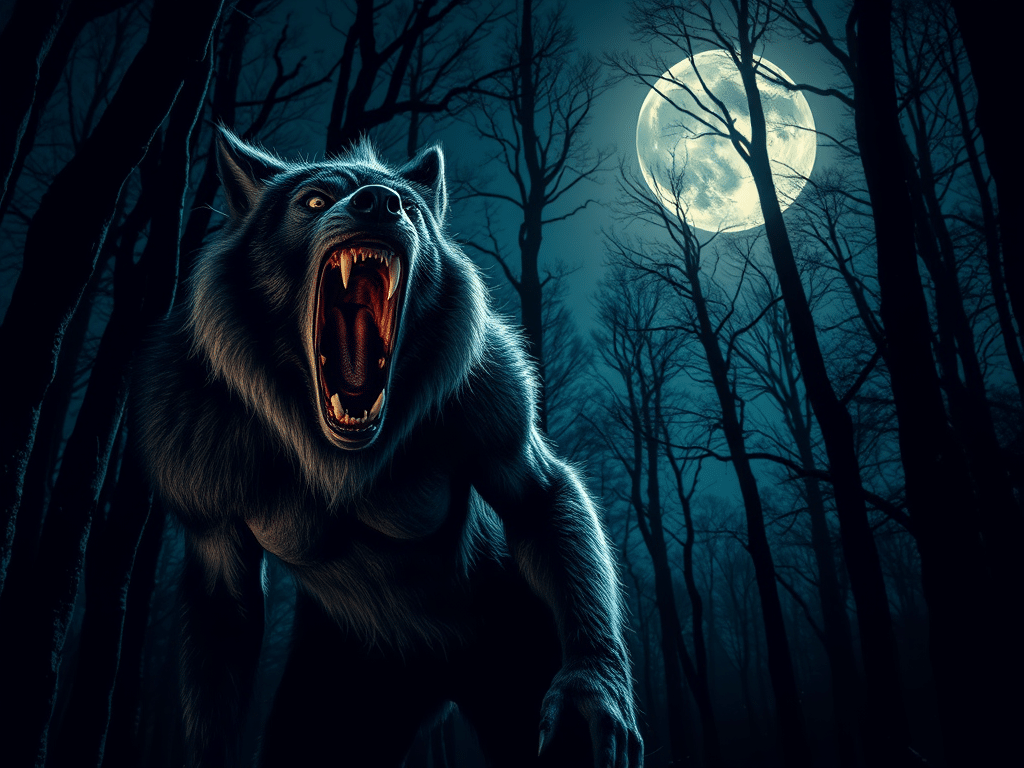
Traditional accounts say the Moon-Eyed People were physically different from both native people and European settlers. Their exceptionally pale, nearly white complexion, which was claimed to have an otherworldly glow in the moonlight, defined them. Their most notable quality, though, was their eyes—unusually big and said to be so sensitive to light that they could only come out of their homes after sunset, therefore their descriptive name. Some stories depict them as of low height, with thin bodies and fragile characteristics that enhance their otherworldly look. Often depicted as white or very light, their hair accentuated their ghostly look and supported their link with the moon and night (Stevenson, 2019).
The behavioral traits ascribed to the Moon-Eyed People underlined even more their nocturnal character and distance from conventional human culture. During daylight hours, they were thought to retreat into caves, rock shelters, or underground homes, coming out only when the sun had set and the moon brightened the scene. Their claimed inability to withstand sunlight shaped their daily routines and restricted their relationships with other people. Some versions of the story claim they were expert stonemasons who built enigmatic buildings overnight. Though some stories portray them as thieves who would steal from human villages under cover of night, leaving odd marks or symbols behind, they were usually characterized as benign or secluded instead of violent.
Cherokee oral traditions often depict the Moon-Eyed People as an ancient group that lived in the area before the Cherokee arrived, providing some of the most thorough descriptions of these enigmatic entities. These stories claim that the Cherokee pushed the Moon-Eyed People from their original grounds in what is now western North Carolina, forcing them to move westward, possibly into the Tennessee highlands or further (Zeigler & Grosseup, 2024). According to some Cherokee elders, the relocation occurred during a full moon, a time when the light-sensitive eyes of these pale people were most vulnerable. Though it is always set in the far past, beyond the direct knowledge of even the oldest storytellers, the timeframe of this alleged fight changes in different tellings, implying actions that might have happened centuries before European contact (The Chattanooga News, 1923, September 1).
Local stories about the Moon-Eyed People became particularly focused around particular archaeological sites and topographical elements in the southern Appalachians. Often ascribed to these nocturnal builders, the strange stone constructions scattered across the area include the large Judaculla Rock in North Carolina with its cryptic petroglyphs. Particularly around Track Rock Gap, settlers in northern Georgia documented tales of odd pale people linked to ancient stone walls and structures in the highlands. Some stories say the old stone wall at Fort Mountain State Park in Georgia was built as a defensive construction during the Moon-Eyed People’s struggle with the Cherokee. These physical sites anchored the story in particular territory, therefore giving it a palpable dimension that contributed to ensuring its survival across generations (Reimensnyder, 1990).
The story of the Moon-Eyed People changed via cultural interchange and reinterpretation as European settlers built settlements across Appalachia in the 18th and 19th centuries. Some white settlers occasionally mixed the Moon-Eyed People with European ideas of fairies, elves, or other liminal creatures, absorbing aspects of the native tales into their own magical belief systems. In some instances, the pale look of these mythical people sparked theories of lost white civilizations or early European interactions before Columbus. By the late 19th century, the mythology had begun to appear in recorded records, where it was often romanticized or adjusted to match prevalent narratives about America’s pre-history. Freezing some versions while letting others fade from shared memory, this move from oral tradition to written record substantially altered how the mythology was passed on and understood.

Analysis and Impact
Adapting to changing cultural settings and scholarly viewpoints, the Moon-Eyed People myth evolved into the 20th and 21st centuries. The story became confused with pseudoscientific ideas about ancient civilizations and diffusionism during the early 20th century, when amateur archaeology and antiquarianism were in vogue. Some people linked the Moon-Eyed People to alleged Welsh explorers under Prince Madoc, who was said to have arrived in America in the 12th century, laying the foundation for narratives of light-skinned, blue-eyed native tribes (Ocker, 2022). Despite their persistence in folklore and popular culture, orthodox archaeology became more methodologically rigorous later in the century, leading to a majority rejection of these ideas. Demonstrating its ongoing cultural relevance even as its literal reading has faded, the legend in more recent decades has found new forms in regional literature, tourism, and neopagan spiritual activities.
Scholars have proposed several hypotheses, ranging from anthropological to genetic, to explain the historical origins of the Moon-Eyed People mythology. Some academics suggest that the tales may preserve distant memories of encounters with albino people, whose genetic condition would have made them sensitive to sunlight and visually different. Some say the stories could mirror genuine cultural interaction between Cherokee forebears and an earlier, physically different group that lived in the area. Archaeological evidence has verified that several cultural groups lived successively in the southern Appalachians, possibly providing a historical basis for stories of displacement. The unique stone constructions linked to the story could reflect the labor of pre-Cherokee civilizations like the Mississippian or older peoples whose building techniques and cultural settings were already becoming enigmatic by the time European records started.
One especially fascinating idea links the Moon-Eyed People to possible genetic evidence of pre-Columbian contact between Native Americans and tribes from Europe or the Middle East. Though the chronology and conditions are still hotly contested, several genetic studies have found indicators in particular indigenous communities that imply ancient hybridization with non-American people. Supporters claim that the physical descriptions in the Moon-Eyed People legends—pale complexion, light-sensitive eyes—might reflect real experiences with genetically different strangers who arrived in North America long before Columbus. Most traditional archaeologists and anthropologists don’t believe these readings because there isn’t enough archaeological evidence to show that people were constantly communicating across the Atlantic Ocean before Columbus. Also, oral traditions often include metaphorical or symbolic parts that aren’t meant to be taken literally.
The Moon-Eyed People have certainly been reinterpreted as possible proof of alien encounters in pre-Columbian America in the framework of modern ufology and ancient astronaut hypotheses. Supporters of these hypotheses highlight the aliens’ odd physical traits—especially their large, light-sensitive eyes—as congruent with common representations of extraterrestrial “gray” beings in contemporary alien abduction stories. Speculation connecting their sophisticated stone-working abilities, nocturnal lifestyles, and seemingly abrupt evacuation from the area to an extraterrestrial source or involvement has emerged. While some theorists believe the stone structures ascribed to the Moon-Eyed People may have had astronomical or navigational functions connected to contact with otherworldly beings, others argue these beings may be a hybrid population produced by genetic experimentation between aliens and native humans. Although lacking scientific proof, these interpretations demonstrate how ancient traditions are continually reimagined to align with modern societal fascinations about extraterrestrial life.
The accounts of the Moon-Eyed People show remarkable resemblance to European fairy customs, implying intriguing possible links between indigenous American folklore and Old World supernatural beliefs. Like the aos sí or sidhe of Celtic tradition, the Moon-Eyed People were linked to ancient buildings, lived partly underground, had supernatural powers, and had a mixed relationship with humanity. While their pale skin and ethereal look fit descriptions of the “fair folk” in many European stories, their sensitivity to sunlight reflects European views about faeries being beings of twilight and gloom. Some folklorists believe the Moon-Eyed People might reflect a common human inclination to occupy the fringes of inhabited areas with liminal people who represent cultural concerns and forbidden knowledge rather than a true historical population. The remarkable congruence between Cherokee stories and European fairy tales might reflect either cultural dissemination following encounters or the independent creation of comparable mythical archetypes addressing universal human experiences of the unknown, the night, and the wilderness beyond human control.
The Moon-Eyed People’s ongoing appeal reflects the ability of cultural myths to answer basic human questions about identity, origins, and the unknown. Like many indigenous legends, these tales had practical uses beyond simple entertainment; they helped clarify strange natural characteristics, created territorial claims via historical narratives, and preserved possible historical information across generations without written records. For modern viewers, the story still conjures the allure and mystery of Appalachia’s hidden valleys and foggy mountains. Ranging from cultural memory to creative mythology to something in between, the Moon-Eyed People are still eerie figures on the fringes of American folklore, reminding us of how much of our continent’s deep history remains shrouded in uncertainty and how strongly narratives influence our knowledge of the past.
Conclusion
Ultimately, the story of the Moon-Eyed People is a captivating convergence of modern speculation on America’s pre-Columbian past, European settlement narratives, and indigenous oral tradition. These pale beings have carved out a lasting presence in the cultural imagination of the area from their unique physical look and nocturnal habits to their connection with old stone buildings scattered throughout the southern Appalachians. Despite the lack of clear archaeological evidence identifying a historical people fitting their description, the legend’s resilience across cultural boundaries and generations suggests it may contain hidden historical truths beneath layers of metaphor and tradition. Like with many ancient legends, maybe the real worth of the Moon-Eyed People lies in knowing how such narratives mirror the intricate cultural interactions, population migrations, and human ability for awe that have formed America’s multicultural legacy since time immemorial rather than in deciding their actual existence.
References
The Chattanooga News. (1923, September 1). A search for the moon-eyed men of Fort mountain (p. 2-C).
Ocker, J. W. (2022). The United States of Cryptids: A Tour of American Myths and Monsters. Quirk Books.
Reimensnyder, B. L. (1990). Cherokee sacred sites in the Appalachians. Cultural heritage conservation in the American South. Benita J. Howell, ed. Athens: University of Georgia Press.
Stevenson, P. (2019). The Moon-Eyed People: Folk Tales from Welsh America. The History Press.
Zeigler, W. G., & Grosseup, B. S. (2024). The Heart of the Alleghanies; or Western North Carolina. BoD–Books on Demand.


Leave a Reply