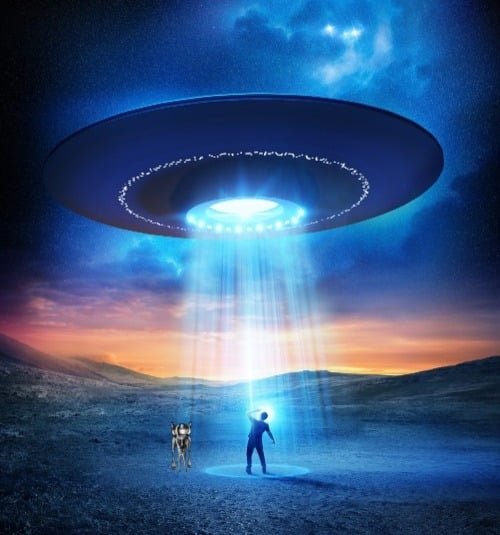
The calm town of Hopkinsville, Kentucky, became an improbable hub of alien legend on the night of August 21, 1955, when the Sutton family said their home was overrun by odd, tiny entities from the sky. The Kelly-Hopkinsville encounter is one of the most peculiar and enduring UFO-related events in American history. The Hopkinsville goblins, as they came to be known, represent a fascinating intersection of extraterrestrial encounter stories, psychological oddities, and evolving mythology that continues to captivate the imagination of both UFO believers and skeptics. What makes this case particularly compelling is not simply the strange nature of the accusations but how deeply woven it has become in the tapestry of American paranormal culture.

Overview
The Sutton family’s rural Kentucky farmhouse became the scene of one of America’s most strange claimed alien sightings on a bright summer evening on August 21, 1955. Family friend Billy Ray Taylor went outside to get water from the well and saw a dazzling, colorful light speeding across the sky, which he thought was a flying saucer that had landed in a nearby gully. The Sutton family first reacted skeptically to his enthusiastic account, but their doubt turned to horror as odd beings began approaching the home. The alarmed family members and guests—eleven people in total—claimed to witness multiple small, silver-skinned beings with large heads, pointed ears, glowing yellow eyes, long arms, and clawed hands appearing around their property, peering through windows, and seemingly attempting to enter the home (Dennett, 2008).
The family firing shotguns and rifles at the creatures whenever they approached set off a terrible siege that supposedly lasted for hours. Their story said that when struck, the entities would float away or flip backward, only to come back unhurt moments after. Barricading themselves inside, the horrified family took turns looking for the animals while some others attempted to sleep. The family at last made a frantic dash to their cars near midnight and hurried to the Hopkinsville police station to file the event. Though police observed the family’s real anxiety and the many bullet holes in the screens and walls of the house, no animals were found when officials came back with them to look into things. Reportedly, the entities came back briefly after the cops left but vanished before daylight, never to be seen again, leaving no tangible record of their existence save for trampled grass and destroyed property.
Across several witnesses’ stories, the physical description of the Hopkinsville goblins was incredibly consistent and thorough. The Sutton family and their visitor, Billy Ray Taylor, claimed the beings were around 3 to 4 feet (1.22 m) tall with a strange, unequal body. With long, pointed ears resembling a lynx or bat, they had large heads said to be “round and outsized” in relation to their thin bodies. Perhaps most unique were their eyes, which witnesses characterized as big, yellow, and shining with almost hypnotic intensity. The aliens’ skin showed a metallic gray or silver hue with a texture ranging from scratchy like sandpaper to reflective like aluminum. While their legs were short and seemed to float or glide rather than walk regularly, their arms were surprisingly lengthy, almost reaching the ground, with clawed or talon-like hands (Estep, 2025).
The behavior of these beings during the claimed encounter was as unusual as their appearance. The Sutton family claimed the entities looked through windows and tried to get into their farmhouse under a careful but persistent approach despite being shot at many times with guns. Oddly, the animals would flip backward or float away, apparently unscathed, before coming back to carry on their siege when struck by gunfire. They showed no clear weaponry or technology and made no audible or communication efforts. Witnesses said the entities would come, run away when challenged, and then come back again in what looked like an unending loop of inquiry or curiosity. Barring themselves inside their house, the family observed this strange conduct for hours until the creatures supposedly left before daybreak. The family’s account of the aliens’ motions featured a strange bobbing or swaying gait and the apparent ability to float or levitate instead of walking normally (Fee & Webb, 2016).

Theories
Ranging from alien visitation to more ordinary explanations, several theories have developed over the years to clarify the Hopkinsville event. The extraterrestrial theory suggests that the entities were scouts or explorers from another planet, connected to a meteor that Billy Ray Taylor claimed to have seen just before the beings appeared. Skeptics have proposed many other theories, including the idea that the family mistook great horned owls for aliens; this view is supported by the fact that the event happened at night and the owl’s unique shape with horns that might resemble pointed ears. Despite the absence of recorded circuses in the area, some have conjectured that the family might have encountered escaped circus monkeys. Psychological theories range from mass hysteria to the impact of drinking (the family claimed no intoxication) to the power of suggestion mixed with the fear of the unknown in the remote rural environment (Schmaltz & Lilienfeld, 2014).
The social and historical background of the Hopkinsville event offers significant understanding of its evolution as a contemporary myth. The occurrence took place in 1955, at the height of Cold War tensions, only eight years after the renowned Roswell event that propelled UFO activity into the American awareness. Reflecting societal concerns about foreign dangers and technological progress, the 1950s saw a boom of science fiction movies starring alien invaders. Rural Kentucky at this time was rather isolated, with little exposure to metropolitan influences and media, which may have made the Sutton family more prone to interpreting strange events through a supernatural lens. The family’s social condition as rural farmers and their stated religious background may also have affected their reading of events and the response of the media and authorities to their allegations, who first regarded their narrative with considerable doubt.
The evolution of the Hopkinsville goblin myth throughout time shows intriguing trends in how paranormal stories grow in American society. In the first few days following the event, the tale got minimal local media attention, mostly regarded as a curiosity or possible fake. But investigators looked back on the case as UFO research became more structured in the 1960s and 1970s, speaking with surviving witnesses and recording the event more methodically. Often mentioned as one of the most plausible close encounter instances, the Hopkinsville event had become a mainstay in UFO literature by the 1980s and 1990s, with many witnesses and their consistent narratives throughout time. With the unique look of the “goblins” becoming legendary in UFO culture, the internet era greatly increased the reach of the narrative. With allusions in movies, TV shows, and video games often changing the look or conduct of the beings to fit modern alien stories, modern pop culture has reinforced the Hopkinsville entities in the popular imagination (Coffey, 2024).
The psychological effect on the witnesses and the community exposes yet another aspect of this ageless story. According to reports, the Sutton family never sought attention or monetary benefit from their experience; several family members were hesitant to discuss the incident for years following it because of mockery and unwelcome attention. Though opinions changed with time as the narrative acquired credence in UFO research circles, local people first regarded the family with doubt and even ridicule. Curiously, the municipality of Hopkinsville came to see its link to the event as a cultural benefit and created a yearly Little Green Men Festival honoring the encounter as part of local legacy. This change from shame to celebration shows how paranormal events can go from stigmatized personal experiences to treasured cultural stories, enhancing a community’s identity and tourist economy.
Conclusion
The Hopkinsville goblin case illustrates the intricate interaction between unexplained events and the cultural stories we create around them. Whether the Sutton family saw alien visitors, misidentified natural events, or went through a collective psychic crisis, their tale has crossed its beginnings to become a significant chapter in American mythology. This case has survived when many such claims have gone into obscurity thanks to the thorough descriptions of the animals, the dramatic siege story, and the trustworthiness of several witnesses. The tale’s evolution from a local oddity to a globally known UFO case study shows how modern myths evolve and adapt to different cultural settings while preserving their fundamental narrative appeal. The strange goblins of Hopkinsville serve as a reminder to us that the line between the known and the unknown is still a rich field for human creativity and narrative as we keep looking to the stars and questioning our position in the cosmos.
References
Coffey, C. (2024). Who Wants to Believe in UFOs?. The New Atlantis, (77), 36-54.
Dennett, P. E. (2008). UFOs and Aliens. Infobase Publishing.
Estep, R. (2025). Dark Spirits: Monsters, Demons and Devils. Visible Ink Press.
Fee, C. R., & Webb, J. B. (Eds.). (2016). American Myths, Legends, and Tall Tales: An Encyclopedia of American Folklore [3 volumes]. Bloomsbury Publishing USA.
Schmaltz, R., & Lilienfeld, S. O. (2014). Hauntings, homeopathy, and the Hopkinsville Goblins: using pseudoscience to teach scientific thinking. Frontiers in Psychology, 5, 336.


Leave a Reply