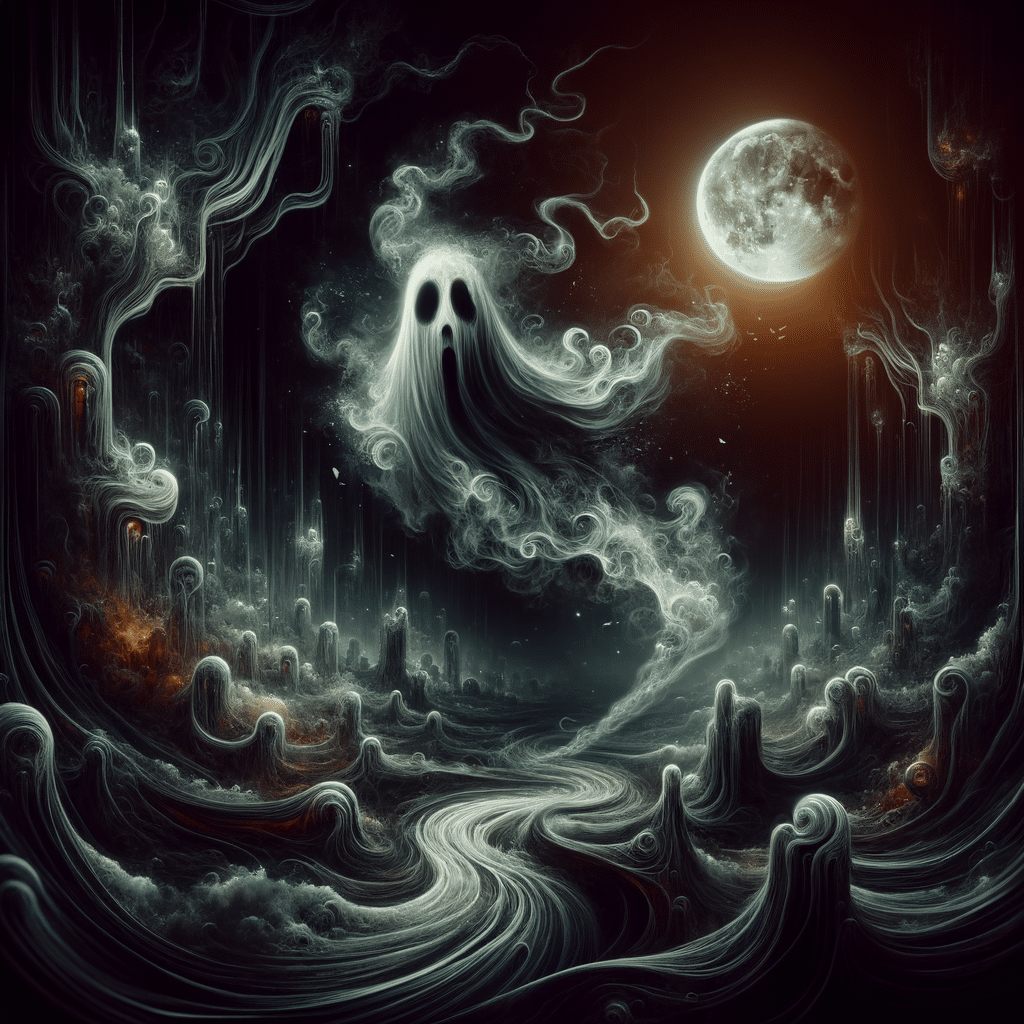
The idea that the dead can communicate with the living has fascinated people throughout history. Across cultures all around, this interest has shown itself in innumerable tales, beliefs, and personal experiences. Of the many ways spirits are thought to reach us, dreams offer an especially intriguing medium—a strange domain where our conscious limits vanish and our minds roam freely across terrain unconstrained by physical constraints. Examining cultural viewpoints, psychological factors, and the historical development of these beliefs, this paper investigates the age-old issue of whether ghosts interact via dreams.

Overview
Though some aspects are surprisingly constant, the idea of ghosts has changed throughout cultures. Often described as ethereal beings that remain in our world after death, ghosts have traditionally been considered the disembodied spirits or souls of the departed. Usually, these ghostly figures are depicted as having unfinished business, unresolved feelings, or significant messages for those they leave behind. Across time, ghost sightings have been recounted with strikingly similar characteristics: transparent appearances, unexpected temperature decreases, mysterious noises, and, maybe most interesting, visitations during liminal states of consciousness like dreams.
Dreams are among the most universal but mysterious experiences of mankind. Every night as we sleep, our minds create vivid stories filled with recognizable faces, unusual symbols, and emotional situations that sometimes challenge rationality. Dreams occupy a unique space in human consciousness, blurring the boundaries between our waking reality and other realms. Many societies have interpreted this liminal character as possible doorways to other worlds—including the country of the dead or the domain of spirits—thereby making dreams natural contenders for supernatural communication (Owen, 2020).
Documented in many different ways throughout all human civilizations, the paranormal—experiences that seem to transcend scientific explanation—has been around for ages. From ancient cave paintings showing spirit travels to contemporary ghost-hunting TV series, people have always tried to comprehend and record events pushing our perception of reality. Among the most often reported paranormal events are dreams that include dead loved ones, many of whom say they had experiences that seem significantly different from typical dreams. Often, these dreams contain knowledge the dreamer could not have known by normal means, deep emotional ties, and exceptionally vivid sensory elements (Jaffé, 2020).
Folklore all around reflects the idea that ghosts could communicate via dreams. While conventional Japanese society acknowledged a certain kind of ghost known as muyōkkō that was claimed to appear only in dreams, ancient Egyptians thought the dead might visit the living through dreams to provide direction or alerts. Many Native American customs see dreams as holy areas where ancestors still engage in tribal life; hence, they provide knowledge and protection to their heirs. Many stories in medieval European literature describe dream visits from the dead, often revealing the location of hidden items or providing details about their deaths that later proved to be accurate.

Impact
Historical records reveal an intriguing shift in our understanding of these dream transmissions. Dream meetings with the dead were usually believed to be actual visitations in ancient times. The Greeks and Romans set up official dream incubation techniques whereby individuals would sleep in temples hoping to get messages from celestial beings or dead loved ones. Dream contacts were more and more filtered by religious frameworks—either as blessed visitations from the faithful deceased or as hazardous deceptions conveyed by demons—as Christianity swept over Europe. More cynical views came with the Enlightenment period, which reinterpreted ghost dreams as reflections of psychological processes rather than supernatural occurrences (O’Callaghan, 2020).
Modern psychological studies provide several non-paranormal reasons for dreams of the dead. Dreams with dead loved ones, according to grief researchers, typically happen during mourning and may be the mind’s method of processing loss and preserving emotional connections. The continuity idea holds that dreams include our most important waking worries; therefore, it is only natural for thoughts of lost loved ones to show during slumber. The brain’s pattern-recognition inclinations also help to explain some claims of verified information in ghost dreams, since dream content may seem to forecast or expose knowledge (Tuzin, 1975).
Proponents of paranormal readings argue that psychological explanations by themselves cannot illustrate the whole spectrum of reported events. They cite instances where dreamers acquire particular knowledge they could not have known via conventional channels, such as the location of concealed items or information about far-off events later validated to be correct. Certain parapsychology studies suggest that our conscious filters loosen during sleep, therefore allowing us to be more open to delicate kinds of extrasensory awareness or direct spiritual contact. From this perspective, dreams could constitute a natural link between physical and spiritual worlds, therefore enabling communication between dimensions usually divided during waking consciousness (Lang, 1897).
In our digital era, the cultural conversation around ghost dreams keeps changing. Countless personal stories of dream communications from the dead can be found on online forums and social media channels, which help generate fresh kinds of group narratives and belief transfer. While spiritual movements like modern Spiritualism keep embracing dreams as legitimate means for connection with those who have departed, contemporary paranormal television shows often highlight dream visitations as proof of ghostly activity. At the same time, new discoveries in neuroscience provide more detailed explanations of how dreams are created, which makes people question supernatural views, even though these dreams can still be very meaningful for those who have them.
Their natural subjectivity is what is still most intriguing about dreams as possible ghost communications. Dream experiences are private and profoundly personal, unlike physical manifestations that scientists could record. Whether external spiritual forces or internal psychological processes caused the meeting, a dreamer who meets a deceased loved one finds solace and significance. This ambiguity allows people to understand these strong events using whatever framework—scientific, religious, or something in between—that best fits their perspective and offers relevant background, hence allowing many readings to coexist.
Conclusion
Ultimately, the issue of whether ghosts interact via dreams is as complicated and intriguing as the dreams themselves. From ancient folklore to contemporary psychological studies, the interpretation of such events shows our changing awareness of consciousness, death, and the borders separating known and unknown domains. What may be most important is not finding a single objective truth about these interactions but rather understanding how they operate in human experience—providing comfort to the bereaved, preserving connections across the threshold of death, and reminding us that some facets of life could always elude our total knowledge. The possibility of ghostly dream communications prompts us to consider the possibility that the boundary between the visible and invisible realms may be more intimate than we typically perceive, especially during those twilight hours when consciousness shifts and the boundaries of reality momentarily blur as we continue to explore the mysteries of both dreams and death.
References
Jaffé, A. (2020). Death Dreams and Ghosts. Daimon.
Lang, A. (1897). The book of dreams and ghosts. Longmans, Green, and Company.
O’Callaghan, M. (2020). Dreaming the Dead: Ghosts and History in the early seventeenth century. In Reading the Early Modern Dream (pp. 81-95). Routledge.
Owen, C. (2020). “Thou Dream’st awake”: Ghosts and sleep. New directions in Early modern English Drama: Edges, spaces, intersections, 37.
Tuzin, D. (1975). The Breath of a Ghost: Dreams and the Fear of the Dead. Ethos, 3(4), 555-578.


Leave a Reply