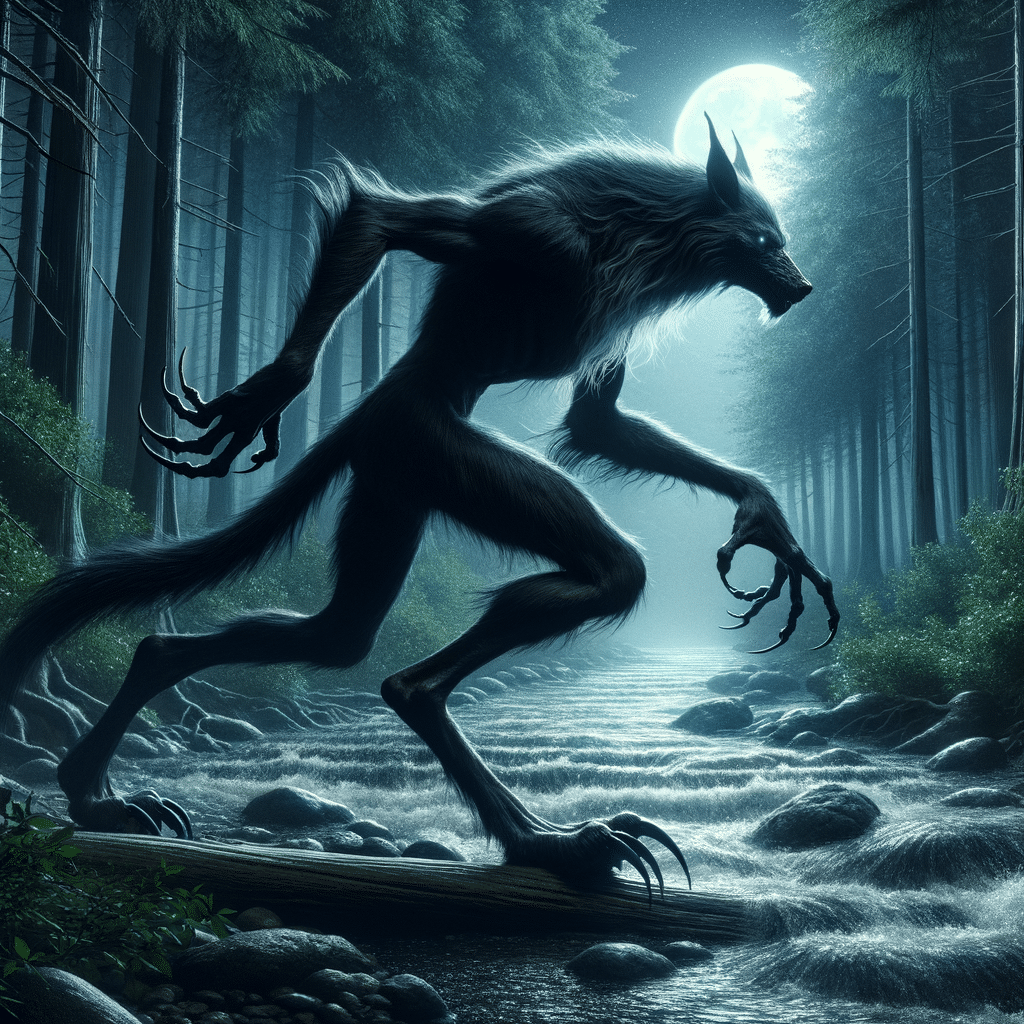
The legend of the Tallbotton Werewolf remains one of the most persistent yet unknown supernatural stories from the misty moorlands of northern England. Dating back to at least the early 17th century, this strange werewolf story has frightened generations of villagers and fascinated folklorists trying to grasp its roots and tenacity across time. Unlike more widely known werewolf legends from continental Europe, the Tallbotton beast blends elements of pagan beliefs, Christian morality stories, and the harsh realities of rural life in a remote area where ancient superstitions persist and the line between the natural and supernatural remains permeable well into the modern era, resulting in a uniquely British interpretation of the werewolf archetype.

Overview
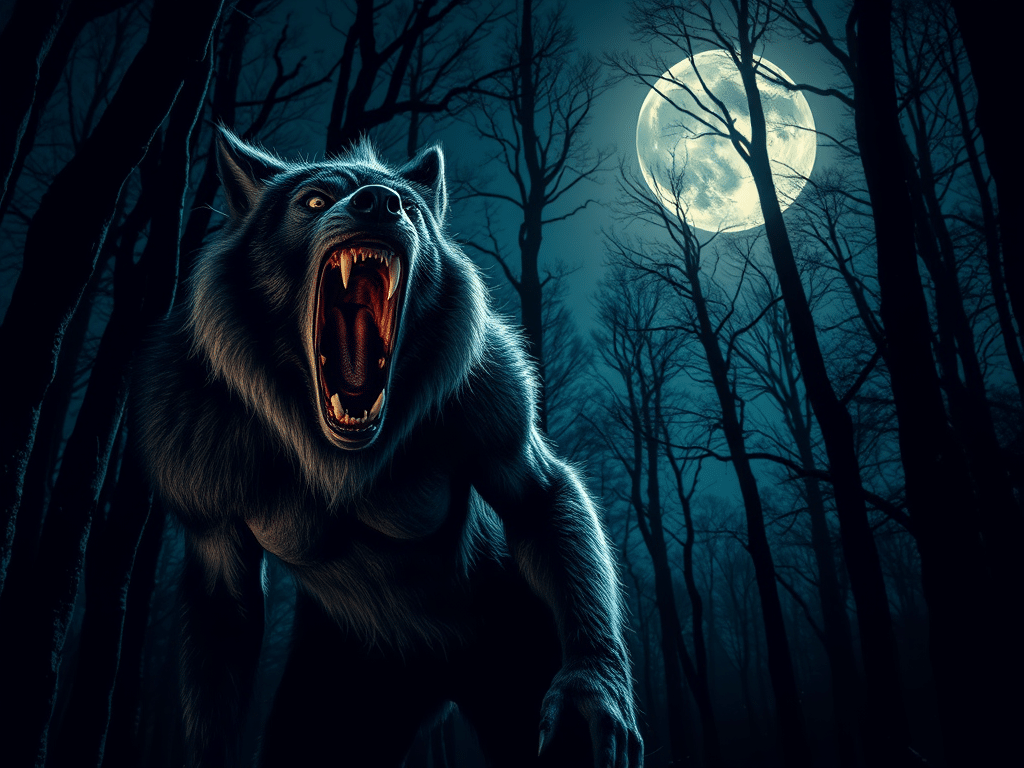
The tale starts in the made-up community of Tallbotton, tucked away in a lonely valley of the Yorkshire Dales, where a rich landowner called Edward Morrow was infamous for his brutality towards both tenants and servants. Most often, Morrow came upon an elderly lady collecting herbs on church land under a full moon, whom he charged with witchcraft. Morrow was cursed to become a beast that would reflect his inner savagery every full moon after he had beaten the woman badly. That very night, as Morrow came back to his estate, the change grabbed him for the first time; his body twisted in pain as fur erupted from his skin, his face stretched into a muzzle packed with razor-sharp teeth, and his hands curled into strong claws able to rip a man apart.
Unique in lycanthropic folklore, the Tallbotton Werewolf’s physical description markedly contrasts with continental werewolves. Nearly eight feet tall on its back legs, the animal had very long arms with stretched fingers terminating in black claws reported to create unique five-pointed star designs while marking territory. Its fur was said to be dark gray or black, but for a unique white ruff around the neck that gave it an almost gentlemanly look—a teasing reminder of Morrow’s former human rank. What was most shocking were its eyes, often described as looking human and aware, shining with an amber light that suggested the human mind was still stuck in the animal body, fully aware of what was happening but unable to stop its hunting instincts (Du Coudray, 2002).
The Tallbotton Werewolf’s behavior mirrors both known and unusual patterns in werewolf legend. The Talbotton beast, unlike many werewolves, was known to deliberately target individuals who misused power, particularly landowners, tax collectors, and corrupt clergy. This selective predation gave the story a unique aspect of social justice that probably helped it survive among the working classes. Known to mark its territory by leaving deep claw scratches on ancient oak trees, the werewolf sometimes organized these scars in patterns local folklore said could be read as warnings or prophecies. Victims were seldom eaten but rather discovered drained of blood in a way more often linked with vampiric legends, perhaps most strangely indicating an intriguing cross-pollination of supernatural ideas in the remote area (Beresford, 2013).
According to stories, sightings of the Talbotton Werewolf have mostly centered on three main sites. Most often, the fantastic location of Hangman’s Wood, a thick area where Morrow reportedly hung poachers and where the old woman’s curse was said to have been cast, hosts the encounters. The second site, Moon’s Mirror Pond, supposedly reflects the beast even when it is physically absent; myth explains this phenomenon as the water remembering the many nights the creature came to drink and wail at its own trapped humanity. The third and most dreaded site is the remains of Morrow Manor itself, where residents say the beast comes on the anniversary of its initial transformation, often accompanied by the spectral figures of its victims in a macabre parade that foretells death for everyone who watches it. These fictional landmarks complement the fictional nature of the town in the tale.

Analysis
The historical background of the Tallbotton Werewolf story exposes much about its beginnings and role in rural life. Although linguistic evidence suggests that the oral tradition predates this record by several decades, the earliest recorded mention appears in church records from 1631, which report local concerns about a man-wolf spirit that was destroying the countryside. The chronology especially aligns with a growing enclosure of common lands and mounting conflict between rich landowners and peasant farmers, thereby offering favorable ground for a revenge fantasy masquerading as a cautionary supernatural story. Parish records from 1645-1648 reveal that local officials tried to quash the story during the peak of English witch-hunting, viewing it as harmful superstition eroding appropriate Christian belief and possibly fostering seditious sentiments against the established order (Edwards, 2002).
The development of the Tallbotton Werewolf story shows how folklore preserves fundamental narrative components even as societal circumstances change. Targeting owners who abused workers, the legend included new aspects as the werewolf started appearing around factories and mines during the Industrial Revolution. Victorian versions of the story added a romantic subplot about Morrow’s unrequited love for the witch’s daughter, therefore introducing a tragic love aspect to the horror. Although this theory never fully replaced the supernatural version in local customs, rationalist interpretations from the early 20th century suggested that the first werewolf was actually a serial murderer with a deformity who used the myth to instill fear in others. Most recently, environmental issues have surfaced in modern tellings; the werewolf is seen protecting the Yorkshire countryside from developers and pollution, so proving the legend’s extraordinary adaptation to current issues.
Digital communications and travel have brought in a strange renaissance of the Tallbotton Werewolf in the twenty-first century. Local companies now profit from the myth with werewolf-themed events and yearly festivals scheduled to coincide with full moons. Reports of alleged sightings still come in, especially during extraordinarily brilliant lunar phases or around the autumn equinox when, according to folklore, the boundary between realms thins. Modern stories sometimes include elements unattainable in prior versions, such as the beast’s eyes reflecting green in smartphone images or its cries being recorded on digital audio. These modern expansions show the aliveness of folklore, always renewed by every generation while still linked to its historical foundations (Pluskowski, 2015).
The psychological foundations of the Tallbotton Werewolf story expose much about human anxieties and wants across millennia. Consistently, the werewolf has symbolized worries about class disparity, misuse of power, and the effects of unbridled greed—themes that remain pertinent throughout all ages. While the curse component fulfills a strongly felt need for cosmic justice in a usually unjust society, the transformation side addresses universal human anxieties about losing control and yielding to our more basic impulses. Perhaps most importantly, the werewolf represents the shadow self described by Jung: the repressed, animalistic sides of human nature that society compels us to ignore but which find expression through legendary structures that enable a safe investigation of these prohibited facets of the psyche (George & Hughes, 2019).
Conclusion
The Tallbotten Werewolf is proof of the ongoing strength of folklore to answer basic human concerns by means of supernatural metaphor. This particularly British werewolf has evolved from a story of justice against a harsh landlord to its contemporary version as an environmental protector, remaining relevant over four centuries while maintaining its unique traits. The beast with human eyes keeps prowling the shared imagination, reminding us that the monsters we make more faithfully reflect our nature and worries than we might like to accept. The howl of the Tallbotton Werewolf will keep resonating across the Yorkshire moors, carrying ancient warnings to new generations about the thin line between humanity and bestiality and the repercussions awaiting those who give in to their darkest impulses as long as people fear the darkness within themselves and pursue justice against those who misuse power.
References
Beresford, M. (2013). The white devil: the werewolf in European culture. Reaktion Books.
Du Coudray, C. B. (2002). Upright citizens on all fours: Nineteenth-century identity and the image of the werewolf. Nineteenth-century contexts, 24(1), 1-16.
Edwards, K. A. (Ed.). (2002). Werewolves, witches, and wandering spirits: Traditional belief and folklore in early modern Europe. Penn State Press.
George, S., & Hughes, B. (2019). Introduction: Werewolves and Wildness. Gothic Studies, 21(1), 1-9.
Pluskowski, A. (2015). Before the Werewolf Trials: Contextualising Shape-Changers and Animal Identities in Medieval North-Western Europe. Werewolf Histories, 82-120.
Leave a Reply