
The ancient Celtic world was filled with mysticism and spiritual connections between humanity and nature. Among these spiritual traditions, few are as fascinating as the relationship between the druids—the Celtic priestly class—and the faeries, supernatural beings deeply embedded in Celtic folklore. This connection transcended mere religious practice, representing a profound understanding of the natural and supernatural worlds that the druids claimed to bridge. The druids, as mediators between humans and the Otherworld, maintained special relationships with faerie entities that modern scholars are still attempting to understand through fragmentary historical records and persistent folkloric traditions.

Druids and Faeries
The druids were the intellectual and spiritual elite of Celtic society, serving as priests, judges, astronomers, healers, and keepers of oral tradition. Their name likely derives from the Proto-Celtic word *dru-wid-, meaning “oak-knower,” highlighting their reverence for sacred trees and natural wisdom. Historical accounts, primarily from Roman sources like Julius Caesar, portray druids as philosophers who spent up to twenty years memorizing vast amounts of sacred knowledge that was never committed to writing. They conducted ceremonies in sacred groves, performed sacrifices, interpreted omens, and advised Celtic leaders on important matters. Beyond these historical accounts lies a more mysterious dimension—the druids’ reputed ability to communicate with supernatural entities, control weather, shape-shift, and travel between this world and the Otherworld, abilities that connected them intimately with the faerie realm (Donoghue, 2020).
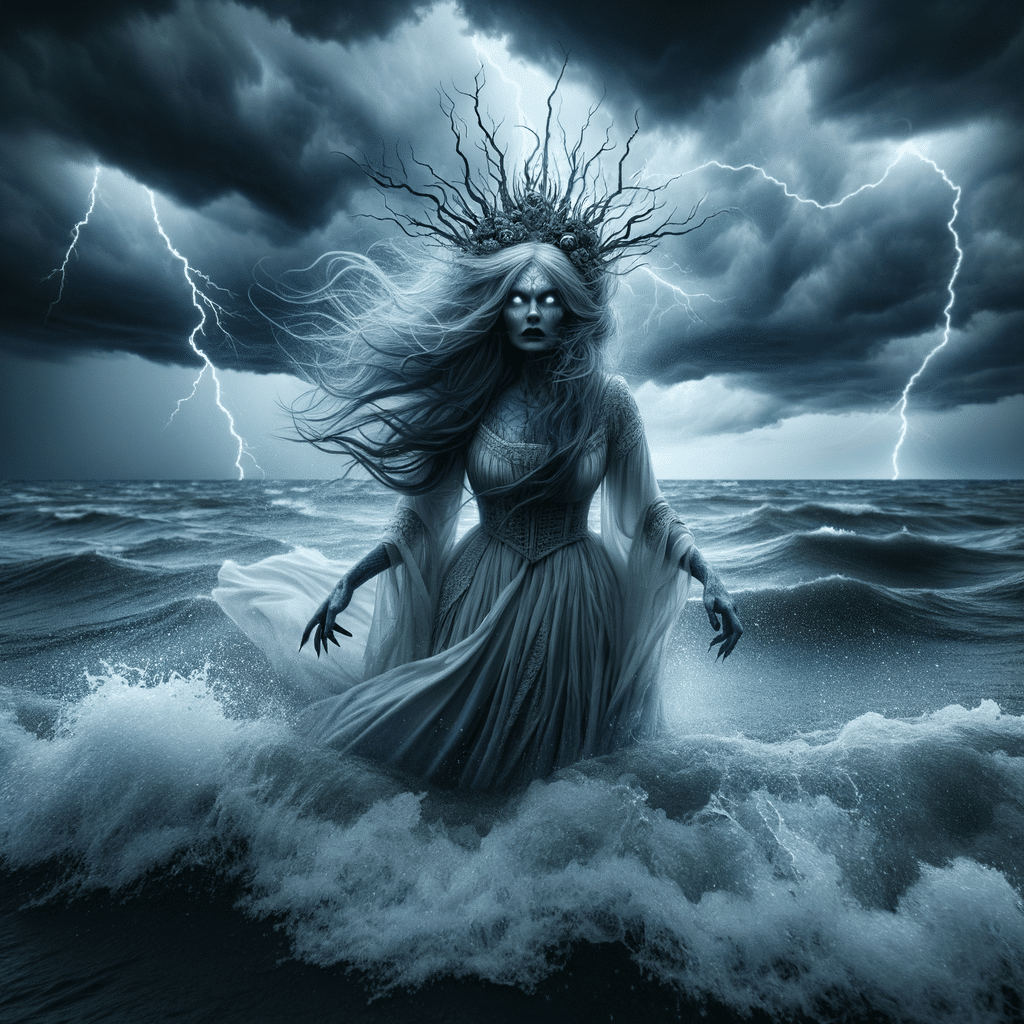
Faeries in Celtic culture represent a complex spiritual ecosystem rather than the diminutive winged creatures of Victorian imagination. The Celtic terms for these beings—sidhe (pronounced “shee”) in Ireland, tylwyth teg in Wales, and similar variations throughout Celtic lands—describe a diverse pantheon of supernatural entities. These beings ranged from the noble Tuatha Dé Danann, former gods diminished to faerie status with Christianization, to territorial nature spirits, household helpers, and malevolent tricksters. Faeries inhabited a parallel dimension called the Otherworld that occasionally intersected with the human realm, particularly at liminal times like dusk and dawn or calendar transitions such as Samhain and Beltane. Celtic peoples both feared and respected these entities, leaving offerings to appease them and developing complex customs to avoid faerie mischief or harm, practices that druids were said to have originated and maintained (Kruse, 2020).
The relationship between druids and faeries existed on multiple levels, from the ritualistic to the educational. Druids were believed to possess the second sight, allowing them to perceive faeries when others could not and to communicate directly with these beings. This communication was not merely conversational but deeply spiritual—druids reportedly received teachings from faerie entities regarding herbal medicine, astronomy, poetry, and divination. Historical sources and later folk traditions suggest that druids served as intermediaries between human communities and faerie inhabitants, negotiating peaceful coexistence through rituals and offerings. They interpreted faerie omens, diagnosed illnesses attributed to faerie interference (such as “elf-shot”), and performed ceremonies to maintain harmonious relationships with the Otherworld. This mediating role gave druids tremendous social power and reinforced their position as keepers of sacred knowledge beyond ordinary human understanding (Wolfe, 2004).

Faerie and Druid Interactions
Certain locations held particular significance for druid-faerie interactions, creating a sacred geography across the Celtic world. In Ireland, the Hill of Tara in County Meath stood as perhaps the most significant druidic site, believed to be the dwelling place of the Tuatha Dé Danann and the seat of the High Kings where druids performed crucial ceremonies. Nearby, the prehistoric monument of Newgrange (Brú na Bóinne) was considered a major entrance to the Otherworld, particularly during the winter solstice when its passage aligns with the rising sun. The ancient sacred site of Navan Fort (Emain Macha) in County Armagh served as a ceremonial center where druids reportedly communicated with faerie entities during important rituals. In Scotland, the Callanish Stone Circle on the Isle of Lewis functioned as a place where druids could access faerie knowledge, particularly regarding astronomical cycles and seasonal transitions. The mystical Isle of Skye, especially the Fairy Glen and the Fairy Pools, features prominently in traditions of druid-faerie interactions, with its otherworldly landscape believed to thin the veil between worlds.
The sacred geography of Wales included prominent faerie-druid connection points such as Mynydd Preseli in Pembrokeshire, the source of Stonehenge’s bluestones and a place steeped in faerie lore where druids reportedly received prophetic visions. Cadair Idris mountain in Gwynedd was said to either drive mad or bestow poetic inspiration upon those who spent the night at its summit, a test that druids may have undertaken to strengthen their faerie connections. In Cornwall, Men-an-Tol and other ancient stone monuments served as portals through which druids could communicate with the small piskies and spriggans of Cornish faerie traditions. The mysterious Glastonbury Tor in Somerset rises from the landscape like the hollow faerie mound described in Celtic legends, believed to conceal entrances to Annwn, the Welsh Otherworld, where druids could meet with faerie kings and queens during the Celtic fire festivals (Larkin, 1978).
Analysis
Various theories attempt to explain the nature of the druid-faerie relationship from both historical and contemporary perspectives. Some scholars propose a shamanic interpretation, suggesting that druids entered trance states to journey spiritually into the faerie realm, similar to practices observed in other indigenous traditions worldwide. Ethnobotanical theories point to druids’ use of psychoactive plants like henbane or fly agaric mushrooms to facilitate visionary experiences interpreted as faerie encounters. Archaeological evidence of ritual deposits in bogs and sacred sites suggests druids maintained complex gift economies with Otherworld entities, providing costly items in exchange for supernatural favor. Psychological interpretations view faeries as personifications of natural forces that druids understood through cultural frameworks different from modern scientific paradigms. Celtic Christian writers later reinterpreted the druid-faerie relationship, sometimes portraying druids as sorcerers trafficking with demons, while popular folklore gradually transformed druids into wizards and wise folk who knew the secrets of faerie magic.
In continental Europe, the Black Forest of Germany, known to the Celts before Germanic expansion, contained numerous sacred groves where druids reportedly conducted ceremonies to communicate with forest spirits and woodland faeries. The ancient sanctuary at Fontenay in Burgundy, France, later converted to Christian use, was originally a site where druids left offerings for water spirits at its sacred spring. The forest of Brocéliande (now Paimpont Forest) in Brittany features prominently in Arthurian legends as a place where Merlin, often interpreted as a druidic figure, communed with faerie entities, particularly at the mystical Fountain of Barenton. Monte Bego in the Maritime Alps contains thousands of prehistoric rock carvings and served as a high-altitude sanctuary where druids could access mountain spirits during seasonal pilgrimages. The sacred landscape around Hallstatt in Austria, the center of the early Celtic Hallstatt culture, included salt mines and mountain lakes considered to be dwellings of powerful elemental faeries with whom druids negotiated for the prosperity of their communities.
The druid-faerie relationship also manifested through calendar customs and seasonal celebrations that have partially survived into modern times. The four major Celtic festivals—Samhain, Imbolc, Beltane, and Lughnasadh—were times when druids reportedly performed rituals to maintain balance between the human and faerie worlds. At Samhain (modern Halloween), druids lit sacred fires and conducted ceremonies to honor ancestors and appease potentially dangerous spirits when the boundaries between worlds were at their thinnest. Beltane celebrations included rituals to protect cattle from faerie theft and ensure fertility for the coming growing season. Druids collected specific plants at particular times—mistletoe at the sixth night of the moon, rowan berries before they touched the ground—following precise instructions supposedly received from faerie sources. These seasonal practices created a yearly cycle of communion and negotiation between the human and Otherworld communities, with druids serving as the essential intermediaries.
The legacy of the druid-faerie relationship continued long after the historical druids disappeared. Christianity spread through Celtic lands, adapting many druidic practices rather than eliminating them, resulting in a syncretic tradition where faerie beliefs persisted beneath Christian veneers. Local wise people, cunning folk, and traditional healers claimed the inheritance of druidic knowledge about faerie interactions and maintained practices like leaving milk for household spirits or avoiding construction on faerie paths. Celtic literature preserved accounts of druids and their faerie relationships in medieval manuscripts, eventually influencing the Arthurian cycle and other European literary traditions. The modern druidic revival, which began in the 18th century, reconnected with these faerie traditions, often through romanticized interpretations instead of direct cultural transmission. Contemporary Celtic spirituality continues to explore this relationship, with modern druids developing practices they believe honor their ancient predecessors’ connections to the faerie realm (Cooper, 2009).
Conclusion
The relationship between druids and faeries represents one of the most intriguing aspects of Celtic spiritual tradition, bridging the visible and invisible worlds through ritual, wisdom, and mutual respect. While separating historical fact from later romanticization remains challenging, the persistence of these traditions through centuries of cultural change suggests they addressed fundamental human needs to understand and interact with the mysteries of nature. The druid-faerie relationship offered Celtic societies a framework for navigating the unpredictable aspects of existence, recognizing humanity’s place within a larger cosmic order that included non-human intelligences. This ancient spiritual ecology still motivates contemporary seekers, reminding us that before the modern separation of religion, science, and art, there existed integrated knowledge systems that perceived the world as fundamentally alive, conscious, and filled with beings both seen and unseen, with whom humans might establish meaningful relationships through appropriate intermediaries and practices.
References
Cooper, M. T. (2009). The Roles of Nature, Deities, and Ancestors in Constructing Religious Identity in Contemporary Druidry. Pomegranate, 11(1).
Donoghue, C. N. (2020). The Mysterious Druids. FriesenPress.
Kruse, J. T. (2020). Faery: A Guide to the Lore, Magic & World of the Good Folk. Llewellyn Worldwide.
Larkin, D. (Ed.). (1978). Faeries. Bantam.
Wolfe, A. (2004). Druid Power: Celtic Faerie Craft and Elemental Magic. Llewellyn Worldwide.
Leave a Reply