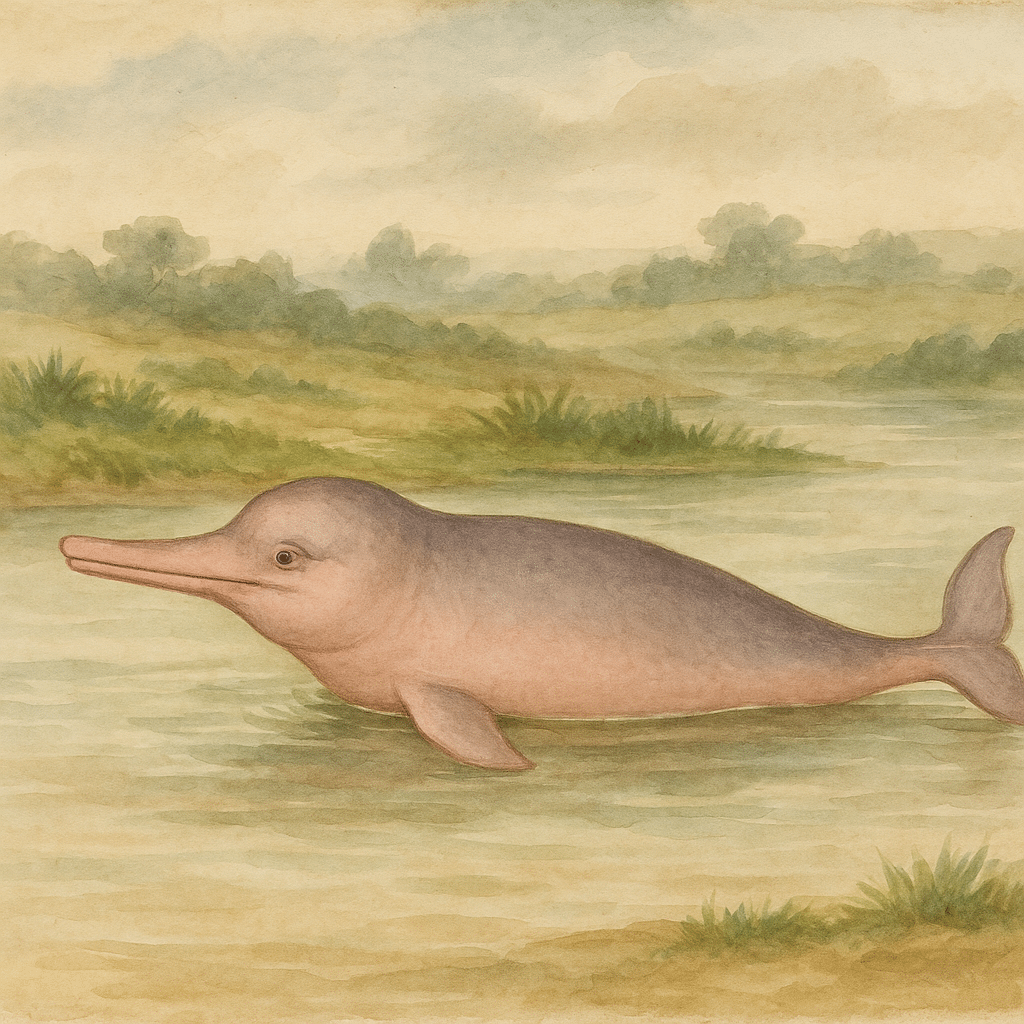
Perhaps none are more intriguing than the Encantado; the rich fabric of Amazonian mythology is spun with amazing entities bridging the natural and supernatural worlds. For millennia, the indigenous people of the Amazon Basin have been enamored by these fabled beings, said to be pink river dolphins who change into exquisite humans. From Brazil to Peru and beyond, riverine tribes from the Encantado myth still find resonance in a complex junction of environmental observation, cultural values, and spiritual beliefs. This timeless folklore addresses mankind’s constant curiosity with change and the enigmatic lines separating human from animal worlds.

Description
Originally from the Portuguese phrase “enchanted one,” the encantado is mostly connected with the intelligent aquatic animal native to the Amazon and Orinoco river basins, the boto or pink river dolphin (Inia geoffrensis). Local legend holds that these beings live in an underwater paradise known as the Encante, a magnificent world with advanced technology, colorful cities, and mystical powers incomprehensible for humans. The Encantado in dolphin form’s physical features—its unique pink hue, strange extended snout, and remarkably human-like eyes—already point to something otherworldly about these animals. Their clever actions and seeming human curiosity have only served to confirm their uniqueness from other animals (Slater, 1994).
Transformed into human form, encantados are claimed to be absolutely beautiful, usually defined as tall, pale-skinned people of extraordinary beauty. Most stories depict Encantados as being dressed in white and wearing caps to conceal their blowholes, which remain visible even in human form. Their mesmerizing powers, musical ability, and great charm balance their alluring appeal to few mortals who can withstand. Usually presented as masters of celebration and festivity, these shapeshifters have a magical appeal that attracts people into their enigmatic universe (Cravalho, 1999).
The behavioral patterns ascribed to Encantados expose intricate motives spanning from mischievous to evil. They are well-known for rising from the sea during traditional celebrations, especially in the wet season when river levels increase and provide simpler access to human settlements. Under cover of darkness, they enter village festivals where they dance, drink, and enthrall gullible people with their magical talents. Stories abound of Encantados impregnating women who subsequently produce offspring with extraordinary traits or supernatural ability. Other tales warn that Encantados abduct people—especially those with musical ability—and take them to their underwater world, where they may remain permanently, transforming them into fellow Encantados who cannot return to their human lives.

Analysis
Beyond simple amusement, Amazonian mythology around the Encantados performs vital cultural roles. These tales set environmental limits, warn towns against risky nocturnal activities close to the sea, and explain disappearances in an area where drowning accidents are frequent. By advising against too much drinking, promiscuity, or walking alone during celebrations—activities that may leave one exposed to the Enchantados’ magic—the stories help support societal conventions. For many indigenous people, these stories—which give credit to experiences with these shapeshifting beings—offer explanations for otherwise incomprehensible events such as unexpected pregnancies, sudden illnesses, or the delivery of children with congenital abnormalities (Arregui, 2020).
Local versions of the Encantado myth mirror the varied cultural terrain of Amazonia. In some Brazilian customs, the creature—which is specifically male—is known as the Boto Cor-de-Rosa (pink dolphin), infamous for luring ladies at celebrations. Sometimes Peruvian adaptations show the Encantado as a group of supernatural entities comprising not just dolphins but also anacondas, caimans, and other river creatures with transforming power. Colombian variants highlight the Encantados’ responsibility as protectors of water habitats, punishing environmental damage or overfishing. Notwithstanding these variations, the fundamental components of change, seduction, and the link between human and aquatic worlds remain constant over the Amazon Basin.
Different explanations of the Encantado phenomenon are provided by modern anthropological and psychological ideas. Some academics see these stories as symbolic depictions of the complex but required relationship between Amazonian people and their river surroundings—sources of both risk and food. Others argue that the pale-skinned, well-dressed Encantado captures the foreign presence that both attracted and threatened indigenous civilizations and reflects past relations with European colonists. Psychological explanations include that in societies where direct conversation of such issues can be outlawed, the myth serves as a cultural method for resolving forbidden impulses, justifying sexual offenses, or processing pain (Caesar & Bueno, 1999).
The modern relevance of the Encantado myth is shown by its conservation consequences. Habitat destruction, dam building, pollution, and deliberate killing—sometimes driven by the very superstitions that surround them—cause real boto dolphins severe threats. Paradoxically, although the tales traditionally shielded river dolphins by instilling fear and respect, these same beliefs today often drive their persecution, with fishermen killing them to use their body parts as love charms or to stop competition for fish. Emphasizing their cultural relevance combined with their ecological importance, conservation groups have started using the good features of Encantado folklore to support protection of these threatened species.
Traditional beliefs in Encantados suffer but nevertheless show amazing resiliency as industrialization and evangelical Christianity expand throughout the Amazon. Many riverine villages have dual belief systems, accepting new religions while safeguarding cultural venues for historic folkloric practices. Literary, musical, ecotouristic, environmental education, and modern interpretations of the Encantado story show how indigenous knowledge adjusts to fit new conditions. This cultural persistence addresses the profound psychological resonance of transformation stories and the ongoing human search for meaning in the enigmatic natural surroundings (Radecki, 2018).
Conclusion
The mythology of the Encantado captures the complex interaction between people and the Amazon Basin, where the lines separating truth from enchantment remain wonderfully hazy. These shapeshifting river dolphins, who live both in human and aquatic environments, still inspire people and offer insights into spiritual beliefs, environmental ethics, and cultural values. The Encantado is a potent emblem of the cultural and ecological variety of the Amazon, a reminder that the worlds under the river’s surface hold secrets we have only started to know as the region faces hitherto unheard-of hazards from development and climate change. Maybe in safeguarding the boto’s physical habitats, we also help to maintain the magical worlds where human tales and natural beauty entwine in ways beyond common knowledge.
References
Arregui, A. G. (2020). Positional wildness: Amazonian ribeirinhos, pink dolphins and interspecies affections. Ethnos, 85(5), 819-842.
Caesar, T., & Bueno, E. (1999). 9. Myth, Modernity, and Postmodern Tragedy in Walter Lima’s The Dolphin. In Imagination Beyond Nation: Latin American Popular Culture (pp. 195-209). University of Pittsburgh Press.
Cravalho, M. A. (1999). Shameless creatures: an ethnozoology of the Amazon River dolphin. Ethnology, 47-58.
Radecki, K. (2018). The Enchanted Beings of the Amazon Rivers. A Case Study in Pará, Brazil. Natures et Sociétés: identités, cosmologies et environnements en Amazonie brésilienne. Sous la direction de L. Jérôme et al, 111-138.
Slater, C. (1994). Dance of the dolphin: transformation and disenchantment in the Amazonian imagination. University of Chicago Press.


Leave a Reply