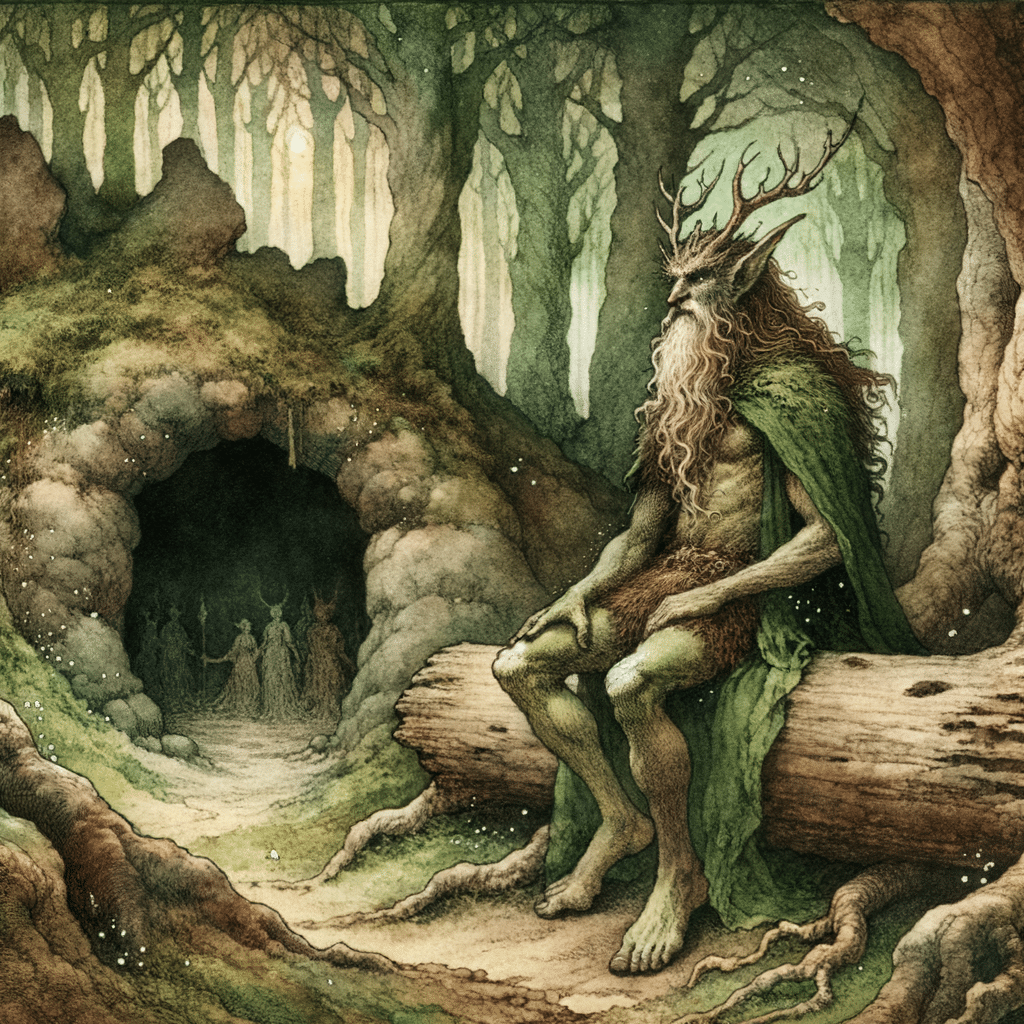
The Erlking: Key Points
-
The Erlking is a scary character from legend that hides in woodlands and tricks kids into coming to him.
-
He looks like a king, yet he can change shape and show his victims his horrible actual appearance.
-
The story comes from Germanic and Scandinavian mythology, but it became well-known because of Goethe’s poem and Schubert’s music.
-
Erlking stands for anxieties about being alone in the woods, being innocent, and being weak.
-
This old figure keeps showing up in current media, changing while keeping the most important parts.
-
His perseverance shows how folklore changes to deal with new fears and worries.

Introduction
The Erlking, or Elf King, is one of the most interesting and scary characters in European folklore. This mysterious supernatural fairy being has had a huge impact on stories, poems, songs, and modern entertainment for hundreds of years. The Erlking is a symbol of people’s long-standing anxieties about the mysterious forces that live in untamed regions, especially woodlands, where this ghostly figure was thought to live and hunt for lost travelers and innocent children. We can figure out why the Erlking myth has such a strong hold on our imaginations by looking closely at where it came from, how it looks, how it acts, and how it has affected culture.
Description
Varying cultural traditions give different physical descriptions of the Erlking, although most of them agree on some things. People usually see him as a big, scary person with a crown and a cloak. His looks combine human and otherworldly traits. Some stories say he looks like the ancient woods spirits, with antler crowns, glowing eyes, and skin that feels like bark or moss. In Danish and German stories, he is often shown as deceptively regal, able to look handsome and attractive while he is trying to lure his victims in, only to show his actual horrible form once they are within his reach. The Erlking is especially hazardous since he can change shape, which means his victims could not see the danger until it’s too late (Rix, 2022).
Folklore about the Erlking mostly focuses on how he is a predator and how he goes after children and young people. The Erlking is different from many other supernatural beings in that he seems to prefer young and innocent people, which is very distressing. People say that he stalks the margins of woodlands, looking for kids who go too far from safety. Then he uses his mesmerizing talents to draw them farther into his territory. Some versions of the story say that he kidnaps kids to work for him in his faraway realm, while others say that he eats their life force or soul. The Erlking doesn’t often use physical violence; instead, he uses seduction, lies, and psychological manipulation to get what he wants. He promises presents, adventures, or a reunion with loved ones, which makes him both a source of temptation and fear (Lecouteux, 2016).

History
The stories about the Erlking come from Germanic and Scandinavian mythology and have changed over time through oral tradition before being written down. The name “Erlking” probably comes from the Danish word “ellerkonge,” which means “king of the elves,” or it could come from the word “erle,” which means “alder tree.” The name links the character to both supernatural entities and the natural world. Danish ballads and stories from the past describe the Erlking. He is commonly linked to the “elle-folk,” magical entities that lived in foggy meadows and could make people sick if they came into contact with them. As the story spread throughout northern Europe, it incorporated elements from various myths, including the Wild Hunt and woodland spirits believed to pursue visitors. By the 1700s, the Erlking had become a complicated character that stood for the scary parts of nature and the unknown (von Goethe, 2015).
During the Romantic period, poets and writers became very interested in folklore and the occult, which is when the Erlking became quite popular in literature. The 1782 poem Erlkönig by Johann Wolfgang von Goethe is one of the most important literary works about the character. It shows a father riding through the night with his sick son, who sees and hears the Erlking trying to lure him away, but the father can’t see or hear anything. The poem’s sad ending, in which the infant dies in his father’s arms, made the Erlking even more connected to death and the fragility of innocence. Johann Gottfried Herder and other Romantic writers also used the Erlking mythology in their work. They saw this old character as a strong symbol for exploring ideas about nature’s dualism, the limits of reason, and people’s most basic concerns. These stories changed the Erlking from a local folk belief into a well-known cultural symbol.
The Erlking had an impact on more than just literature; it also affected music, painting, and eventually modern pop culture. Franz Schubert’s famous musical version of Goethe’s Erlkönig turned the creepy tension of the poem into one of the most dramatic and difficult lieder pieces of the 19th century. Artists from the Romantic period and beyond have painted and drawn pictures of the Erlking, often focusing on how his attractive looks and evil plans are at odds with each other. The Erlking is still a big influence on writers, filmmakers, and game designers today. You can find him in fantasy books, horror movies, and video games. Modern versions of the story typically add to the original by giving the Erlking a backstory or linking him to other mythical stories, but they nonetheless keep him as a carnivorous woodland spirit.
Analysis
The Erlking legend is still popular because it has a lot of psychological depth and may talk about concerns that everyone has. The woodland where Erlking lives has always been a line between civilization and nature, fairy and non-fairy, the known and the unknown. This makes it the appropriate home for a character who represents the perils that are beyond human control. The fact that the Erlking specifically goes for children shows how worried parents are about keeping their most vulnerable family members safe. The Erlking’s methods of seduction instead of direct attack show more complicated issues about temptation and the loss of innocence. The Erlking reminds us of how fragile our connection to nature is and how old worries still live in our minds at a time of urbanization and technological advancement (Simpson, 1998).
The story of the Erlking is also a fascinating way to see how folklore changes and grows over time and in different cultures. The Erlking is still considered a frightening supernatural being, although different cultures and historical periods have given him varied meanings. In other modern versions, he is shown in a more sympathetic light as a misguided protector of nature or even as a sorrowful figure who has to be a predator. Other versions focus on his ties to the seasons and old pagan traditions, showing him as a scary but necessary part of the natural order. These evolving interpretations demonstrate how ancient myths remain relevant by addressing contemporary societal issues while preserving their core narrative strength (Wheelock, 2023).
The story of the Erlking is especially powerful in today’s society, where digital technology has created new kinds of “forests” that can entice kids with terrible things. Parents nowadays may not be as afraid that supernatural beings will literally take their children away in the woods, but the metaphorical parts of the Erlking—the alluring stranger making false promises to the innocent—are still crucial. The Erlking’s ability to change is what keeps him appearing in modern books, movies, and other media, even if he is different now. He still plays the same role as he did in ancient times: a person who represents danger disguised as pleasure. His appearance in stories from many eras shows how powerful folklore is at expressing people’s anxieties in ways that stay true even when our social structures or physical environments change.
Conclusion
In the end, the Erlking is one of the most interesting and adaptable characters in folklore. He connects old fears with new worries in a way that is quite effective. The Erlking has been around for a long time, from his roots in Northern European mythology to his popularity in Romantic poetry and music and now in modern popular culture. His basic traits—his connection to wild nature, his predatory interest in the young and innocent, and his use of seduction instead of force—reflect deep-seated human fears about being weak, being tempted, and the dangers that lie beyond the safety of the known world. As long as people still feel the tension between civilization and the wild, between safety and risk, the Erlking will probably stay with us. He will change to fit new cultural settings, but he will always be a haunting reminder of what might be lurking in the shadows beyond the firelight.
References
Lecouteux, C. (2016). Encyclopedia of Norse and Germanic folklore, mythology, and magic. Simon and Schuster.
Rix, R. W. (2022). The Elf-King: Translation, Transmission, and Transfiguration. In Nordic Romanticism: Translation, Transmission, Transformation (pp. 1-29). Cham: Springer International Publishing.
Simpson, J. (1998). Freud and the Erl King. Oxford German Studies, 27(1), 30-63.
von Goethe, J. W. (2015). TRADITION, CRUX, AND ADAPTATION. CS Lewis and the Inklings: Reflections on Faith, Imagination, and Modern Technology, 163.
Wheelock, A. (2023). Common Threads: Centuries of Folklore Told Through Tapestry.




Leave a Reply