
Key Points on Bigfoot in the Washington Environmental Atlas
-
The 1975 Washington Environmental Atlas officially described Bigfoot as a 12-foot-tall, 1,000-pound creature.
-
The government document mapped Bigfoot sightings while noting the disputed nature of its existence.
-
Conspiracy theories regarding government knowledge of Sasquatch have been stoked by this official recognition.
-
The inclusion may represent documentation efforts, engineer humor, or cautious acknowledgment of evidence.
-
The atlas’s ambiguous conclusion neither confirmed nor denied Bigfoot’s existence.
-
This case parallels how government agencies document other unexplained phenomena.

Introduction
The fact that Bigfoot was added to the U.S. Army Corps of Engineers’ Washington Environmental Atlas in 1975 is an intriguing mix of legend, official records, and cryptozoology. The Corps formally acknowledged the existence of Sasquatch in this $200,000 study to help government and private planners, according to a Charleston Daily Mail article from July 5, 1975. This surprising mention of a cryptid in an official government journal drew both interest and debate, with people wondering if this was real recognition or just a clever joke hidden in a serious scientific document (Dice et al, 1980).
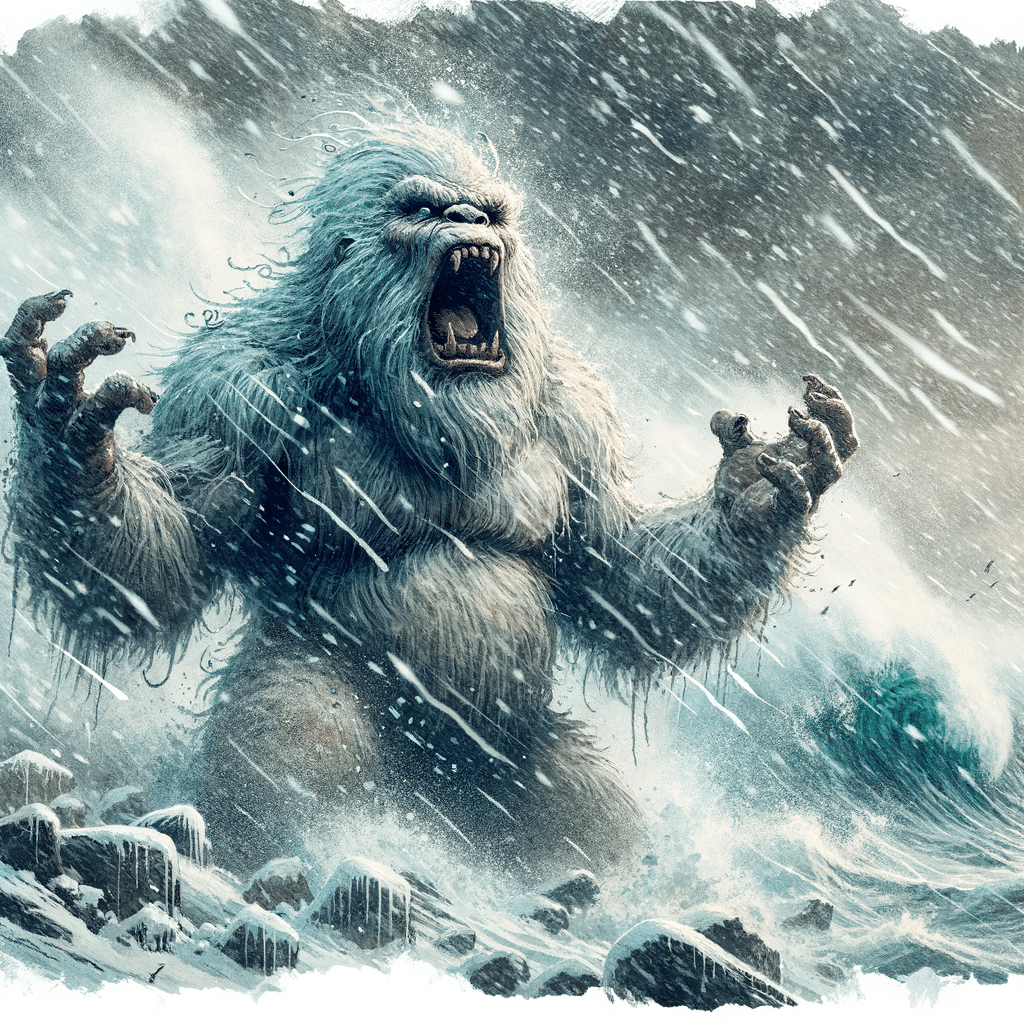
The Washington Environmental Atlas gives a very thorough description of Bigfoot, saying that it can be up to 12 feet tall, weigh about 1,000 pounds, and have a stride length of up to 6 feet. The paper says that Sasquatch eats plants and meat and has long hair all over its body save for its face and hands. The atlas goes on to say that the creature has a body shape that is very similar to a human’s, but it is also quick and strong. The text says that Bigfoot is very timid, which is why there is “minimal evidence of its presence.” This is a nice way to explain why there is no solid proof that it exists.
The fact that Bigfoot is in an official government atlas is an intriguing example of how institutions occasionally confront folklore. The corps admitted in the letter that Sasquatch’s existence is “hotly disputed,” and they said that some people who don’t believe in Sasquatch think that “not one piece of evidence will withstand serious scientific scrutiny.” At the same time, the Washington Environmental Atlas had a map showing all of the reported Bigfoot sightings and said that the FBI had looked at hair that was said to be from Sasquatch and discovered that it didn’t match any known animal or human. This careful placement let the corps record the event without entirely agreeing with its actuality. The agency created an intentional ambiguity that kept scientific credibility while still recognizing cultural importance (Reuss, 1983).
Analysis
The atlas’s mention of FBI analysis provides us a glimpse into the unusually long history of government involvement in Bigfoot study. The FBI officially disclosed papers in 2019 that proved they had looked at hair samples that were said to be from Sasquatch at the request of Bigfoot researcher Peter Byrne in the 1970s. Although the tests indicated that the samples were deer hair, the mere fact that the FBI conducted them has sparked speculation that the government is more interested in the phenomenon than it appears. So, the mention of these studies in the Washington Environmental Atlas is only one part of what some people think is a larger government involvement in the Bigfoot topic.
For decades, many people have believed in conspiracy theories suggesting that the government is aware of Bigfoot’s existence. People often use the Washington Environmental Atlas as proof. Some people who study the subject say that the atlas’s thorough physical depiction implies that it was possible to get classified information that civilian scholars didn’t have. Some people say that the careful wording of the text shows that the government is using a “soft disclosure” method to slowly accustom people to the idea of undiscovered hominids. Some of the more extreme theories suggest that the U.S. government operates hidden research labs to analyze captured Sasquatch specimens. The atlas reference intentionally misleads people by emphasizing the difficulty of finding the creature.
Several theories explain the inclusion of Bigfoot in this atlas. One option is that it was a real effort to record all reported environmental events in Washington, even if they didn’t agree with scientists, in the name of thorough documentation. A second explanation says that it could have been a deliberate joke included in an otherwise boring government report, maybe a joke between the engineers and researchers. A third, more intriguing theory suggests that some government officials genuinely believed there might be real proof of Sasquatch and used this release as a low-risk way to acknowledge the phenomenon without making a definitive statement (Gordon, 2015).
The atlas’s own enigmatic conclusion on the topic shows that the authors themselves were careful: “If Sasquatch is purely legendary, the legend is likely to be a long time in dying.” This phrase does neither affirm nor deny that the creature exists; instead, it admits that it has been part of culture for a long time. The document’s discussion of Bigfoot, presented in a matter-of-fact manner alongside real environmental features such as Washington plants, archaeological sites, rivers, and geological formations, creates an intriguing contrast that elevates folklore to the status of genuine natural phenomena, at least in this government publication.
The Corps of Engineers is one of many government agencies that keep Sasquatch records. Researchers have found many accounts from national parks, forest service employees, and military personnel alleging encounters with big, unidentifiable bipedal creatures thanks to the Freedom of Information Act. The National Park Service has covertly retained data on allegations of strange sightings, including Bigfoot encounters, while trying to keep the public from believing them. These parallel tracks of official paperwork and institutional distancing have led to theories that government agencies know a lot more about Sasquatch than they let on. The Washington Environmental Atlas stands as a rare example of brief public exposure.

Impact
The way that popular culture reacted to this official acceptance probably made Bigfoot’s place in American folklore even stronger. Interest in Sasquatch peaked in the 1970s, after the famous Patterson-Gimlin film from 1967 that claimed to show a female Bigfoot wandering in northern California. The Corps of Engineers’ decision to include Sasquatch in the Washington Environmental Atlas would have made cryptozoology fans feel more credible and made critics question how the government spends its money. People in general see Bigfoot as both a joke and something that fascinates them. He exists in the area between myth and possible discovery.
The Washington Environmental Atlas case demonstrates how American culture and institutions view cryptids like Bigfoot differently. Sasquatch is not only a mythological creature; it exists in a world where government organizations may have to acknowledge reported sightings while still being skeptical from a scientific point of view. The corps’ method of documenting the event while also acknowledging the disagreement serves as a model for how organizations could deal with issues that sit between scientific agreement and cultural opinion. It doesn’t mean that Bigfoot is real or that it’s not real; it just means that Bigfoot is important in the culture of the Pacific Northwest.
The inclusion of Bigfoot in the Washington Environmental Atlas occupies a similarly ambiguous space as papers on UFO investigations, particularly regarding the government’s broader efforts to study unusual phenomena. In both cases, government agencies have written down alleged events while still being able to deny that they were real. Researchers who study conspiracies say that the atlas was published at a time when secret projects like MK-ULTRA were being revealed. Such an event makes them think that it may have been part of a controlled disclosure approach for biological research that had been kept secret before. Despite the lack of evidence, these claims persist because the government has shown some interest in Bigfoot, unlike how they publicly discuss it (Byrne, 1975).
Conclusion
Bigfoot’s inclusion in the Washington Environmental Atlas represents a notable instance of a myth receiving formal recognition from a government entity. The Corps of Engineers created a unique historical document that continues to captivate both enthusiasts and detractors of cryptozoology. The Corps of Engineers could have intended it as a genuine record, a humorous aside, or a vague admission of an unexplained event. The atlas page, with its thorough physical description and careful warnings regarding evidence that is still being debated, brilliantly captures humanity’s long-lasting interest in the idea that there are animals out there that science hasn’t been able to prove exist. As the atlas itself said, the story of Sasquatch has really “been a long time in dying.” It has stayed in people’s minds for fifty years since this strange government recognition, and it still inspires both serious research and elaborate conspiracy theories about what the government might really know about Bigfoot.
References
Byrne, P. (1975). The Search for Big Foot: Monster, Myth Or Man?. Washington: Acropolis Books.
Dice, S., Malek, J., McNeely, C. M., Newman, J. I., & Weinmann, F. (1980). Use of regional resource expertise in environmental planning. In Biological Evaluation of Environmental Impacts: Proceedings of a Symposium at the 1976 Meeting of the Ecological Society of America, American Institute of Biological Sciences (p. 181). US Department of the Interior, Fish and Wildlife Service.
Gordon, D. G. (2015). Sasquatch Seeker’s Field Manual: Using Citizen Science To Uncover North America’s Most Elusive Creature. Mountaineers Books.
Reuss, M. (1983). Shaping Environmental Awareness: The United States Army Corps of Engineers Environmental Advisory Board, 1970-1980 (Vol. 870, No. 1-10). Historical Division, Office of Administrative Services, Office of the Chief of Engineers.
United States. Army. Corps of Engineers. Seattle District. Environmental Resources Section. (1975). Washington environmental atlas (2d ed.). Seattle, Wash: The Section; Washington: for sale by the Supt. of Docs., U.S. Govt. Print. Off.



Leave a Reply