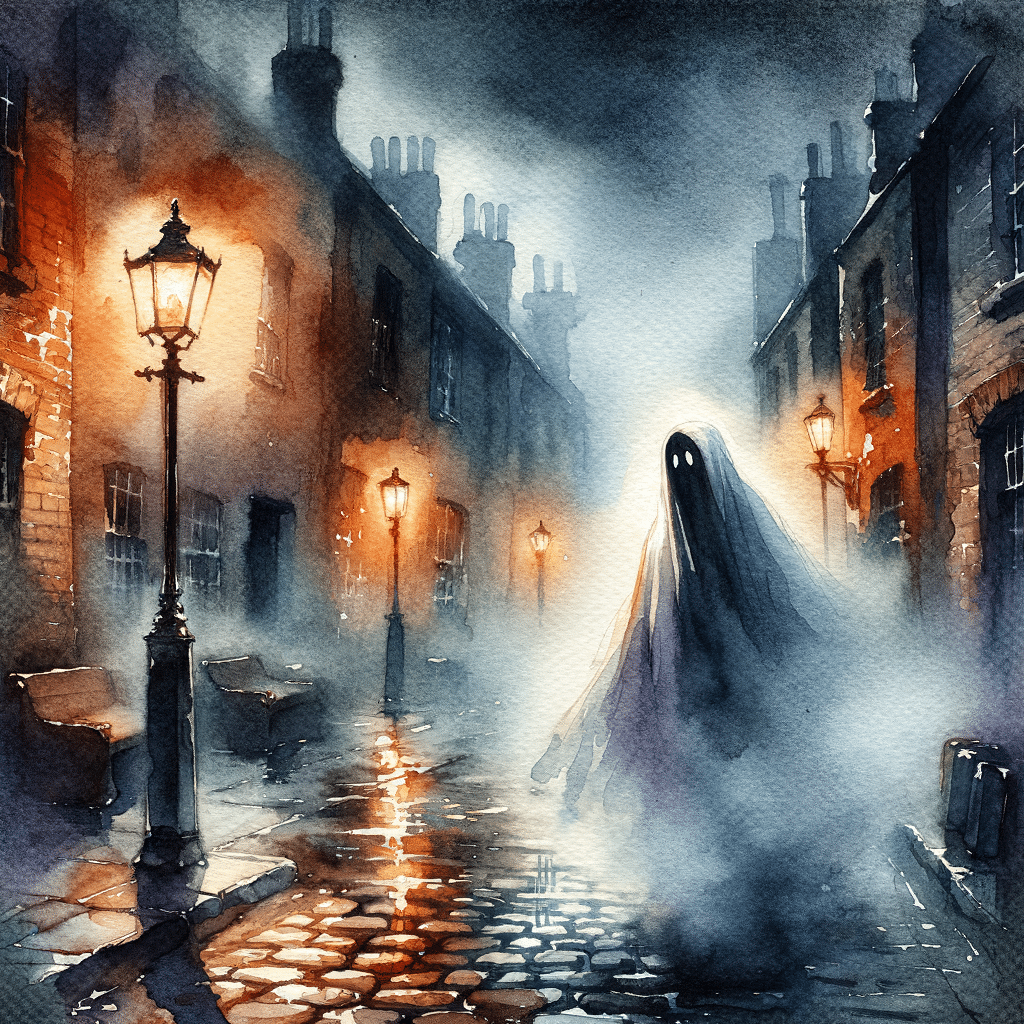
Six Key Points About the Cock Lane Ghost
-
The Cock Lane Ghost is a story from London in 1762 about Fanny Lynes’ spirit knocking on Richard Parsons’ door and accusing William Kent of killing her.
-
Landlord Parsons created the ghost as a form of retaliation against Kent, the previous renter, who owed him money.
-
The case drew people to Cock Lane every night and got the attention of Samuel Johnson, who looked into the claims.
-
Detectives found out about the lie when they witnessed Parsons’ daughter Elizabeth using a piece of wood hidden in her coat to knock during séances.
-
After the exposure, Parsons was sentenced to pillory and prison for conspiracy, but Kent was found not guilty of murder.
-
Charles Dickens wrote about the Cock Lane Ghost, which was one of the first examples of Enlightenment literature looking into paranormal claims.

Introduction
In the winter of 1762, a strange and intriguing story of supernatural events caught the attention of people in London, regardless of their social status. The Cock Lane Ghost was about supposed supernatural events that happened in a house on Cock Lane, a small street near St. Paul’s Cathedral in London. This amazing event included séances, strange knocking sounds, murder allegations, and finally being revealed as a hoax, all while gaining the attention of famous people like Samuel Johnson and Charles Dickens. The story provides us a wonderful look at what people believed in the 18th century, how they were skeptical, and how the supernatural has always fascinated the public.
The Story
The haunting began in Richard Parsons’ Cock Lane house, where he rented apartments to a couple named William Kent and Fanny Lynes. By 18th-century standards, their living situation was scandalous because Fanny was Kent’s dead wife’s sister. This scenario made their relationship unlawful under church law, so they had to pretend to be landlord and tenant. Parsons and Kent experienced difficulties due to outstanding loans, which created a tense atmosphere in the house. This enmity would eventually be important when strange things started to happen, especially after Fanny died of smallpox in February 1760. By then, Kent had already moved out of the house since his relationship with Parsons was getting worse (Lang, 1896).
In January 1762, almost two years after Fanny’s death, Parsons said that Fanny’s ghost was visiting his daughter Elizabeth. This was the start of the mysterious events. Parsons said that the spirit spoke during séances in Elizabeth’s bedroom by knocking on things in a strange way—one knock for “yes” and two for “no.” The most alarming thing was that the spirit supposedly told William Kent that he had killed Fanny by killing her with arsenic. This shocking revelation turned what may have been an isolated local haunting into a famous case that caught the attention of all levels of London society and swiftly spread through newspaper accounts.
The public’s reaction to the Cock Lane Ghost was quick and strong, showing the conflicting ideas of Enlightenment rationalism and the belief in the supernatural that were common at the time. Every night, crowds of people gathered outside the house on Cock Lane, hoping to see the ghostly events or at least be close to the action. The séances turned into social gatherings that people from all walks of life, both believers and skeptics, went to. There was a lot of coverage in the newspapers, with detailed stories about the knockings and the ghost’s claims spreading all throughout London. People met in public houses to talk about the newest news, while leaflets and broadsides about the ghost sold swiftly on street corners (Elliott, 1852).
Dr. Samuel Johnson and other important people in London subsequently took an interest in the issue. He was asked to look into the haunting as part of a group of gentlemen. This well-known group did several controlled observations in the house, one of which involved taking Elizabeth Parsons out of her bed and putting her in a hammock so she couldn’t make the knocking sounds herself. When no unusual occurrences were observed in these controlled conditions, suspicion towards the Parsons family increased significantly. After more examination, it was found that Elizabeth had been using a small piece of wood hidden in her clothes to make the banging sounds. Her father, Richard, had planned the deception since he was having a financial problem with Kent.
The public revelation of the deception significantly altered people’s perspectives. Richard Parsons and a few others faced a conspiracy trial in 1762, leading to their conviction. Parsons was given three days in the pillory and two years in prison. His young daughter Elizabeth, on the other hand, was not punished since she was too young. Following the revelation of the hoax, William Kent, freed from murder charges, filed a lawsuit against those disseminating false information about him. The papers that were eager to print the ghost story were now just as eager to report its debunking. They included extensive reports of the trial and sentencing of the people who had done it, which served as a public warning against such lies (Garcia Oliva & Hall, 2023).

Impact
The Cock Lane Ghost significantly influenced culture, and its impact lasted long after the events occurred. When Charles Dickens wrote about the case in his book A Tale of Two Cities, it became part of the literary canon and will always be remembered (Dickens, 1859). For history students, this episode presents them a lot of information about life in the 18th century, showing how scientific reasoning was growing yet belief in supernatural events stayed strong. The case demonstrated the potential of using ghost stories to discuss topics of public interest, such as justice. In this case, the “ghost” of Fanny was trying to locate her killer. The episode also showed how the press was becoming more powerful in affecting public opinion and making what could be called one of the first contemporary media phenomena (Underwood, 2010).
The Cock Lane Ghost case teaches us a lot about what evidence is and how to look critically. The group, directed by Dr. Johnson, looked at the claims in a methodical way, setting up controlled settings to test the alleged phenomenon. This incident was one of the first times that scientists looked into paranormal claims. The episode shows how personal reasons, like Parsons’ financial animosity against Kent, can lead to lying. The fact that so many people believed the ghost story shows how people can ignore their doubts when they want to be entertained, especially when the story fits with existing cultural ideas about ghosts that are restless and looking for justice.
Conclusion
In short, the Cock Lane Ghost is one of the most renowned ghost hoaxes in history. It was a perfect storm of personal revenge, public gullibility, and media hype. Even though it turned out to be a fake, the case is nevertheless fascinating because it shows how complicated society’s connection with the supernatural was in the 18th century, when Enlightenment reasoning was on the rise but traditional beliefs were still strong. The case is more than just an interesting footnote in history because of how eager the public was, how many famous thinkers got involved, and what the legal repercussions were. Instead, the Cock Lane Ghost teaches us about things that have always been true about people: how we are drawn to the idea of life after death, how easily we can be fooled when it fits with our beliefs or desires, and how a beneficial story—no matter how unlikely—can capture the public’s imagination for hundreds of years.
References
Dickens, C. (1859). A tale of two cities. Chapman and Hall.
Elliott, C. W. (1852). Mysteries; Or, Glimpses of the Supernatural: Containing Accounts of the Salem Witchcraft, the Cock-lane Ghost, the Rochester Rappings, the Stratford Mysteries, Oracles, Astrology, Dreams, Dreams, Demons, Ghosts, Spectres &c, &c. Harper.
Garcia Oliva, J., & Hall, H. (2023). The Trial of the Cock Lane Ghost: Criminal Law, Religious Orthodoxy and Social Values in Enlightenment London. Law & Just.-Christian L. Rev., 190, 40.
Lang, A. (1896). Cock Lane and common-sense. Longmans, Green.
Underwood, P. (2010). Haunted London. Amberley Publishing Limited.


Leave a Reply