
Summary
-
Indiana has decades of Bigfoot sightings that have made the state significant in North American cryptozoology despite lacking scientific evidence.
-
Witnesses describe a seven to nine foot tall creature with dark matted hair, long arms, piercing eyes, and distinctive 15-18 inch footprints.
-
The folklore combines Native American forest spirit traditions with 1800s European settler accounts of “wild men” in the wilderness.
-
Major hotspots include Brown County, Hoosier National Forest, and Monroe Lake, with notable documented sightings from 1972, 1987, and 1994.
-
Theories range from black bear misidentification to surviving ancient primates, or psychological responses to environmental change.
-
The phenomenon impacts Indiana’s tourism, local businesses, and community identity while preserving wilderness mystery in collective memory.

Introduction
For a long time, people have told stories about a strange creature that lives in Indiana’s thick forests and rolling hills. It walks the line between myth and reality. For decades, people in the Hoosier State have said they saw a large, bipedal, ape-like creature known as Bigfoot or Sasquatch. These stories have created a rich tapestry of folklore that still fascinates both believers and skeptics. Even though there isn’t enough scientific evidence, the fact that these stories keep coming up and are consistent has made Indiana an important place in North American cryptozoology. The legend of Bigfoot lives on in the state’s farms and woods, which are both beautiful and mysterious.
Description
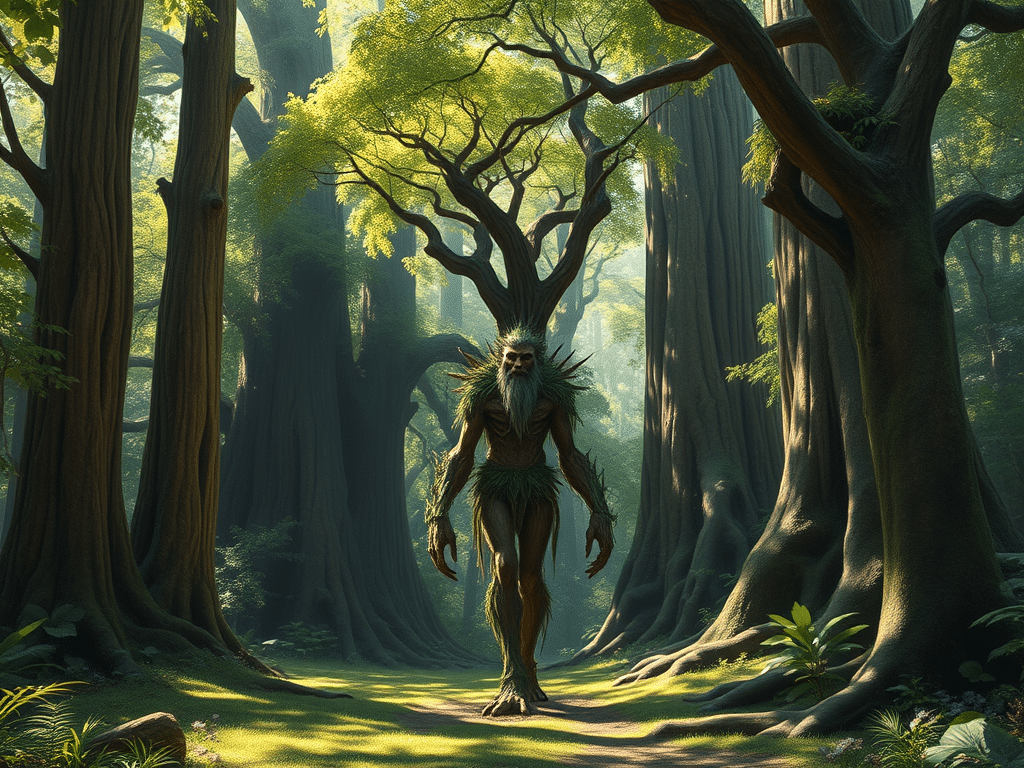
People in Indiana who saw the creature say it is between seven and nine feet tall and has dark brown or reddish-brown hair that looks coarse and matted. People usually say that the Indiana Bigfoot has a muscular, human-like body with arms that are too long and hang past its knees, huge shoulders, and a big crest on top of its head. Witnesses often talk about the creature’s piercing eyes, which are said to be either yellow or deep brown, and its face, which looks very human-like even though it has ape-like features. The footprints that are thought to belong to this creature are between 15 and 18 inches long and show five toes and a heel impression. This suggests that it walked on two legs, which is very different from how other animals in the area walk.
Reports of Indiana’s Bigfoot’s behavior suggest that it is a very smart and hard-to-find creature that actively avoids contact with people but is also very interested in what people do. Witnesses often say that the creature moves through thick woods with surprising stealth, even though it is very big. They often see it watching people from a distance before disappearing into the forest canopy. Many stories say that the creature seems to be very interested in campsites, cabins, and rural properties. It has been seen approaching buildings at night, looking through windows, and sometimes leaving signs of its presence, like broken plants or strange noises. Witnesses say that the creature has a strong, unique smell that smells like wet dog, rotting plants, and musk. This smell is often the first sign that it is nearby.
Folklore about Bigfoot in Indiana mixes Native American stories with stories from modern settlers. This creates a cultural narrative that goes back hundreds of years in the state’s history. The Miami and Potawatomi tribes that lived in the area first talked about forest spirits and wild men that lived in the woods. These beings were very similar to what people say about Bigfoot today. In the 1800s, early European settlers in the state said they saw “wild men” and “wood devils” in the state’s vast forests. These stories were often dismissed as frontier superstition, but they sound a lot like modern Bigfoot sightings. People in the area say that the creature is a guardian of the forest, neither good nor bad, but rather a mysterious presence that reminds them of the wild land that used to cover Indiana (Davenport, 2020).
Bigfoot Encounters
Several locations throughout Indiana have emerged as particular hotspots for Bigfoot activity, with Brown County leading the state in reported encounters due to its extensive forested terrain and relatively low population density. The Hoosier National Forest, spanning across southern Indiana, provides ideal habitat for such a creature with its dense canopy, abundant water sources, and minimal human intrusion, making it a focal point for researchers and enthusiasts. Monroe Lake and the surrounding wilderness areas have generated numerous reports, particularly from fishermen and campers who describe nighttime encounters along the water’s edge. Warren Dunes State Park in northern Indiana and the wooded areas near the Michigan border have also had a lot of sightings. The bottomlands along the Wabash River system are another place where sightings happen a lot (Bigfoot Field Researchers Organization, 2025).
The 1972 Churubusco incident is one of the most interesting and well-documented Bigfoot sightings in Indiana. Several people saw a large, hairy creature crossing County Road 33 near the town’s edge during the day. The creature was said to be about eight feet tall and had a unique, loping gait. Several independent witnesses gave very similar descriptions, even though they hadn’t talked to each other before. Another important event happened in 1987 near Bluffton. A family camping at Ouabache State Park said they were woken up by loud footsteps going around their tent. They then saw a huge, upright figure standing in the moonlight before it disappeared into the thick woods. In 1994, a group of fishermen at Brookville Lake said they saw a large, two-legged creature drinking from the edge of the lake. When it saw them, it quickly ran into the forest, leaving footprints in the muddy shoreline that were more than sixteen inches long.
The 2003 Brown County sighting is one of the most famous recent ones. A local photographer took pictures of the landscape that showed what looked like a large, dark figure moving between trees in the background. However, the pictures are still up for debate and don’t prove anything. In 2008, a deer hunter near Paoli said he came very close to a creature that he thought was over seven feet tall, had dark hair all over it, and acted like it was just as surprised as he was. Both the hunter and the creature ran away in opposite directions. In the 2015 Morgan-Monroe Forest incident, a group of hikers said they heard strange wood knocking sounds and saw a large, upright figure moving along their trail for a few minutes before disappearing completely. This encounter was notable for how long it lasted and how many people saw it (Freeburg & Fowler, 2016).

Analysis
There are a number of scientific theories about why people keep seeing Bigfoot in Indiana. Some say it’s because people are mistaking it for other animals, while others think it could be a new type of primate that hasn’t been discovered yet. The misidentification theory says that people are seeing black bears standing up, which can look a lot like people from a distance, especially in low light or thick forests where visibility is poor. Proponents of this theory point to the fact that Indiana’s black bear population has been steadily recovering in recent decades, expanding into areas where they haven’t been seen for generations, potentially leading to surprising encounters with residents unfamiliar with bear behavior (Nickell, 2013). Also, pareidolia is a psychological phenomenon that explains how shadows, fallen trees, or groups of plants might be seen as a big, upright creature moving through the forest.
The relict hominid theory posits that Bigfoot signifies a surviving population of an ancient primate species, potentially linked to Gigantopithecus blacki, a colossal ape that existed in Asia until a comparatively recent period in evolutionary history. Proponents of this theory contend that the uniform physical descriptions from various witnesses and locations indicate a genuine biological entity rather than mere folklore or misidentification. They highlight the extensive, predominantly uncharted wilderness regions that could potentially sustain a small population of such creatures. The theory gains some credence from the discovery of new large mammal species in remote areas of the world, demonstrating that significant animals can remain hidden from scientific scrutiny for extended periods. However, critics note the lack of physical evidence such as bones, hair samples with unknown DNA, or clear photographic documentation that would be expected from a breeding population of large primates in North America.
Psychological and sociocultural theories examine Bigfoot sightings as manifestations of deeper human needs and cultural narratives rather than encounters with an actual creature. These theories suggest that Bigfoot represents a modern incarnation of the “wild man” archetype found in cultures worldwide, serving as a symbol of untamed nature and humanity’s complex relationship with the wilderness. The social contagion aspect of Bigfoot belief explains how one reported sighting can influence others in the community to interpret ambiguous experiences through the lens of cryptozoology, creating clusters of reports in specific areas and time periods. Some researchers propose that the Bigfoot phenomenon reflects a collective response to rapid environmental change and urbanization, where the mysterious creature serves as a psychological bridge to a more primitive, natural world that residents feel is disappearing around them (Godfrey, 2014).
Bigfoot legends in Indiana have a big effect on the culture and economy of the state. They affect tourism, local businesses, and the way people see themselves in their communities in ways that are hard to measure but very real. Small towns near reported hotspots have embraced their cryptozoological heritage. For example, local businesses use Bigfoot themes in their advertising, and tourism boards promote the mystery as a unique attraction for people looking for adventure and the unknown. The phenomenon has led to the creation of research groups and investigation teams all over the state. These groups include amateur researchers, wildlife lovers, and curious citizens who help the local economy by going on expeditions and buying equipment. Sometimes, colleges and universities have looked into the sociological aspects of Bigfoot belief systems, looking at how these stories show deeper connections between people and nature and the unknown. At the same time, the reports keep coming in, which keeps Indiana in the national conversation about unexplained phenomena.
Conclusion
The mystery of Bigfoot in Indiana isn’t just a story; it’s a symbol of how complicated our relationship with nature is and how much we love the unknown. The Indiana Bigfoot phenomenon continues to capture imaginations and make people wonder what other secrets might still be hidden in the state’s remaining wilderness areas. Some people think it is a surviving relic from prehistoric times, others think it is a misidentified known animal, and still others think it is just a product of human imagination and storytelling traditions. As Indiana’s forests come under more and more pressure from development and people moving in, the story of Bigfoot serves as a powerful reminder of the mysteries that are lost when wild areas are destroyed. This means that the creature’s legacy will live on in the minds of Hoosiers, even if there is never any proof that it exists.
References
Bigfoot Field Researchers Organization. (2025). Reports for Indiana. BFRO.net. https://www.bfro.net/GDB/state_listing.asp?state=in
Davenport, H. M. (2020). The changing face of folkloric transmission: bigfoot and the American psyche. Master of Arts in American Studies, Montana State University.
Freeburg, J., & Fowler, N. (2016). Monsters of the Midwest: True Tales of Bigfoot, Werewolves & Other Legendary Creatures. Adventure Publications.
Godfrey, L. S. (2014). American Monsters: A History of Monster Lore, Legends, and Sightings in America. Penguin.
Nickell, J. (2013). Bigfoot lookalikes: Tracking hairy man-beasts. Skeptical Inquirer, 37(5), 12-16.



Leave a Reply