
Six Key Points About the Brownsville “Gorilla” Incident
-
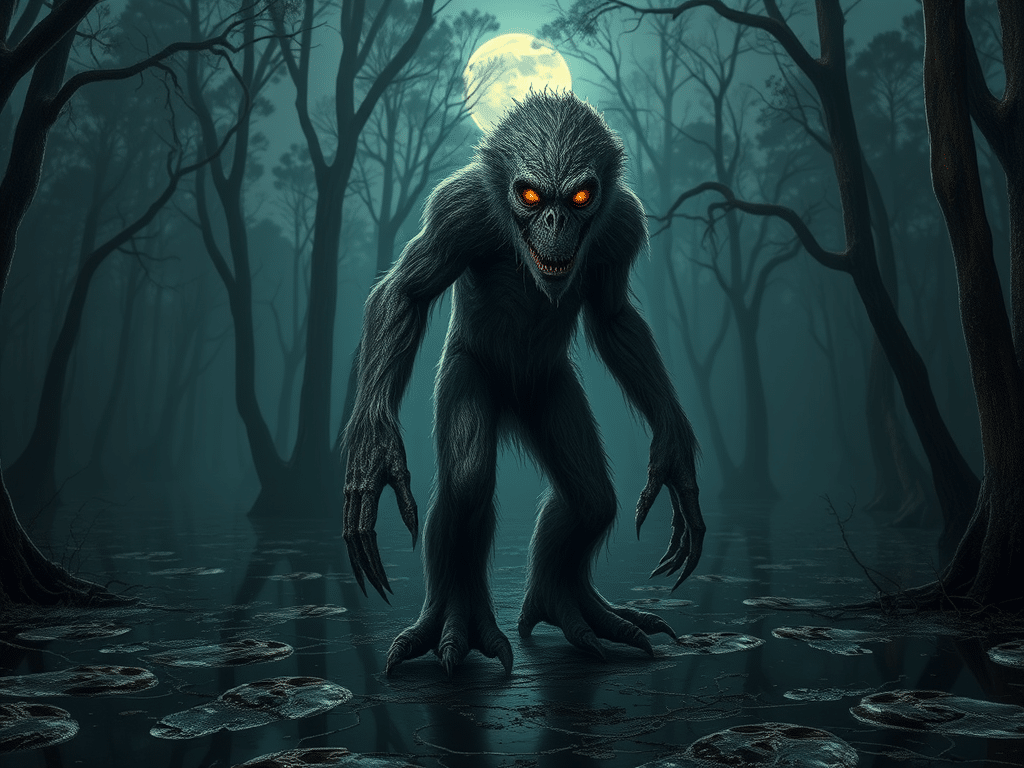
In 1892, Brownsville residents reported a “gorilla” hiding in hills by day and roaming town streets at night.
-
The Lincoln Herald documented multiple witnesses and plans for a hunting posse.
-
The cavernous Mammoth Cave region provided ideal hiding places for a large, elusive creature.
-
Before “Bigfoot” existed as a term, 19th-century Americans often labeled similar sightings as “gorillas” or “wild men.”
-
The newspaper’s escaped circus animal theory seems implausible given the rarity of gorillas in 1892 America.
-
This incident shows how rural communities interpreted unexplained phenomena before modern cryptozoology.

Introduction
A strange fear gripped the small town of Brownsville, Kentucky, in the spring of 1892. An article in The Lincoln Herald on May 7, 1892, said that people in the area were scared of a “gorilla” that lived in the nearby knobs and hills during the day and only came into town at night. This strange event, which most history books don’t talk about, is a great example of early American sightings of cryptids and how the story of Bigfoot changed over time before it got its famous name. The events in Brownsville, located in the cavernous area near Mammoth Cave, show us how rural communities in the late 1800s dealt with strange occurrences.
Overview
The Lincoln Herald’s story paints a clear picture of a community that has changed because of fear. The newspaper said, “As soon as it gets dark, the people are so scared that everyone locks up their house and bars the doors and windows.” The fact that so many people reacted in the same way shows that the events weren’t just one-time things but rather a problem that affected the whole community. The report also says that “not a few have seen him,” which means that more than one person saw whatever was walking around Brownsville at night. The article ends by saying that a “posse of citizens will probably soon turn out and seek the capture of the monster or fill its hide with slugs of lead.” This statement shows how seriously the community took this threat (The Lincoln Herald, 1892, May 7).
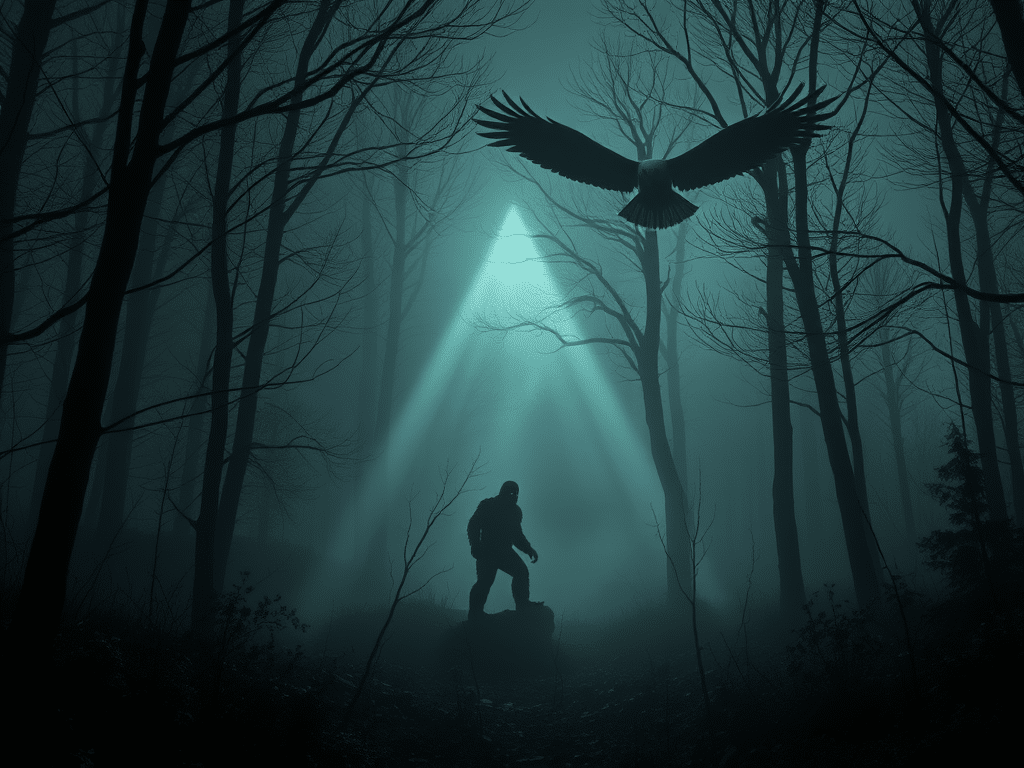
The fact that these sightings are linked to a “gorilla,” an animal that has never lived in the wild in North America, makes this story even more captivating. The paper guessed that the animal “probably made its escape from some traveling show,” which was a common reason for animals to be found in strange places at the time. Modern paranormal researchers at ParaRational.com say that “the odds of a gorilla sneaking down into town at night to wander around in 1892 Kentucky seem pretty low.” Instead, they say that a more likely explanation might be that the event was an early sighting of Bigfoot, long before that word became known to the general public. The behavior described—going back to the wilderness during the day and exploring human settlements at night—is similar to what people today say Sasquatch does (Cliff, 2025).
The location of Brownsville supports the Bigfoot theory. Edmonson County, Kentucky, has many caves, thick forests, and rough terrain, which makes it a good place for cryptids to live. The area around Mammoth Cave has a landscape that could, in theory, support a population of big, hard-to-find animals. The area is full of caves, such as the Mammoth Diamond, Grand Avenue, Proctor’s, and Hundred Dome caves, which provide many places for animals to hide and stay safe from people. These natural features might help explain how a big animal could stay mostly hidden while still occasionally going into areas where people live (Algeo, 2004).

Analysis
This event, prior to the standardization of cryptid terminology, was part of a broader pattern of pre-modern Bigfoot sightings known by various names. In the 1800s, newspapers often reported sightings of “wild men” or “gorillas” in places where there were no known primates. These reports are very similar to modern Bigfoot stories, but they don’t have the context or language that later developed around these kinds of events. The Brownsville incident marks a transitional phase in American folklore, characterized by the incorporation of encounters with unidentified creatures into the cultural lexicon, frequently utilizing terminology from recognized animals instead of acknowledging them as separate cryptid classifications.
There are a few different ideas that could explain the Brownsville gorilla event. The newspaper’s idea that the gorilla escaped from a circus seems the least likely because gorillas were not common in American traveling shows at the time and would not have done well in the wild. A more likely explanation might be that people mistook a known animal for something else, like a black bear standing on its hind legs. However, the fact that people kept seeing this creature and the clear difference residents made between it and familiar wildlife argues against this. The psychological explanation—that mass hysteria or shared delusion gripped the town—doesn’t explain the specific details and multiple independent sightings that were reported. Finally, it’s possible that people in Brownsville saw something truly strange, like a new primate species or a relic hominid that has been seen in North America throughout history.
There have been many Bigfoot sightings in Kentucky over the years. The Bigfoot Field Researchers Organization (2025) says there have been 116 sightings in the state. These reports are mostly from a few counties. Lawrence County has the most, with 10 reports, followed by Pike County with 6, and several counties, including Harlan and Hopkins, with 5 reports each. The most recent Class A sighting (which means it was clear) happened in Anderson County in November 2021, when a hunter saw something during the day just 30 miles southeast of Louisville. The locations of sightings match up with Kentucky’s many forests, rough terrain, and remote areas, especially in the eastern part of the state, where the Appalachian Mountains provide the best habitat. The historical consistency of reports, which go back to at least 1950 in Martin County, suggests that these encounters are not just one-time events but a long-term occurrence, which could explain the Brownsville incident.
The Brownsville gorilla’s effect goes beyond this one event; it adds to the rich history of American cryptid folklore. These historical accounts are important steps on the way to the Bigfoot phenomenon that would capture the national imagination in the second half of the 20th century. These initial accounts, untainted by subsequent pop culture depictions that influenced perceptions of Bigfoot’s appearance and conduct, offer significant insights into the natural responses and classifications of communities regarding anomalous encounters. The Brownsville case illustrates how rural Americans endeavored to comprehend the inexplicable by invoking the nearest analogues within their cultural lexicon—in this instance, the exotic gorilla instead of the yet-to-be-conceived Sasquatch (Freeburg & Fowler, 2016).
Conclusion
The 1892 Brownsville gorilla incident is an intriguing part of the history of American cryptid folklore. It shows how people dealt with and understood strange events before modern cryptozoological frameworks were created. People are still arguing about whether the incident was really an early sighting of Bigfoot, an exotic animal that got loose, a case of mistaken identity, or something else. It is clear that something strange enough to receive newspaper coverage and safety measures across the whole town was walking the streets of a small Kentucky town after dark for a short time in the spring of 1892. This long-forgotten story reminds us that the lines between folklore, cryptozoology, and local history aren’t always as clear as we think. Every strange encounter adds to America’s rich tradition of monster stories and wilderness mysteries.
References
A big gorilla. (1892, May 7). The Lincoln Herald, p. 3. https://www.newspapers.com/article/the-lincoln-herald/178153672/
Algeo, K. (2004). Mammoth Cave and the making of place. Southeastern Geographer, 44(1), 27-47.
Bigfoot Field Researchers Organization. (2025). Reports for Kentucky. BFRO.net. https://bfro.net/GDB/state_listing.asp?state=ky
Cliff. (2025). Gorilla or Bigfoot? Something terrorized the town of Brownsville in 1892. ParaRational.com. https://www.pararational.com/gorilla-brownsville-1892/
Freeburg, J., & Fowler, N. (2016). Monsters of the Midwest: True Tales of Bigfoot, Werewolves & Other Legendary Creatures. Adventure Publications.

Leave a Reply