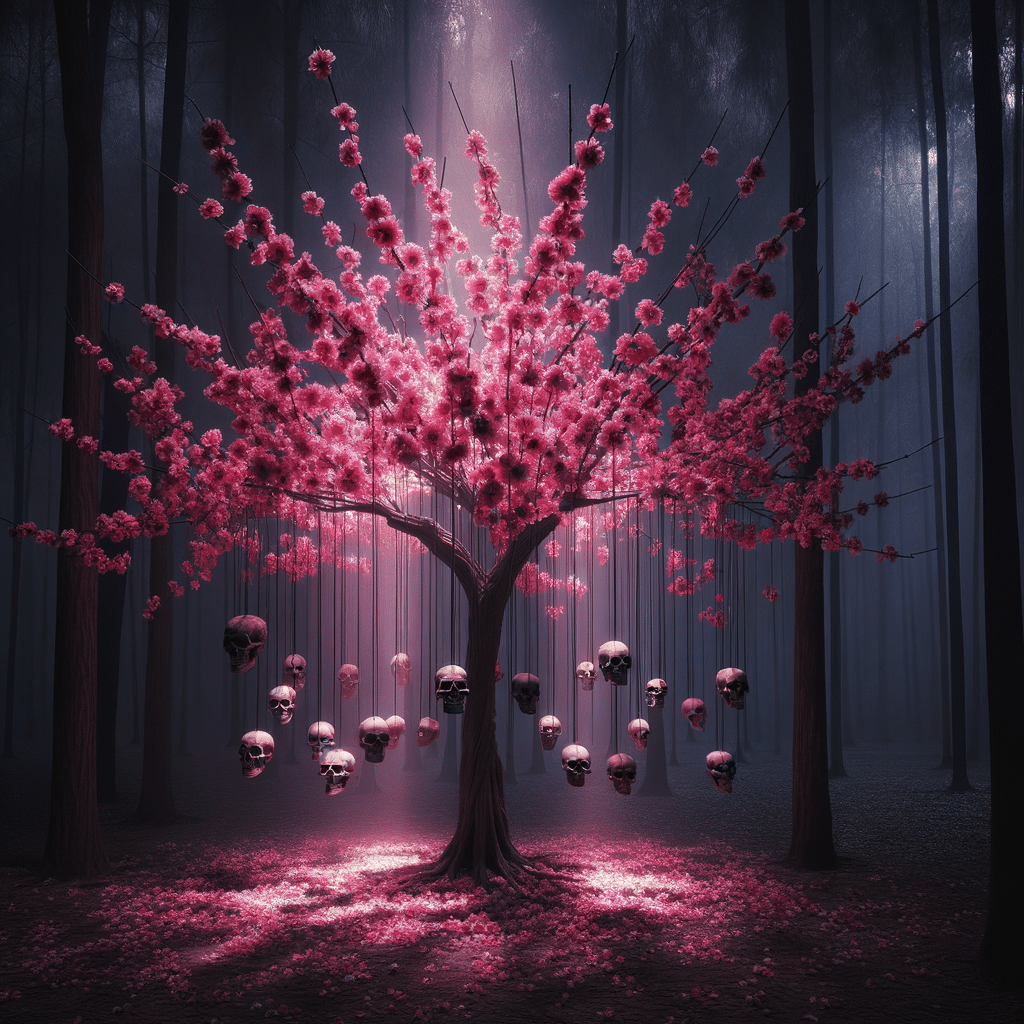
Jubokko, the Vampire Tree: Key Points
-
The Jubokko is a Japanese vampire tree born from battlefield blood.
-
It looks normal but drains people’s blood with its branches.
-
Japanese folklore often sees trees as sacred or spirit filled.
-
Stories tell of travelers and villagers attacked or finding bloody roots.
-
Other cultures also tell of deadly or man-eating trees.
-
The legend symbolizes war’s trauma and still inspires modern culture.

Introduction
The stories we tell about nature often suggest that there is something more than what we see every day. In Japan, one of the most creepy examples of this is the legend of the Jubokko, the vampire tree. It looks like a normal tree at first, but folklore says it’s not safe at all. Like many myths that come from nature, the Jubokko shows how people have tried to make sense of the mysteries of life and death. It also shows how things that seem harmless, like trees, can be thought of as dangerous or even predatory forces in the unseen world. These stories illustrate a universal human fear: the notion that danger can lurk right in front of one’s eyes, concealing itself as an ordinary aspect of nature.
Overview
In Japanese folklore, beliefs about trees are not separate from the supernatural. People have long believed that trees are homes for spirits and that they are holy beings in their own right, standing between heaven and earth. Some traditions say that some trees hold kami, or divine presences, while others may hold restless souls. Trees can live for hundreds of years longer than people, so they naturally stand for strength and mystery, as if they could hold the essence of places where strong human emotions have left a mark. People believed in the Jubokko, which became a terrifying example of how nature and the supernatural can work together.
The word “Jubokko” comes from the Japanese words for “tree” (木, “ki”) and “child” (子, “ko”). It means a mythical creature that is connected to trees. People think that Jubokko comes from the idea of Kodama (木霊), spirits that live in trees and keep the forest safe. Japanese culture and literature have shown these nature spirits in many different ways over the years, changing as society’s views of nature have changed (Walker, 2023).
The story of how the Jubokko has come to be comes from places where big battles used to happen. Legend has it that when a lot of blood was spilled, it seeped into the ground and was taken in by trees nearby. The trees in these war-torn fields didn’t stay normal; they changed into vampiric creatures that wanted more human blood. This origin shows a fear of the long-term effects of war, where even after the fighting stops, signs of violence stay around, making the land sick. The Jubokko is both a ghost story and a warning, showing that destruction changes not only people but also the earth itself (McElroy, 2020).
The Jubokko may not look suspicious until it does something. It is often described as looking like a normal tree that fits in perfectly with the rest of the forest. But when people come close, its branches move like arms or claws and stab through skin to drink blood directly from its victims. Some stories say that people who survive its attack are drained of energy and left pale and weak, while others say that the attacks are deadly. The notion that an entity appearing calm and still could suddenly launch an attack heightens the fear, making the Jubokko more frightening than a beast we already recognize as dangerous.
One story about the Jubokko is about a young traveler who got lost in a forest on a battlefield after dark. He stopped to rest against what looked like a strong old tree, but a branch went through his arm and hurt him. The story says that the tree started to drain his blood, and the only way he could get away was by using a small dagger to cut the branch. He came out of the woods pale and weak, telling others never to stay near the trees that grow on old battlefields (Seki, 1963). In another story, villagers saw livestock disappearing near a grove. At first, they thought it was wild animals, but then they found a tree with roots that were sickly red. One elder remembered that the grove was where two clans had fought long ago, which proves that the Jubokko grew from the blood-soaked ground (Meyer, 2011). These kinds of stories are both scary entertainment and cultural markers of trauma linked to landscapes.
There are different versions of the Jubokko story in Japanese folklore from different areas. There are common themes, like how the tree looks, how it traps people, and what happens to those who give in to its charms. In some stories, the Jubokko seems to be aware of or aware of people and interacts with them. It might provide rewards for being respectful and caring or punish people who trespass and disrespect.

Analysis
The Jubokko may only be found in Japan, but the idea of trees that are like vampires or predators can be found in other parts of the world. Oral traditions in Madagascar tell of a tree that eats people and traps them if they get too close. Some people in South America believe that when you cut down certain trees, they bleed, as if they have lifeblood like people. There are stories from Northern Europe about cursed oaks that hurt people who bother them. These different stories show how people are interested in the idea that plants, even though they seem passive, could be hiding disturbing hungers or awareness.
Scholars and storytellers have argued about the theories behind the Jubokko legend, asking if it is mostly about war trauma, a symbolic warning, or just a dark fantasy. Some people think it represents shared memories of violence, with the earth itself imagined as scarred and changed by bloodshed. Some people see it as a metaphor for how nature absorbs what we do and silently bears the consequences of our actions. The Jubokko could also be considered a way for communities to deal with grief, as it is a physical representation of loss that is always present and cannot be ignored. The fact that it looks normal might even show how trauma can be hidden under normal surfaces (Quinney, 2024).
In literature and the visual arts, there are many different ways to show Jubokko. Traditional woodblock prints (ukiyo-e) and modern manga show how the presence of these kinds of beings can change the way people perceive things. They remind us of how important it is to take care of the environment. Jubokko has been used as a symbol for talks about being aware of the environment throughout different artistic periods, especially during times of rapid industrialization. Depending on the local folklore, geographic area, and historical context, the way Jubokko is shown and what it looks like can be completely unique. The rich variations found in places like Aomori and Hokkaido may reflect their unique climates and ecosystems. This creates a tapestry of beliefs about how Jubokko interacts with people and the moral lessons that its stories teach (Campos, 2021).
The stories like the Jubokko have an effect because they still make people scared, curious, and thoughtful. People today may not really believe in vampire trees, but the story still affects art, literature, and even modern media. For example, anime, comics, and games all use images inspired by Jubokko. The story also serves as a reminder of how deeply human experiences, especially those involving violence, suffering, and mystery, can be embedded in landscapes and passed down through stories. Folklore like this isn’t just fun; it’s also a way for people to pass down their cultural memories, values, and warnings from one generation to the next.
Conclusion
The Jubokko vampire tree is more than just a scary story from Japan. It shows how people use nature to express their fears and truths. The quiet mystery of these stories, like the Jubokko itself, keeps drawing us closer. They remind us that folklore keeps us connected to the land we live on and to the generations who used to walk among those same old trees. By looking into these legends, we learn not only spooky stories but also how culture and imagination help people understand what happens after a war, the power of nature, and the mysteries that still surround the world’s forests.
References
Campos, M. (2021). Shinto for children in Hayao Miyazaki’s My Neighbour Totoro. libri liberorum.
McElroy, D. R. (2020). Superstitions: A handbook of folklore, myths, and legends from around the World. Wellfleet Press.
Meyer, M. (2011). The night parade of one hundred demons: A field guide to Japanese yokai. Seattle: Chin Music Press.
Quinney, R. (2024). Cryptids, Creatures & Critters: A Manual of Monsters & Mythos from Around the World. Andrews McMeel Publishing.
Seki, K. (1963). Folktales of Japan. Chicago: University of Chicago Press.
Walker, J. D. (2023). Under the Sacred Canopy: Working Magick with the Mystical Trees of the World. Llewellyn Worldwide.


Leave a Reply