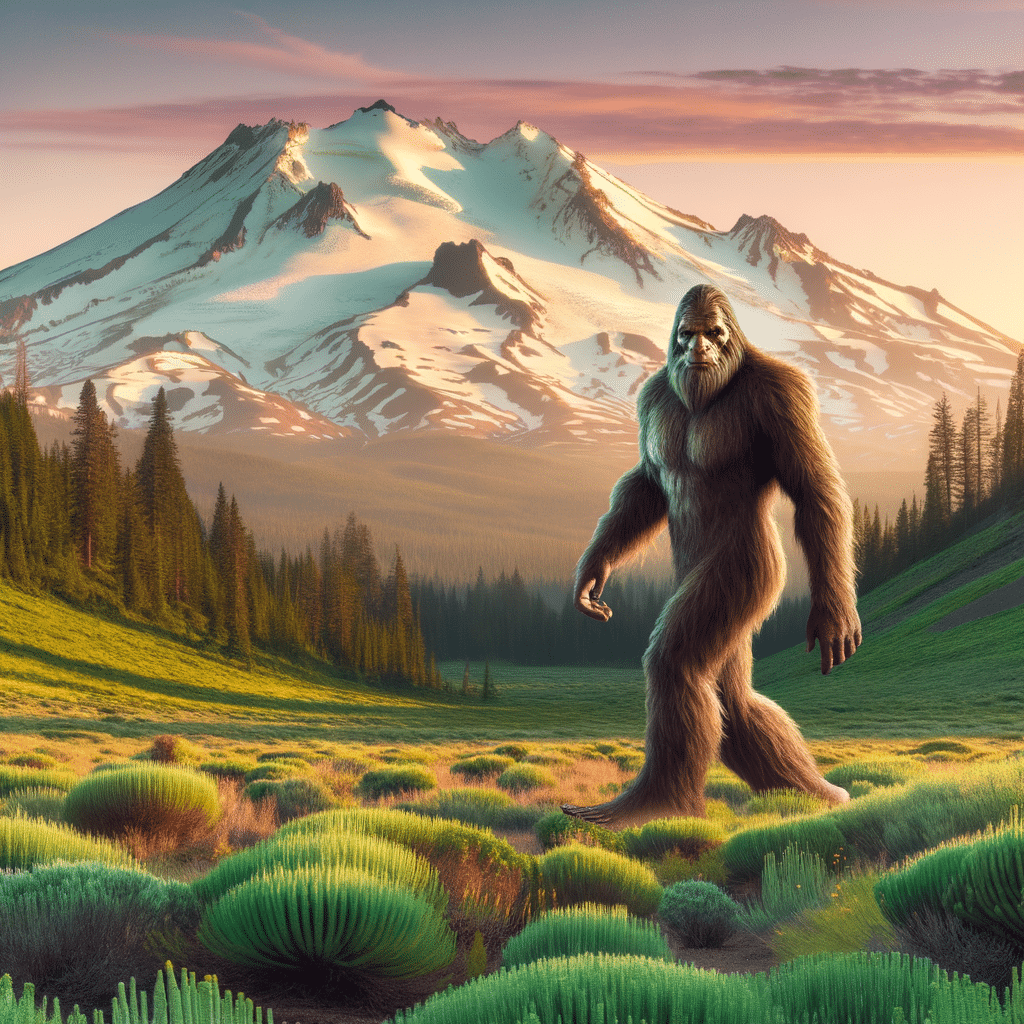
Bigfoot at Mount Shasta: Key Points
-
The mystical connection between Bigfoot and Mount Shasta has captivated researchers for decades, weaving together cryptozoology, paranormal phenomena, and indigenous folklore.
-
Bigfoot is described as a large, bipedal, ape-like creature, with Meldrum (2006) noting that physical evidence suggests patterns worthy of scientific investigation.
-
Mount Shasta is known as a paranormal hotspot, with documented numerous credible reports of mysterious lights, UFOs, and unexplained phenomena.
-
Bigfoot sightings near Mount Shasta often involve creatures that vanish mysteriously or display supernatural behaviors beyond typical cryptid encounters.
-
Indigenous tribes have oral histories of forest beings existing between physical and spiritual worlds, with Stephens (2015) noting these perspectives differ from Western cryptozoological frameworks.
-
Tourism related to Bigfoot and Mount Shasta brings thousands of visitors annually while raising concerns about exploitation of indigenous stories and environmental impact.

Introduction
Researchers, fans, and locals have been fascinated by the mysterious link between Bigfoot and Mount Shasta for decades. It combines cryptozoology, paranormal events, and Native American legends into a rich fabric of mystery. Mount Shasta is in Northern California and it is both a geological wonder and a spiritual center. It draws people who want to see strange things and legendary creatures. The cryptid Bigfoot and one of America’s most mysterious mountains have created a unique cultural phenomenon that still affects tourism, local economies, and popular culture. It also raises questions about the line between folklore and reality.
Bigfoot and the Mountain
Bigfoot, or Sasquatch, is one of North America’s longest-lasting cryptozoological mysteries. Hundreds of sightings have described it as a large, bipedal, ape-like creature with dark hair. Bigfoot is said to be between seven and ten feet tall and weigh between 500 and 1,000 pounds. Its huge feet, which can leave footprints up to 24 inches long, give the creature its name. Witnesses have reported a range of behaviors, such as knocking on wood, throwing rocks, and making strange sounds that range from howls to screams. Cryptozoologists have written a lot about these behaviors. Meldrum (2006) asserts that the physical evidence amassed over decades, such as dermal ridges in footprint casts and uniform anatomical descriptions, indicates a pattern that merits rigorous scientific inquiry, despite prevailing skepticism within mainstream science.
Mount Shasta is 4,317 meters high and has several volcanic cones, each with its history of eruptions. The cones have younger structures like Sargents Ridge and Misery Hill, which shows that the area has changed a lot over the past 250,000 years (Nathenson et al., 2003). The distinctive geological features of Mount Shasta and its surroundings are a result of volcanic activity and geological processes, such as debris flows caused by rapid snowmelt (Osterkamp et al., 1985; Blodgett et al., 1996). These geological features make the landscape very complicated, and they also provide a home for a wide variety of plants and animals.
Mount Shasta has a reputation as a paranormal hotspot that goes beyond just Bigfoot sightings. There have been reports of strange lights, UFOs, portals between dimensions, and encounters with supposed underground civilizations. The mountain has been linked to the story of Lemuria, a lost continent whose survivors are said to live inside it and come out from time to time to interact with the outside world. People who live near the mountain and people who visit it have said that they have seen strange glowing orbs, felt time distortions, and seen figures in white robes that disappear without explanation. These things have helped the mountain gain a reputation as a place where supernatural energy flows. Blackburn (2023) recorded numerous accounts of paranormal phenomena surrounding Mount Shasta, asserting that the substantial quantity and uniformity of reports from reliable witnesses necessitate investigation, despite the absence of definitive explanations.
There are many stories and reports of people seeing Bigfoot, or Sasquatch, in the wilderness around Mount Shasta, but not many real connections. These claims have led to folklore and speculative theories over the years that say Bigfoot is a creature that lives in the thick forests around the mountain. Studies suggest that areas with high biodiversity and isolated wilderness, like Mount Shasta, may offer ecological niches that sustain elusive organisms frequently associated with cryptozoological importance (Foxon, 2024). The physical landscape, with its rough terrain and thick vegetation, makes it possible for these beings to stay hidden from people.
The intersection of Bigfoot and Mount Shasta is a fascinating location for cryptozoological research, as sightings of the creature there often involve unusual occurrences that are not typical of standard Bigfoot encounters. Locals near Mount Shasta have reported encounters with Bigfoot creatures that appear to vanish from sight, communicate telepathically, or emit strange glowing effects. Such evidence has led some researchers to think that the creatures may be interdimensional rather than just biological. The thick forests around the mountain are perfect for a large, hard-to-find animal because there are plenty of water sources, wildlife that could be food, and rough terrain that makes it hard for people to travel to large areas. Along Highway 97 and in the areas around Mount Shasta City, McCloud, and Weed, there have been many reports of sightings. Witnesses have depicted creatures that align with the traditional Bigfoot description, yet they occasionally exhibit behaviors that defy scientific explanation.

Analyse
The stories and legends about Bigfoot at Mount Shasta come mostly from Native American tribes that have lived in the area for thousands of years, like the Wintu, Modoc, and others. They have oral histories of large, hairy beings. These tribes revere forest giants and spirit beings, believing them to safeguard the wild. They live in a place between the physical and spiritual worlds. The Wintu people told stories about beings they called the “Wood People” or something like that. These beings, possessing both physical and supernatural traits, posed no threat. Stephens (2015) examined the fundamental differences between indigenous perspectives on Bigfoot-like entities and Western cryptozoological paradigms, highlighting spiritual and ecological connections over mere species classification. The combination of these native traditions with modern Bigfoot research and Mount Shasta’s reputation for paranormal activity has led to a complicated folklore that is still changing and adding to itself with ideas from New Age spirituality, UFO culture, and modern conspiracy theories.
We can measure the effects of the Bigfoot-Mount Shasta phenomenon on the area’s economy, culture, and society. Every year, thousands of people come to Mount Shasta for both Bigfoot research and the mountain’s mystical reputation. The result helps local businesses like hotels, restaurants, tour guides, and specialty shops that sell everything from Bigfoot souvenirs to crystals and spiritual tools. Mount Shasta has embraced its unique identity by hosting conferences, organizing expeditions, and keeping museums open that focus on both the mountain’s mysteries and Bigfoot research. People are worried about the exploitation of indigenous stories, the damage to the environment from more foot traffic in sensitive areas, and the possible trivialization of important cultural traditions. We must weigh these concerns against the economic impact. The phenomenon has also affected scientific discussions about the standards of proof needed for cryptozoological claims, the importance of eyewitness testimony in establishing fact, and the psychological and social factors that lead people to believe in things that can’t be explained.
Conclusion
The enduring mystery surrounding Bigfoot at Mount Shasta extends beyond mere myths or tourist attractions; it demonstrates people’s desire to preserve a sense of awe in a world increasingly dominated by explanations and to safeguard areas where the unknowable still holds sway. Regardless of whether one approaches the topic as a skeptic, a believer, or a moderate position, the cultural significance and ongoing reports necessitate recognition as important phenomena deserving of thoughtful scrutiny. As long as Mount Shasta is surrounded by clouds and mystery, and as long as there are still unexplored forests, the stories of Bigfoot and other strange events will continue to interest people, inspire them to look into things, and remind us that even in the modern world, some questions will always be beautifully and frustratingly unanswered.
References
Blackburn, L. (2023). The Beast of Boggy Creek: The true story of the Fouke Monster. Anomalist Books.
Clark, J. (2010). Hidden realms, lost civilizations, and beings from other worlds. Visible Ink Press.
Foxon, F. (2024). Bigfoot: if it’s there, could it be a bear?. Journal of Zoology, 323(1), 1-8. https://doi.org/10.1111/jzo.13148
Meldrum, J. (2006). Sasquatch: Legend meets science. Forge Books.
Nathenson, M., Thompson, J. M. T., & White, L. (2003). Slightly thermal springs and non-thermal springs at mount shasta, california: chemistry and recharge elevations. Journal of Volcanology and Geothermal Research, 121(1-2), 137-153. https://doi.org/10.1016/s0377-0273(02)00426-2
Osterkamp, W. R., Hupp, C. R., & Blodgett, J. (1985). Magnitude and frequency of debris flows, and areas of hazard on mount shasta, northern california. Open-File Report. https://doi.org/10.3133/ofr85425

Leave a Reply