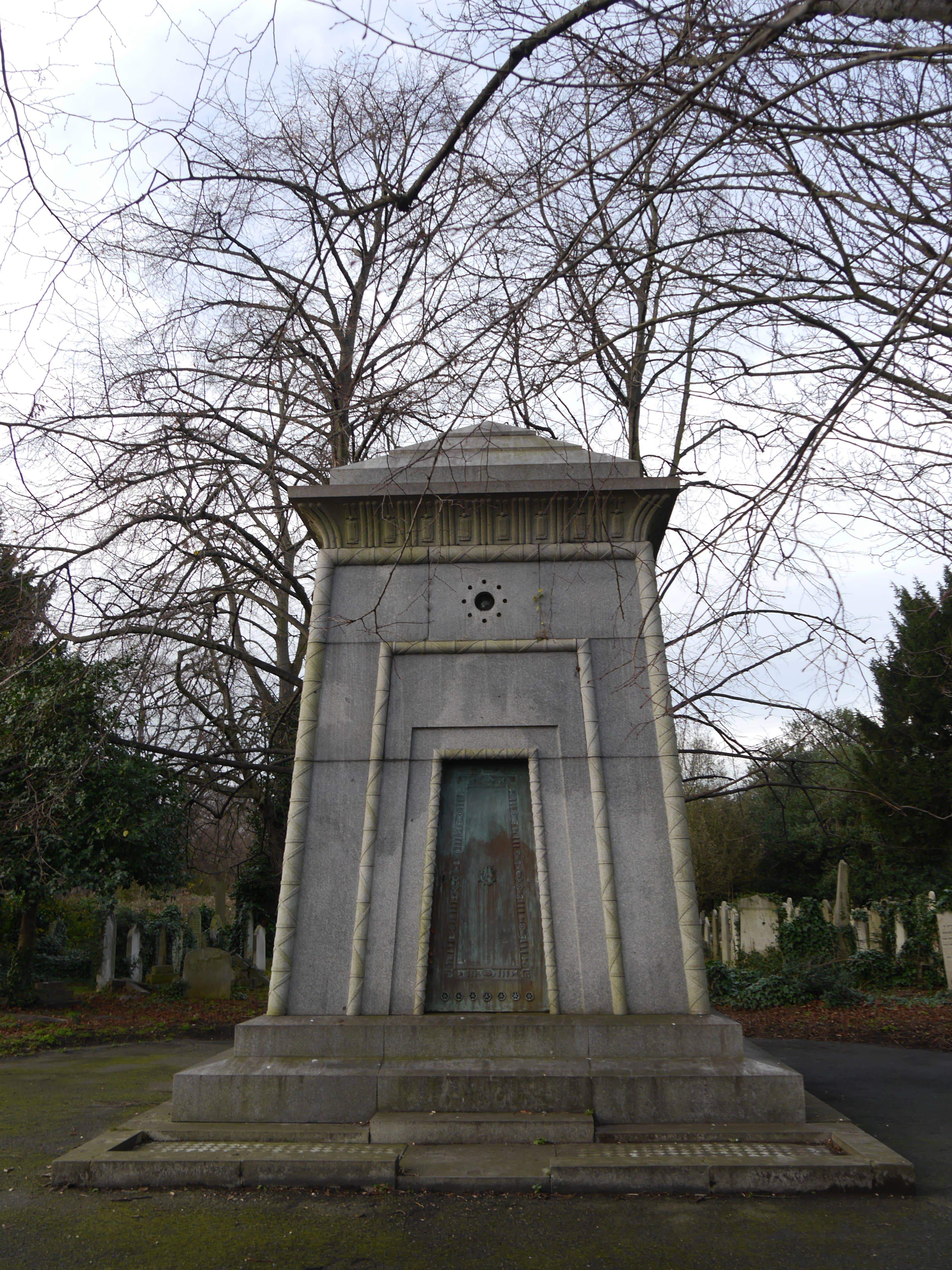
Brompton Time Machine: Key Points
-
The Brompton Time Machine is an urban legend about Hannah Courtoy’s Egyptian-style mausoleum in London, which some claim houses a time travel device.
-
Hannah Courtoy rose from maid to wealthy society figure after inheriting a fortune in 1815, living prosperously until her death in 1849.
-
The elaborate mausoleum was built in 1854 in Egyptian Revival style, with its distinctive architecture fueling speculation about hidden purposes.
-
Media coverage from 1998 onward popularized the legend, with proponents citing the building’s styling and sealed design as evidence.
-
Skeptics note that Egyptian Revival architecture was common in Victorian Britain, and no scientific evidence supports time travel claims.
-
The entertaining legend has transformed the tomb into a tourist attraction, illustrating how urban legends spread and our fascination with mysteries.

Introduction
The strange story of the Brompton Time Machine is one of London’s oldest urban legends. It is about a fancy Egyptian-style mausoleum in Brompton Cemetery that some people think has a working time machine inside. This incredible claim, which got a lot of attention after a Reuters story in 1998, has fascinated conspiracy theorists, paranormal fans, and curious Londoners for decades. The final resting place of Hannah Courtoy is at the center of this mystery. She started out as a maid and worked her way up to become a wealthy socialite in nineteenth-century London. She left behind a fortune and one of the cemetery’s most mysterious monuments.
For thousands of years, the concept of time travel has fascinated people. It represents our deepest desire to break free from the linear limits of existence and go back in time or see the future. Albert Einstein’s theory of relativity made the idea more scientifically sound by showing that time is not fixed and can be changed by speed and gravity. This concept means that time travel could theoretically happen in very extreme situations. Although physicists persist in discussing the theoretical feasibility of time travel via constructs such as wormholes and closed timelike curves, no practical methodology has been demonstrated or validated. Time travel still fascinates us all, though, and it has inspired countless works of fiction and led to speculation about strange artifacts or structures that could somehow connect different times.
The Time Machine Story
Hannah Courtoy’s life was so interesting that it reads like a Victorian novel, even though it is based on real events. Hannah Peters was born in 1784. She worked as a maid and had three daughters with John Courtoy, an old French-born merchant who changed his name from Nicholas Jacquinet (National Archives, n.d.). When Courtoy died in 1815, he left Hannah a large fortune through a will that was challenged in court. These events changed her from a domestic servant to a woman of immense wealth. She lived in style for the rest of her life at 14 Wilton Crescent in Belgrave Square, one of London’s most prestigious addresses. She died on January 26, 1849 (Deaths, 1849).
The monument that would later lead to so much wild speculation was built in 1854, five years after Hannah’s death, in the Brompton Cemetery, which had just opened at the time (Meller & Parsons, 2013). The mausoleum is built in the trendy Egyptian Revival style that was popular during the Victorian era. It offers unique architectural features that make it stand out from the other graves nearby. Two of Hannah’s unmarried daughters, Elizabeth (who died in 1876) and Mary Ann, were eventually buried there with their mother, making it the family’s final resting place. The building is impressive because of its intricate design and how well it has been preserved. It is a testament to Hannah’s wealth and the high status she achieved in her lifetime.
In 1998, a story came out asking about the secret of time travel hidden in an old London cemetery (Smith, 1998). This made the time machine legend famous around the world, even though it was only a local curiosity before. Stephen Coates, a musician in the band The Real Tuesday Weld, became genuinely interested in the story. Stephen Coates documented numerous aspects of the time machine legend, including multimedia projects that explored the connections between London’s history and time travel concepts. Brompton Cemetery, the burial place of Egyptologist Joseph Bonomi the Younger, added intrigue to the story. These characteristics gave the place a scholarly air of mystery. Jinman (2015) wrote about the phenomenon in The Independent, which helped make the legend more popular and turned the mausoleum from a Victorian memorial into a place where people who are interested in time travel and strange events can go on pilgrimage.

Theories
Paranormal believers think the mausoleum is more than a tomb because of its oddities. Some theorists draw attention to the Egyptian style, asserting that it carries hidden meanings connected to ancient knowledge of time manipulation. They make questionable connections between Egyptian mysticism and advanced technology. Others focus on the fact that the structure is sealed and wonder what might be inside. They say that the building’s real purpose was hidden behind a memorial. There are also claims about strange electromagnetic activity, strange building features, and the fact that it is near other famous graves, all of which are part of a complicated story that the mausoleum is a gateway through time.
Skeptics, on the other hand, give much more boring and historically based reasons for every part of the so-called mystery. The Egyptian Revival style was very popular in Victorian Britain, especially after more people became interested in Egypt’s archaeology and obelisks and other artifacts were brought to London. During this period, wealthy individuals built elaborate mausoleums to pay tribute to their earthly accomplishments and to create a beautiful resting place for their entire family. This is a common feature of tomb architecture: the building is completely sealed. Its purpose is to keep the remains inside and prevent people from entering or disturbing the dead.
From a practical perspective, it is scientifically implausible that a mausoleum from the Victorian era could contain operational time travel technology, given our current understanding of physics and the technological limitations of the 1850s. There are no reports of people appearing or disappearing near the structure, and there’s no proof it relates to time travel. There is also no credible testimony from anyone who says they traveled through time using the mausoleum. The whole story seems to be based on guesswork, creative interpretations of normal building features, and the fact that people tend to look for mystery and wonder in the world around them. Historical records clearly show how and why the mausoleum was built. Hannah’s will is in the British National Archives (National Archives, n.d.), and her life is documented in various parish records and historical sources. There are no contemporary sources that suggest anything strange about the structure apart from how impressive it looks.
Impact
Even though the Brompton Time Machine story isn’t based on facts, it has had a big cultural impact, turning a boring Victorian tomb into something that people all over the world are interested in. Many articles, including those in The Independent (Jinman, 2015) and other paranormal magazines, have covered the story. This means that Hannah Courtoy’s name is still known more than 175 years after her death. The Friends of Brompton Cemetery have named her one of their “Fifty Notable Personalities” because of how important she was in history and how fascinating her memorial is. The legend has definitely helped tourism to Brompton Cemetery, as curious visitors go to the mausoleum to take pictures and think about the unlikely chance that it might be more than it seems.
The fact that the Brompton Time Machine story is still going strong shows something important about how urban legends work today: they spread through the internet and news media to reach people all over the world while still being specific to their local area. This legend is different from most conspiracy theories or paranormal claims because it is based on a real place with a documented history. The evidence makes a clear link between the strange claim and the real world. This easy access makes the story more interesting and lets people become involved in the mystery by going to the site themselves, even if they don’t really believe in the time machine. For most people who hear the legend, it is more of an entertaining story on top of historical facts than a serious belief system.
Conclusion
The Brompton Time Machine is a wonderful example of how everyday historical objects can become the focus of amazing speculation when imagination and opportunity come together. Hannah Courtoy’s mausoleum is still what it has always been: an impressive Victorian memorial to a woman who broke down many social barriers to become rich and famous in her lifetime. The time machine story, even though it is not based on science or history, has given her story a kind of immortality that few maids in the 1800s could have hoped to achieve. The result means that her name and monument still attract a lot of attention today. One can view the Brompton Time Machine story as a serious mystery, an entertaining fiction, or a cautionary tale about the spread of misinformation. It shows how much we all care about time, death, and the idea that the world may be stranger and more amazing than we think.
References
Barristers called. Michaelmas term, 1837. (1837). The Legal Observer, 15(438), 170.
Deaths. (1849, February 19). Bell’s Weekly Messenger, p. 63.
Jinman, R. (2015, December 12). Brompton cemetery: The sealed mausoleum believed to be a fully-functioning time machine. The Independent.
Meller, H., & Parsons, B. (2013). London cemeteries: An illustrated guide and gazetteer. Stroud, England: History Press.
National Archives. (n.d.). Will of Hannah Courtoy otherwise Hannah Peters, single woman of no 14 Wilton Crescent.
Smith, H. (1998, October 29). Is the secret of time travel lurking in an old London cemetery? Daily News, p. 4A.

Leave a Reply