Scottish Highland Ghosts: Key Points
-
The Scottish Highlands combine dramatic natural beauty with centuries of tragic history, creating a landscape deeply associated with ghost stories and paranormal phenomena.
-
The Grey Lady of Dunrobin Castle is believed to be Margaret, an earl’s daughter who died escaping after her father imprisoned her for loving a stable boy.
-
The Glencoe Massacre of 1692 has left the area reportedly haunted by screams, ghostly figures, and sudden temperature drops that locals treat as reminders of unhealed historical trauma.
-
Theories explaining paranormal experiences include the Stone Tape Theory, electromagnetic activity, infrasound from mountain winds, and genuine supernatural hauntings from historical trauma.
-
Skeptics attribute ghost sightings to psychological factors like pareidolia, folklore influence, and misidentification, though even they acknowledge the Highlands inspire such experiences unusually often.
-
Ghost stories impact Highland culture and economy through paranormal tourism while preserving local history and helping communities process collective trauma.

Introduction
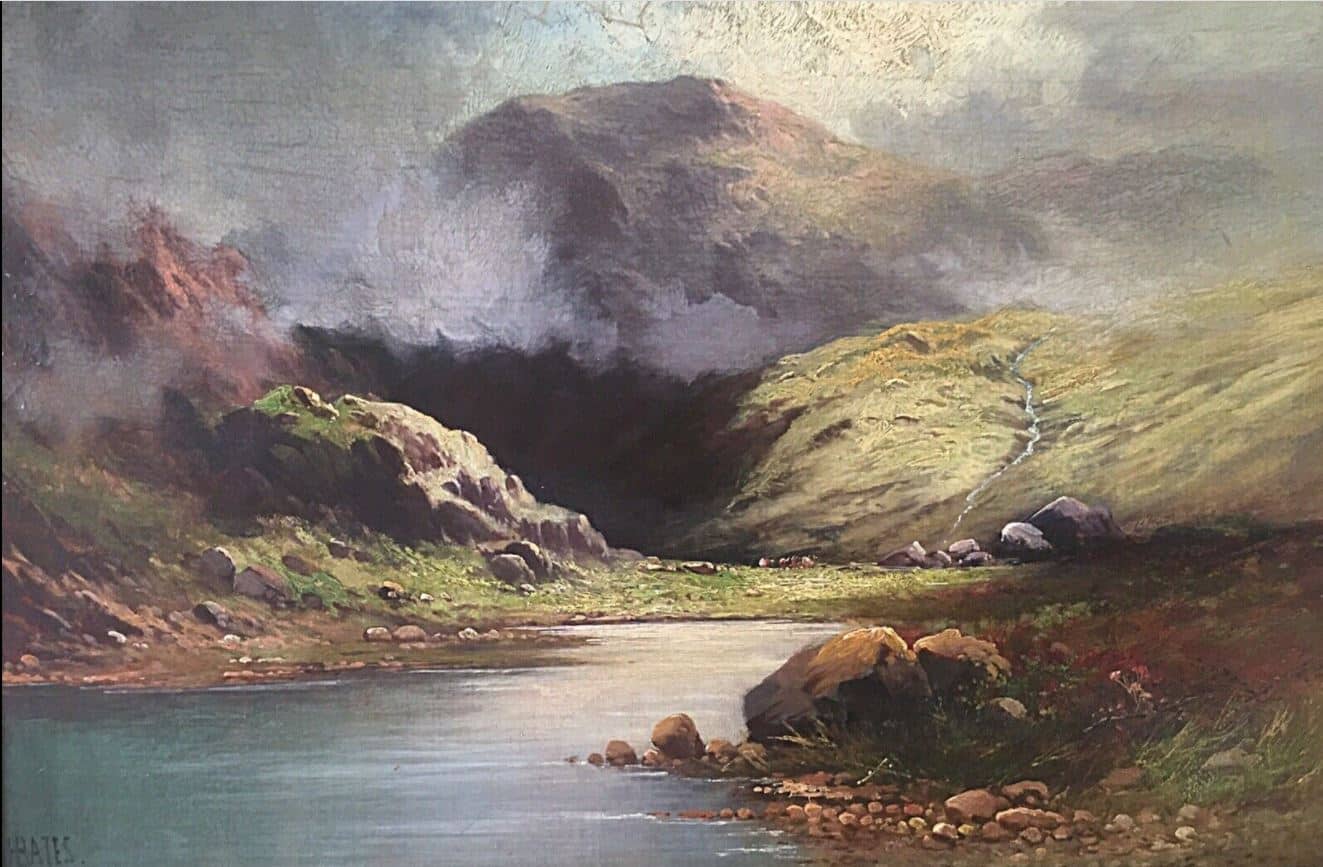
The Scottish Highlands are one of the most beautiful places on Earth. Mist-covered mountains meet ancient glens, and the air appears to be full of history. People have long told stories about the supernatural and strange things happening in this rough area, which has steep peaks, deep lochs, and castles that are far away from each other. The Highlands are a wonderful place to look at how people have always been interested in ghosts and the paranormal. The combination of beautiful natural scenery and rich folklore makes them a wonderful place to contemplate belief, the power of place, and the stories we tell ourselves about what lies beyond the visible world.
Overview
The Scottish Highlands are a vast area of mountains in the north of Scotland. Ancient geological forces and glaciers shaped the landscape, resulting in highly unpredictable weather. Because the area is so remote, it has kept both its natural wilderness and its rich cultural history, which is based on Gaelic traditions, clan histories, and hundreds of years of war and tragedy. The paranormal, on the other hand, is a term for things that are outside of normal scientific understanding, like ghosts, strange sounds, and other things that make us think there is something beyond our everyday reality. In the Highlands, the link between place and phenomenon is especially strong. The landscape itself seems to make people contemplate mysteries that are difficult to explain (Jonsson, 2013).
Ghost stories
There are as many ghost stories in the Scottish Highlands as there are glens. Almost every castle, battlefield, and ancient ruin has its own ghostly residents. These stories aren’t just for tourists; they’re a part of the culture of the area. They are treated with a mix of respect, caution, and acceptance that might surprise skeptics. The stories often come from real historical tragedies, which lends them a weight and truth that made-up ghost stories don’t have. Highland ghost stories are especially interesting because they mix real historical events with supernatural elements, making stories that seem both real and strange (McGill, 2022).
The Grey Lady of Dunrobin Castle, a magnificent castle in Sutherland that looks out over the North Sea, is one of the scariest stories from the Highlands (Malan, 1902). People think the ghost is Margaret, the daughter of the 14th Earl of Sutherland. She fell in love with a stable boy in the early 1700s, but her father thought it was completely wrong because of the strict class differences of the time. Legend says that when the Earl found out about their romance, he locked his daughter in the attic rooms of the castle to keep her from seeing her love. But Margaret tried to escape by tying bedsheets together and climbing down from her window. The rope that Margaret had made broke, and she fell to her death on the rocks below. Her father’s pride and the harsh rules of social hierarchy cut short her young life. People who have been to Dunrobin Castle and staff members have seen a young woman in gray moving around the upper floors, especially near the rooms where Margaret was held captive. Some people say they feel a strong sadness in those areas. The castle no longer lets people see these attic rooms, but it’s not clear if the ban is out of respect for the ghost or just because they are in bad shape.
The Old Military Road near Glencoe serves as the setting for another very creepy Highland ghost story, where one of Scotland’s most famous massacres took place. In February 1692, government soldiers who had been staying with Clan MacDonald as guests killed them. This incident broke the sacred Highland tradition of hospitality and shocked even people who were used to clan warfare. The soldiers killed thirty-eight men, women, and children either in their beds or as they fled into the winter snow. Many more died from exposure in the mountains (MacLean, 1889). For hundreds of years since that awful night, people traveling along the old road through Glencoe have said they heard screams carried on the wind, saw people in period dress running through the snow even in the summer, and felt sudden drops in temperature that made them feel scared and hopeless. People in the area take these events seriously instead of getting excited about them because they see them as a reminder of a historical wound that has never fully healed. One very detailed story from the 1970s tells of a couple driving through the glen who stopped when they saw what looked like people in trouble ahead. But as they got closer, the figures disappeared, leaving only fresh snow that looked like it had been disturbed by running footprints.

Theories
Many theories exist regarding the causes of paranormal events in the Highlands. Some theories attribute paranormal events to psychological or environmental factors, while others attribute them to real supernatural forces. Some researchers refer to the Stone Tape Theory, which posits that traumatic events can be recorded in the physical environment, especially in stone, and subsequently replayed under specific conditions to sensitive individuals. Some people say that the Highlands’ unique mix of high electromagnetic activity from granite bedrock, sudden changes in the weather, and the mental effects of being alone could make it easier for individuals to have hallucinations or altered states of consciousness. Some people think that infrasound, which is low-frequency sound waves that are too low for people to hear, could be the cause. These waves can make people feel uneasy, cause visual disturbances, and make them feel like someone is there. They happen naturally in places where strong winds funnel through narrow valleys. At the same time, people who believe in the supernatural say that the weight of history and suffering in the Highlands has caused real hauntings, where the energy or consciousness of the dead stays in the places where they lived, fought, and died.
The scientific community is still very skeptical of ghost stories and claims of the paranormal. Critics argue that eyewitness accounts lack reliability and that expectation, suggestion, and cultural conditioning can easily sway human perception. Psychologists cite pareidolia, the inclination to discern significant patterns in random stimuli, as a potential explanation for why individuals perceive faces or figures in shadows and mist. Folklore and collective memory can also make visitors to the Highlands more likely to see strange things as supernatural, especially if they have heard a lot of ghost and haunting stories before they come. Sleep paralysis, misinterpretation of natural occurrences, and the inherent human inclination to derive meaning from tragedy can all lead to ghost sightings. Skeptics contend that these ordinary explanations are significantly more probable than the existence of genuine spirits. Even the most cynical will admit that the Highlands seem to cause these events to happen more often than they should. It’s still unclear if the phenomenon is supernatural or due to the landscape, history, and human psychology.
Impact
During the Enlightenment (1685–1830), Scotland, struggling with the conflict between reason and superstition, saw a rise in ghost stories. While conventional wisdom posits that the Enlightenment precipitated a reduction in belief in the supernatural, it actually signified the advent of a unique Scottish cultural identity rooted in ghost narratives. This time period created a story world where ghosts stood for deeper social issues, showing Scotland’s fight between Enlightenment rationality and medieval belief systems. As a result, the country was known as a “haunted nation” (McGill, 2018). Writers of the time started putting ghostly figures in the beautiful Scottish landscapes, making them an important part of the story (McGill, 2022). Ghostly stories showed how people thought about themselves and how they dealt with significant changes in society and politics, like industrialization and the Highland Clearances.
Additionally, the widespread Romantic movement in the late 1700s and early 1800s pushed ghost stories even more to the front of Scottish literature. This movement romanticized the mystical connection to nature, suggesting that ghosts often lingered in landscapes that bore witness to past traumas and cultural memories (McGill, 2022). Authors such as Sir Walter Scott utilized spectral entities in their works, employing them as symbolic representations of Scotland’s formidable terrain and historical accounts (Cook, 2021). Scott’s depictions of Highland landscapes frequently integrated the supernatural with the natural, mirroring Scottish perspectives on heritage, memory, and identity (García-Walsh, 2025).
Recent examinations of Scottish ghost narratives have addressed the concept of spectrality, emphasizing the cultural importance of ghosts as embodiments of collective memories and societal traumas. These interpretations highlight ghosts as entities that not only haunt but also symbolize unresolved histories and lost identities, frequently prompting a political engagement with the past (Kilroy‐Marac, 2013). This viewpoint aligns with extensive ethno-cultural research asserting that ghosts play a crucial role in the articulation of national narratives and the formation of identity (Lincoln & Lincoln, 2015).
Artistic inquiries in the Highlands, exemplified by contemporary artists and researchers, signify profound interrelations among nature, memory, and the spectral entities sensed within the rugged terrains (Badenoch, 2024). This academic exploration of “haunted spaces” indicates that spectral entities may serve as channels for the expression of cultural and personal memories, thereby strengthening the connections between individuals and their environments.
Ghost stories and paranormal tourism in the Scottish Highlands have had a big effect on the region’s culture and economy. They have changed how the region shows itself to the world and have made a big difference to the local economies. Every year, thousands of people come to see haunted castles, go on ghost tours, and investigate paranormal activities. Some estimates say that supernatural tourism brings millions of pounds to Highland communities. Because of this commercial side, some critics are worried that ghost stories are being made up or exaggerated just to make money, which could water down real folklore and make tragic historical events seem less important. But these stories also play important cultural roles by helping people stay connected to their past, address trauma as a group, and keep local history alive in ways that interest both residents and visitors (Inglis & Holmes, 2003). The ghosts of the Highlands, whether real or imagined, keep history alive in ways that dusty textbooks can’t. They make the past feel real and important to people today.
Conclusion
The connection between ghosts and the Scottish Highlands ultimately tells us something deep about who we are as people and how we relate to history, place, and death. Whether one subscribes to the literal existence of spirits or perceives ghost narratives as psychological and cultural phenomena, the enduring nature of these stories reflects our intrinsic need to commemorate the deceased, comprehend tragedy, and establish a connection between the past and the present. The Highlands, with their stunning beauty and troubled past, are the perfect place for these timeless human issues to unfold. The Highlands offer a landscape where the boundaries between worlds are blurred and the past refuses to remain buried. In the end, maybe what haunts the Scottish Highlands the most is not the ghosts themselves but what they stand for: our shared memory, our unresolved grief, and our stubborn refusal to let go of things that are too important to forget, even by death itself.
References
Badenoch, K. (2024). Phantoms of a five‐day forest. Architectural Design, 94(4), 40-47. https://doi.org/10.1002/ad.3074
Cook, D. (2021). Walter scott, five short stories: the dundee edition.. https://doi.org/10.20933/100001216
García-Walsh, K. (2025). Margaret oliphant’s phantom scots. 19: Interdisciplinary Studies in the Long Nineteenth Century, 2025(37). https://doi.org/10.16995/ntn.11130
Inglis, D., & Holmes, M. (2003). Highland and other haunts: Ghosts in Scottish tourism. Annals of tourism research, 30(1), 50-63.
Jonsson, F. A. (2013). Enlightenment’s frontier: the Scottish Highlands and the origins of environmentalism. Yale University Press.
Kilroy‐Marac, K. (2013). Speaking with revenants: haunting and the ethnographic enterprise. Ethnography, 15(2), 255-276. https://doi.org/10.1177/1466138113505028
McGill, M. (2018). Ghosts in enlightenment scotland.. https://doi.org/10.1017/9781787443662
McGill, M. (2022). The Evolution of Haunted Space in Scotland. Gothic Studies, 24(1), 18-30.
MacLean, J. P. (1889). A history of the Clan MacLean.
Malan, A. H. (Ed.). (1902). Other Famous Homes of Great Britain and Their Stories. GP Putnam’s sons.
Leave a Reply