Aliens and the Knights Templar: Key Points
-
The Knights Templar, a medieval military order, have become the subject of modern theories linking them to extraterrestrial contact, though these claims lack credible evidence.
-
Some proponents claim the Templars discovered alien technology beneath the Temple Mount, but historians point to documented banking innovations and donations as their actual source of wealth.
-
The mysterious Baphomet idol has been reinterpreted as an alien entity, though these accusations came solely from unreliable tortured confessions during political persecution.
-
Theories suggest Templar achievements indicated otherworldly knowledge, but these actually resulted from cultural exchange with advanced Islamic and Byzantine scholarship during the Crusades.
-
These alien-Templar theories have significantly impacted popular culture through media and tourism, blurring the line between historical fact and speculative fiction.
-
The persistence of these theories reveals our attraction to hidden knowledge and alternative narratives, telling us more about contemporary culture than actual medieval history.

Introduction
For decades, conspiracy theorists, alternative historians, and curious minds have been fascinated by the connection between extraterrestrial phenomena and medieval history. The Knights Templar is one of the groups that has drawn the most speculation. This medieval Catholic military order was set up in the early 1100s to protect Christian pilgrims on their way to the Holy Land. Since then, many people have come up with theories about them, linking them to everything from hidden treasure to secret knowledge and, more recently, to contact with beings from other worlds. Most historians think these links are fake, but the fact that they keep coming up shows something interesting about how we think about historical mysteries and how much we love the unknown. The purported link between aliens and the Knights Templar exemplifies a distinctive intersection of ancient astronaut theory, medieval mysticism, and contemporary conspiracy culture that warrants scrutiny, not for its veracity, but for its insights into the proliferation and impact of fringe theories on popular culture.
Overview
The idea that aliens visited Earth in the past and had an impact on human civilization is older than most people think. It didn’t become popular until the 20th century. People who believe in this theory say that ancient structures like the pyramids of Egypt, Stonehenge, and the immense stone works of South America are proof that advanced beings helped humans with technology. They say that primitive humans couldn’t have done such wonderful things on their own (White, 2013). This view, while well-meaning in its awe of ancient achievements, often fails to recognize the creativity, determination, and skills of our ancestors who learned a lot about math, astronomy, and engineering over thousands of years. This perspective reinterprets ancient texts from diverse cultures that depict celestial beings, aerial phenomena, and encounters with divine entities as possible evidence of extraterrestrial visitation, rather than mere mythology, religious experience, or poetic representations of natural occurrences. When we apply this framework to medieval history, the interpretation becomes even more uncertain, since the Middle Ages had a long history of recording both ordinary and extraordinary events. This approach makes it hard to tell the difference between metaphor and literal description and between religious vision and claimed physical encounter.
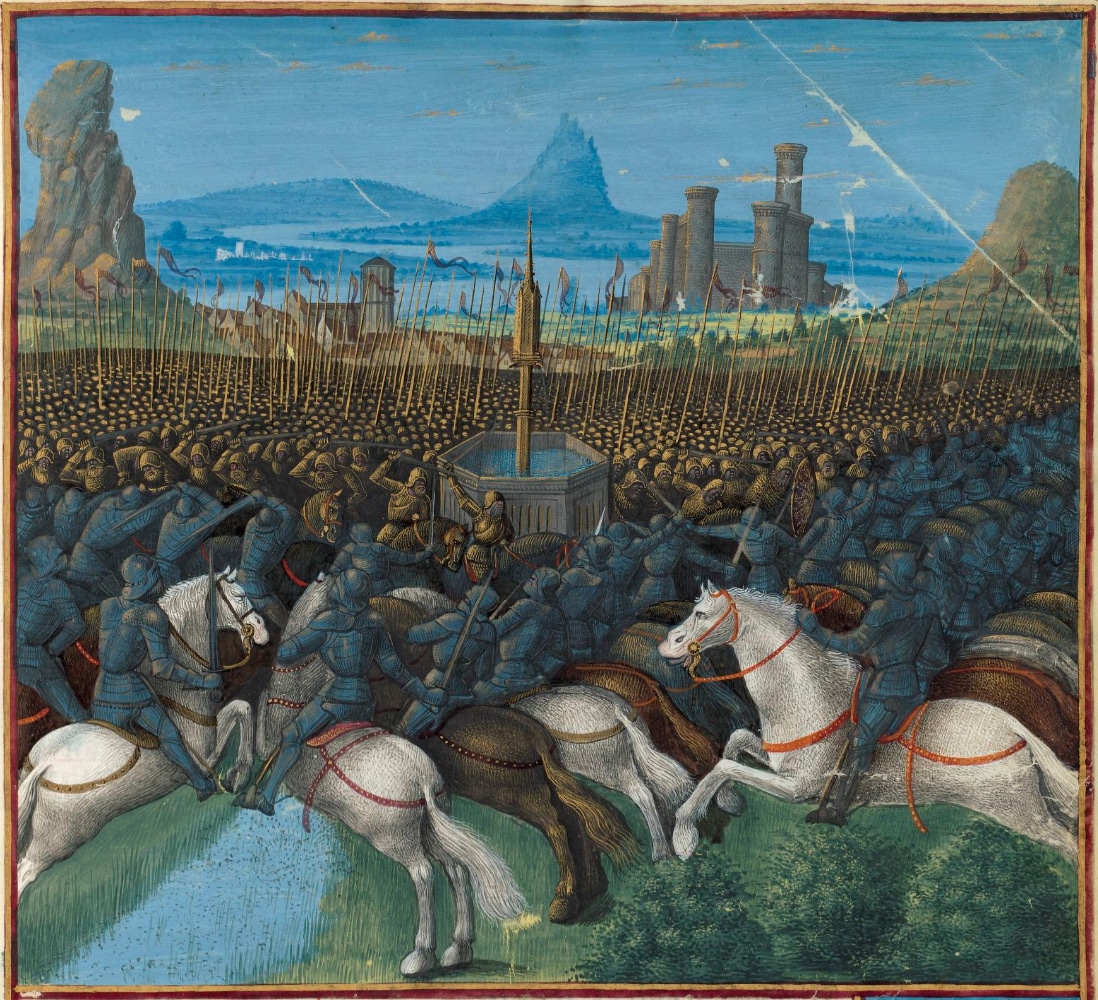
The Knights Templar started in 1119 when a small group of knights promised to protect Christian pilgrims in the Holy Land. The order quickly grew into one of the most powerful groups in medieval Europe. They built a network of forts across the Crusader states, came up with an early form of banking that let pilgrims deposit money in Europe and take it out in Jerusalem, and gained a lot of power and money that eventually led to their downfall. King Philip IV of France arrested many Templars in 1307 on charges of heresy, idol worship, and other offenses, most of which involved torture. His action was probably because he was in debt and wanted their money. Pope Clement V officially ended the order in 1312. The strange circumstances of their suppression, along with stories of hidden treasure and secret rituals, led to centuries of speculation about what the Templars really knew, owned, or protected. Their documented journeys to the Holy Land, access to ancient texts and artifacts, and reputation for secrecy have made them irresistible subjects for those looking to connect medieval Christianity with hidden knowledge or different historical stories (Howarth, 1991).
The idea that the Knights Templar had contact with aliens is a relatively new addition to the order’s already rich mythology (Masters, 2022). It started to become popular in the second half of the twentieth century, around the same time that ancient astronaut theories became popular. These stories often mix real historical facts about what the Templars did with guesses about what their symbols, art, and rituals meant. This viewpoint makes for captivating stories that mix real history with made-up stories. The allure of these theories partially resides in their capacity to reinterpret medieval enigmas within a contemporary scientific paradigm, converting religious relics and architectural accomplishments into indicators of technological progress rather than expressions of spiritual commitment. Supporters argue that the Templars’ secrecy and persecution prove they had dangerous knowledge that threatened the established order. However, this interpretation conveniently ignores the more mundane political and economic reasons for their downfall.
Aliens and Templar Knights
Some people who support this idea say that the Templars found ancient alien technology or artifacts under the Temple Mount in Jerusalem while they were in the Holy Land. This is supposed to explain how they suddenly became powerful and rich. This theory is based on the fact that the Templars really did set up their headquarters on the Temple Mount and may have dug in the area. However, what they found, if anything, is still up for debate. People who believe in the alien connection say that the order’s quick rise to wealth and power over just a few decades can’t be explained by normal means. Instead, they believe they discovered advanced technology or materials that provided them with economic and political advantages. Some versions of this theory suggest that aliens, possibly even the same ones who assisted in the construction of Solomon’s Temple on the same site, left these artifacts thousands of years ago. To go from finding archaeological evidence to finding alien technology, you have to ignore the well-known historical facts about the Templars’ banking innovations, strategic marriages and alliances, and the generous gifts they got from nobles who wanted to help the Crusades. However, the mystery surrounding what the Templars might have discovered beneath the Temple Mount continues to intrigue people (Haag, 2010). The story of alien technology is a more exciting explanation that captures the imagination better than stories of medieval ledgers and land grants.
Some people say that the Baphomet, the strange idol that the Templars were accused of worshiping during their persecution, was really an alien being or a way to talk to aliens instead of a demon or false god. During the Templar trials, members of the order confessed to worshiping a strange head or idol while being tortured (Snuffin, 2025). However, the varying descriptions of this object in different testimonies suggest the falsity or fabrication of the confessions. Alien-Templar theories view this mysterious Baphomet as evidence of contact with aliens. Some claim that the Templars used it as a communication device to receive instructions or knowledge from the aliens who assisted them. Some versions say that Baphomet was a real alien being that the Templars met and then worshipped. These interpretations would explain their supposed heretical practices as misunderstood attempts to honor or talk to an otherworldly intelligence. Proponents of this theory, who see the mystery as a chance to link medieval religious controversy with modern UFO phenomena, disregard the fact that no physical evidence of any Baphomet idol has ever been found and that the accusations came only from tortured confessions during a politically motivated persecution. This new way of looking at things turns what historians see as a sad case of religious persecution and forced confession into an exciting hint of hidden cosmic knowledge that the medieval church tried unsuccessfully to hide.
Some theories say that the Templars’ precise geometric architecture, advanced navigation methods, and complex organizational structure showed that they knew things that weren’t known in medieval Europe. Only external sources could have provided this knowledge. Supporters cite the advanced math used in Templar churches and fortifications, like the exact ratios and sacred geometry in their designs, as proof that they knew more than people in the Middle Ages. The Templars demonstrated their advanced knowledge in the twelfth and thirteenth centuries through their ability to travel across the Mediterranean and beyond, their creation of an international banking system, and their hierarchical organizational structure. This implies that their understanding of organization and technology must have originated from a realm beyond human civilization. This argument, on the other hand, is based on a wrong idea of what medieval knowledge was like and what cultural exchange happened during the Crusades, when European Christians met the more advanced Islamic world with its preserved Greek texts, advanced mathematics, and new ideas in architecture. The Templars were very impressive for their time, but their successes can be fully explained by their access to knowledge from Byzantine and Islamic sources, their international network that made it easy to share information, and the organizational models they took from monastic orders and military structures. Saying that aliens helped the Templars succeed not only insults the intelligence and creativity of people in the Middle Ages, but it also ignores the well-known historical processes of cultural diffusion and institutional development that made their achievements possible in their time.

Theories
Both professional historians and scientific researchers are skeptical of these theories about aliens and Templars because they say that the assumptions and evidence used by supporters are flawed in many ways. Historians assert that the Templars’ wealth and power can be comprehensively elucidated through documented medieval economic practices, contributions from affluent patrons, their banking activities, and strategic land acquisitions, necessitating no supernatural or extraterrestrial explanation. The architectural and navigational advancements ascribed to extraterrestrial assistance were, in fact, the result of knowledge amassed over centuries by European, Islamic, and Byzantine scholars, with the Templars merely being beneficiaries of this cultural exchange during the Crusades. The confessions obtained from Templars concerning Baphomet and heretical practices are now recognized as products of systematic torture and leading inquiries, rendering them unreliable as evidence for anything apart from the severity of their persecution. Furthermore, when people say that medieval art and symbols show aliens, they often take them out of their religious and cultural context, where angels, demons, and divine visions were common symbols that were not meant to show aliens from other planets.
These theories about aliens and Templars have had an effect on more than just academic debates. They have also affected popular culture, tourism, and even religious and spiritual movements. This phenomenon shows how powerful alternative historical narratives can be. Books, TV shows, and movies have all been genuinely interested in these connections. For example, the show Ancient Aliens has episodes that look into supposed Templar encounters with aliens, and millions of people around the world watch them. Video games, novels, and comic books have used these themes to create entertainment that complicates the ability of people who may not know the difference between historical fact and speculative fiction to distinguish between them. Templar sites all over Europe have seen a rise in tourists, in part because of these other theories. People are looking for links to mysteries and secrets that mainstream history doesn’t offer. Some New Age spiritual movements have taken the idea of Templars as protectors of ancient alien knowledge and added it to their larger beliefs about where we came from and where we’re going in the universe.
The enduring nature of these theories, in spite of the absence of credible evidence, elucidates significant aspects of human psychology and our connection to history and enigma. People like stories that hint at hidden knowledge, secret societies, and answers to historical puzzles that traditional scholarship hasn’t been able to fully explain. The Templars’ real historical mystery, their quick rise and fall, and the fact that we’re not very knowledgeable about how they worked all leave room for speculation. The combination of medieval Christianity, which already deals with supernatural ideas, and modern interest in life on other planets is a powerful mix that meets several needs: the desire to believe we’re not alone in the universe, the appeal of secret knowledge, and the thrill of questioning established historical stories. These theories also show a certain doubt about the authority of institutions, both academic and government, which resonates with people who think that mainstream experts are hiding or ignoring important truths.
Conclusion
The link between aliens and the Knights Templar lacks solid historical or scientific proof and serves as an interesting example of how different historical stories grow and spread in modern culture. These theories combine real historical mysteries about a medieval group with modern worries about aliens to create a new mythology that talks about modern fears and interests instead of medieval truths. Historians and scientists correctly criticize the lack of evidence and logical inconsistencies in these connections. However, the persistent appeal of such theories indicates that they address psychological and cultural needs that straightforward historical narratives may not fulfill. Knowing why so many people are interested in these stories may be as important as knowing the Knights Templar’s true history. Their fascination is because it shows how we make sense of the past and what we hope to find in the mysteries that history has left unsolved. The link between aliens and Templars may tell us more about ourselves in the 21st century than it does about either medieval knights or aliens.
References
Haag, M. (2010). The Templars: History and Myth: From Solomon’s Temple to the Freemasons. Profile Books.
Howarth, S. (1991). The Knights Templar. Barnes & Noble Publishing.
Masters, P. (2022). The Knights Templar in Popular Culture: Films, Video Games and Fan Tourism. McFarland.
Snuffin, M. O. (2025). Baphomet: History, Ritual & Magic of the World’s Most Famous Occult Icon. Llewellyn Worldwide.
White, C. (2013). Ancient alien evidence examined. Skeptic (Altadena, CA), 18(4), 16-24.


Leave a Reply