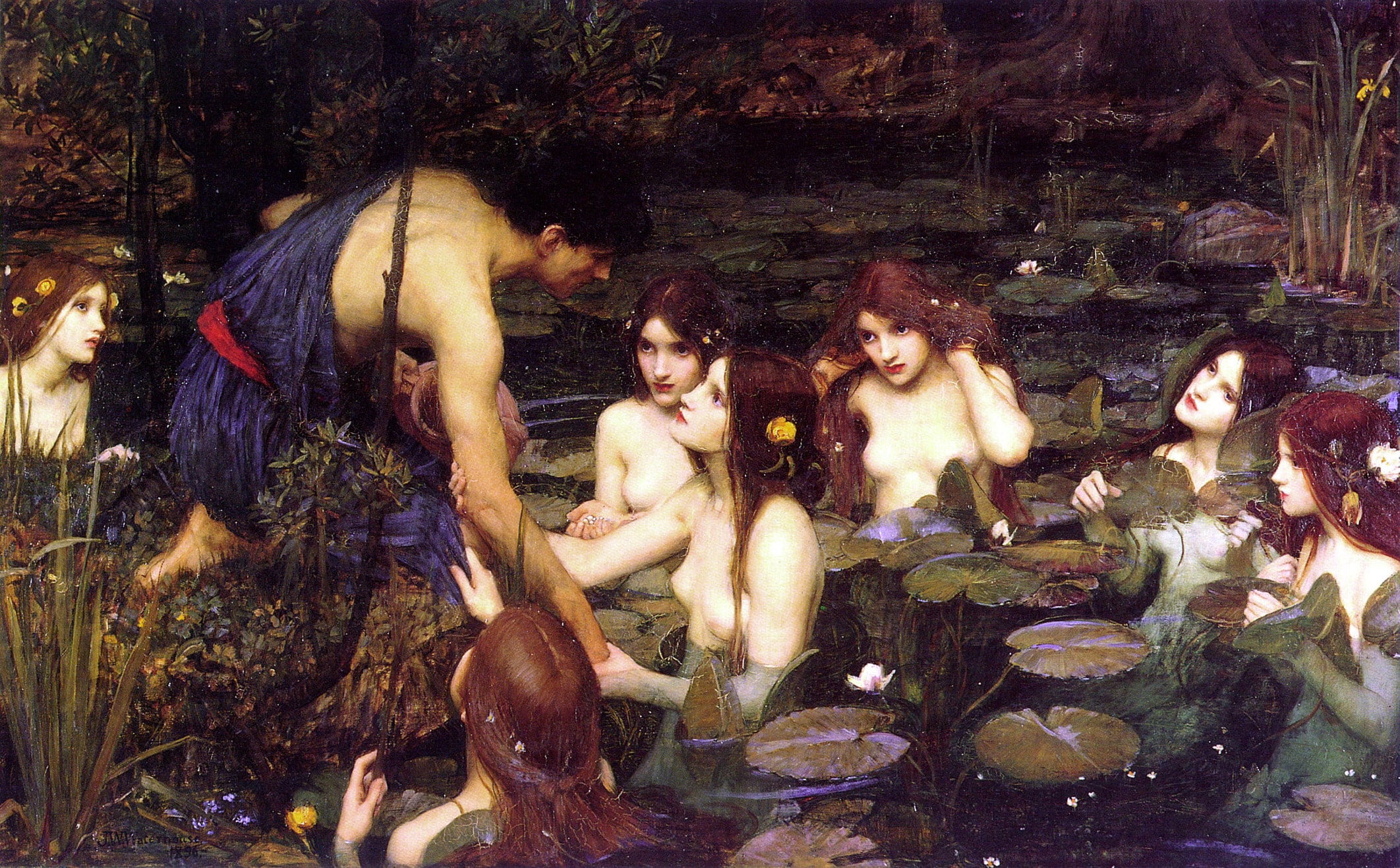
The Limnades, Greek Water Nymphs: Key Points
-
In Greek mythology, water nymphs were divine female spirits who lived in different bodies of water and acted as go-betweens for mortals and gods.
-
Limnades were water nymphs who presided over lakes, marshes, and swamps, though they appear less frequently in surviving myths than other water nymphs.
-
Limnades differed from Naiads (rivers and springs), Oceanids (oceans), and Nereids (seas) by inhabiting still freshwater environments symbolizing reflection and mystery.
-
Scholars theorize Limnades received less attention because lakes were less central to Greek life than rivers and seas, and murky marshes were less poetic than clear springs.
-
Limnades influenced Roman practices, Renaissance art, and Romantic literature and continue to impact modern environmental consciousness and ecological awareness.
-
Limnades represented accessible divine presence in everyday locations, exemplifying a tradition of water spirits that appears across cultures and persists in contemporary art and literature.

Introduction
The Limnades, while not as well-known as some other Greek gods and goddesses, are an intriguing part of the long history of people giving names and worshiping natural things through divine spirits. These nymphs of lakes, marshes, and swamps had a special place in the complicated system of water gods that existed in the minds of ancient Greeks. They were the protectors of calm freshwater areas that were not the life-giving springs and rivers that were so important to farming or the vast, powerful seas that were so important to maritime culture. The fact that they are not as well-known in classical literature as their more famous sisters, the Naiads and Oceanids, makes them more fascinating to study to see how ancient people thought about their relationship with different landscapes and how these ideas changed over time to affect European folklore, art, and even modern environmental awareness. By looking at the Limnades in the larger context of water nymph mythology, we can see both the deep ecological awareness that was part of Greek religious thought and the lasting human desire to find spiritual meaning in the waters that give us life, show us our reflections, and hold secrets in their depths.
Water Nymphs
Water nymphs were divine spirits in Greek mythology that were very close to the water features of the natural world. People thought these female gods lived in and protected different bodies of water, from big oceans to small springs. They were usually shown as beautiful, young beings who would never die or live for a very long time. In myths that looked at love, protection, and the sacred relationship between people and nature, water nymphs acted as go-betweens between the mortal world and the divine realm. They often interacted with both gods and people. The Greeks put these nymphs into different groups based on the type of water body they lived in. Their behavior created a complicated system of names that showed how carefully they observed the natural world and how much they wanted to fill every part of their world with divine presence (Larson, 2001).
The Limnades were a unique type of water nymph because they were the spirits of lakes, marshes, and swamps. The word “Limnad” comes from the Greek word “limne,” which means “lake” or “marsh.” This word directly referred to their area of control and influence. People thought that these nymphs lived in freshwater bodies that were still or moving slowly, especially ones that were surrounded by lush plants and had an air of mystery and seclusion. Limnades are not as well-known as some of their more famous Greek mythological cousins, but they were still important figures in local religious practices and folk traditions throughout ancient Greece. Because they lived in marshes and swamps, which could be both life-giving and dangerous, they were sometimes harder to understand than other water nymphs. These places could support a wide range of ecosystems while also being dangerous for travelers who weren’t careful. Each Limnade is frequently linked to a specific locale, becoming integral to its regional mythology and folklore (Hansen, 2004; Larson, 2007).
The differences between Limnades and other types of water nymphs show how well the ancient Greeks understood their natural world and how they thought of different water sources as having spiritual meaning. Naiads, one of the most famous types of freshwater nymphs, were linked to flowing water like rivers, streams, fountains, and springs. People often worshipped them because they helped plants grow and provided food. Hesiod said that there were three thousand Oceanids, who were the daughters of the Titans Oceanus and Tethys. They ruled over the salty waters of the oceans and seas and were a more cosmic and primordial force than their freshwater counterparts. Nereids were another type of sea nymph. They were the fifty daughters of the sea god Nereus and were often shown as helpful to sailors and connected to the calmer parts of the Mediterranean Sea. In contrast, the Limnades lived in freshwater areas that weren’t flowing or oceanic. Their still waters stood for both reflection and stagnation, contemplation and mystery (Mays & Angelakis, 2019).

Theories
Scholars and mythographers have developed a variety of theories to explain why Limnades received less attention in classical literature compared to other water nymphs. These theories frequently pertain to the practical and symbolic significance of various water sources in ancient Greek society. One theory posits that lakes and marshes, although existent in Greece, were less integral to Greek civilization compared to rivers, springs, and the sea, which had more direct influences on agriculture, trade, and quotidian life. Rivers like the Achelous and springs like Castalia at Delphi had their cults and were important in myths. However, because lakes were less common in Greece, there were fewer documented local religious traditions in literature. Another viewpoint suggests that the stillness and occasionally murky nature of marsh waters rendered them less attractive subjects for poetic veneration compared to the vibrant, crystalline springs favored by the Muses or the formidable, wine-dark sea that characterized Greek maritime culture. Some researchers have posited that Limnades may have held greater significance in oral traditions and local folklore that failed to endure in written form, as our understanding of Greek mythology is predominantly derived from literary sources that favored specific narratives and contexts over others.
Nymphs in Greek mythology do more than just protect bodies of water. They are connected to many myths and can be both beneficial and detrimental. For example, Larson’s study of nature deities shows how these nymphs can be both attractive and dangerous, demonstrating how they can enchant mortals. Such depictions serve to underscore the awe that ancient Greeks held for spring waters and their mysterious, transformative qualities (Larson, 2007). In addition, the conflicts involving nymphs, like the gods who tried to woo them, show how the divine and natural worlds interact in Greek mythology. For instance, stories about water gods such as Alpheios, who pursues the nymph Arethusa, exemplify this interaction (Bouffier, 2019; Lewis, 2019).
The link between limnades and bigger ideas about divinity and nature in Greek mythology is also important. The Greeks loved nature and its personifications, and these nymphs are often shown as being connected to certain natural features. The notion that personal relationships and local heritage were constructed around various nymphs, such as Naiads, underscores the complex interconnections between geographic features and cultural identity in ancient Greek society. This connection implies that local customs and traditions may have originated from these mythological stories, creating a sense of community among people (Hansen, 2004; Bouffier, 2019; Hansen, 2005).
The word “limnai” also comes from the Greek word for water, and it refers to the marshy or lake environments that Naiads liked best. This linguistic connection supports the idea that these nymphs were more than just mythological figures; they were also important to the ancient Greek worldview because they represented the life-giving and life-sustaining properties of freshwater sources (Hansen, 2005). Naiads were revered as protectors of springs and rivers, and their stories were important for understanding both the natural world and the Greeks’ own lives (Hansen, 2004; Larson, 2007).
Impact
The idea of localized water spirits and Limnades had an effect on cultures outside of ancient Greece and changed how later civilizations thought about the connection between the divine and the landscape. During the Roman Empire, the worship of Greek nymphs persisted and evolved. For example, lake spirits were honored in many parts of the empire where lakes were a big part of the landscape, like in Northern Italy and other places far from the Mediterranean heartland. Rediscovered classical mythology sparked a renewed interest in nature spirits during the Renaissance. Artists and poets used the tradition of water nymphs, like Limnades, to write about the beauty of nature and the magic of wild places. The Romantic movement of the 1700s and 1800s embraced these figures even more as symbols of wild nature and the sublime. Lakes and marshes were places where people could meet the strange and the transcendent. The legacy of Limnades can still be seen today in how people care about the environment and how they know that certain ecosystems need special care and respect. However, the religious framework has given way to ecological awareness.
The Limnades also helped people understand how ancient people thought about the environment as being full of conscious, spiritual beings that humans had relationships with. This animistic worldview saw natural things not as dead resources but as living beings that people could honor, please, or offend with their actions. People honored Limnades and other nymphs by performing rituals and making offerings at the edge of the water. This perspective made sacred places where the line between human civilization and wild nature became blurry. These kinds of things brought people together because they all worshiped the same nymphs and made up stories about the land that explained its character and history. The existence of these minor deities also helped people understand strange things that happened in nature, like when things disappeared in marsh waters or when strange mists rose from a lake. They thought these things were caused by divine beings rather than just physical processes.
When we look at the role of Limnades in the bigger picture of Greek religious thought, we can see how they showed the idea of divine immanence, which means that the sacred is present in the natural world at all levels. The Olympian gods ruled from Mount Olympus and got involved in human affairs on a large scale. Nymphs like the Limnades, on the other hand, were divine beings that lived in everyday places where regular people could feel a direct connection to the spiritual world. This democratization of the sacred meant that you didn’t have to go to big temples or state-sponsored festivals to meet God. Instead, you could have a religious experience by going to the lake near your village or the marsh at the edge of cultivated land. The Limnades played an important psychological and social role by embedding spirituality deeply in the landscape and making the divine a constant, close presence in everyday life instead of a distant idea.
The comparative mythology of water nymphs in different cultures shows some interesting similarities and differences in how people around the world tend to personify natural features and change these personifications to fit their situations. Celtic traditions included water spirits that were linked to lakes and wells. For example, the Lady of the Lake in Arthurian legend is similar to Limnades in that she is linked to still waters and has mysterious, transformative power. In Slavic folklore, rusalki were water spirits that lived in rivers, lakes, and swamps. They were often considered dangerous to men who came across them. This perception is similar to how Greeks felt about Limnades, who lived in marshes. There were water spirits in Norse mythology, but they were more often linked to the sea or certain rivers and waterfalls than to lakes. These cross-cultural comparisons indicate that, although the distinct attributes and narratives of water spirits differ based on regional geography and cultural norms, the tendency to inhabit aquatic environments with spiritual entities seems to be a prevalent aspect of human religious imagination.
One of the most lasting changes in classical mythology that has made its way into popular culture is the influence of Limnades and other Greek water nymphs on later European water fairy tales. As Christianity spread across Europe, the pagan gods of Greece and Rome were slowly reinterpreted and added to folk traditions. For example, water nymphs became the fairies, sprites, and undines of medieval and early modern folklore. The Limnades’ connection to lakes and marshes had a big effect on stories about strange creatures that lived in water and could enchant travelers, grant wishes, or lead the unwary to their deaths. These stories combined elements of classical literature with local beliefs and Christian morals. French mélusines, German nixies, and British lake maidens all had something in common with the old Limnades: they were connected to certain bodies of water, were gorgeous, and had strange relationships with people. This folkloric evolution allowed the essential character of these spirits to persist across centuries and religious transformations, demonstrating how deeply the archetype of the water nymph had embedded itself in European cultural consciousness and how effectively it could adapt to new contexts while maintaining its core associations with aquatic environments and feminine mystery.
Conclusion
The legacy of Limnades and the larger tradition of water nymphs still has an effect on modern culture. They show up in literature, art, and popular media in ways that are both true to ancient sources and creatively changed. In fantasy literature, nymphs are often used as characters. Occasionally they are carefully separated into different types of water spirits, and other times they are grouped together as nature spirits. Environmental movements have sometimes used the images of water nymphs to represent and fight for the protection of aquatic ecosystems. Conservation efforts have drawn inspiration from the emotional power of these beautiful, fragile beings. The idea of genius loci, which means “the protective spirit of a place,” comes from the tradition of nymphs like the Limnades, who were always with their specific places. This idea is still important when talking about place-based identity and environmental ethics. Even in non-religious settings, the archetype of the water nymph remains a potent symbol of nature’s beauty, enigma, and the human quest for significance and connection within the natural realm.
References
Bouffier, S. (2019). Arethusa and kyane, nymphs and springs in syracuse: between greece and sicily. Ancient Waterlands, 159-181. https://doi.org/10.4000/books.pup.40610
Hansen, W. (2004). Handbook of classical mythology. https://doi.org/10.5040/9798400661198
Larson, J. L. (2001). Greek nymphs: Myth, cult, lore. Oxford University Press.
Larson, J. (2007). A land full of gods: nature deities in greek religion. A Companion to Greek Religion, 56-70. https://doi.org/10.1002/9780470996911.ch4
Lewis, V. M. (2019). Myth, locality, and identity in pindar’s sicilian odes.. https://doi.org/10.1093/oso/9780190910310.001.0001
Mays, L. W., & Angelakis, A. N. (2019). Ancient gods and goddesses of water. Evolution of WatEr Supply through thE MillEnnia, 1.
Leave a Reply