Pillywiggin Faeries: Key Points
-
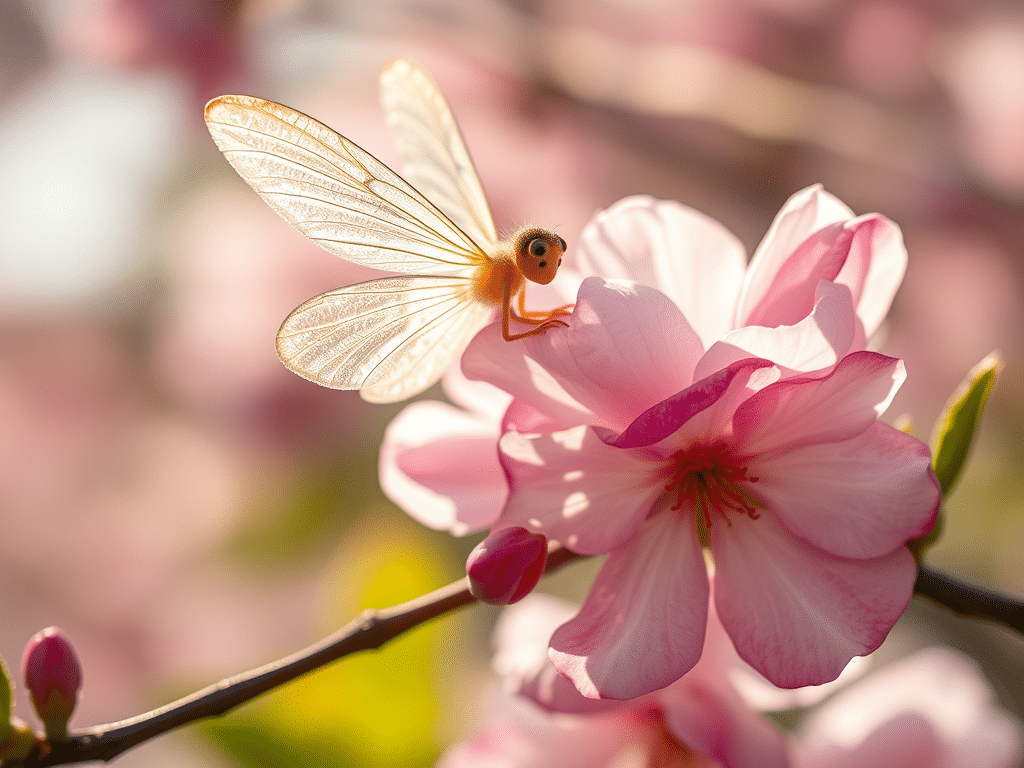
Pillywiggins are tiny flower fairies no larger than a fingernail, with gossamer wings and appearances that mirror the blossoms they inhabit.
-
These gentle fairies assist in pollination and ensure flower health, remaining shy and active primarily at dawn and dusk.
-
Within the fairy hierarchy, pillywiggins occupy a humble position as specialized botanical guardians serving larger nature deities.
-
Scholars debate whether pillywiggins emerged during the Victorian era or preserve ancient animistic beliefs about nature spirits.
-
Pillywiggins have influenced children’s literature, garden design, and the creation of “fairy-friendly” garden spaces.
-
Their enduring appeal lies in transforming ordinary gardens into magical realms and maintaining enchantment in the modern world.

Introduction
Pillywiggins, those minuscule flower fairies, embody a particularly fragile and beguiling aspect of the fairy world. Their small stature and connection to flowers have long captured the imagination. These minuscule creatures, hardly larger than a speck, have the ability to cling to insects or nestle within the bloom of a flower. They hold a special place in fairy tales, acting as protectors and friends of the plant kingdom. Pillywiggins, unlike their more formidable fairy relatives, are the embodiment of nature spirits’ softer, more playful side. They act as a link, connecting the human realm with the hidden lives of gardens and meadows. Folklore’s inclusion of these figures reflects humanity’s lasting interest in nature’s hidden aspects, as well as the desire to populate the natural world with helpful, magical beings.
Description
Pillywiggins, those diminutive fairies, are usually depicted as being incredibly tiny—sometimes no bigger than a human fingernail. They possess delicate, translucent wings that catch the light, mirroring the iridescence of the blossoms they call home. Their looks, it is said, echo the flowers they love, their attire and hues perfectly matching their floral surroundings, rendering them almost invisible to human observers. These fairies are often linked to the blooms of spring, especially those painted in pink, white, and yellow. They’re thought to have a particular fondness for cherry blossoms, apple blossoms, and wild roses. Their delicate features and ethereal beauty are matched by their fragility, as they are known to be vulnerable to harsh weather, pollution, and the destruction of their natural habitats. The word “pillywiggin” suggests a sense of smallness and fragility, hinting at creatures that exist in the space between what we can see and what we can imagine.
Pillywiggins are known for their gentle nature and their close connection to the natural world, especially the cycles of plant life. This makes them some of the most kind-hearted fairies. These diminutive creatures are thought to play a role in pollination, acting as guides for bees and butterflies. They lead these pollinators to the flowers brimming with nectar, thereby supporting the well-being and flourishing of the plants they favor. These creatures are most active during the early morning and late evening, when the light is soft and human activity is low. They are often seen moving among flowers and drinking dew, which they treat like nectar. Pillywiggins, unlike their more impish fairy cousins who revel in human mischief, are typically quite timid. They tend to vanish at the slightest hint of a human presence, preferring to avoid any pranks or meddling. These creatures’ songs, although too high-pitched for most humans to hear, are said to encourage flowers to bloom and to bring peace to the gardens where they live. These figures are often considered playful, sometimes representing the more positive aspects of faerie stories. Their appearance is different from the darker portrayals of fairies found in other cultures (Vasilev, 2025). These portrayals often reflect the dual nature of fairy tales, where beings can embody both good and evil at the same time.
Pillywiggins are an intriguing part of folklore, particularly within the larger context of fairy tales. These diminutive, fanciful beings are frequently linked to a fairy tale tradition and known for their playful and sometimes troublesome behavior. Unlike fairy queens and kings, they lack the power and authority associated with those figures. Furthermore, they don’t have the dangerous magic often linked to more powerful fairy groups, like the Unseelie Court or the Wild Hunt riders. Their main role, however, is to support and nurture, focusing on the care and growth of plants, rather than getting involved in political issues or territorial disputes. Some folklore suggests that pillowwigs are subordinate to larger flower fairies or nature deities. This implies a structured system of plant-related governance, where each type of fairy has specific duties and areas of responsibility. Unlike brownies, who dabble in many things, or pucks, who are known for their playful tricks, these are beings of singular focus. Their entire lives are dedicated to the flowers they tend.

Theories
Some researchers suggest that “pillywiggins” represent a Victorian-era romanticized view of fairies. This view developed during a time when fairies were increasingly portrayed as small, beautiful, and harmless, rather than dangerous and unpredictable. This theory suggests that pillowwigs might be a relatively new addition to the fairy world. They could have been created to satisfy a growing interest in gentler, more visually appealing fairy images, which were popular in children’s stories and garden decorations. Other researchers suggest that pillywiggins are a remnant of old animistic beliefs. According to these beliefs, each element of nature has a spirit or guardian. In this view, these small flower fairies represent the concentrated essence of flowers and petals. Another perspective posits that the development of stories about pillywiggins aimed to elucidate natural events that eluded easy comprehension. These events included things like the seemingly miraculous process of pollination and the sudden opening of flowers in the morning. These occurrences were attributed to the hidden actions of tiny, magical beings.
Fairies, in general, are known for a wide variety of characteristics that have changed over time in stories and traditional beliefs. These elements symbolize nature’s power, representing both beauty and disorder. In works like Edmund Spenser’s The Faerie Queene, fairies are used as allegorical figures to represent virtues and vices, with their characteristics reflecting moral standards (Dixon, 1975). Tolkien’s concept of ‘Faërie’ similarly explores the enchantment and transformative power of these stories, examining their deeper connections to human experience (Townend, 2024; Michelśon, 2019).
Pillywiggins, along with other fairies, have appeared in various literary works, and their significance is shaped by historical context. Some researchers examine Victorian and Edwardian fairy illustrations, which romanticize faerie folklore, as reflections of societal beliefs and narratives about race and gender (Herzig, 2021). This analysis shows how fairy tales can reflect broader societal issues, particularly in how they portray femininity and the ability to act independently.
In contemporary literary studies, the faerie archetype frequently engages with concepts of identity, particularly within works that explore transformation and gender fluidity; such engagement is exemplified by analyses of early modern transgender figures in faerie narratives (Horbury, 2021). Pillywiggins, with their playful nature, often represent the changing nature of identity and the transformations seen in early modern literature.
In folklore, the role of pillywiggins goes beyond just being playful. These beings frequently embody significant struggles, serving as representations of life’s shifts and existing within liminal zones where identity can be concealed or altered, thereby depicting critical narrative crises (Vasilev, 2025). The connection between human stories and faerie folklore highlights a fascination with the supernatural and its impact on people, often shown through fantastical adventures and moral lessons in different literary traditions (Yocom et al., 1975).
Impact
Pillywiggins, though small in fairy tales, have had a significant cultural impact, influencing art, literature, and how we view the connection between magic and the natural world. In children’s literature, pillowwigs and similar small flower fairies have become beloved characters. They teach young readers about the beauty and importance of gardens while also encouraging a sense of wonder about the natural world. Garden design has also been influenced by stories about pillywiggins. As a result, many gardeners intentionally create “fairy-friendly” gardens, using flowers that are said to attract these creatures, along with small houses and other whimsical decorations. The concept of pillywiggins has contributed to a broader cultural movement that emphasizes the magic of everyday nature. This myth has encouraged people to look more closely at flowers and to appreciate the small wonders found in gardens and natural environments. This gentle myth serves an important psychological purpose, helping to maintain a sense of wonder and possibility in a world that’s becoming more rational and urban.
The symbolism of fairies, including pillywiggins, offers a way to explore deeper metaphysical ideas, representing the desire to go beyond the ordinary (Savitskij & Cherkassova, 2024). The connection between fairies and the natural world highlights a search for harmony and a more profound understanding of human existence within its complex story. Additionally, the interactions between these entities and humans frequently evoke ethical dilemmas, mirroring cultural perceptions of good and evil, as illustrated in Spenser’s allegorical literature (Dixon, 1975).
Conclusion
The lasting charm of pillywiggins stems from their knack for turning mundane gardens into places of enchantment and potential. They gently nudge us to consider that magic could be hiding in the tiniest, most easily missed parts of our surroundings. These diminutive flower fairies spark the imagination, whether considered real creatures or as poetic symbols of nature’s allure and enigma. They also help forge bonds between people and the plant kingdom. In folklore, the gentle presence of these beings serves to balance the more threatening types of fairies. Their presence offers a view of the fairy world as a place of care and kindness, rather than one of danger and unpredictability. The story of pillywiggins will likely continue as long as flowers bloom and people admire their beauty. This story offers a charming way to understand and appreciate the delicate wonders of nature.
References
Dixon, M. F. (1975). Fairy tale, fortune, and boethian wonder: rhetorical structure in book vi of the faerie queene. University of Toronto Quarterly, 44(2), 141-165. https://doi.org/10.3138/utq.44.2.141
Herzig, M. (2021). Fairies and Fairness: The Aesthetic of White Femininity in Jane Eyre. Pittsburgh Undergraduate Review, 1(1). https://doi.org/10.5195/pur.2021.4
Horbury, E. (2021). Early modern transgender fairies. TSQ: Transgender Studies Quarterly, 8(1), 75-95. https://doi.org/10.1215/23289252-8749596
Michelśon, P. E. (2019). J.r.r. tolkien on faërie and faërie-stories. Linguaculture, 10(2), 81-100. https://doi.org/10.47743/lincu-2019-2-0147
Savitskij, V. M. and Cherkassova, E. V. (2024). Reflection of traditional european fairy tales in children’s stories by roald dahl. Philology. Theory & Practice, 17(7), 2210-2218. https://doi.org/10.30853/phil20240309
Spenser, E. (1596/2007). The faerie queene (A. C. Hamilton, Ed.). Pearson Longman. (Original work published 1590-1596)
Townend, M. (2024). Faërie. J.R.R. Tolkien: A Very Short Introduction, 37-49. https://doi.org/10.1093/actrade/9780192882042.003.0004
Vasilev, M. (2025). Fairies as horror characters (based on the novels of r. feist and r. campbell). Philology. Theory & Practice, 18(2), 547-552. https://doi.org/10.30853/phil20250079
Yocom, M. R., Leeming, D. A., Kernan, A., Brooks, P., Holquist, J. M., Eastman, A. M., … & Sherr, P. C. (1975). Flights: readings in magic, mysticism, fantasy, and myth. The Journal of American Folklore, 88(348), 199. https://doi.org/10.2307/539205



Leave a Reply