Wizards in Fantasy: Key Points
-
Wizards gain their powers through rigorous study and discipline, representing humanity’s fascination with transcending natural limitations through arcane knowledge.
-
Scholarly wizards seek knowledge in towers and libraries, appreciating wisdom and restraint just as much as they do raw magical power.
-
Elemental wizards command primal forces like fire, water, earth, and air through instinctual connections to nature rather than academic study.
-
Battle wizards specialize in combat magic, acting as living artillery capable of transforming warfare with swift, tactically effective spells.
-
Necromantic wizards manipulate death and unlife through forbidden practices, though some are portrayed as complex scholars rather than pure villains.
-
Wizards endure in fantasy because they embody transformation through knowledge and will, suggesting reality can be reshaped through dedication and understanding.

Introduction
Wizards have long been a source of fascination for humanity, emerging as some of the most recognizable and persistent characters within the realms of fantasy literature and other media. These enigmatic figures, who practice the arcane arts, encapsulate humanity’s enduring curiosity about the unknown and our aspiration to overcome natural constraints through the acquisition of knowledge and the wielding of power. In fantasy stories, wizards are usually shown as people who have spent their lives learning about and mastering the magical powers that exist in their worlds.
Wizards in Fantasy Lore
Within the context of fantasy narratives, wizards are generally depicted as individuals who have devoted their lives to comprehending and controlling the fundamental magical forces that are intrinsic to their respective worlds. Unlike sorcerers, who might inherit their powers, or warlocks, who gain them through deals, wizards gain their abilities through dedicated study, practice, and self-control. They are often depicted in unique robes, carrying staffs or wands, which symbolize their separation from everyday life and the years of training needed to master their craft. The classic wizard draws on ancient traditions, spells, and closely held secrets passed down through generations, making them living sources of magical knowledge that might otherwise be lost.
In fantasy stories, the rules for magic are different from those in realistic fiction, because fantasy deliberately goes against the usual ideas about how nature works and how people behave (Attebery, 1991). Characters like wizards often act as lenses through which events are considered magical and influenced by their will, with their existence supported by shared knowledge, stories, and cultural understanding in the fictional world. The archetypal wizard figure, exemplified by characters like Gandalf, embodies the Wise Elder archetype and draws upon comparative mythology across global systems, functioning as advisors and mentors whose roles parallel those of legendary figures such as Merlin and various prophetic traditions (Stephens, 2024). These wizard-type figures represent core elements of mythological systems worldwide, serving essential narrative functions that extend beyond mere magical practitioners to encompass roles as guides, teachers, and moral authorities (Stephens, 2024).
Scholarly Wizards in Fantasy
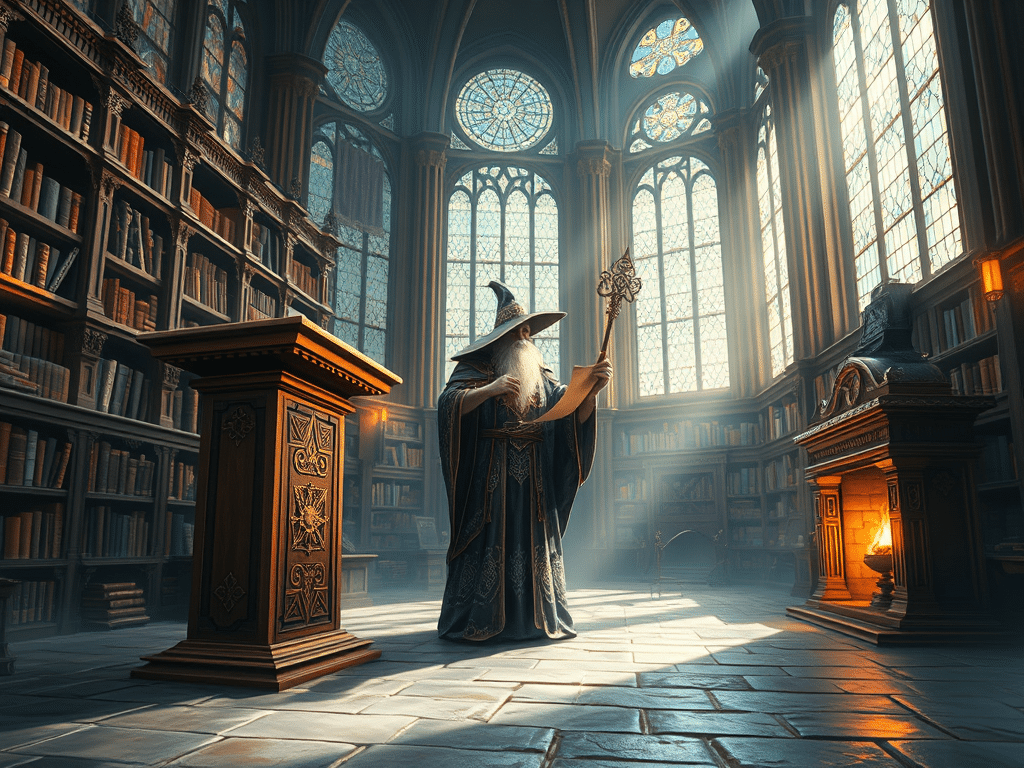
Scholarly wizards represent perhaps the most traditional archetype in fantasy, embodying the pursuit of knowledge for its own sake and the belief that understanding the universe’s deepest mysteries is the highest calling. These practitioners of the arcane arts dwell within towers, libraries, and laboratories, their environments populated by aged volumes, active alchemical apparatus, and relics acquired from far-off places. Their magical abilities are derived from rigorous investigation into theoretical constructs, the memorization of intricate spellcasting procedures, and practical experimentation that explores the limits of magical potential. The character of Gandalf in Tolkien’s narratives and the wizards from Ursula K. Le Guin’s Earthsea serve as prime examples of this tradition, wherein wisdom and self-control are esteemed as highly as innate magical aptitude, and each spell is cast only after a thorough evaluation of its potential repercussions.
The quintessential mage in fantasy literature is represented through various archetypes, such as the Apprentice Mage, the Wise Old Mage, and the Dark Mage, each of which embodies distinct phases or facets of magical proficiency (de Pádua, 2004). Employing Joseph Campbell’s myth criticism, specifically the hero cycle, one can discern that mages embark on a unique mythical odyssey—the mage cycle—which governs their development and metamorphosis within narrative frameworks (de Pádua, 2004). Fantasy literature often shows wizards with certain looks, like being old, having beards, and wearing long robes; however, their true strength comes from their intelligence, not their physical power, creating a clear difference between mental skill and physical weakness (de Pádua, 2004).
In contemporary fantasy literature, particularly in young adult novels, the sage archetype—often represented by wizard characters—remains a prevalent motif, yet it is relatively underexplored compared to other archetypal figures like heroes or tricksters (Renga & Lewis, 2018). These sage figures cultivate discipleship through cooperative investigation, revelation, and education, serving as supporting archetypes in relation to the mythic hero while simultaneously preserving their own narrative significance (Renga & Lewis, 2018).

Elemental Wizards in Fantasy
Elemental wizards, in particular, are characterized by their mastery over nature’s fundamental forces, often forming alliances or cultivating affinities with elemental domains such as fire, water, earth, and air, and occasionally, more unusual elements like lightning, ice, or metal. These individuals harness the unrestrained power of tempests, the enduring solidity of mountains, the insatiable nature of flames, or the flexible currents of rivers and oceans. Their magical abilities frequently manifest as instinctual and visceral, contrasting with the more cerebral approach of scholarly wizards; their work necessitates a profound comprehension of and bond with natural processes, rather than solely intellectual pursuit. Within numerous fantasy narratives, elemental wizards may philosophically and spiritually identify with their selected element; for instance, fire wizards might exhibit passionate and impulsive tendencies, whereas water wizards cultivate fluid, adaptable temperaments that reflect the nature of their element.
Battle Wizards in Fantasy
Battle wizards, conversely, are experts in employing magic for warfare and combat, thereby transforming the arcane arts from instruments of contemplation into potent weapons of destruction. These wizards function as living artillery on the battlefield, capable of unleashing fire from above, constructing impenetrable barriers, or decimating enemy formations with concentrated energy projectiles. Their training emphasizes quick casting, efficiency under pressure, and tactical awareness, making them as much warriors as scholars. While scholarly wizards might spend hours preparing a single complex ritual, battle wizards perfect spells that can be unleashed in mere seconds, trading elaborate power for immediate, practical effectiveness that can turn the tide of conflicts.
Magic systems function as fundamental components in the world-building and narrative structure of fantasy literature, requiring authors to develop comprehensive understandings of how these systems intersect with every aspect of their fictional worlds, including setting, narrative, and strategic elements (Guethert, 2016). The creation of “hard magic” systems, which operate according to established rules and principles, has become particularly important in settings designed for interactive mediums such as tabletop wargames, where systematic rules for magical conflict and strategy must be clearly defined (Guethert, 2016).
In fantasy literature’s military settings, magic functions as more than just a storytelling element; it is a concrete power that influences both tactical and strategic planning, with authors utilizing magical capabilities for reconnaissance, espionage, and direct combat operations (Faustino, 2025). The physical expressions of magic in fantasy narratives frequently parallel real-world military technology and advancements, as demonstrated by villains who create magical versions of explosives and other weapons (Faustino, 2025).
Necromantic Wizards in Fantasy
Necromancers explore the most sinister and proscribed areas of magical practice, controlling the forces of death, decay, and undeath in ways that other magic users find unsettling or repugnant. These practitioners interact with spirits, animate the deceased as servants, siphon life from the living, or even attempt to overcome death through various forms of lichdom or vampirism. Necromancers frequently serve as adversaries in fantasy tales, their magic often deriving from sacrifice, suffering, or the disruption of the natural order. However, certain narratives depict more complex necromancers, portraying them as scholars of death’s enigmas or even as protectors who shield the living from malevolent spirits, thereby subverting the notion that all death magic is intrinsically malevolent.
Magical users like necromancers need certain skills and traits to use their powerful magic effectively, with different types of necromancers having specific roles in fantasy worlds. Historical studies of necromancy show that those who practiced it tried to gain enough power through rituals and spells to make spirits and demons obey them, using special names and methods to control unwilling and possibly dangerous beings. The cultural resonance of necromancy during the late Middle Ages underscores the pervasive apprehension surrounding its practitioners, which in turn precipitated legal actions and the obliteration of grimoires and other magical manuscripts (Kieckhefer, 1998).
Conclusion
The persistent fascination with wizards in fantasy literature arises from their representation of transformation achieved through knowledge, self-control, and determination. They serve as a reminder that influence need not be derived from physical prowess or inherited status; rather, it can be attained through a commitment to uncovering the concealed realities of the universe. Wizards, whether portrayed as sagacious guides, formidable foes, or intricate characters navigating the boundaries of both roles, continue to captivate audiences because they embody the magical thinking inherent in humanity, the aspiration that reality could be more extraordinary and adaptable than it seems, and the belief that through sufficient study and resolve, we too could reshape the world to fulfill our aspirations.
References
Attebery, B. (1991). Fantasy and the narrative transaction. Style, 28-41.
de Pádua, É. (2004). The mage as the hero: An archetypal study of fantasy literature.
Faustino, J. R. (2025). The affairs of wizards: A study on the role of magic in medieval fantasy fiction. https://repositorio-aberto.up.pt/bitstream/10216/171055/2/749927.pdf
Guethert, K. S. W. (2016). Believable worlds: The rules, role and function of magic in fantasy novels [Doctoral dissertation, University of Waikato].
Kieckhefer, R. (1998). Forbidden rites: A necromancer’s manual of the fifteenth century. Penn State Press.
Kurtz, S. (1995). The complete book of necromancers. Wizards of the Coast.
Renga, I. P., & Lewis, M. A. (2018). Wisdom, mystery, and dangerous knowledge: Exploring depictions of the archetypal sage in young adult literature. Study & Scrutiny: Research on Young Adult Literature, 3(1), 25-50.
Stephens, S. A. (2024). The enchanted image of Tolkien’s grey pilgrim: Myths, archetypes, and philosophies of the wizard Gandalf—A character study of enigmatic wizard figures in myth & pop culture [Doctoral dissertation, Pacifica Graduate Institute].



Leave a Reply