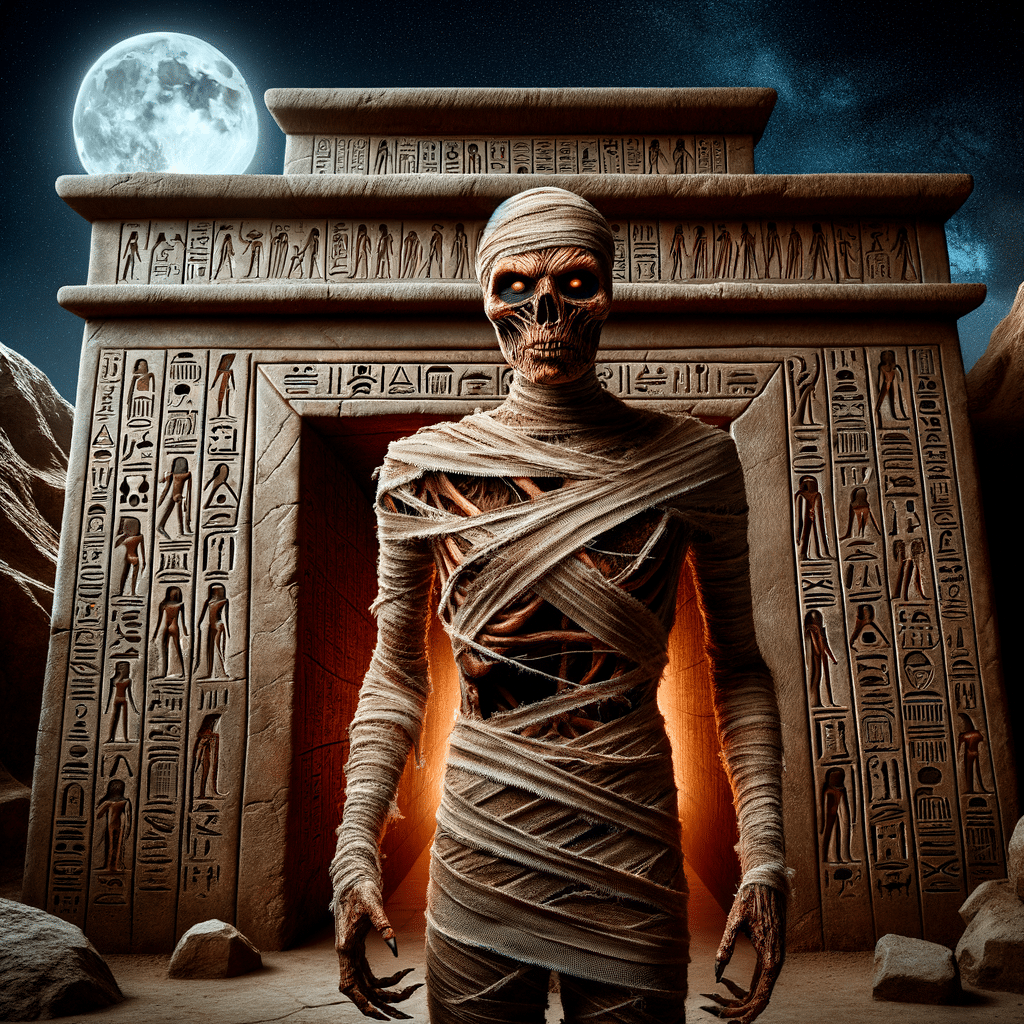
In many cultures around the world, some individuals can become undead mummies. How does this process occur?
The mummified bones of once-living humans, known as mummies, have long had a dual meaning in human consciousness: they are both a disturbing embodiment of death and a revered portal to the afterlife. Although mummification has been used in many societies, the idea of undead mummies, or creatures with magical qualities that emerge from their tombs, has its origins in both historical mummification procedures and popular culture. This essay examines how individuals can become undead mummies, examines mummification traditions in many societies, and concentrates on ancient Egypt.
Mummification
Mummification is a sign of the various ways that different communities pay respect to their deceased. Indigenous groups in Vanuatu, the Ibaloi of the Philippines, the Chinchorro of South America, and other regions created their own mummification customs, frequently drawing inspiration from natural environmental elements that preserved remains. These early preservation techniques were usually the result of a deep reverence for the departed and a wish to keep in touch with them after they passed away.
However, the boundary between terror and veneration is often blurry in many societies. The naturally occurring mummified bodies can give rise to stories about the undead, in which it is believed that preserved remains contain restless spirits that could affect the living. The strangely well-preserved features and traces of violent deaths of bog bodies found in European peat bogs sometimes gave rise to legends about cursed people rising again.
Mummification was an essential component of burial practices in ancient Egypt, demonstrating a strong belief in the afterlife and the necessity of the physical body’s preservation for the soul’s journey. The methodical procedure comprised removing the organs, covering the corpse in linen, and embalming the body. The goal of taking such precautions was to guarantee eternal life.
However, the idea of undead mummies in popular mythology was also born out of the elaborate Egyptian ceremonies. Curses and the terrible repercussions of opening the pharaohs’ tombs were common themes in the stories. These stories, which drew inspiration from the intricate burial rituals and the mythology surrounding Egyptian tomb curses, portrayed mummies as strong undead creatures that could seek revenge or defend holy places.
The concept of natural mummification occurs when environmental conditions stop a corpse from decomposing, according to research on ancient preserved remains. Bodies can be preserved for generations under certain circumstances, such as being buried in parched deserts, exposed to subzero temperatures, or imprisoned in bogs and swamps. Fascinatingly, these preserved remnants can occasionally serve as the foundation for the legendary and terrifying ancient undead that emerge from the deathly silence.
The fact that these naturally preserved remains frequently meet their end abruptly and in great emotional or physical pain is one of their most fascinating features. In several cases, the medium that kept them alive also contributed to their demise. Armed invaders, for instance, who were killed in a bog could turn into the very creatures of myth, caught in a terrifying state halfway between life and death and driven by a whirlwind of embarrassment, dread, and annoyance at their premature demise.
Even though they are uncommon and naturally weaker than other undead because they don’t have an outside power source, natural mummies can nonetheless be rather dangerous. The intensity of these entities’ motivations and emotions prior to death appears to be correlated with the power they achieve. When confronted with gullible people, even a naturally occurring mummy with small power can grow into an unstoppable force.

Ancient Dead and Other Forms of Mummies
In addition to natural mummies, there are the created ancient dead, in which a preserved corpse is transformed into an undead being through intentional efforts. The most common example of this is when religious figures are ritualistically prepared; the body is wrapped, embalmed, and put through procedures that bind the spirit back into its mortal coil. There are two common categories for these undead: usurped and subordinate.
As obedient henchmen, subservient mummies are under the direct authority of their creators. The nature of this link is important since it frequently contains the key to destroying the creature. In contrast, usurped mummies are ones over which the creators had no influence during their lifetime. Other strong undead may have used arcane rituals to produce these mummies, turning the dead into mindless servants.
An enemy’s curse tainting burial customs is an even more unsettling source for a usurped mummy. Even though they may have had good lives, these creatures turn into horrific creatures when they die because of a fury brought on by betrayal and unmet hopes for the afterlife. But by doing a thorough investigation, it is possible to uncover ways to finally bring these troubled ghosts to rest, giving the departed peace of mind.
Lastly, and maybe most dangerously, there are the invoked mummies. These creatures willingly accepted undeath in search of a corrupted kind of immortality. They might wait for the right circumstances to rouse them from their slumber for centuries before going inactive. Their spirits may even travel to an afterlife during these times of repose, according to theory, only to return to the living to complete tasks. It appears that maintaining their memory and reverence is essential to their survival in the world of the undead.
Despite being feared, some have a devoted following that even worships these conjured mummies. Their graves can be turned into centers of worship, and the cults that spring up around them help to preserve their memory and guarantee their reappearance when called upon.

Analysis
With different origins and skills, the ancient undead thus represent a range from the naturally preserved to the purposefully summoned. They serve as a reminder that, given the right or incorrect set of circumstances, crossing the boundary between life and death is not only possible but also fine.
The transition from preserved remains to zombie mummies is a result of popular culture and narrative. An entity that is given a semblance of life after death through desecration or sorcery is known as an undead mummy. These supernaturally gifted undead characters, who frequently have objectives connected to their previous lives or the circumstances of their deaths, perfectly capture our curiosity and fears about death and the unknown.
The zombie mummy has become ingrained in popular culture thanks to horror literature and movies, which frequently show these animals as defenders of antiquated artifacts or as scavengers of tombs that have been vandalized. The concept of the undead mummy expresses an innate fear of the sanctity of the grave and the repercussions of violating it, as well as acting as a warning against the hubris of disturbing the dead.
Conclusion
From natural preservation to intentional embalming, the making of mummies is a widespread and ancient phenomenon that reflects humanity’s desire to remember and honor the deceased. In popular mythology, the metamorphosis of mummies into undead creatures symbolizes an intriguing nexus between terror, awe, and the creative investigation of life after death. The undead mummy endures as a potent emblem of the mysteries of death and the age-old human yearning to comprehend what lies beyond the veil of mortality, despite the historical mummies having been produced out of respect and a wish for continuation beyond the grave.
Leave a Reply