Six Rules for Ouija Board Use: Key Points
-
The first rule warns never to use the Ouija board alone, as solitary sessions leave individuals vulnerable to malevolent entities without protection or support.
-
The second rule prohibits using the board in graveyards or cemeteries, where restless spirits and concentrated negative energy make contact particularly dangerous.
-
The third rule forbids burning or destroying a Ouija board, as this can trap or anger spirits and prevent proper closure of spiritual portals.
-
The fourth rule requires never leaving the planchette on the board when not in use, as this keeps the spiritual gateway open for unwanted entities.
-
The fifth rule cautions against asking when you will die, as this question attracts dark forces and can bring curses or devastating psychological impacts.
-
The sixth rule mandates always saying goodbye to properly close sessions and prevent spirits from remaining attached to participants or following them home.

Introduction
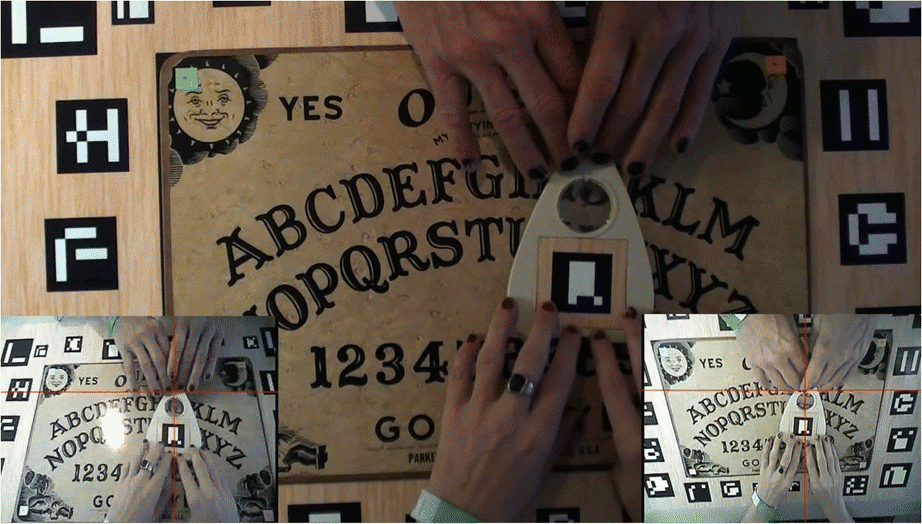
The Ouija board has long captivated and terrified people. Some people say that this unusual instrument allows people to talk to spirits, while others believe it is simply a tool for the subconscious mind to express thoughts and feelings. In the late 1800s, the Ouija board was first sold as a game for the living room. There is a flat surface with letters, numbers, and the words “yes” and “no.” People also write notes with a planchette that looks like a heart. Some people think the Ouija board is just a game, but others say it could bring in evil spirits from other worlds. People who believe in spiritual threats have made a strict set of rules to protect people against evil spirits, demonic possession, and mental suffering that lasts a long time. People who want to utilize this controversial divination instrument need to know these rules. Even if they don’t believe in the supernatural, people are terrified of the unknown. This conclusion is clear based on the warnings about using Ouija boards.
People have talked about Ouija boards for a long time as a game, a religious tool, or a location where unusual things happen, like ideomotor movement, suggestibility, and altered states of experience (Gauchou et al., 2012; Lloyd, 1921). Training, context, attitudes, and environmental factors influence users’ experiences, as the study demonstrates. Particular regulations and meticulous framing can alter outcomes and influence individuals’ perceptions of safety (Pasanen, 2021; Escolà‐Gascón et al., 2025). The Ouija board is numbered with voluntary rules and regulations. This essay presents a short summary of the six rules that people talk about the most.
Rule One: Never Use the Ouija Board Alone
The first and most important rule is to never use the Ouija board by yourself. People are open to talking to any spirits that might be able to help while they are alone. Having more than one person there not only offers you witnesses, but it also provides you a group of spiritual energy that can help you fight off evil forces. When alone, a person has no one to help them get rid of a nasty spirit that might stay with them. No one can tell if the person is possessed or controlled by a scary supernatural being since they are alone. Group sessions also let people help each other psychologically and emotionally, which is especially crucial when things get scary or too difficult to manage.
Make sure that people can choose to participate and know what they’re getting into. If local regulations say so, ask the minor’s parents or guardians for permission before allowing them to take part. Ethical discussions about research on Ouija-related phenomena highlight the significance of consent and the safeguarding of participants in any engagement with paranormal content (Escolà‐Gascón et al., 2025; Homan, 2006). The necessity for several players may coerce reluctant persons into Ouija board activities, which raises ethical concerns about informed consent and the comfort of all participants involved in these potentially sensitive experiences. If you have Ouija boards in schools or community centers, make sure everyone knows they cannot be used to talk to spirits. Instead, they are a tool to look at beliefs and mental processes from a cultural or literary point of view, allowing participants to explore themes of spirituality, communication, and the human psyche in a safe and structured environment. This method is connected to larger issues like how Ouija is used in schools, manners, and professionalism (Schein, 1995; Shannon, 1917).
Rule Two: Never Use the Board in Graveyards or Cemeteries
You can’t utilize the Ouija board in places where people are buried, such as graveyards or cemeteries. People believe that these places are full of restless ghosts, tortured souls, and terrible energy that has built up over time. Researchers who study the paranormal claim that several dead individuals in one place makes it easier for the living to see and talk to them. Using a Ouija board in this situation is like opening a floodgate, which might let many creatures in at once. Talking to spirits at graveyards is quite risky because they could be frustrated, confused, or violent. Using a graveyard for something displays disrespect for the dead and makes the living frustrated.
People used to use séances and spiritualism to talk to the dead. In Europe and America throughout the Victorian era and the late 19th to early 20th centuries, graves were regularly utilized as venues for these activities or were close to them. Burkette’s analysis of Victorian death culture and the rise of spiritualism, especially Ouija boards, contextualizes these practices within the larger cultural understanding of cemeteries as places to learn about death, talk to the dead, and remember them through rituals (Burkette, 2015). Seeman’s account of antebellum Protestant “presence” theology discusses the notion that the deceased were “with us though invisible.” A number of burial ceremonies and ways of relating to the deceased are based on this kind of thinking (Seeman, 2019), such as the practice of leaving offerings at gravesites or holding memorial services that honor the memory of the deceased while acknowledging their continued presence in the lives of the living. A Ouija board seems like an excellent way to talk to spirits, but it also lets in a lot of different voices, which can lead to confusion and unintended consequences during a séance.
Rule Three: Never Burn or Destroy a Ouija Board
The third rule is that you can’t break or burn a Ouija board once you’ve used it. Many individuals who have had horrible things happen with the board want to get rid of it right away, but breaking it could make things a lot worse. Some cultures believe that burning the board keeps spirits trapped in the flames or makes them insane by cutting off their capacity to talk to living people. Some accounts suggest that planks wouldn’t catch fire or would shout when they did. It looks like powers from another world are trying to save them from being annihilated. You also can’t close any spiritual doors that were opened if you break a board. This implies that they will stay open forever. The best way to deal with the board is to keep it safe or give it away.
Using open flames or ritual incense in Ouija board activities is just as dangerous as using candles or other fire-based elements in small ceremonial rooms. Studies on fire risk in wooden and cultural heritage contexts demonstrate that even minor ignition sources can facilitate rapid fire development in timber structures that lack adequate protection or extinguishment measures. This indicates how crucial it is to consider fire safety in these kinds of areas (Zhang et al., 2022; Liu et al., 2023). Of course, fire safety is not why this rule exists. It’s about keeping malevolent spirits away from Ouija boards. It’s also important to remember that the fire itself is awful, though.

Rule Four: Never Leave the Planchette on the Board When Not in Use
The fourth rule states to remove the planchette from the Ouija board when not in use. The planchette is what connects the physical world with the spiritual world. Keeping it where it is keeps that connection alive. Spirits can enter and depart through an open door, which could bring evil spirits into your home or personal space. These spirits that linger behind could attach themselves to the humans or the place, which could cause strange things to happen long after the session is ended, such as unexplained noises, feelings of unease, or even disturbances in daily life. Taking the planchette off the board and putting it away helps confirm that the spiritual door is completely closed. This one small thing that we do makes our world different from the rest of the world. Experimental and observational studies on ideomotor movements offer a naturalistic explanation for planchette motion and underscore the necessity of explicit training and environmental control to mitigate unintended cues and misattribution (Gauchou et al., 2012; Lloyd, 1921).
Experimental demonstrations and classroom-style presentations have investigated ideomotor action as a cognitive mechanism enabling planchette movement, illustrating how belief, suggestion, and motor action can produce “evidence” interpreted by participants as contact with the departed. Lawson and Crane definitively demonstrate that dowsing and ideomotor action can provide compelling demonstrations, which subsequent participants regard as invalid upon acquiring critical information in a regulated environment. This insight helps us understand Ouija board events as a mix of perception, suggestion, and belief (Lawson & Crane, 2014).
Rule Five: Never Ask When You Will Die
The fifth guideline is that people should never ask when they will die since this question invites in extreme and dark forces. When people talk about death, they bring in things that feed on fear, hopelessness, and other terrible sentiments that come with dying. Individuals who respond to such questions often either lie or share frightening information. Some individuals believe that inquiring about someone’s death could potentially cause it to occur or bring a curse upon them. Even if the answer is inaccurate, knowing the answer to this question can have a big impact on your mental health. This rule says that some things are too dangerous to look for and that we shouldn’t use supernatural ways to learn about death.
To utilize a Ouija board to ask about your own death, you need to know about the bigger belief systems that make such an inquiry feasible. Researchers have identified a notable association between individuals’ beliefs about the afterlife and their assessments of the Ouija board’s effectiveness. Many people who believe they can live after death may quickly adopt new ideas, such as the powers that many attribute to the Ouija board (Myrick, 1999). This logical connection is why those who believe in the board are especially afraid to talk about death. Those who believe in spirit communication also think spirits can predict death. If one asserts that consciousness persists post-mortem and may interact with the living universe, it logically follows that such entities may have access to information beyond ordinary human vision. The fifth rule against asking about death says that talking to the dead is real and that evil spirits could use this information to hurt, curse, or dominate the living. This rule says that anyone who believes in the Ouija board must also be ready to face the huge spiritual risks that come with asking questions about death, including the potential for malevolent entities to manipulate the information received during such sessions.
Rule Six: Always Say Goodbye
The sixth and last rule dictates that everyone must always say goodbye before they leave the Ouija board. This formal closing is like a spiritual lock that keeps users from talking to any beings they have already talked to. Spirits can still follow you home or stay with you if you don’t say goodbye. Many claims of hauntings and possessions stem from sessions that didn’t go as intended, often due to the absence of a proper goodbye ritual that leaves the connection to the spirit world unresolved. The goodbye ritual shows that we respect the spirits and that there is a clear line between our world and theirs. People who don’t pay attention could have paranormal difficulties that linger for months or even years, although this last stage just lasts a few more seconds.
It’s crucial to say goodbye and stop talking when the spirits ask you to. This is not simply to terminate the session properly. When a ghost moves the planchette to “goodbye” during a session, everyone must follow this rule and refrain from asking any more questions or expecting any answers. Chauran (2014) states, “If the planchette says ‘goodbye,’ don’t make the spirit keep answering” (p. 43). The goodbye ceremony is a way for the living and the dead to agree on when to stop talking. It’s disrespectful to try to keep a spirit around after it has said it wants to leave. This act might make creatures that were neutral or even helpful mad. If you treat a spirit this way, it might turn against you or let bad things take its place, such as negative energies or malevolent entities that could cause harm or distress. The sixth rule is that both the person and the spirits must be able to end the conversation when they want. They must also realize that setting the right limits protects both of them and the spirits they talk to.
Conclusion
Ouija board users and storytellers have made the rules for using it. Some people think these concepts are ridiculous superstitions, while others think they are crucial ways to protect themselves from serious spiritual threats. The Ouija board is still a worry because it is entertaining, spiritual, and mysterious all at once. Even though it doesn’t really talk to spirits, the board can have a huge impact on how people think and feel, influencing their beliefs and emotions about the spiritual world and potentially leading to anxiety or fear. People who still want to use a Ouija board should at least follow these traditional rules of how to do it, such as ensuring a respectful mindset, using the board in a safe environment, and having a clear intention for the session. Overall, it might be best to stay away from the Ouija board altogether, since it’s hard to close some doors once they’re open.
References
Burkette, A. (2015). The burial ground: A bridge between language and culture. Journal of Linguistic Geography, 3(2), 60-71. https://doi.org/10.1017/jlg.2016.2
Chauran, A. (2014). Spirit boards for beginners: The history & mystery of talking to the other side. Llewellyn Worldwide.
Escolà‐Gascón, Á., Dagnall, N., & Denovan, A. (2025). Increase in reported anxiety and anomalous experiences in paranormal believers following Ouija board play. Psychology of Consciousness: Theory, Research, and Practice. https://doi.org/10.1037/cns0000415
Gauchou, H., Rensink, R., & Fels, S. (2012). Expression of nonconscious knowledge via ideomotor actions. Consciousness and Cognition, 21(2), 976-982. https://doi.org/10.1016/j.concog.2012.01.016
Homan, R. (2006). Problems with codes. Research Ethics, 2(3), 98-103. https://doi.org/10.1177/174701610600200304
Lawson, T. J., & Crane, L. L. (2014). Dowsing rods designed to sharpen critical thinking and understanding of ideomotor action. Teaching of Psychology, 41(1), 52-56. https://doi.org/10.1177/0098628313514178
Liu, Z., Li, Z., Lin, X., Xie, L., & Jiang, J. (2023). Study on fire prevention in Dong traditional villages in the western Hunan region: A case study of Gaotuan Village. Fire, 6(9), 334. https://doi.org/10.3390/fire6090334
Lloyd, A. (1921). Newspaper conscience–A study in half-truths. American Journal of Sociology, 27(2), 197-210. https://doi.org/10.1086/213304
Myrick, J. M. (1999). Belief and custom surrounding the Ouija board (Doctoral dissertation, Memorial University of Newfoundland).
Pasanen, T. (2021). Christus verus Luciferus, Demon est Deus Inversus: Pekka Siitoin’s spiritism board. Temenos – Nordic Journal for the Study of Religion, 57(2), 181-207. https://doi.org/10.33356/temenos.107763
Schein, H. (1995). From the editor. NACADA Journal, 15(1), 3-4. https://doi.org/10.12930/0271-9517-15.1.3
Seeman, E. (2019). The presence of the dead among U.S. Protestants, 1800–1848. Church History, 88(2), 381-408. https://doi.org/10.1017/s000964071900115x
Shannon, T. (1917). Etiquette. https://doi.org/10.1037/13854-003
Zhang, F., Shi, L., Liu, S., Shi, J., Shi, C., & Xiang, T. (2022). CFD-based fire risk assessment and control at the historic Dong wind and rain bridges in the western Hunan region: The case of Huilong Bridge. Sustainability, 14(19), 12271. https://doi.org/10.3390/su141912271



Leave a Reply