
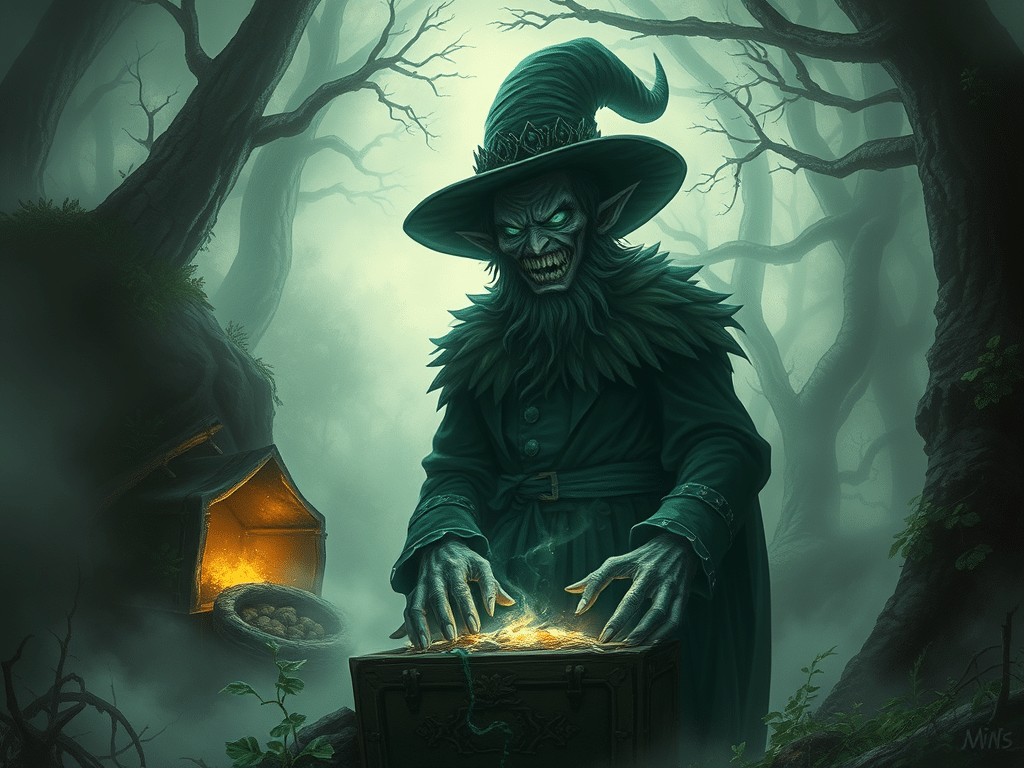
It has long been thought that fairies, those fanciful and frequently mischievous creatures of legend, engage in a variety of enigmatic interactions with the human world. The fact that they frequently steal food from people is one of the most fascinating features of their behavior. This trend is based on the idea that fairy food isn’t as nutrient-dense as food for humans. As a result, we often depict fairies as stealing food from us, sometimes even disguised as rodents like mice or rats to avoid detection. It’s interesting to note that, despite being vegetarians, according to some stories, fairies have a special affection for dairy products like milk and butter.
In order to protect their supplies from these cunning pilferers, people have created a variety of charms. It used to be customary practice to safeguard butter by adding holy water or mullein leaves to the churn. A distinct twist to this story comes from Scottish tradition, which claims that fairies may siphon off food’s foyson, or fundamental deliciousness, rather than physically stealing it, leaving only a pale imitation. This magical extraction may make cheese so substance-free that it would float in water like a cork.
Fairies are known to be skilled cooks, particularly when it comes to baking, despite their propensity for stealing. Fairies, especially those in domestic settings, are known to craft delectable cakes for those they hold dear. Folktales, however, warn that fairy food is frequently a fraud. What appears to be a sumptuous feast might simply consist of magically crafted pebbles and branches. This was such a widespread notion that some even linked eating fairy food to tuberculosis.
The customs of the past reveal a deep-seated reverence and terror for fairy appetites. Giving food offerings to fairies was a common custom in the past, and people still observe this tradition today by leaving refreshments for Santa Claus on Christmas Eve. On the other hand, there are also stories about fairies giving humans food during difficult times. Families began to surface stories of finding food that could save their lives in abandoned fields during Ireland’s Great Hunger in the 1840s, despite the widespread belief that these finds were curses.
By the end of the nineteenth century, people’s perceptions of fairy consumption had changed. Some people believed that fairies got their sustenance from magnetism or the aroma of flowers rather than food, just as humans do.

Folklorists and cultural historians have long explored the relationships between fairies and human food as a reflection of society’s ideals and fears. Briggs claims that the fairy’s food theft alludes to human concerns about scarcity and the role of the paranormal in day-to-day existence. Stealing milk and butter, which are necessities for rural communities, highlights how susceptible human resources are to external influences.
Furthermore, it is possible to interpret the use of protective charms like holy water and mullein leaves as an expression of human yearning to have control over the unknown. According to Narváez, these customs show how pagan and Christian aspects coexist, demonstrating how folk beliefs may change to fit various cultural contexts.
The theory that fairies might take food’s essence rather than its actual content, leaving behind a helpless replica, is consistent with larger themes in folklore that involve magical creatures controlling reality. Silver delves deeply into this idea, talking about the theme of the “hollowing out” of substance in a variety of cultural narratives, such as those about vampires and other supernatural beings.
Fairy Cups
Fairy cups are a common theme in legend, frequently depicted as lavish drinking vessels. Usually, one can find these cups in magical locations, such as underground tunnels that lead to the homes of the “little people.” Occasionally, a fairy will craft them from gold or other valuable materials. In some folktales, a fairy extends an invitation to sip from these goblets, and those who decline frequently discover the leftover liquid to be caustic. More frequently, a human steals the cup, setting off an enraged group of fairies on the hunt.
In a well-known story from the seventeenth century from Scotland, a tornado carries away a man who, after chanting “horse and hattock,” lands in the King of France’s cellar, where he awakens holding a silver cup. Gervase of Tilbury, in another account, recounts a woodland in Gloucester where hunters could summon a cup-bearer by simply declaring their thirst. This sorcerous attendant would offer the drinker a horn encrusted with jewels that contained a rejuvenating nectar, then disappear without asking for payment. However, a knight’s attempt to steal this horn ultimately led to his execution, highlighting the danger of dealing with fairies.
The fairy-cup motif is a powerful representation of temptation and the negative effects of avarice. Purkiss explains that these tales frequently have moral overtones that serve as a warning against the pursuit of worldly prosperity and the transgression of otherworldly bounds. The repeated theme of the stolen cup and its punishment in fairy lore reflects the story structure, depicting the dire consequences of transgressing against the fairy realm.

Fairy Wands
For centuries, wands have been powerful representations of magic and authority. Stories from various European traditions mention wands, but traditional British folklore rarely does. For instance, a Breton story depicts the use of a white fairy wand to access fairyland. Fairies with wands were a common sight in Italian fairy tales during the late Middle Ages.
By the nineteenth century, the connection between wands and fairies had intensified, coinciding with the rise of fairy wings in popular culture. In his 1820s writings, Thomas Hood bemoaned the shattering of fairy wands, which he saw as a sign of the diminishing power of magic. Typically, wands serve as instruments to bestow other fairy abilities, such as invisibility. These wands, which are typically eighteen inches long and less than an inch thick when held in the right hand, embodied the spirit of fairy magic.
The development of the fairy wand as a symbol of magical authority reflects the changing cultural perception of fairies. According to Warner, in the nineteenth century, fairy imagery became more romanticized and associated with literary and artistic trends that prioritized fantasy and escape. Thus, the wand became an indispensible part of this new depiction, functioning as a material symbol of the fairies’ magical powers.
In conclusion, fairy tales about their interactions with human food, enchanted objects like fairy cups, and well-known fairy wands paint a vivid picture of a world where the fantastical and the everyday coexist. These stories, which are full of symbolism and admonishing components, never fail to pique people’s curiosity and demonstrate humanity’s persistent interest in the supernatural and the invisible.
References
Briggs, K. M. (1976). An Encyclopedia of Fairies: Hobgoblins, Brownies, Bogies, and Other Supernatural Creatures. Pantheon Books.
Narváez, P. (1997). The Good People: New Fairylore Essays. University Press of Kentucky.
Purkiss, D. (2001). Troublesome Things: A History of Fairies and Fairy Stories. Penguin Books.
Silver, C. (2000). Strange and Secret Peoples: Fairies and Victorian Consciousness. Oxford University Press.
Warner, M. (1999). No Go the Bogeyman: Scaring, Lulling, and Making Mock. Farrar, Straus and Giroux.


Leave a Reply