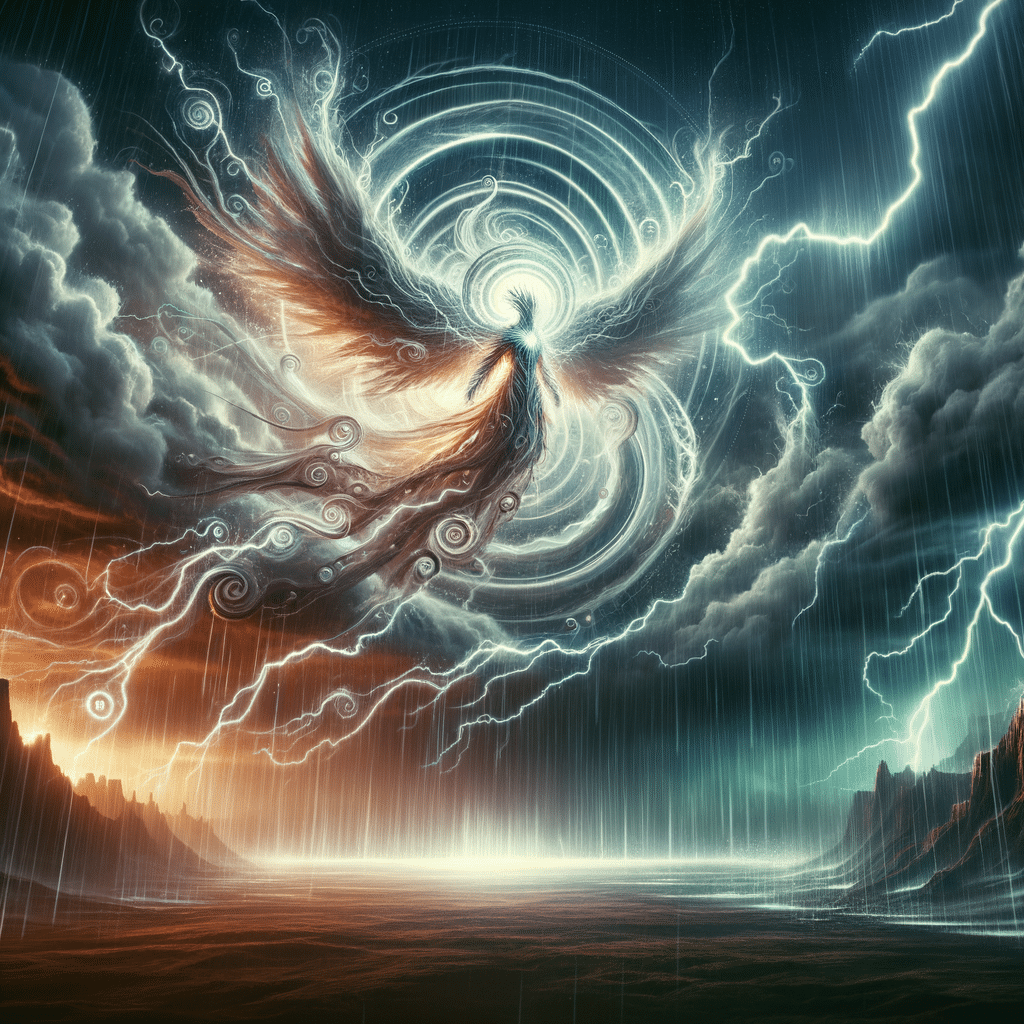
For thousands of years, the idea of elementals have been an important part of human mythology and spiritual practices. The four basic elements, earth, water, fire, and air, are believed to comprise the elements. People often think of these beings as live examples of the natural world, and each has its own unique traits and areas of responsibility. Air elements stand out because they are airy and physical, just like air. They represent how the air is always changing and moving. This essay goes into detail about the nature of air elementals and compares them to their earth, water, and fire peers. The essay also examines their historical significance, their portrayal in folklore, and their continued use in contemporary spiritual practices.
Description
Most depictions of air elementals depict them as magical beings composed of air. The ethereal nature of these things is what makes them stand out. They often appear as fluid, undetectable masses of wind and clouds. Many traditions view air elementals as the spirits or guardians of the air. They have traits like freedom, movement, and intelligence, which are all associated with air. People often associate their appearance with the capacity to think, generate ideas, and even embody the essence of life.
Myths and ancient philosophies in the past suggested the existence of air elementals. In ancient Greece, people thought that earth, water, fire, and air were the basic building blocks of the universe. Philosophers like Empedocles and later alchemists built on these ideas by linking different elements to different souls or beings. Paracelsus, a Swiss scientist and doctor from the 1600s, wrote about air elements, also known as sylphs. He called them one of the four types of elemental beings. Sylphs, as Paracelsus saw them, are light, airy beings that live in the sky and control the weather and air flow.

Contrasts
Water elementals, on the other hand, are spirits of water. People also refer to them as undines or nymphs. Water elements are often associated with emotions and intuitive aspects of life. People believe that they live in rivers, lakes, seas, and other bodies of water because of their fluidity, depth, and nurturing qualities. People often associate undines with feelings, healing, and cleaning, whereas sylphs, perceived as airy and intelligent, are less associated with these attributes. Folklore portrays them as aesthetically pleasing and frequently captivating entities, capable of expressing kindness or anger based on their treatment (Cunningham, 1989).
Gnomes, which are earth elementals, symbolize the earth’s strength and security. These beings, typically described as small, strong, and hardworking, are closely associated with the physical and material aspects of life. People believe they live underground and guard minerals and riches. People typically perceive gnomes as useful, trustworthy, and protective, in contrast to the light, intellectual nature of sylphs and the undines’ ability to change their feelings at will (Grimassi, 1997).
Salamanders are fire elementals that represent the fire’s power to change and grow. People often think of salamanders as lively, active creatures that love fire. They are associated with anger, creativity, and damage. The burning nature of salamanders differs from the cool, calm, and caring nature of water elements, as well as the stable, grounded nature of earth elements. They are different from the other elements because of their strong energy and connection with change (Butcher, 2000).

Impact
Some myths depict air elementals as fairies or ghosts, residing in the sky and regulating the weather and winds. In Shakespeare’s The Tempest, for example, Ariel is an air spirit who works for the magician Prospero. Ariel, being elusive and moody, embodies the changing and uncertain nature of air, a trait common to all air elementals. Some cultures perceive them as helpful spirits, while others view them as neutral or even evil spirits that demand respect and avoidance. Many European myths believe that air spirits can control storms, assist travelers, or even transmit notes between the human and spirit worlds.
Air elementals are still important in some current religions and beliefs, like Wicca, different types of paganism, and other nature-based spiritual paths. In rituals and ceremonies, practitioners may call on or respect air elementals to help them with communication, creativity, and intelligence (Cunningham, 1989). People often ask these beings to help them clear their minds, come up with new ideas, or make their lives move and change. Rituals may incorporate incense, feathers, bells, and other air-related items as gifts (Grimassi, 1998). Connecting with the air element is often a part of meditation and visualization techniques to help people think more clearly and gain spiritual insight.
Modern fantasy literature and media also feature air elementals. These stories often show them as mysterious and powerful beings that can control the weather and wind. Jim Butcher uses air elementals in his popular book series The Dresden Files to aid in battle or perform challenging tasks that require control over the weather and air (Butcher, 2000). Despite their differences, these images typically emphasize their connection to nature and their role in protecting the air. Characters that are based on air elements often have traits like being quick, smart, and free-spirited.
People who study mythology and folklore, like Marina Warner, say that our interest in air elements is part of a deeper human need to understand and connect with the natural forces that shape our world (Warner, 2006). Whether you look at them through the lens of old philosophy, folklore, or modern spirituality, air elementals continue to fascinate people because they represent the mysteries and wonders of the air around us. There are many examples of their impact on art, from old paintings to new movies. They serve as symbols of freedom, change, and the unseen forces governing the world.
Conclusion
To sum up, the idea of air elements is deep and complex, spanning different countries and times. These flowers demonstrate the intangible qualities of air, such as its ability to make things move and come to life, as well as its ability to inspire and change. Through historical texts, myths, and modern practices, air elements serve as a reminder of people’s long-standing connection to and respect for the natural world.
References
Butcher, J. (2000). Storm Front. Ace.
Cunningham, S. (1989). Wicca: A Guide for the Solitary Practitioner. Llewellyn Publications.
Grimassi, R. (1998). Wiccan Magick: Inner Teachings of the Craft. Llewellyn Publications.
Warner, M. (2006). Phantasmagoria: Spirit Visions, Metaphors, and Media Into the Twenty-first Century. Oxford University Press.

Leave a Reply