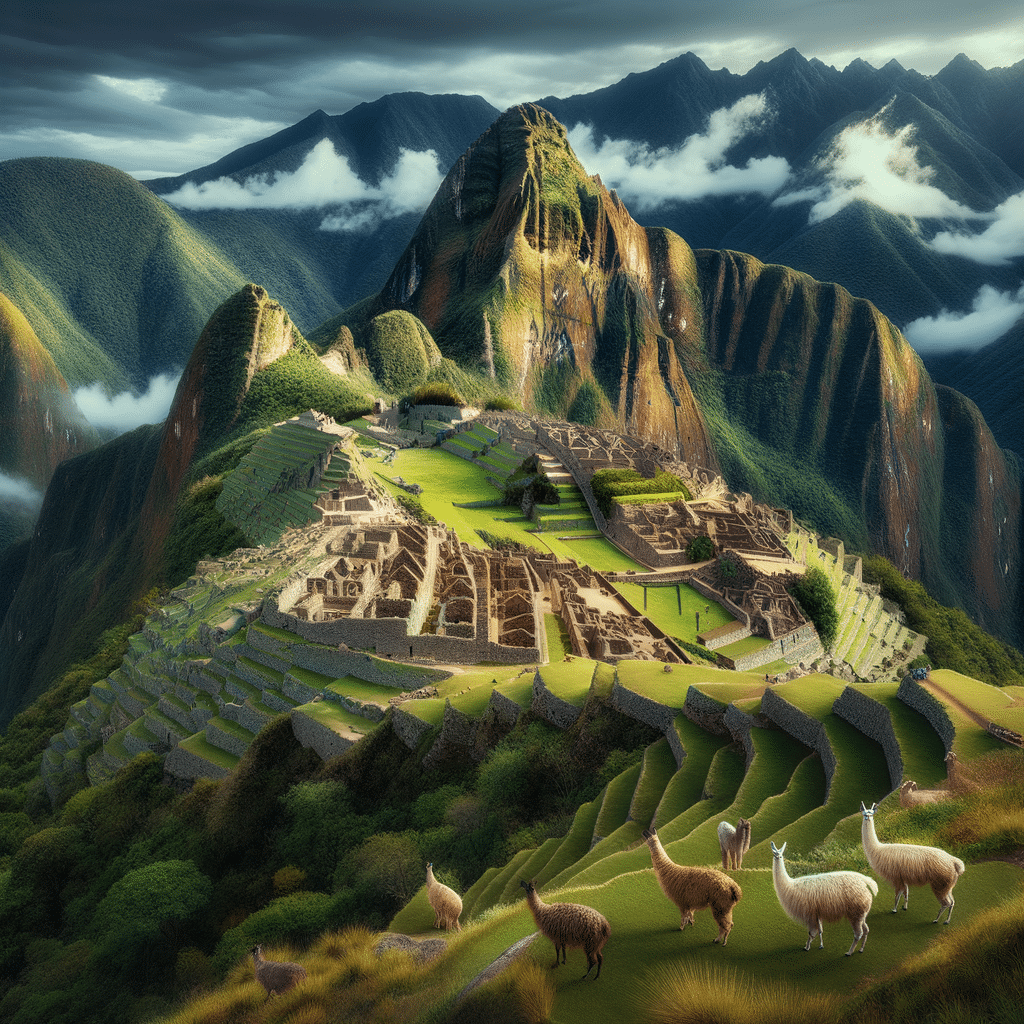
Hiram Bingham’s 1911 rediscovery of Machu Picchu, nestled high in the Peruvian Andes, has captivated historians, archaeologists, and tourists alike. Mist frequently covers this long-gone Incan citadel, serving as an engineering marvel and testament to the creativity of its builders. Even after much study, there are still a lot of unanswered questions about Machu Picchu, from its actual function and building methods to its people’s day-to-day activities.

Mysteries
Machu Picchu’s goal remains one of its most enduring mysteries. Academics have proposed several explanations, yet they have not reached a consensus. Some people think that Pachacuti, the Inca ruler who ordered its construction in the middle of the fifteenth century, used it as a royal estate. Some argue that because it included so many temples and ritualistic buildings, it was a religious location. Some sites that imply ceremonial purposes include the Room of the Three Windows, the Temple of the Sun, and the Sacred Plaza. According to certain beliefs, Machu Picchu may have served as an astronomical observatory because of its alignment with specific celestial phenomena. A more extreme argument, citing comparisons with other ancient ruins that demonstrate sophisticated engineering methods seemingly developed before their time, suggests that extraterrestrials may have assisted in the construction of Machu Picchu.
The methods used to build Machu Picchu are still a mystery. The Incas were expert stonemasons, and it is amazing how precisely they could cut and fit stones together without the need for mortar. Not even a blade of grass could fit between these stones due to their immaculate design. Researchers are perplexed about the instruments and techniques used in this technique, known as ashlar masonry, especially in light of the historical technological constraints. The movement of enormous stones across rugged and steep terrain from quarries located miles away further complicates the riddle. Some theories suggest that an advanced civilization, potentially extraterrestrial in origin, may have provided the Incas with superior knowledge or assistance, making such precise construction impossible with the available technology at the time.
There are doubts about Machu Picchu’s actual location. Situated approximately 2,430 meters (7,970 feet) above sea level, this location is exceedingly isolated and unreachable. The reason for choosing such a challenging location remains unclear. Some argue that the location’s spiritual value led to its selection, while others argue that its strategic position was crucial for defense. People may have perceived the surrounding terrain, with its majestic peaks and hallowed valleys, as a bridge connecting the heavenly and earthly realms. The remarkable location, with its expansive views and alignment with astronomical phenomena, has also inspired claims that alien spaceships selected it for its distinct energy fields or as a landing area.
The lifestyles of humans who lived at Machu Picchu are also a mystery. The citadel was home to roughly 750 people at its height, according to estimates; however, nothing is known about their day-to-day lives. Archeological discoveries have provided some insights into the residents’ diet, which included maize, potatoes, and a variety of fruits and vegetables. The community’s particular responsibilities and social structure, however, remain mostly hypothetical. Luxuries and practical artifacts suggest a sophisticated culture, yet the absence of written records hinders our understanding. An additional layer of mystery surrounds these people’s existence: the possibility that they interacted with or learned from an advanced civilization, whether terrestrial or extraterrestrial.
Specialists who have worked hard to unravel the mysteries of Machu Picchu include anthropologist and adventurer Johan Reinhard. Reinhard asserts that the Incas’ holy geography ideas inextricably link the location and design of Machu Picchu. He contends that Machu Picchu’s orientation toward important astronomical events and its placement in relation to other important Incan sites demonstrate a comprehensive mastery of both geography and astronomy. In a similar vein, archaeologist Richard L. Burger highlights the significance of Machu Picchu in relation to Inca civilization, pointing out that the building of the site demonstrates the empire’s inventiveness in architecture and ability to manage sizable work groups. Both experts agree that there are still a lot of unanswered questions regarding the location, which calls for more research and discussion.
The reason for the abandonment of Machu Picchu remains a mystery. The Spanish conquistadors arrived in Peru after several decades of abandonment of the location. Some theories attribute the abandonment to a smallpox outbreak that European invaders caused, while others point to political and social unrest within the Inca Empire. The precise causes of Machu Picchu’s abandonment remain a mystery due to the lack of conclusive evidence. Some have even conjectured that the location’s inhabitants left because it served their purpose, and that cosmic or alien phenomena abandoned the site.

Conclusion
Some of Machu Picchu’s mysteries are starting to come to light thanks to modern technologies. Techniques like LiDAR (light detection and ranging) have revealed previously hidden terraces and structures, providing new insights into the site’s scope and complexity. However, a lot of concerns remain unresolved, and Machu Picchu still inspires awe and interest in spite of these advancements. The persistence in popular culture and among certain researchers of theories concerning aliens and sophisticated civilizations not generally acknowledged in conventional archaeology increases the site’s mysterious appeal.
Machu Picchu is a testament to the Inca civilization’s sophisticated engineering, architectural mastery, and profound spirituality. Despite significant discoveries since its rediscovery, the site continues to hold many secrets. The intended use, building techniques, location, occupants, and abandonment are still hotly debated topics. Even if they are debatable, theories about extraterrestrial life and advanced civilizations add to the complex tapestry of conjecture surrounding Machu Picchu. The air of mystery surrounding it further enhances its fascination, beckoning future generations to explore and unearth the secrets hidden inside its ancient stones.
References
Bingham, H. (1930). Machu Picchu, a citadel of the Incas: National Geographic Society.
Burger, R. L., & Salazar, L. C. (Eds.). (2004). Machu Picchu: unveiling the mystery of the Incas. Yale University Press.
Hemming, J. (1993). The Conquest of the Incas. Papermac.
Reinhard, J. (2007). Machu Picchu: Exploring an Ancient Sacred Center. ISD.
Wright, R. (2005). Stolen Continents: Five Hundered Years of Conquest and Resistance in the Americas. Houghton Mifflin Harcourt.



Leave a Reply