Eiffel Tower Dark Portal: Key Points
-
The Eiffel Tower, completed in 1889, has accumulated various paranormal reports over its century-long existence through two world wars and countless human dramas.
-
Visitors and staff report seeing ghosts, including a woman in Victorian dress and a worker in nineteenth-century clothing, while security guards hear unexplained tool-clanging sounds and old French work songs at night.
-
Physical manifestations include invisible hands touching visitors, mysteriously moved tools, sudden intense emotions in specific locations, and electronic disturbances like complete battery drain and unexplained photographic anomalies.
-
Skeptics offer rational explanations, including the metal structure’s acoustic properties, temperature variations, psychological factors like height-induced anxiety, and camera lens reflections or dust particles.
-
Some theorists propose the tower conducts electromagnetic energy or creates a “dark portal,” though these claims lack scientific basis and remain unproven speculation.
-
The paranormal reputation has a modest cultural impact, with ghost tours occasionally including the tower despite no official acknowledgment from management.

Introduction
The Eiffel Tower, a world-famous landmark, is in central Paris, France. Since it was finished in 1889, it has attracted millions of visitors. Most people think of this iron lattice structure as a romantic place with beautiful views and a connection to French culture. But the tower has a lesser-known side: it has been the subject of many reports of paranormal activity over its 100-year history. These strange stories, which include ghostly sightings and strange sounds and feelings, have turned the beloved monument into a source of interest for both paranormal fans and skeptics. The combination of such a well-known symbol of human achievement with reports of supernatural activity makes for an intriguing story that needs to be looked into more closely.
Overview
One of the tallest buildings in Paris, the Eiffel Tower’s antennas contribute to its 330-meter height. It also serves as a remarkable showcase of nineteenth-century engineering. Gustave Eiffel’s company built the tower for the 1889 World’s Fair. About 2.5 million rivets hold together more than 18,000 iron pieces that make up the tower. The building weighs about 10,000 tons and has three levels that visitors can ascend to. There are restaurants and observation decks that provide visitors great views of the French capital. Its unique brown color and graceful curves have made it famous all over the world, but at first, Parisian artists and intellectuals hated it and thought it was ugly. The tower’s intricate latticework creates a complicated network of shadows and spaces that change a lot with the weather and the time of day. This makes the tower feel creepy at times.
The Eiffel Tower has a long history that is closely linked to important events in French and world history. This makes it an ideal location for paranormal claims. The structure was only supposed to be up for twenty years as a temporary exhibit at the World’s Fair, but it was saved from demolition because it was useful as a radio transmission tower. During World War I, it picked up enemy radio communications, and during World War II, French resistance fighters damaged the tower’s elevators so that Nazi officials couldn’t easily climb it. The tower has seen a lot of human drama, from suicide attempts to marriage proposals. It has also quietly watched over Paris’s turbulent twentieth century, which included two world wars, the occupation, and liberation. Some paranormal researchers think that the place has absorbed leftover energy from these events because of its long history of human emotion, tragedy, and success.
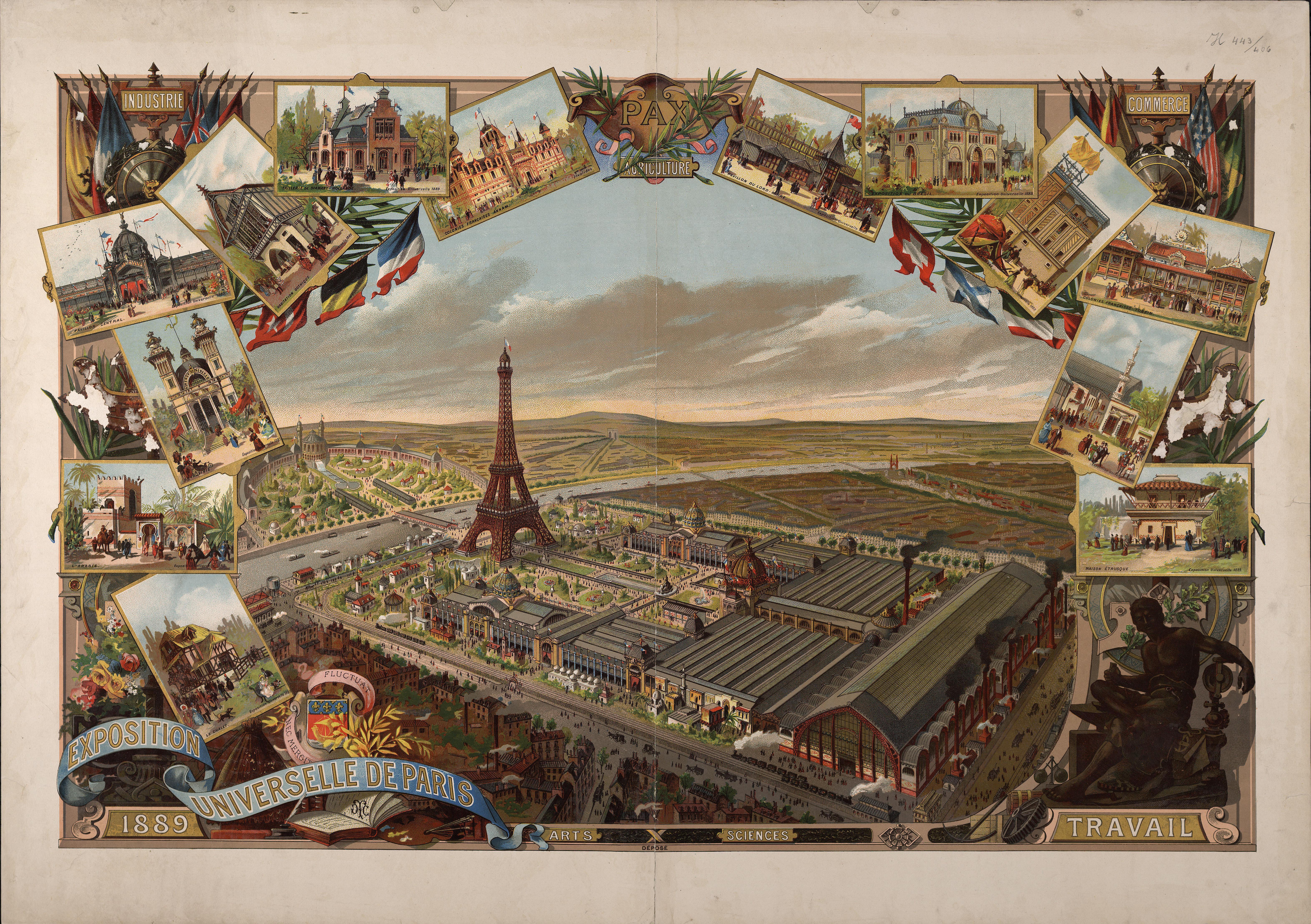
Engineer Gustave Eiffel built the Eiffel Tower as the main attraction for the 1889 Exposition Universelle. It was meant to honor the 100th anniversary of the French Revolution. It was the tallest man-made structure in the world at 300 meters until 1930. It was not only a sign of engineering skill but also a lasting symbol of Parisian culture and history. This kind of importance has naturally led to the creation of many urban legends and myths, especially those about the idea of haunting (Flinn, 2014).

Haunted Tower
There have been sporadic reports of paranormal activity at the Eiffel Tower throughout its history, with accounts that differ in type and reliability. Staff and visitors have reported seeing shadowy figures moving along the iron beams at night, especially on the first and second levels, when there shouldn’t be any tourists. Some individuals report hearing unexpected footsteps echoing through the metal framework, accompanied by whispers in older French dialects that seem to emanate from nowhere. Some people have said that the temperature drops suddenly in certain parts of the tower, even on warm summer days. Others have said that visitors have felt overwhelming sadness or unease in certain parts for no clear reason. Some people who love photography say they have seen orbs of light or misty ghosts in their pictures, but these claims are very controversial. One story that keeps coming up is about the ghost of a construction worker who supposedly fell to his death while building the tower. However, there are no historical records of such an event. (Power Traveller, n.d.)
Mysterious sounds that seem to have no logical explanation are some of the most common things that people report, especially in the early morning hours before the tower opens to the public. People who work as security guards at night have said that they hear what sounds like metal tools banging against the iron framework, which is similar to the noise that was made during construction over a hundred years ago. These sounds are said to occur most often between 2 and 4 a.m. and seem to move around the tower. Some guards have said that they followed these sounds only to find that the platforms and stairs were empty and there was no source for the noise. A retired security supervisor said that he heard what sounded like men singing old French work songs several times, but when he looked into it, he found that he was the only person on that level of the tower. The iron structure’s sound properties make it difficult to tell where sounds are coming from, but these reports have been very consistent from different witnesses over many years (Amy’s Crypt, 2020).
People have seen different kinds of ghosts at the Eiffel Tower, from fully formed human figures to barely visible shadows or clear shapes. Many tour guides have said that they saw a woman in a long, dark Victorian-era dress standing near the railing on the second level. When they got closer, she disappeared. Witnesses have mostly seen this figure on cloudy days, and they often describe it as looking sad or deep in thought while gazing out over Paris, as if searching for something or someone. People often see a man in work clothes from the late 1800s near the elevator machinery and stairs. Witnesses say he looked solid and real for a few seconds before fading away or disappearing when they blinked or looked away for a short time. Some visitors have reported seeing a man dressed in formal attire from the early 1900s on the third level. He politely tipped his hat before disappearing. Although these sightings are rare, they have been reported by people who had no prior knowledge of similar accounts, which gives them some credibility among believers (Mirror, 2023).
Theories
There are valid reasons to doubt these paranormal claims at the Eiffel Tower. Logic can explain most of the reported phenomena. The tower’s metal structure naturally creates strange acoustic effects that make sounds echo and change in ways that might seem supernatural to people who have never been there before. The metal’s thermal properties cause it to heat and cool at different rates than the air around it, which explains the temperature changes and creates localized cold spots. When you take pictures of the tower, you might see strange things because of reflections in the camera lens, dust particles, or moisture in the air. This scenario is especially true because the tower is in an open area and the weather changes a lot. The power of suggestion is also crucial. Visitors who expect to see something strange may see normal things in a paranormal way. Also, the tower’s enormous size, dizzying heights, and enormous crowds can have psychological effects that some people might think are supernatural.
Some theories about the reported paranormal activity are psychological, while others are metaphysical. Some paranormal researchers think that the Eiffel Tower’s huge iron structure might be able to conduct electromagnetic energy, which could make conditions that sensitive people see as ghostly presences. Some people think that the strong feelings of millions of visitors over more than a century could have caused what parapsychologists call “residual hauntings,” where strong feelings are somehow left behind in a place and play back like recordings. The tower’s reputation as a place where people have felt deep joy, sadness, and everything in between could, in theory, play a role in these kinds of events. From a more traditional standpoint, cognitive psychologists attribute perceived paranormal phenomena to the effects of height-induced anxiety, sensory overload from crowds and environments, and the human inclination toward pareidolia—interpreting patterns and significance in random stimuli.
The idea of haunting, which is often shown as a connection between memory and cultural identity, is a beneficial way to look at the ghostly themes that go along with the Eiffel Tower. Cultural studies posit that hauntings signify unresolved histories, collective trauma, and societal anxieties. Kröger and Anderson say that studying ghosts is not just a way to add the supernatural; it is also a way to look into identity, memory, and trauma (Kröger & Anderson, 2013). So, the stories about the Eiffel Tower can be considered examples of national identity mixed with memories of tragic events, especially its links to pain and loss in the past.
People have committed suicide or died tragically near the Eiffel Tower, contributing to its eerie reputation. Some visitors say they feel uneasy and see ghostly presences, which is similar to the darker stories that talk about loss and despair. Emotional investments in urban legends and folklore often make these kinds of experiences worse, making a tapestry of scary stories (Fleischhack and Schenkel, 2016). There are numerous haunted places in Paris, including the Eiffel Tower. Many Gothic stories ignite the public’s imagination with the contrast between beauty and horror. This idea makes people think that the Eiffel Tower’s appeal may hide darker, less known histories (Piatti-Farnell and Mercer, 2014). A defining feature of the Gothic style is the use of ugly and scary elements to illustrate cultural fears.
One of the more unusual ideas about the Eiffel Tower is that it is a “dark portal” or dimensional gateway, which is a popular idea in some paranormal circles. People who believe in this theory say that the tower’s unusual shape, iron construction, and location along certain supposed ley lines or earth energy grids make it easier for breaches to happen between different dimensions or planes of existence. Some people say that the lattice structure works as an antenna not only for radio waves but also for supernatural energies, which could let beings from other realms through. This theory often includes ideas about sacred geometry and the intentional or unintentional use of occult symbols in the tower’s design. However, there is no credible historical evidence that Gustave Eiffel or his team had these goals. The portal theory is still just a guess and has no scientific support, but it still fascinates people who are interested in the connection between architecture and the supernatural.
Impact
The cultural and social effects of paranormal claims about the Eiffel Tower have been relatively small compared to the tower’s overall importance, but they do add an intriguing new layer to its legacy. Ghost tours and paranormal investigation groups sometimes include the tower in their Paris itineraries, but the people who run the monument don’t officially support or acknowledge these supernatural connections. These stories have made their way into popular culture, showing up in books, blogs, and TV shows about haunted places all over the world. For some visitors, the idea of paranormal activity makes their experience even more mysterious, turning a simple tourist visit into a chance to meet the unknown. But the tower’s romantic and architectural importance far outweighs its ghostly reputation, and most of the millions of people who visit each year have no idea about these ghostly stories. These kinds of stories are still popular because people have always been interested in the unexplained and like to make up mysterious stories about their favorite places.
People’s reactions to hauntings connected to the Eiffel Tower often add to the myths that surround it. Tourists’ stories about strange feelings or seeing ghosts at the Tower help to support the idea that it is a haunted place, as seen in many travel blogs and reports. Visitors often narrate tales that resonate with overarching spectral themes in literature and film, wherein the ghost symbolizes history and unresolved trauma (Kozlovic, 2017). We can examine the tales of spectral entities and inexplicable occurrences near the Eiffel Tower through the lens of cultural memory. They embody individual and communal traumas interwoven with the site’s historical narrative (Arias, 2020). In many Gothic traditions, ghosts are signs of problems in society or things that happened in the past that still bother people. The haunting of the Eiffel Tower is a good example of such traditions because it shows both the beauty of Paris and the pain that people have felt there in the past. The creation of these eerie stories often mirrors the patterns found in movies and books, where hauntings represent cultural fears. This concept is underscored by the idea that hauntings can symbolize collective memory, aiming to illuminate unresolved societal tensions (Boehler, 2014).
Conclusion
To sum up, the strange things that have happened at the Eiffel Tower are an interesting mix of history, psychology, and human imagination about one of the most famous buildings in the world. Although the assertions of spectral manifestations, enigmatic auditory phenomena, and unaccounted sensations create intriguing narratives, they lack the empirical substantiation required to persuade skeptics and scientists of their supernatural provenance. The more outlandish theories, like the one that says there is a dark portal here, are still just that: theories without any real evidence. Still, these paranormal stories help us understand how people interact with and make sense of their experiences at famous places. They tell us as much about human psychology and cultural storytelling as they do about the possibility of the supernatural. The Eiffel Tower is still a monument to human engineering and artistic vision, as well as our ongoing interest in mystery and the unknown, whether or not you believe in ghosts.
References
Amy’s Crypt. (2020, November 16). The Eiffel Tower is haunted: Ghosts of Paris, France. https://amyscrypt.com/eiffel-tower-haunted-paris/
Arias, R. (2020). The supernatural. Victorian Literature. https://doi.org/10.1093/obo/9780199799558-0157
Boehler, N. (2014). Staging the spectral: the border, haunting and politics in mekong hotel. Horror Studies, 5(2), 197-210. https://doi.org/10.1386/host.5.2.197_1
Fleischhack, M. and Schenkel, E. (2016). Ghosts – or the (nearly) invisible.. https://doi.org/10.3726/978-3-653-05962-5
Flinn, M. C. (2014). The social architecture of french cinema, 1929–1939.. https://doi.org/10.5949/liverpool/9781781380338.001.0001
Kozlovic, A. K. (2017). Cinematic ghosts: haunting and spectrality from silent cinema to the digital era, edited by murray leeder. Alphaville: Journal of Film and Screen Media, (12), 116-122. https://doi.org/10.33178/alpha.12.09
Kröger, L. and Anderson, M. R. (2013). Ghostly and the ghosted in literature and film.. https://doi.org/10.5040/9781611496895
Mirror. (2023, February 13). Exploring the ghost stories on top of Paris’ Eiffel Tower. Moon Mausoleum. https://moonmausoleum.com/exploring-the-ghost-stories-on-top-of-paris-eiffel-tower/
Piatti‐Farnell, L. and Mercer, E. (2014). Gothic: new directions in media and popular culture. M/C Journal, 17(4). https://doi.org/10.5204/mcj.880
Power Traveller. (n.d.). Eiffel Tower exterior at night – Ghost & haunted walking tour. https://powertraveller.com/eiffel-tower-exterior-at-night-ghost-haunted-walking-tour/

Leave a Reply