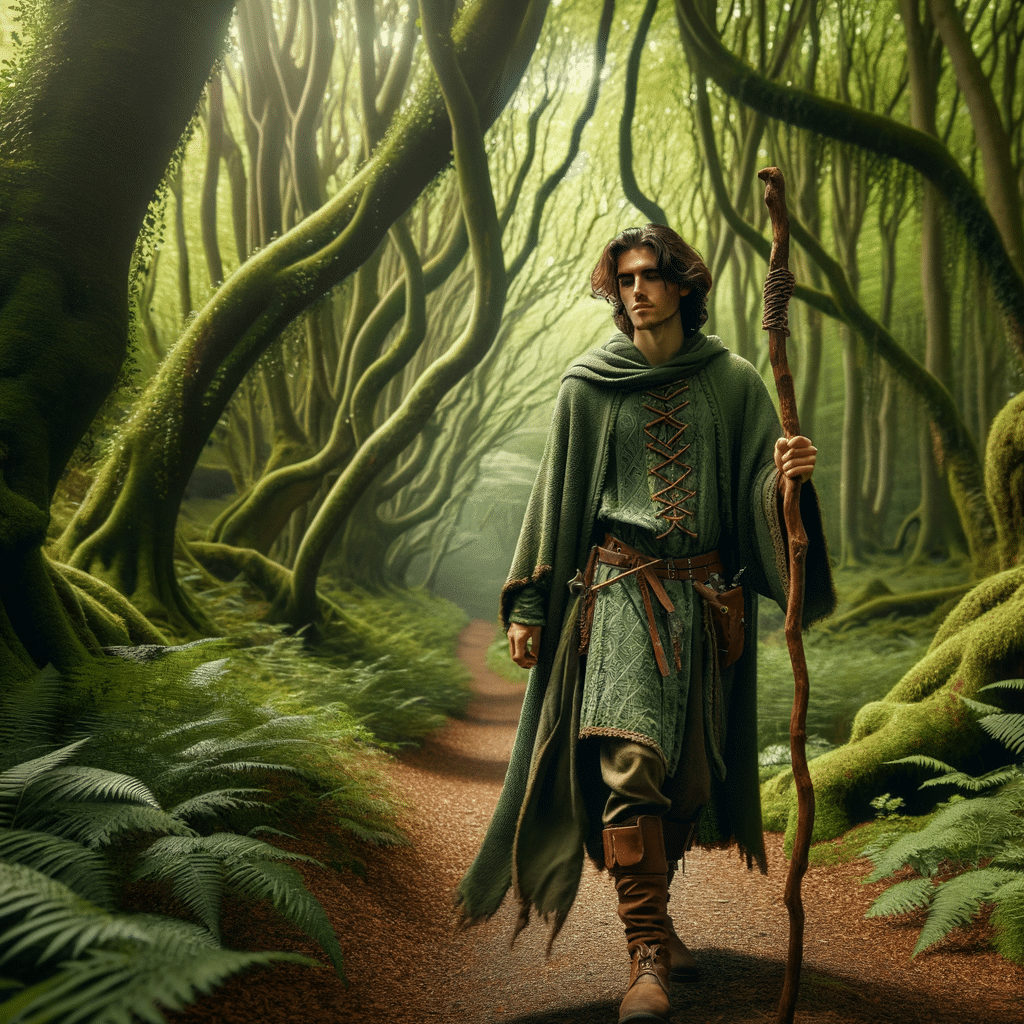
How was druid training in ancient times done? As religious leaders, philosophers, instructors, and judges, the ancient Druids held a renowned and prominent place in Celtic society. They were also responsible for a variety of other roles. A comprehensive awareness of the natural world was required of them in order to complete their training, which was a laborious process that required years of concentration. In the next article, we will discuss the training of Druids, as well as their history, the role they played in Celtic civilization, and the influence they have had on modern society.
It is possible to trace the roots of the Druidic tradition all the way back to the Iron Age, which experienced a flourishing of Celtic culture across a significant portion of Western and Central Europe. While working as counselors to kings and chieftains, executing religious ceremonies, and acting as mediators in disputes, the Druids were considered to be the intellectual and spiritual elite of Celtic society. The scope of their power stretched beyond the bounds of religion, as they were also accountable for the preservation and transmission of the historical narratives and cultural heritage of their people (Carr-Gomm, 2013).

Druid Training
The training of Druids was a laborious and time-consuming endeavor that included a significant amount of time and effort. It was necessary for anyone who were interested in becoming Druids to commit to memory a massive body of information, which included the elaborate customs, rites, and teachings of their organization. Because the Druids did not commit their sacred wisdom to writing, this information was passed down verbally from generation to generation. As part of the training process, students were also required to study astronomy, mathematics, philosophy, and the interpretation of natural occurrences. It was anticipated of apprentices that they would have remarkable memory skills, as well as a profound regard for the natural world and the holy.
It is a reflection of the tremendous importance and respect afforded to these valued persons that the training of Druids in Celtic culture was a procedure that was exceedingly selective and hard. The process of selecting potential Druids was a tradition that was carefully guarded, guided by stringent criteria, and frequently began at an early age. An individual’s birth and family lineage were the primary factors that established their eligibility for Druidic instruction. In spite of the fact that the particulars differed from one Celtic society to another, it was usual practice to consider only members of noble or priestly households for this distinguished post. Particularly in certain instances, children who had outstanding intellectual abilities or spiritual tendencies were recognized at an early age and prepared for the possibility of receiving Druidic training (Guyonvarc’h, 2001).
In and of itself, the training was a lengthy and all-encompassing endeavor that often lasted for several decades. In the first phase, which might run for as long as twenty years, the primary focus was on the memory of large volumes of information (Ross, 2012). This information included oral traditions, religious teachings, laws, genealogies, and the intricate workings of the natural world. The student’s recall capability, self-control, and commitment to the Druidic path were all put to the test at this first stage of the process.
During the course of the training, the curriculum was broadened to include more complex disciplines, such as astronomy, philosophy, divination, and the interpretation of omens and natural phenomena. Such subjects were included in the curriculum. It was anticipated of druids that they would have a profound awareness of the motions of the heavens, the cycles of nature, and the complicated workings of the physical and metaphysical realms.
In addition to their intellectual pursuits, those who were interested in becoming Druids received training in a variety of practical abilities. These talents included mediation, conflict resolution, and the conduct of complicated rituals and ceremonies. It was expected of them that they would be expert orators, capable of commanding respect and communicating complicated concepts in a way that was both clear and authoritative.
The final part of Druidic training was sometimes cloaked in secrecy because it was at this period that initiates delved into the most sacred and esoteric portions of the Druidic tradition. The most promising and committed applicants, who had demonstrated their worthiness through years of intense study and steadfast commitment, were probably the only ones who were allowed to go to this stage.

Druids in Celtic Society
Because they were considered to be the personification of wisdom, virtue, and spiritual enlightenment, Druids were expected to keep the greatest standards of moral conduct during the entirety of their training. Only the most remarkable individuals were able to achieve the renowned rank of a fully-fledged Druid, which meant that they were capable of leading and creating the spiritual, intellectual, and cultural landscapes of their communities. This was due to the hard nature of their schooling (MacCrossan, 1993).
Druids held a position of tremendous respect and authority in Celtic civilization. They were revered and respected by all. They were considered to be the keepers of knowledge and the translators of the will of the deity who created the universe. Their teachings and decisions had a great deal of weight, and they were frequently taken into consideration when it came to issues concerning the law, politics, and social norms. In addition, it was believed that the Druids possessed supernatural powers, such as the capacity to converse with the gods and to carry out rites that had the potential to affect the natural world.
A variety of factors, including historical sources, archaeological data, and popular culture, have jointly contributed to the formation of contemporary conceptions of Druids. The activities and beliefs of the ancient Druids have been vulnerable to romanticization and misconception throughout the course of the ages, despite the fact that they were an essential component of Celtic civilization. New neo-Druidic movements have formed in recent years, with the objective of reviving and reinterpreting various components of the Druidic heritage. These movements frequently combine elements of modern spirituality and environmentalism with the Druidic legacy.
Many areas of contemporary culture continue to be influenced by the ancient Druids, and this impact can still be felt. The veneration that they had for the natural world and the importance that they placed on the cyclical nature of life have struck a chord with a number of current environmental and spiritual forces. In addition, the Druids’ function as guardians of cultural heritage has been a source of motivation for the preservation and celebration of the customs and histories of a wide variety of cultures all over the world (Driscoll, 2022).
Conclusion
Furthermore, the training of Druids in Celtic culture was a rigorous and profound process that instilled its practitioners with a profound grasp of the natural world, a regard for tradition, and a commitment to preserving and imparting knowledge. In conclusion, the training of Druids was a profound and rigorous procedure. Due to the fact that the Druids played a significant part in the formation of the intellectual, cultural, and religious landscapes of their day, their legacy continues to have an impact on the ways in which people think and behave currently.
References
Carr-Gomm, P. (2013). What Do Druids Believe?. Granta Books.
Driscoll, D. (2022). Creativity, Spirituality, and Awen: An Exploratory Study of Learning the Bardic Arts and Eisteddfodau in the Modern Druid Tradition. Pomegranate, 24(1).
Guyonvarc’h, C. J. (2001). The Making of a Druid: Hidden Teachings from the Colloquy of Two Sages. Inner Traditions/Bear & Co.
MacCrossan, T. (1993). Druids. Llewellyn Worldwide.
Ross, A. (2012). Ritual and the Druids. In The Celtic World (pp. 423-444). Routledge.




Leave a Reply