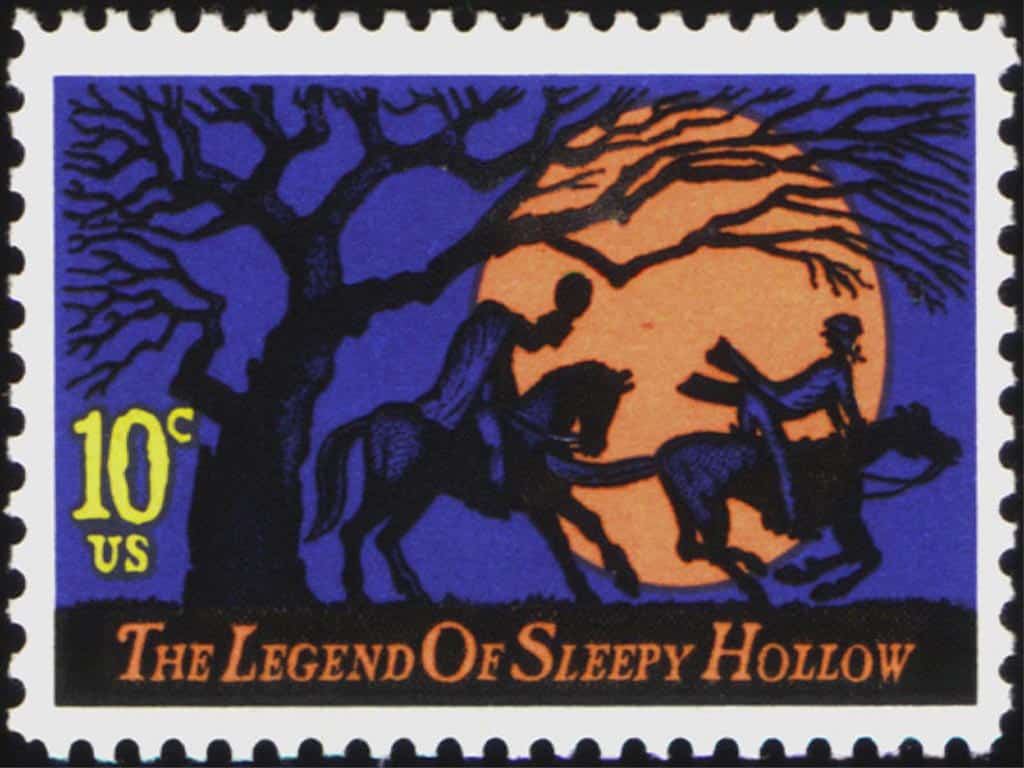
Few characters in literature and tradition are as eerie and timeless as the Headless Horseman. This ethereal being, a headless rider who embodies the unsettling fusion of the macabre and the supernatural, has captivated people for generations. A variety of media constantly reimagines this terrifying apparition, blurring the boundaries between nightmare and folklore, into a well-known horror icon.

Headless Horseman Description
The Headless Horseman, a terrifying figure from literature and tradition, typically appears as a ghostly rider atop a horse without a head. People frequently depict this unsettling specter clutching his severed head beneath his arm or raising it high like a ghoulish lantern. Known for his horrific nighttime rides, the Headless Horseman hunts down unsuspecting travelers or exacts revenge for wrongs done in the past.
The Headless Horseman is the main character in Washington Irving’s famous story The Legend of Sleepy Hollow, playing a terrifying role in the small Dutch village of Sleepy Hollow, New York. According to the story, the horseman was a Hessian trooper who, during the American Revolutionary War, lost his head to a projectile. Rumors circulate that his spirit haunts the locals, particularly the superstitious schoolteacher Ichabod Crane, every night as it rides out in pursuit of his missing head. The story culminates in a famous chase scene where the Headless Horseman pursues Ichabod through the dark woods, resulting in the schoolmaster’s mysterious disappearance (Pajak, 1981).
European mythology has deeply ingrained the idea of a headless rider, dating back centuries to Irving’s well-known tale. History has documented tales of spectral, headless individuals in various forms since the Middle Ages. The dullahan, an Irish folktale, is a headless fairy that rides a black horse and holds its head beneath one arm. Scottish folklore tells stories of “The Galloping Hessian” and other headless riders. German folklore depicts numerous headless horsemen, such as the Wild Huntsman, who leads an eerie procession through the sky.
These headless figures frequently represent notions of unsolved disputes, justice, or retaliation. Their appearance acts as a warning or a symbol of past disasters, and they often appear as harbingers of death or adverse luck. The split head and body theme also has profound symbolic meaning; it could refer to the disjunction of passion and reason or the disintegration of the ego.

Headless Horsemen Around the World
Around the world, there are numerous folklore traditions that feature headless characters, each with distinctive qualities and cultural significance. According to Irish tradition, the Dullahan is a fairy that rides a dark horse, stops when it approaches the location where a person is going to die, and carries its head under one arm while using a human spine as a whip. The Green Knight, a mystery character from Arthurian mythology, challenges Sir Gawain to a test of valor after surviving a beheading (Nickel, 1988). Despite his capacity to withstand beheading, he still falls under this category. According to Buddhist mythology from Southeast Asia, Kinnara are half-bird, half-human beings who sometimes have faces on their chests but no heads.
The terrifying Nuckelavee from Orcadian mythology is a feature of Scottish folklore. Sometimes, depictions show its head resting squarely on its torso, without a neck. Ancient Mesopotamian mythology occasionally portrayed Lahmu as headless, protective deities, with their faces visible on their chests. Christian iconography frequently depicts Saint Denis, the patron saint of France, bearing his own severed head, despite his not being a mythological figure. After his beheading, legend has it that he carried his severed head and walked several miles while delivering a sermon.
There are tales of headless ghosts from many cultures, usually linked to specific places or historical events. These include a number of headless soldier ghosts from various wars, as well as Anne Boleyn’s headless ghost in the Tower of London. Legendary creatures from North African tradition, the Blemmyes were thought to have no heads and to have their facial characteristics on their chests. Several ancient and medieval texts referenced them. In Chinese legend, Xingtian was a giant without a head who battled the Supreme Divinity. Despite losing his head, Xingtian continued to fight, using his navel as his mouth and his nipples as his eyes. According to Dominican folklore, La Ciguapa is a monster with a head that can turn 180 degrees, giving it the appearance of headless creatures when viewed from behind.
These headless or head-related figurines show how common this motif is in folklore around the world. They frequently depict themes of enduring life after death, the paranormal, or the fuzziness of borders between the material and spiritual realms. The variety of these legends highlights universal human fascinations and concerns that cut across national boundaries, as well as the distinct cultural contexts in which they originated (Rodger, 1965).
Modern Interpretation
Multiple interpretations and adaptations of The Headless Horseman have left a lasting impact on contemporary popular culture. A gothic, strikingly beautiful version of the character made their big screen debut in Tim Burton’s 1999 film Sleepy Hollow. In addition, the Headless Horseman has appeared in video games, comic novels, and television series, frequently in altered versions to suit various themes and situations. According to some contemporary readings, the character has changed from its first terrifying appearance to become a multifaceted and occasionally sympathetic figure, reflecting shifting perspectives on the paranormal in modern literature (Rasmussen, 2006).
Contemporary literature and movies have elaborated upon and reinterpreted the ancient folklore around headless individuals, frequently modifying these characters to fit modern themes and tales. These versions sometimes delve into more profound psychological elements, using the headless motif as a metaphor for more general social issues, or subvert the idea into previously unexplored genres.
Numerous writers have returned to the headless horseman trope in their works. The beloved story by Washington Irving has been the subject of several adaptations and retellings. For example, Richard Gleaves’ Sleepy Hollow: Rise Headless and Ride retells the narrative in the present day by fusing elements of the classic thriller with new features. As part of a larger investigation of cultural mythology, Zachary Jernigan’s The Spearfinger is another example, combining Native American tradition with a headless character.
The graphic novel form has also accepted headless figures. Neil Gaiman explores the idea of lost facial features in his The Sandman series with his terrifying creation, The Corinthian, who has teeth in place of eyes. This persona embodies a similar sense of the weird and frightening, even though they are not literally headless.
In film and television, reinterpreting headless people has proven successful. The previously referenced 1999 Tim Burton film Sleepy Hollow presents a dark, visually arresting take on the Headless Horseman, recasting him as a Hessian mercenary raised from the grave using sorcerous sorcery. The film explores themes of rationality vs. superstition by fusing aspects of horror, mystery, and dark fantasy with the headless motif (Ray & Zipes, 2010).
Reimagining the Headless Horseman as one of the Four Horsemen of the Apocalypse and moving Ichabod Crane to contemporary America, the television series Sleepy Hollow (2013–2017) expanded on the idea. This rendition weaves the original fable into a sophisticated mythology, incorporating biblical prophecy, witchcraft, and demons.
Headless Larry, a clever parody of the headless ghost cliché from the animated series Gravity Falls, defies expectations by being amiable and non-threatening. This perspective explores the topic of how classic folkloric figures could adapt to appeal to modern sensibilities.
Some contemporary versions employ the headless motif in a more symbolic way. Despite not having a headless character per se, the decapitation imagery in the 2018 movie Hereditary is a powerful symbol for themes of loss of identity, trauma in the family, and legacy.
Headless characters have also appeared in video games, usually as bosses or antagonists. The Dark Souls series, known for its gloomy fantasy setting, features numerous headless foes. The game uses this pattern to test player assumptions and create an eerie atmosphere.
Conclusion
The main characteristics that draw people to headless figures are the weird, the paranormal, and the symbolic division of mind and body, and these contemporary interpretations frequently retain them. However, these contemporary interpretations often transcend mere realism, using these characters to explore psychological depths, societal concerns, and modern fears. Artists continue to tap into the intrigue and terror that headless creatures have evoked in people for ages, recasting these characters in fresh settings, while keeping them relevant to contemporary audiences and narrative strategies.
The Headless Horseman’s persistent allure stems from his capacity to arouse deep-seated anxieties and a curiosity with the unknown. It never fails to pique audiences’ interest as a powerful symbol of the paranormal and a reminder of the blurry boundary between the worlds of the living and the dead. Whether viewed as a tragic figure or a menacing apparition, the Headless Horseman remains a potent symbol in the world of folklore and popular culture.
References
Nickel, H. (1988). Why Was the Green Knight Green?. Arthurian Interpretations, 58-64.
Pajak, E. F. (1981). Washington Irving’s” Ichabod Crane”: American Narcissus. American Imago, 38(1), 127-135.
Rasmussen, R. (2006). Children of the Night: The Six Archetypal Characters of Classic Horror Films. McFarland.
Ray, B., & Zipes, J. (2010). Tim Burton and the Idea of Fairy Tales. Fairy Tale Films: Visions of Ambiguity, 198-218.
Rodger, I. (1965). The headless horseman: An amateur inquiry. Journal of the Folklore Institute, 2(3), 266-271.


Leave a Reply