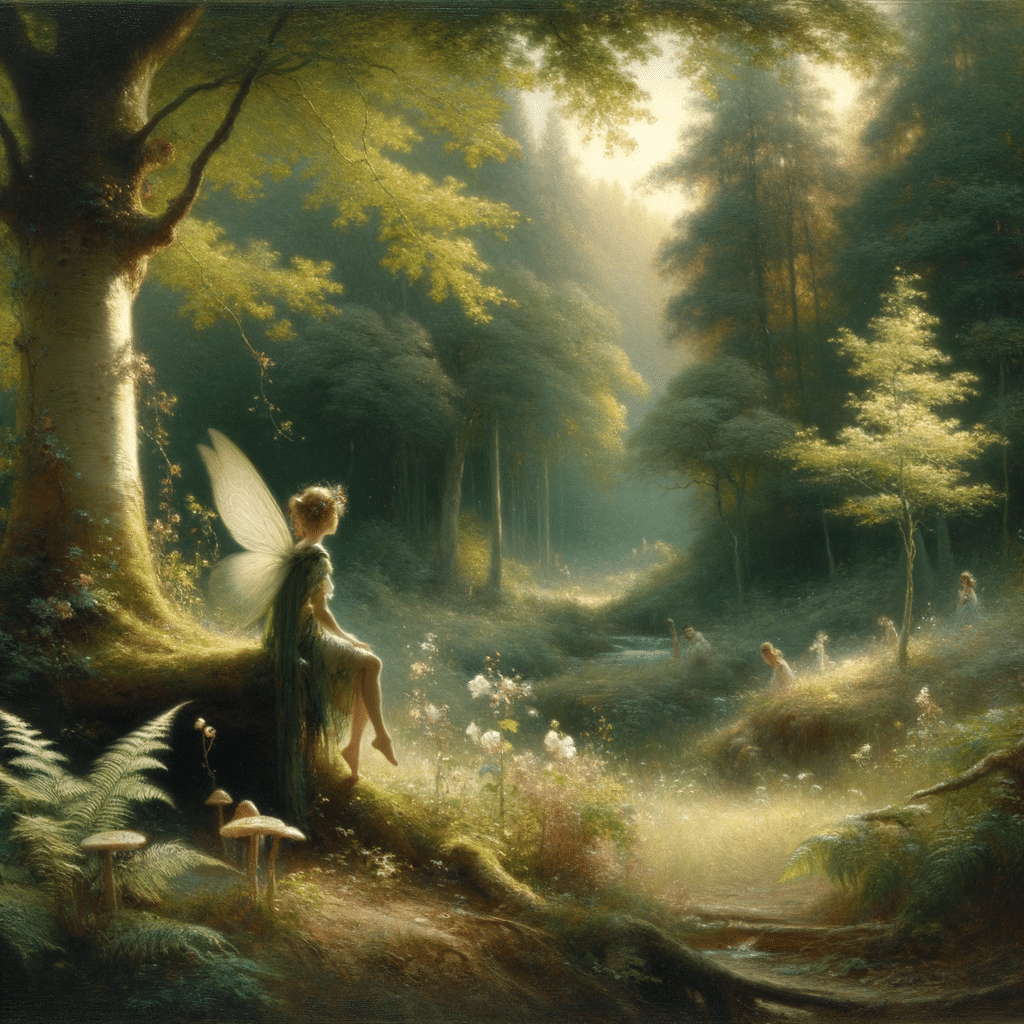
Podcast about the Irish fairy can be accessed above. This episode was part of several podcasts generated with Google NotebookLM and is the product of AI.
Today’s discussion will focus on a compilation of Irish folktales and the Irish fairy, edited and compiled by W.B. Yeats. The text begins with a comparison between the declining belief in fairies in England and their continued existence in Ireland. This comparison serves to show the continuing strength of folklore in the process of shaping cultural identity. The introduction argues that the Celt and his customs remain unchanged despite the influence of industrialization. The persistence of superstitions and the belief in the supernatural serve as evidence of this. In the following section, Yeats provides a number of folktales that highlight the everlasting fascination that the Irish have with fairies, witches, and other legendary creatures.

[Tammy]
Okay, so we’re diving into Irish fairy lore today, and wow, these tales you’ve given us, they’re something else. We’re talking centuries of stories about the good people.
[Joe]
It’s fascinating, isn’t it?
[Tammy]
And you want to uncover the truly unique, the surprising hidden depths of these stories.
[Joe]
Right. We’re going beyond a simple read-through here.
[Tammy]
Exactly. This is about unearthing those unexpected twists and hidden meanings. It’s like searching for those elusive fairies themselves.
[Joe]
Yeah.
[Tammy]
But thankfully, you’ve got an expert guide to navigate this magical landscape.
[Joe]
Well, I’ll do my best to eliminate the path. And you know, one thing that strikes me right away about these sources, we’re not talking about your typical, you know, Tinkerbell fairies here but the Irish fairy.
[Tammy]
No, no, not at all.
[Joe]
Yeats himself, in his writings, found Irish fairies, they were a far cry from their, you know, gentler, fading English counterparts.
[Tammy]
Really?
[Joe]
Oh, yeah. And we see this reflected throughout the tales you’ve provided. This is a world where a mischievous fairy might casually use a weaver’s dressing noggin as a rocking chair, which, by the way, I find absolutely hilarious.
[Tammy]
I know. It’s such a funny image. Right.
[Joe]
But it’s also a world where those same fairies can vanish with a priest’s supper, leaving him quite literally in the dark.
[Tammy]
It’s true. That image from the priest’s supper, the fairies whisking away the entire meal, it’s such a stark display of their abilities. But it does make you wonder, what’s the deeper significance of the priest being the target of this prank?
I mean, it can’t just be about respecting the fairies. There has to be more to it than that.
[Joe]
Yeah. You’ve hit on something there. It’s not just about respect.
It’s about this balance of power. The priest, representing the authority of the church, he’s being put in his place. It’s a reminder that in the realm of the fair folk, even those with earthly power are subject to the whims of older, wilder forces.
[Tammy]
It’s like the fairies are reminding humans that their rules, they don’t apply in their realm.
[Joe]
Exactly. Their magic, their rules, they’re ancient. And humans are just visitors in their world.
And those in positions of power, they often make the easiest targets.
[Tammy]
It’s a good point. It makes that image of the fairies favoring unfrequented nooks even more poignant.
[Joe]
Oh, absolutely.
[Tammy]
It’s as if they’re being pushed to the margins as human influence expands, you know?
[Joe]
There’s this definite sense of melancholy woven into these stories. You’re right. The fairies are tied to the land, to the old ways.
And as humans encroach on their territory, their magic seems to, well, dwindle.
[Tammy]
It’s like they’re losing their grip on the world.
[Joe]
In a way, perhaps. And this theme of longing and loss, it’s even more pronounced in the fairy well of Legnene, where a young girl’s yearning for escape leads her down a very dangerous path.
[Tammy]
Yeah, that shift in tone from the playful mischief of those first stories to the chilling allure of the well. It really caught me off guard. It’s not just about respecting the fairies anymore.
It’s about understanding that their magic, while enticing, can have devastating consequences.
[Joe]
Well, it embodies that duality perfectly. It offers Solace a chance to forget her sorrow, but at a price.
[Tammy]
Right. Nothing comes for free.
[Joe]
Exactly. And that detail of the well holding only pebbles smooth after the sister vanishes, it’s chilling, isn’t it? It speaks to the complete erasure of her presence, the permanence of her decision.
[Tammy]
It’s haunting. And that sense of something precious being lost or dealing with dangerous consequences seems to run through so many of these tales. Like, take the story of Tago Kain, forced to bury the fairy corpse.
On the surface, it seems like a simple task, but you quickly realize it’s anything but.
[Joe]
You’re right. It’s a classic setup. Seems straightforward, but then…
[Tammy]
Exactly. There’s always more to it than meets the eye.
[Joe]
And that’s where the real danger and the intrigue often lie.
[Tammy]
It’s true. There’s always a catch with the Fair Folk. And the imagery in Tago Kain—that protective ring of fire—it’s such a stark visual—that boundary between the human and fairy realms.
It’s serious business. But even with all the danger, there’s this like glimmer of hope, a sense that these challenges can be overcome. We see the shift in Lusmore and the fairies, right?
Where instead of a chilling encounter, we get a, what, a begrudging partnership?
[Joe]
Yeah. I see what you mean. Lusmore’s tale offers an interesting counterpoint to Kaig’s ordeal.
Both involve servitude to the fairies. But where Kaig is driven by fear and desperation, Lusmore approaches his tasks with, well, let’s just say a healthy dose of reluctance.
[Tammy]
He’s not exactly thrilled about it.
[Joe]
Not at all. Yet, it’s this very reluctance, this refusal to be completely seduced by the fairy glamour, that ultimately leads to his reward.
[Tammy]
It’s true. He’s grumbling the whole way, but he gets the job done. Makes you wonder if there’s a lesson there.
Sometimes, even when facing magical forces, a bit of pragmatism—maybe even a healthy dose of skepticism—can be its own kind of protection.
[Joe]
It’s an interesting thought. Maybe those who aren’t completely swept away by the magic have a better chance of navigating its dangers.
[Tammy]
And the image of him waking up as a well-shaped, dapper little fellow in a brand new suit, I can’t help but chuckle. It’s like the fairies have a sense of humour after all. But then we move from bargains and transformations to something, well, something altogether more unsettling.
The idea of changelings, children stolen away. The fairy nurse, it truly tapped into a primal fear, don’t you think?
[Joe]
Absolutely. The changeling lore embedded in that story—it’s not just about the fear of losing a child. It’s the fear of the unknown replacing something deeply familiar.
It reflects this deep-seated anxiety about the vulnerability of family bonds, that fragility of human connection when faced with the supernatural.
[Tammy]
And those eerie lullaby lyrics sung by the fairy nurse. It’s as if the danger is hidden in plain sight, masked by something that should be comforting and familiar.
[Joe]
Right, it subverts your expectations, lulls you into a false sense of security.
[Tammy]
It’s a chilling reminder that not all threats reveal themselves with fire and fury. Sometimes they lull you into, yeah, a false sense of security. But you know, humans aren’t always portrayed as helpless victims in these stories.
We have characters like Jamie Friel, who not only navigate the fairy realm, but manage to outsmart the fairies at their own game.
[Joe]
Oh, absolutely. Jamie Friel, now there’s a clever one. What’s intriguing about that story is that it speaks to a different kind of strength.
Not brute force, but wit and cunning. Jamie, by understanding the rules that govern the fairy realm, is able to use their own magic against them.
[Tammy]
It’s like he’s playing chess while the fairies are playing checkers.
[Joe]
Exactly.
[Tammy]
He’s thinking several steps ahead, using their expectations against them. And the irony, he steals the fairy lady, breaks her curse, and reunites her with her grieving father, all through actions that initially seem driven by self-interest.
[Joe]
It’s true. Jamie’s story really throws a wrench into those easy categories of hero and villain, doesn’t it? He achieves a positive outcome through, let’s say, unconventional means, challenges, or assumptions about what it means to be a hero.
It’s this complexity, this exploration of the gray areas of morality that makes these tales so compelling.
[Tammy]
It’s not always black and white, good versus evil. There’s this real sense of moral ambiguity in many of these encounters. And speaking of ambiguous figures, we can’t overlook the Leprechaun.
Perhaps one of the most iconic figures in Irish folklore, wouldn’t you say? Oh, for sure. He’s mischievous, he’s greedy, and he’s got that pot of gold at the end of the rainbow.
Or does he?
[Joe]
The Leprechaun, especially as he’s depicted in Allingham’s poem, he’s a fascinating paradox—represents both incredible luck and the dangers of greed. That poem’s playful tone, that kindy clamor of his work, almost invites you to try and catch him, to seek your fortune. But it also hints at the potential consequences of such a pursuit.
Is the pot of gold worth the chase? Or does true wealth lie in something less tangible?
[Tammy]
It’s a question that resonates even today in a world, well, obsessed with material success. These stories seem to suggest that true fulfillment might be found not in riches, but in understanding, respect, and perhaps a healthy dose of caution when dealing with the unknown. But as much as I love the Leprechaun, I’m drawn to those tales where the lines between the human and fairy worlds kind of blur.
Where mortals get swept up in the whirlwind of fairy magic, Master and Man is a great example. It’s a pure, unadulterated fairy tale.
[Joe]
Oh, absolutely.
[Tammy]
Yeah.
[Joe]
Billy McDaniel’s adventures with the fairies perfectly highlight the seductive nature of their realm. The rush horse, the hidden cellars, the intoxicating revelry. It’s all incredibly tempting, a chance to escape the mundane realities of human life, even if just for a little while.
[Tammy]
Right. Who wouldn’t be tempted?
[Joe]
Exactly. But like so many before him, Billy gets caught up in the thrill of it all. And his ambition, his desire for more, ultimately leads to his downfall.
[Tammy]
It’s that classic cautionary tale. Don’t get too greedy. Don’t overstay your welcome.
I find it interesting that even his downfall is tied to a simple human act to sneeze. It serves as a reminder that despite the magic’s strength, we are still subject to our inherent human weaknesses.
[Joe]
Exactly. We can’t escape our nature, even in the face of magic. And Patty Corcoran’s wife offers another example of these hidden rules, these delicate boundaries that humans must navigate when dealing with the fair folk.
Her insatiable hunger, that craving for meat, it suggests, at least to me, a fairy influence. Subtle but powerful hold on her desires.
[Tammy]
It’s as if she’s caught between two worlds, unable to control her cravings. And the imagery of that fairy lady guarding the river, threatening to turn the soldier into a pinkeen, sends shivers down my spine. It’s a reminder that the fairies aren’t just mischievous pranksters.
They can be downright menacing when crossed. It’s true. It’s like they have their own sense of justice and it doesn’t always line up with our own.
But sometimes it seems like they punish humans simply for, I don’t know, being in the wrong place at the wrong time. Like the soldier in Patty Corcoran’s wife. He seems more foolish than malicious.
[Joe]
Right. He stumbles into the situation, really.
[Tammy]
And yet he barely escapes with his life.
[Joe]
That element of unpredictability, that capriciousness—it’s central to the fairy’s nature. It reinforces the idea that the natural world, that realm of magic, operates according to its own rules, indifferent to our, well, human ideas of fairness or justice. The soldier’s encounter, though, does highlight the importance of moral conduct, even in the face of these unpredictable forces.
[Tammy]
That’s a good point. He does own up to his mistakes.
[Joe]
Exactly. He’s spared because he acknowledges his failings, demonstrates a willingness to change his ways. Perhaps it’s a reminder that even when facing these powerful, often amoral beings, humans still have a responsibility to act with integrity.
[Tammy]
A glimmer of hope amidst all the darkness. Although the fairy thorn doesn’t offer much in the way of hope. That story is, well, pure nightmare fuel.
With the vanished Anna Grace and those poor sisters wasting away from grief.
[Joe]
It’s heartbreaking.
[Tammy]
It really is. And it’s a side of fairy lore we haven’t explored as deeply. This idea of fairies is, well, seductive figures who lead mortals astray.
Not just mischievous, but intentionally harmful.
[Joe]
The fairy thorn. It’s a potent example of how Irish fairy tales can be both beautiful and utterly terrifying. That image of the fairies dancing, drawing the maidens into the revels.
It speaks to the allure of the otherworldly, this promise of escape. But this beauty masks a darker reality, a reminder that the fairy realm operates on a different moral axis. Where human desires and expectations are often, well, cruelly subverted.
[Tammy]
It’s a side of fairy lore that often gets overshadowed by the more whimsical tales. But even in those lighter stories, there’s always an undercurrent of danger. This sense that these encounters could easily take a sinister turn.
And speaking of sinister turns, the Banshee stories. Enough to send chills down your spine. What I find so fascinating about them is how those tales weave folklore and historical events together, blurring the lines between superstition and reality.
[Joe]
The Banshee, more so than any other figure in Irish folklore, really embodies that liminal space between the worlds. She’s both a harbinger of death, but also a guardian of ancient families. Her cries a lament for those about to pass.
It’s a powerful image, isn’t it? The story of Charles McCarthy and the wailing Banshee, with that detail of her screams transforming into the clapping of hands. It speaks to the deeply unsettling nature of these encounters.
The Irish fairy banshee can shake us to our core.
[Tammy]
It’s that sense of the uncanny. The familiar turns strange. It’s what makes these stories so effective and so haunting.
And The Stolen Child evokes that same sense of unease, that blend of beauty and loss. There’s a line in that poem: He’ll hear no more the lowing of the cabs on the warm hillside. It’s so evocative, so full of longing for what’s lost, but also for what might be found in that other realm.
[Joe]
That poem, I think, perfectly encapsulates the heart of the Faerie’s appeal, but also the tragedy of their allure. They offer this escape. A world free from the constraints of human existence.
But that freedom always comes at a cost. The boy, stolen away, might find joy and wonder in the faerie realm, but he also loses his connection to his family, his history, and his very humanity.
[Tammy]
It really makes you think about the nature of belief itself. What happens when these ancient beliefs, so deeply woven into Irish culture, collide with modern skepticism? Do these stories lose their power in a world increasingly driven by, well, rationality and science?
[Joe]
And that’s the enduring power of these tales, isn’t it? They challenge us to confront the unknown, to grapple with the possibility that there might be more to the world than meets the eye. Take the priest in the Faerie, for example.
The unwavering faith of a young child who is able to see what adults cannot saves the priest, a man of faith. It’s a reminder that sometimes the most profound truths are revealed through that lens of innocence and wonder.
[Tammy]
It’s a beautiful thought, and it makes me think about the power of storytelling itself. These tales, passed down for generations, shape beliefs and influence behaviors, offering comfort and caution in equal measure. They give us a window into the Irish psyche, a way of understanding the world, well, through a different lens.
[Joe]
Absolutely. And what’s truly remarkable is how these stories, while rooted in a specific time and place, continue to resonate with modern audiences. They speak to something universal, I think.
Our fear of the unknown, our fascination with the otherworldly, our longing for connection, for meaning in a world that can often feel, well, chaotic and unpredictable.
[Tammy]
So as we close this deep dive into Irish Faerie lore, I think the biggest takeaway isn’t about whether fairies exist or not, but about the power of these stories. To transport us, to challenge us, to remind us that there’s magic to be found in the world, even in the darkest of corners. If we keep our eyes open, our minds curious, and our hearts, well, just a little bit open to the possibility of the extraordinary who-knows-what wonders we might encounter.

Leave a Reply