
The mysterious alignments known as ley lines, which intersect various landscapes, have captivated the human mind for ages. People have put forth numerous theories on these purported energy pathways, ranging from old mystical beliefs to contemporary pseudoscientific assertions. This essay will discuss the idea of ley lines, its history, its associations with numerous folktales and paranormal occurrences, and its impact on modern culture.

Description
Ley lines are theoretical alignments of historical sites, megalithic structures, and natural ridges that have cultural and geographical significance. Proponents contend that these lines connect significant locations and are impacted by many facets of life and the natural world. They also form a network of mystical energy that encompasses the entire planet. Despite conventional science’s rejection, the idea has gained popularity in New Age and esoteric groups (Hix, 2014).
Amateur archaeologist Alfred Watkins first introduced the concept of ley lines in his book The Old Straight Track in 1921. According to Watkins, he found a straight-line network spanning the British terrain that connected ancient sites. At first, he suggested that these alignments were historic trade routes, but as others built on his research, his theory began to take on deeper mystical meanings (Sullivan, 1997).
Although the notion of ley lines lacks scientific validation, fans and believers have connected various locations across the globe to these purported energy channels. The most well-known location associated with ley lines is arguably Stonehenge in England, a prehistoric structure that has long captured people’s attention. Some theorists believe that the Great Pyramid of Giza in Egypt, another famous building, lies at the intersection of several lines. Many people in England frequently bring up Glastonbury Tor, a hill with a roofless tower atop it, in debates and regard it as a significant spiritual center. There is a theory that these ethereal energy channels are in alignment with the ancient Nazca Lines in Peru, across the Atlantic.
Some believe that strong ley lines form the foundation of the Incan fortress of Machu Picchu in Peru. Sedona, Arizona, is well known in the US for its vortexes, which some people compare to ley line junctions. Fans of ley lines also often visit the Neolithic henge monument at Avebury, England, which consists of three stone circles. Some people believe that the Oracle of Delphi in ancient Greece and the massive temple complex of Angkor Wat in Cambodia, built on ley line junctions, are examples of these beliefs.
Finally, fans of the ley line concept also find significance in Uluru, also referred to as Ayers Rock, an Australian natural structure held in high regard by the Aboriginal people. These places represent many civilizations and continents, demonstrating the ley line concept’s universal appeal. The locations commonly associated with ley lines, ranging from historic monuments to breathtaking natural formations, typically possess spiritual, cultural, or historical significance that predates our current understanding of them (Hardy, 2011).
It is crucial to keep in mind that a variety of different hypotheses and opinions, not scientific data, support these relationships. In the scientific community, there is still disagreement and uncertainty surrounding the idea of ley lines. However, individuals who are intrigued by the possibility of earth energies or attracted to these locations due to their undeniable historical and cultural importance continue to visit these locations (Cowan, 2003).

Paranormal Connections
Faerie legend has intriguing parallels to the concept of ley lines. Celtic mythology frequently depicted the pathways connecting fairy mounds to other mysterious locations as straight lines of energy. Otherworldly creatures used these fairy trails as routes to traverse the terrain. Some contemporary theorists have suggested that the ancient myths may have been an attempt to explain the apparent energy networks by drawing comparisons between these legendary routes and ley lines.
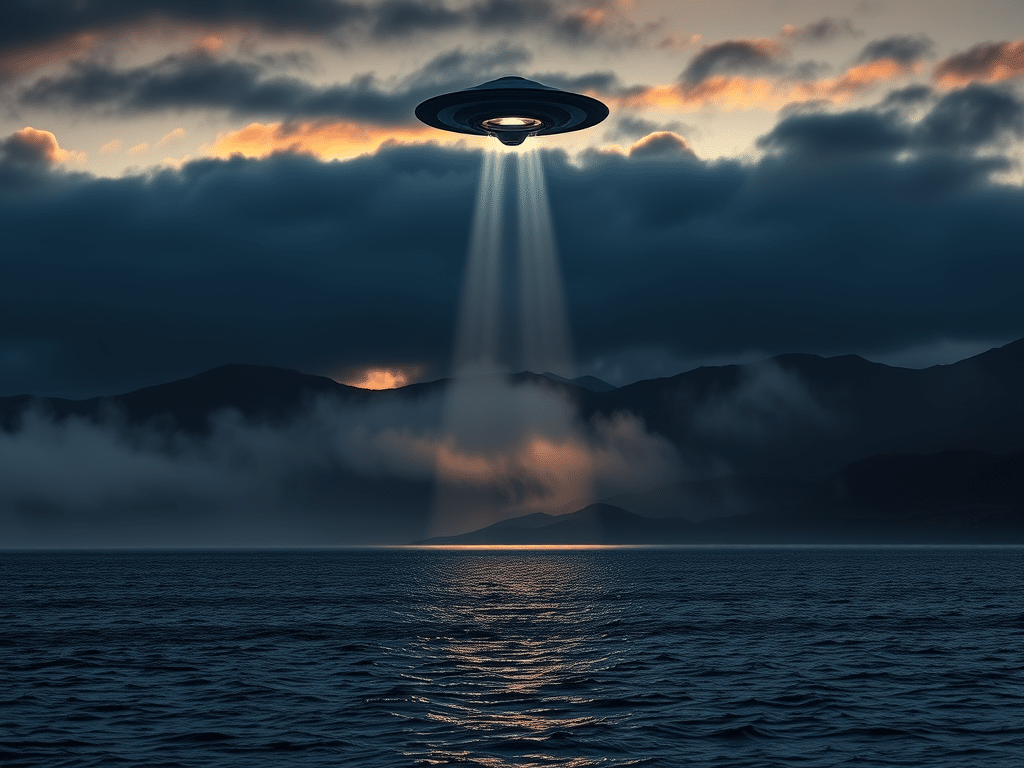
Ufologists have also embraced the concept of ley lines, proposing connections between extraterrestrial activities and these energy channels. Some people assert that UFO sightings seem to concentrate along ley lines, raising the possibility that alien spacecraft could use these energy networks as power sources or navigational aids. Despite the absence of scientific support, these notions have fueled the ongoing obsession in popular culture with the concept.
There is a long history of mythology and contemporary pagan activities linking ley lines to witchcraft. Many adherents of Wicca and other neo-pagan traditions believe that they are conduits of Earth’s inherent energy, which they can use magically. Some witches assert that nodes—intersections of the lines—are potent sites for rituals and spell casting. This relationship has strengthened the position of the idea in modern alternative spirituality.
Modern Impact
Today, the presence of ley lines extends beyond esoteric circles, permeating many facets of popular culture. New age tourism has sprung up around alleged ley line locations, with fans flocking to places like Glastonbury, England, or Sedona, Arizona, to personally feel the said energy. In addition, the idea has served as the inspiration for many fictional works, showing up as magical systems or plot devices in novels, films, and video games.
Despite the lack of scientific evidence to support their claims, people who believe in ley lines frequently attribute different energy qualities to these areas (Lines, 2016). A lot of enthusiasts think that they provide a kind of global energy network, a power grid for the earth. They believe that these are sites where this energy is most available or potent. Some suggest that spending time at ley line intersections can be beneficial to one’s physical and mental health, as the energy there is thought to relieve physical ailments, lower stress levels, and enhance general wellbeing.
Many think that these locations help people meditate more deeply, have more intuitive insight, and have better spiritual ties. At these places, some people report having visions or experiencing heightened levels of consciousness. Additionally, some claim that the focused energy at ley line places amplifies rituals, intention-setting, and manifestation practices. Certain theorists assert that specialist equipment can measure the unique electromagnetic properties of specific line locations.
It is believed that some places serve as portals or vortexes, where the line separating many worlds or dimensions is less distinct, thereby opening the possibility of paranormal experiences. Some people think that because energy flows across ley lines and their intersections, crops and plants growing along them are more lively and healthier. There’s a belief that these places enhance psychic or intuitive talents, facilitating impressions or messages for those who are sensitive.
Many believers think that ancient societies were aware of these energy lines and purposefully placed their monuments and religious sites at these power spots in order to capture the energy. Stressing that these views remain within the realm of alternative theories and spiritual beliefs, devoid of scientific data, is crucial. These theories’ allure frequently stems from their capacity to provide people a feeling of connectedness to the natural world and to traditional wisdom, as well as from their capacity to explain occurrences that science is still not entirely able to explain.
Conclusion
Despite the lack of scientific proof for their existence, ley lines nonetheless hold a fascination for many people. From their humble beginnings in amateur archaeology to their assimilation into popular culture and a variety of paranormal beliefs, these imaginary energy routes have proven remarkably resilient. Viewed as a pseudoscientific hypothesis, an interesting cultural phenomenon, or ancient knowledge, they provide witness to humanity’s ongoing preoccupation with the unknown and the inexplicable.
References
Cowan, D. (2003). Ley Lines and Earth Energies: An Extraordinary Journey Into the Earth’s Natural Energy System. Adventures Unlimited Press.
Hardy, C. H. (2011). The sacred network: Megaliths, cathedrals, ley lines, and the power of shared consciousness. Simon and Schuster.
Hix, H. L. (Ed.). (2014). Ley lines. Wilfrid Laurier Univ. Press.
Lines, W. A. L. (2016). Ley Lines: Investigating on Site. Skeptical Inquirer, 40(5), 12-15.
Sullivan, D. (1997). Ley Lines: dead and buried—a reappraisal of the straight line enigma. 3rd Stone, 27, 44-49.
Watkins, A. (1948). The old straight track : its mounds, beacons, moats, sites, and mark stones. In Methuen eBooks. http://ci.nii.ac.jp/ncid/BB16412981



Leave a Reply