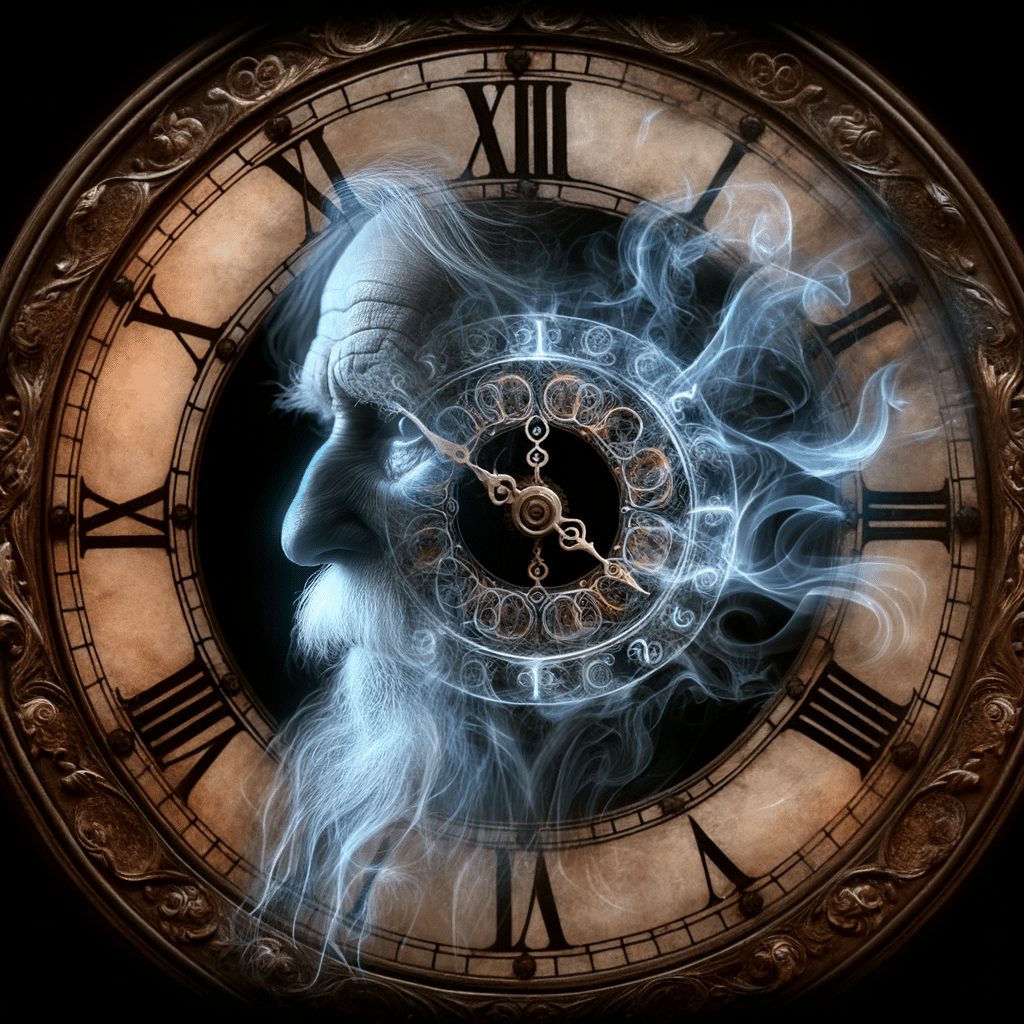
The terrifying and intriguing notion that ghosts have the capacity to age their victims has captivated storytellers and paranormal aficionados alike. The idea that ghosts could control time itself or hasten a human victim’s aging process adds a new level of dread to the supernatural, even if traditional ghost mythology frequently centers on apparitions haunting the living, frightening them, or even hurting them. This concept creates a particularly unnerving premise that pushes the limits of life, death, and the forces that control human existence by fusing the fear of mortality with the ethereal and enigmatic nature of ghosts.

Ghosts and Aging
The belief that spirits exist outside of time is the foundation for the notion that ghosts age their victims. Many cultures understand ghosts as beings existing in a transitional state between the physical world and the afterlife, where the laws of physics and biology no longer govern them. If they can transcend it, ghosts may have some impact over time. This might show itself as the capacity to accelerate time for everyone they come into contact with, making their victims age quickly. Given that they symbolize a force that has the potential to upend the basic order of life itself, ghosts would become both horrifying and utterly alien.
Stories about ghosts aging their victims frequently emphasize the psychological and existential agony of this occurrence. Unlike physical assaults or possessions, which many ghost stories allow for resistance or undoing, aging is an irreversible and intensely personal process. A ghost’s robbery of one’s youth and energy is akin to losing a fundamental aspect of the human experience: the gradual progression through life’s phases. In a matter of seconds, victims of such hauntings may find themselves years older, their bodies deteriorating, and their minds unable to cope with the agony. The dread stems not only from the physical toll but also from the terrible breach of the natural order, as the sufferer abruptly faces the unavoidable fact of their mortality (Mills, 1995).
Folklore and paranormal stories frequently portray spirits who age their victims for a number of reasons. In these stories, the ghost is driven by hatred and seeks retribution for a crime that was done to them in life. The ghost administers a harsh punishment by hastening the victim’s aging, making them bear the agony and anxiety of swift deterioration. According to other legends, ghosts age their victims inadvertently as a result of their influence or presence. In these situations, the ghost’s link to the afterlife may cause a warping of time, with the repercussions felt by people in close proximity. However, other stories suggest that ghosts utilize this capacity to consume their victims’ life power, taking vitality from them to maintain their own physical existence (Hawes, Wilson & Friedman, 2007).
Naturally, the mechanisms by which ghosts could age their victims are theoretical and based in the paranormal. According to certain ideas, ghosts may be able to alter the passage of time around their victims, causing localized temporal distortions that hasten the aging process. Others believe that spirits may drain a person’s life energy or essence, causing their body to decline as if it had aged normally. Either way, the procedure would probably be inexplicable to science, supporting the notion that ghosts function on a plane of existence that is incomprehensible to humans. Because victims and witnesses are unable to fight or even completely understand what is occurring to them, this incomprehensibility heightens the anxiety.
The idea that ghosts age their victims also echoes deeper human anxieties about aging, time, and death. Most people face the common experience of aging with a mixture of acceptance and anxiety. When an outside factor unduly hastens this process, it can lead to a terrible and tragic loss of control over one’s own life. In this sense, the notion that ghosts age their victims appeals to our innate fears of life’s frailty and time’s unrelenting passage. Additionally, it serves as a reminder of the delicate boundary that separates the living from the dead, and the unsettling possibility of forces from beyond intruding and disrupting the natural order.

Impact on Popular Culture
Fiction and popular culture have explored the idea that ghosts age their victims as a metaphor for unresolved pain, remorse, or sadness. A ghost that ages its victim could stand in for the weight of unresolved memories or previous transgressions. In this sense, growing older becomes a metaphor for the psychological toll that these unaddressed problems have on a person. An interpretation like this gives the concept more psychological depth and turns it from a straightforward paranormal occurrence into a representation of the human condition.
Washington Irving’s The Legend of Sleepy Hollow is one of the best-known literary depictions of supernatural aging. The story subtly examines the psychological effects of otherworldly encounters, despite being essentially a ghost story about the Headless Horseman. Certain interpretations suggest that the sheer dread of Ichabod Crane’s encounter with the phantom Horseman prematurely ages him, leaving him psychologically broken. Even though this is not a direct example of a ghost causing aging, there is a larger pattern in folklore that suggests contact with the supernatural might leave one physically or emotionally exhausted, with the aging process signifying the cost of such interactions.
Gore Verbinski’s 2002 horror thriller The Ring presents a contemporary interpretation of the concept of supernatural aging. After watching the cursed videotape for seven days, the victims succumb to terrifying visions and discover their bodies grotesquely aged and twisted, seemingly devoid of life. This suggests a connection between the curse, time, and the unnatural depletion of the victim’s life force, despite the fact that the aging process occurs instantaneously at the point of death, not gradually. The antagonist, Samara, a psychically gifted ghostly kid, fuels this curse by representing the idea of a spirit that controls or accelerates the natural cycles of life and death (Lacefield, 2016).
In Japanese mythology, the idea of ubume, a kind of ghost, is occasionally associated with the depletion of life force from the living. This is another example of folklore. People believe these spirits haunt the living to care for their children or exact revenge; they are often the ghosts of women who died during childbirth. According to certain retellings of these stories, the ubume’s presence can age or weaken their victims, illustrating how parasitic or disruptive their existence is. Even though the aging is frequently symbolic—signaling sorrow or grief—it speaks to the larger idea of supernatural entities hastening the demise of those they haunt (Yasui, 2020).
Stephen King’s It also explores the issue in a more metaphorical manner. The otherworldly, shape-shifting monster that serves as the title preys on trauma and terror, especially in children. Although it doesn’t physically age its victims, the psychological damage it causes lasts into adulthood and frequently shows up as delayed emotional development or premature soul aging. Long after their encounters, the survivors of its terror bear the weight of their experiences, illustrating how coming into contact with the supernatural may permanently change a person’s life and accelerate the loss of innocence.
Stephen King’s novel-based 1980 movie The Shining also subtly explores this idea. The ghosts of the Overlook Hotel appear to feed on the emotional and mental energy of its occupants, especially Jack Torrance, who grows more and more insane throughout the narrative. Even though Jack doesn’t age physically, his spiral into insanity and his worsening physical condition by the end of the movie imply that the hotel’s mysterious energies rob their victims of their life essence, leaving them as lifeless shells of who they once were. It would be straightforward to read this as a metaphor for the unnatural consequences of spending a lot of time with evil spirits (Savath, 2019).
Fantasy or speculative fiction more frequently depicts the concept of ghosts aging their victims. Television series such as Supernatural and The X-Files occasionally portray ghosts and other entities as consuming the life energy of the living, causing their victims to age or weaken quickly. These narratives frequently highlight the existential and physical costs of tampering with the paranormal by using aging as a visual shorthand for the exhausting effects of otherworldly encounters.
Literature, movies, and folklore generally depict the idea that ghosts age their victims in a variety of ways. It frequently functions as a metaphor for aging, the passing of time, or the supernatural’s transgression of natural laws. The concept, whether real or symbolic, highlights people’s innate anxieties about death and the future, which makes it a potent and timeless storytelling device.
Conclusion
After all, the idea that spirits can age their victims is a chilling and provocative one that blends existential philosophy, mystery, and horrifying components. In addition to challenging our conceptions of time, mortality, and the distinction between the living and the dead, it also appeals to our ingrained anxieties about losing control of our own lives. Whether viewed as a real supernatural occurrence or as a metaphor for time passing and death’s inevitable outcome, the concept remains a potent and unsettling addition to the realm of ghostly mythology. It reminds us of the mysteries that still encircle the unknown and the manner in which the paranormal might compel us to consider the most important issues about our existence.
References
Hawes, J., Wilson, G., & Friedman, M. J. (2007). Ghost hunting: True stories of unexplained phenomena from The Atlantic Paranormal Society. Simon and Schuster.
Lacefield, K. (2016). Introduction: Media anxiety and the Ring phenomenon. In The Scary Screen (pp. 1-25). Routledge.
Mills, M. B. (1995). Attack of the widow ghosts: Gender, death, and modernity in northeast Thailand. Bewitching women, pious men: Gender and body politics in Southeast Asia, 244-273.
Savath, L. (2019). Unlocking Time: The Clock of Horrors in Stephen King’s The Shining. The Journal of Stephen King Studies, 11.
Yasui, M. (2020). Imagining the Spirits of Deceased Pregnant Women. Japan Review, (35), 91-112.
Leave a Reply