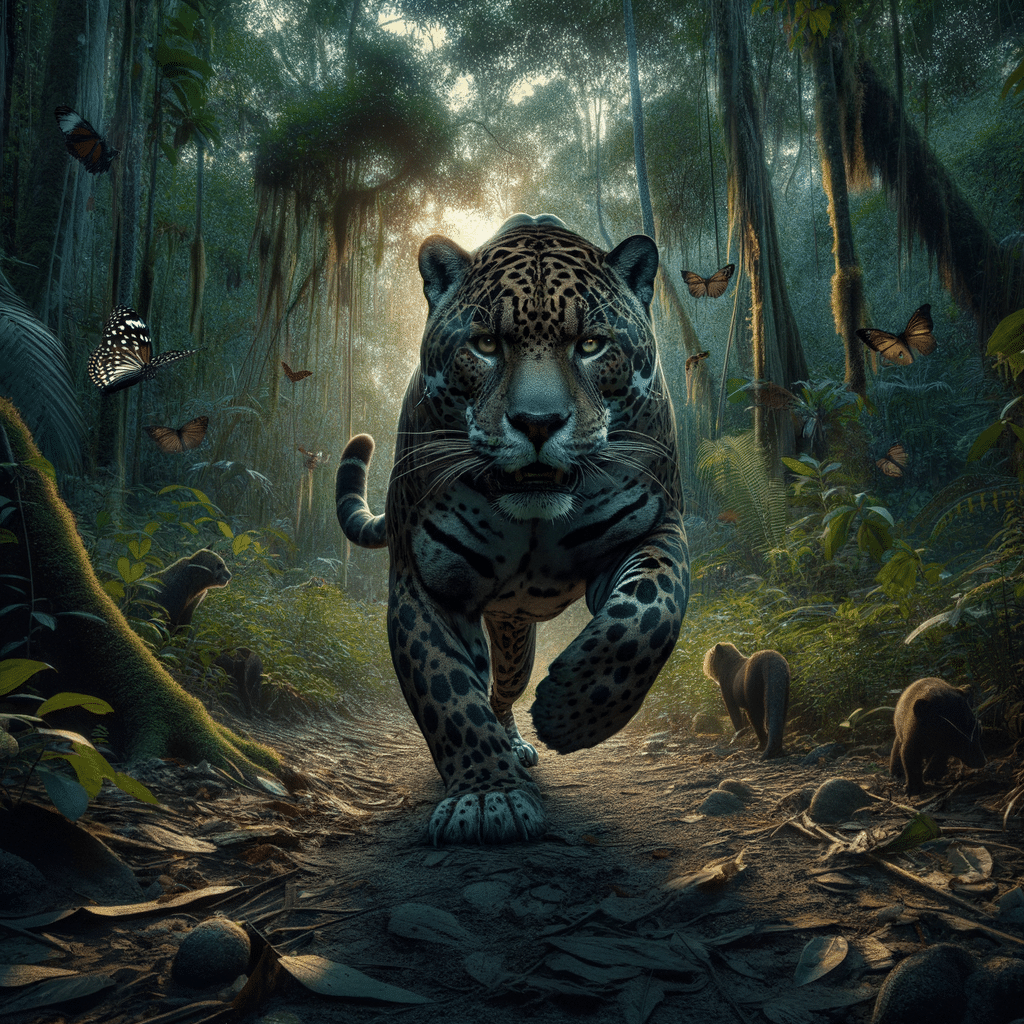
Mesoamerican societies’ conceptions of lycanthropy and the werejaguar, which represent strongly held spiritual ideas about the relationship between humans and animals, offer an intriguing contrast to European werewolf traditions. In contrast to the European concept of demonic possession or cursed changes, Mesoamerican society frequently revered shapeshifters as members with sacred skills. People believed that these people, also known as nahual, wayob, and tonalli, possessed the ability to transform into animals, either as a divine gift or through specific spiritual rituals.

Mesoamerican Lycanthropy
Animals played a major spiritual role in Mesoamerican mythology, frequently serving as symbols for different gods and natural forces. Although not as well-known as other animals like eagles or jaguars, the wolf nevertheless had a role in Mesoamerican mythology. For instance, Aztec mythology frequently depicted the god Tezcatlipoca, associated with the night, struggle, and transformation, as possessing animal characteristics like a jaguar (Ruck, 2016). Despite not being major characters, people valued the traits of wolves, such as their ferocity and cunning.
Throughout Mesoamerican societies, the jaguar in particular was a potent symbol that stood for spiritual strength, the underworld, and strength. Jaguars were seen as strong defenders and were frequently connected to elite warriors and gods, in contrast to wolves, which were less central.
The nagual or nahual, strong sorcerers who could change into animals at command, were at the heart of the Aztec civilization’s intricate system of beliefs about human-animal metamorphosis. People believed that the birth conditions of these practitioners, such as specific birth markings or being born on specific days of the ritual calendar, accounted for their talents. According to the Aztecs, these shapeshifters most frequently assumed the shapes of coyotes, eagles, and jaguars—animals with immense religious and cultural significance. These changes, in contrast to European werewolves, were deliberate and controlled, frequently carried out to fulfill certain spiritual obligations or act as community guards.
People frequently associated the Nahuatl word for transformation, tlatlacazca, with magic and the ability to change one’s form at whim. It was thought that some priests and shamans had this ability, which enabled them to transform into animals for a variety of uses, such as healing, divination, or combat. The notion of lycanthropy also permeated societal processes. People believed that warriors, particularly those from higher social levels, enhanced their bravery and combat skill by assuming the spirits of animals. The idea of merging with a mighty beast represented the soldiers’ desire for strength in battle and their relationship to the divine (Robertson, 2013).
The wayob was a crucial element in the Maya’s understanding of shapeshifting, and their perspectives on lycanthropy were particularly intricate. People believed that Maya kings and priests could manifest various animal spirits as physical changes. Predatory birds, snakes, jaguars, and even otherworldly hybrids were among these animal forms. Archeological evidence, such as the numerous images of rulers wearing animal masks and costume pieces found in codices and on ceramics, suggests a ritual connection to these transformation ideas.
Their cosmology was based on the idea of dualism, according to which persons might have both human and animal characteristics. For instance, the Mayan belief systems emphasized the fluidity of identity by frequently depicting the god Itzamná with both human and reptilian traits. Metamorphosis was not only a bodily transformation, but also a spiritual one, as certain animals were associated with specific qualities. In this setting, people viewed those who could transform into wolves or other animals as possessing unique abilities, often associated with healing or defense against evil forces (Signorini & Lupo, 1992).
According to Oaxacan customs, Nagual shapeshifters, particularly among the Zapotec people, could transform into animals such as coyotes, dogs, and turkeys. These practitioners were believed to be spiritual bridges between the natural and human realms, with the capacity to both heal and damage. People frequently linked their transformations to nighttime activities, much like European werewolves, but that’s where the similarities end. People regarded these shapeshifters as normal components of the cosmic order, rather than as cursed or malevolent entities.

Werejaguars
A distinctive feature of lycanthropy is the werejaguar notion, which is prevalent in Mesoamerican cultures, especially among the Olmec, Maya, and Aztec peoples. Unlike the well-known werewolf myths, werejaguars depict individuals with the ability to transform into jaguars or hybrid forms, combining traits from both animals (Pyne & Flannery, 1976).
The earliest depictions of werejaguars date back to the Olmec culture, which flourished between 1200 and 400 BC. Olmec art frequently features jaguar motifs, typically depicting the werejaguar figure with a human body and jaguar-like traits such as claws and teeth. This depiction portrays the werejaguar as a powerful creature capable of transitioning between the animal and human realms (Metcalf & Flannery, 1967).
The werejaguar is strongly associated with the ideas of duality and metamorphosis in Mayan mythology. Mayan mythology revered the jaguar as a soul-guider and defender of the underworld. People believed that werejaguars possessed unique abilities and served as intermediaries between the supernatural and human realms. The werejaguar was a symbol of valor and slyness because of its power and stealth, which were qualities that warriors aimed to imitate.
The Maya kings believed they could harness the power of the jaguar and, consequently, the werejaguar. This was seen by the frequent usage of jaguar images in their regalia to symbolize their divine right to rule. People underwent a spiritual and physical metamorphosis to transform into a werejaguar, gaining strength and wisdom from the animal spirit.
The idea of werejaguars persisted in Aztec civilization, where jaguar warriors, also called ocelotls, occupied a prominent position in society. Certain tales claim that these warriors could transform into jaguars during combat. This was embodied in the animal’s fierceness, and people believed they possessed the same qualities as the jaguar.
The jaguar was associated with the god Tezcatlipoca, a symbol of conflict and the night. In this setting, people viewed werejaguars as strong individuals capable of handling the challenges of life, death, and combat. These people’s capacity to change forms gave them access to supernatural power and knowledge, hence highlighting the connection between the animal kingdom and humanity.
Evolution of Belief
Despite Spanish suppression, we can follow the development of these beliefs from pre-Classic period art and artifacts through colonial period reports, demonstrating remarkable consistency. While later colonial sources describe indigenous practitioners keeping these beliefs secret, early images show shamanic figures in various phases of change. Contrary to European lycanthropy tales, which over time evolved to more closely identify with evil and demonic forces, Mesoamerican transformation beliefs, often driven underground, maintained their link to spiritual strength and volunteerism.
Though they have changed to include both traditional and Catholic aspects, modern indigenous groups across Mexico and Central America still hold onto beliefs in shapeshifting abilities. Modern Naguals often serve as community healers and protectors, aligning with the long-standing bond between human and animal spirits. By stressing metamorphosis as a spiritual gift rather than a curse and demonstrating the close linkages that exist between human societies and the natural world in Mesoamerican worldviews, these beliefs mark a major departure from Western ideas of lycanthropy.
Mesoamerican cultures linked shapeshifting to a number of distinct rituals and celebrations, despite the loss of many specifics due to colonial persecution and forced conversion. The most well-known customs were cave ceremonies, in which prospective Nahuales would fast and undertake ceremonial bloodletting for several nights in total darkness. As they sang particular prayers in their original tongues, these initiates would extract their own blood from their tongues, ears, or limbs and offer it to sacred fires (Carrasco, 2013).
Prospective shapeshifters in the Aztec culture underwent ritualistic cleansing in temazcal (sweat lodges) under the supervision of skilled practitioners before consuming sacred mushrooms or other psychotropic herbs. Usually, these rituals occurred on specific days of the ritual calendar, particularly those associated with powerful animal spirits such as the snake, eagle, or jaguar. During these rituals, the initiate would frequently don the skin or feathers of the animal they wished to change.
By burning copal incense and making elaborate gifts of carefully prepared food, flowers, and valuable items, the Maya engaged in complex cave rites. Candidates for transformation powers would go through food and sexual abstinence periods, which typically lasted 20 days (a Maya calendar ritual month). Crystals, mirrors, and ceremonial bundles holding animal parts from their intended transformation animal were among the many precious items commonly used in these rites.
Zapotec customs included praying to animal guardians and ancestral spirits while taking ceremonial baths in holy springs or rivers at particular times, typically midnight or dawn. These ceremonies frequently required several seasoned nahuales to guide the initiate through the transformation process. With distinct rites held throughout each lunar phase, the entire ritual cycle could take up to a year.
Contemporary practitioners still perform modified versions of these rites in a number of indigenous cultures, but many aspects have changed or disappeared. Modern ceremonies frequently incorporate Catholic aspects alongside traditional customs, such as incorporating Christian prayers with traditional invocations or performing rites on the days of saints associated with specific animals. Even though we typically no longer practice the more extreme aspects like bloodletting, these contemporary customs still emphasize the importance of prayer, fasting, and spiritual preparation.
Conclusion
In contrast to European werewolf stories, Mesoamerican lycanthropy traditions reflect a distinct and intricate set of beliefs. Mesoamerican tribes considered shapeshifting as a holy skill connected to spiritual power and societal service, but Western traditions usually see it as a curse or punishment. Mesoamerican traditions place more emphasis on peace and integration than on conflict and corruption, reflecting greater cultural differences in how these communities perceived the interaction between humans, animals, and the supernatural realm.
References
Carrasco, D. (2013). Religions of Mesoamerica. Waveland Press.
Metcalf, G., & Flannery, K. V. (1967). An Olmec “were-jaguar” from the Yucatan Peninsula. American Antiquity, 32(1), 109-111.
Pyne, N. M., & Flannery, K. (1976). The fire-serpent and were-jaguar in Formative Oaxaca: a contingency table analysis. The early Mesoamerican village, 272-282.
Robertson, V. L. D. (2013). The beast within: Anthrozoomorphic identity and alternative spirituality in the online therianthropy movement. Nova Religio: The Journal of Alternative and Emergent Religions, 16(3), 7-30.
Ruck, C. A. P. (2016). The wolves of war: evidence of an ancient cult of warrior lycanthropy. NeuroQuantology.
Signorini, I., & Lupo, A. (1992). The ambiguity of Evil among the Nahua of the Sierra (Mexico). Etnofoor, (1/2), 81-94.

Leave a Reply