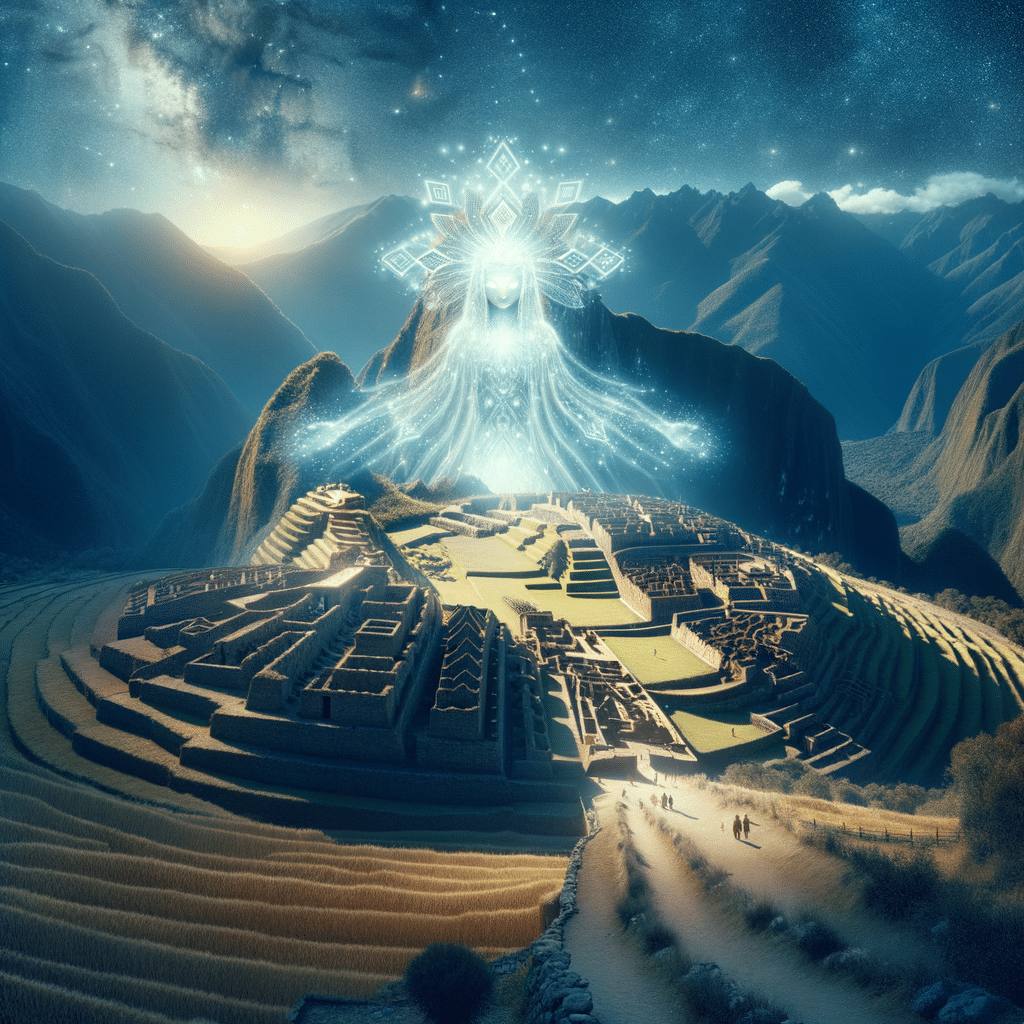
The huacas, sacred spirits living within natural surroundings and manmade artifacts in the Incan world, formed a fundamental component of Andean religious and cultural life that still shapes belief systems today. These strong creatures were thought to occupy everything from well-made artifacts to famous mountains and rock formations to springs, plants, and even animals. Around these spirits, the Inca people constructed complex ceremonial customs and belief systems that acted as middlemen between the human and divine domains, therefore preserving cosmic order and balance in their planet.

Description
Since huaca spirits could manifest in almost any place with a specific meaning or power, their nature was quite diverse. Among the most venerated, mountain huacas—also known as apus—were supposed to regulate agricultural fertility and weather patterns. While other spirits lived in ancestral mummies, temples, and holy things made especially to house them, water-dwelling huacas frequented springs, rivers, and lakes. These spirits could be both good and bad; therefore, careful attention and appropriate ceremonial observance are necessary to maintain friendly connections within Andean society (Gullberg, 2009).
Huacas behaved in a sophisticated manner that religious experts needed to carefully interpret. When fairly respected through offerings and ceremonies, they may grant favors, guarantee prosperous harvests, and guard towns. However, if neglected or disrespected, they could also bring about calamity, disease, and misfortune. Dreams, odd natural events, and particularly educated priests able to interpret their requests and demands were known means of communication among huacas. These spirits sometimes demanded specific offerings, such as chicha (corn beer), coca leaves, textiles, and occasionally animal or human sacrifices.
Rituals
Ritual offerings to huacas in Incan society followed complex customs based on the type of spirit and the intended result. Sharing chicha, or maize beer, by spilling a tiny bit on the ground before drinking was one of the most often offered everyday practices. Likewise, coca leaves were arranged in particular designs thought to appeal to spirits. Common folks often carried out these modest but important acts to keep positive rapport with nearby huacas (Jennings, 2003).
More complex rites included burning especially prepared food, fabrics, and valuable metals—particularly in relation to significant agricultural or celestial events. Before burning them in ceremonial fires, priests would meticulously choose perfect white maize, quinoa, and many tropical fruits and arrange them in particular configurations. While the residual ashes were often buried in especially specified areas around the huaca, the smoke from these offerings was thought to transmit the essence of the presents to the spirit realm.
One of the most important presents to strong huacas—especially mountain spirits—was the capacocha rite. Children judged physically perfect—who were meticulously chosen from all throughout the empire—were sacrificed in this event. These children were fed special diets, dressed in exquisite clothing, and marched to important huaca sites where they were presented with priceless items including gold and silver figures, excellent textiles, and especially crafted little trinkets. Archeological research has unearthed many capacocha burials at high-altitude mountain locations.
Another essential element of huaca worship is animal sacrifices; llamas and alpacas are the most often given species. After special events, white llamas were especially sought after; their blood was occasionally used to anoint holy artifacts or areas. Priests closely inspected the internal organs of the animals in search of divine messages; different animal parts were presented to particular huacas following rigorous ceremonial guidelines. Often accompanying these offerings were intricate dances and musical presentations spanning several days.
Textile gifts were especially important for huaca worship since the Inca thought the act of weaving itself was holy. Made from alpaca and vicuña wool, fine cumbi textiles—often with intricate designs and motifs significant to particular spirits—were fashioned especially for huaca offerings. At huaca sites, people occasionally burned, buried, or left these fabrics exposed to the elements, observing their degradation as the huaca consumed them.
Offering chicha required sophisticated cooking techniques and certain serving customs. The holy drink was served in special containers known as queros using intricate pouring procedures that tracked exact motions and gestures. Different variations were developed for various kinds of huacas and ceremonies; the chicha itself was made by particular people who had to uphold ceremonial purity during the brewing process. People considered sharing chicha with huacas as a vital act of reciprocity, preserving cosmic balance.
For huacas connected with rivers, lakes, and springs, water-related presents were especially crucial. Some examples include seashell scattering, chicha dumping, and priceless artifact submersion. In highland places, small containers filled with water from holy springs were traded between villages as part of greater ceremonial rites; offerings to water huacas often contained specially prepared fish and marine items in coastal areas (Glowacki & Malpass, 2003).

Impact
Huacas had importance in every sphere of Incan social and political life, transcending mere religious observance. As Incan leaders claimed unique ties to justify their reign, they were crucial in establishing and preserving political authority. Local huacas shaped communal territory, changed farming methods, and acted as centers of social identity and collective memory. By means of a shared set of ideas and rituals, the intricate network of huaca worship helped bind the vast Inca Empire together (Jennings, 2008).
The huaca belief system helped create and maintain social hierarchies in Incan society by controlling who could access holy knowledge and participate in ceremonial activities. This led to the creation of clear social classes. The Sapa Inca, as the supreme ruler, claimed direct heritage from the Sun deity Inti and maintained exclusive relationships with the strongest huacas, using these spiritual ties to justify their total dominance over the empire. This heavenly link contributed to producing an unbridgeable gap separating the royal family from the people.
The nobles kept their privileged position in part by their exclusive access to significant huacas and their capacity to carry out specific rites banned to lesser classes. Controlling access to blessings and heavenly favor, these elites acted as middlemen between the most powerful huacas and common people. Furthermore, noble families sometimes asserted unique ties with particular local huacas, which supported their authority over territory and resources in their domains.
Priests and diviners, along with other religious practitioners, established a distinct elite, their authority stemming from their exceptional ability to communicate with and interpret the will of the huacas. These persons underwent intensive instruction in hidden knowledge and ceremonial practices, therefore producing a specialized class of religious specialists who could not be readily replaced or questioned by ordinary people. Their exclusive access to huaca communication kept lower classes dependent on their interpretations and services, hence preserving social hierarchy.
Local leaders and kuraka—chiefs—maintained their authority partly through their responsibilities for planning and supervising huaca-related rites and maintaining connections with local spirits. Claiming extraordinary skills to guarantee the continuous protection and blessings of the huacas, this religious function helped explain their political and economic control over their communities. Their capacity to plan and finance grand presentations and festivities also demonstrated and reinforced their higher social rank.
Common people’s interaction with huacas was more limited and generally mediated via political and religious institutions. They were deprived of stronger spiritual bonds and sophisticated ceremonial knowledge even if they could make basic daily offerings to household and village huacas. This spiritual restriction strengthened their lower social level and made them dependent on higher-ranking people to acquire significant spiritual benefits and protection.
The huaca belief system helped to justify the system of labor responsibilities and tribute as well. The practice of mit’a, or mandatory public service, was presented as a holy obligation to preserve appropriate ties with huacas through temple construction and upkeep, offering production, and attendance in state-sponsored rituals. This affirming framework, through the affinities of heavenly rituals, served to normalize and preserve economic disparities.
By building obstacles across classes via limited ritual knowledge and practices, the huaca belief system also affected social mobility. Some huaca-related ceremonies and offerings were exclusively carried out by particular social groupings, and the information needed for these rites was closely guarded and passed on among households or small gatherings. This religious exclusivity helped uphold social divisions and stop migration between socioeconomic levels.
Though it did not completely eradicate these ideas, the entrance of Spanish conquistadors and Catholic missionaries in the 16th century signaled a profound change in huaca worship. Although campaigns aimed at eradicating idolatry demolished many physical huacas, the underlying spiritual ideas proved astonishingly strong. Many times, indigenous people kept their old beliefs hidden while outwardly following Catholic doctrine, resulting in distinctive kinds of religious syncretism still today. Though their customs have changed to include Christian aspects, many contemporary Andean communities still present gifts to apus and other huacas (Brosseder, 2014).
Conclusion
Huaca ideas have permeated modern spiritual activities across the Andes and beyond as well as modern popular culture. Around well-known huaca locations, tourism businesses have grown; modern writers and artists find inspiration in these old spiritual ideas. Though their interpretations usually diverge greatly from traditional Andean knowledge, New Age movements and modern shamanic practices have also included huaca worship. From literature and movies to music and artistic arts, these spirits still inspire new works and captivate imagination.
Finally, huaca spirits are a sophisticated and long-lasting spiritual system that has shown amazing adaptation and fortitude over millennia of human development. Though their worship has changed greatly since Incan times, these holy objects nevertheless have an impact on contemporary Andean spiritual and cultural customs all around. Their legacy is evidence of the ongoing strength of indigenous spiritual traditions as well as their capacity to change and survive in the face of significant social and religious upheaval.
References
Brosseder, C. (2014). The power of huacas: change and resistance in the Andean World of Colonial Peru. University of Texas Press.
Glowacki, M., & Malpass, M. (2003). Water, huacas, and ancestor worship: traces of a sacred Wari landscape. Latin American Antiquity, 14(4), 431-448.
Gullberg, S. R. (2009). The cosmology of Inca huacas (Doctoral dissertation, James Cook University).
Jennings, J. (2003). Inca imperialism, ritual change, and cosmological continuity in the Cotahuasi Valley of Peru. Journal of Anthropological Research, 59(4), 433-462.
Jennings, J. (2008). Catastrophe, revitalization and religious change on the prehispanic North Coast of Peru. Cambridge Archaeological Journal, 18(2), 177-194.



Leave a Reply