Before Dracula prowled the Carpathian Mountains or Lestat roamed the streets of New Orleans, in the dark domains of ancient mythology, there lived a primordial figure who would develop into the contemporary vampire — Lilith, Adam’s rebellious first wife. The core of the blood-drinking immortal was personified in this ancient Mesopotamian demoness who rejected divine authority and chose exile over subservience long before vampirism became defined in Eastern European folklore or idealized in Victorian fiction. Though appearing in many forms across civilizations and keeping fundamental elements that would eventually define vampire mythology—nocturnal nature, blood consumption, seductive power, and eternal existence outside the usual cycles of life and death— Lilith’s legacy as the first vampire transcends particular cultural boundaries.

Overview
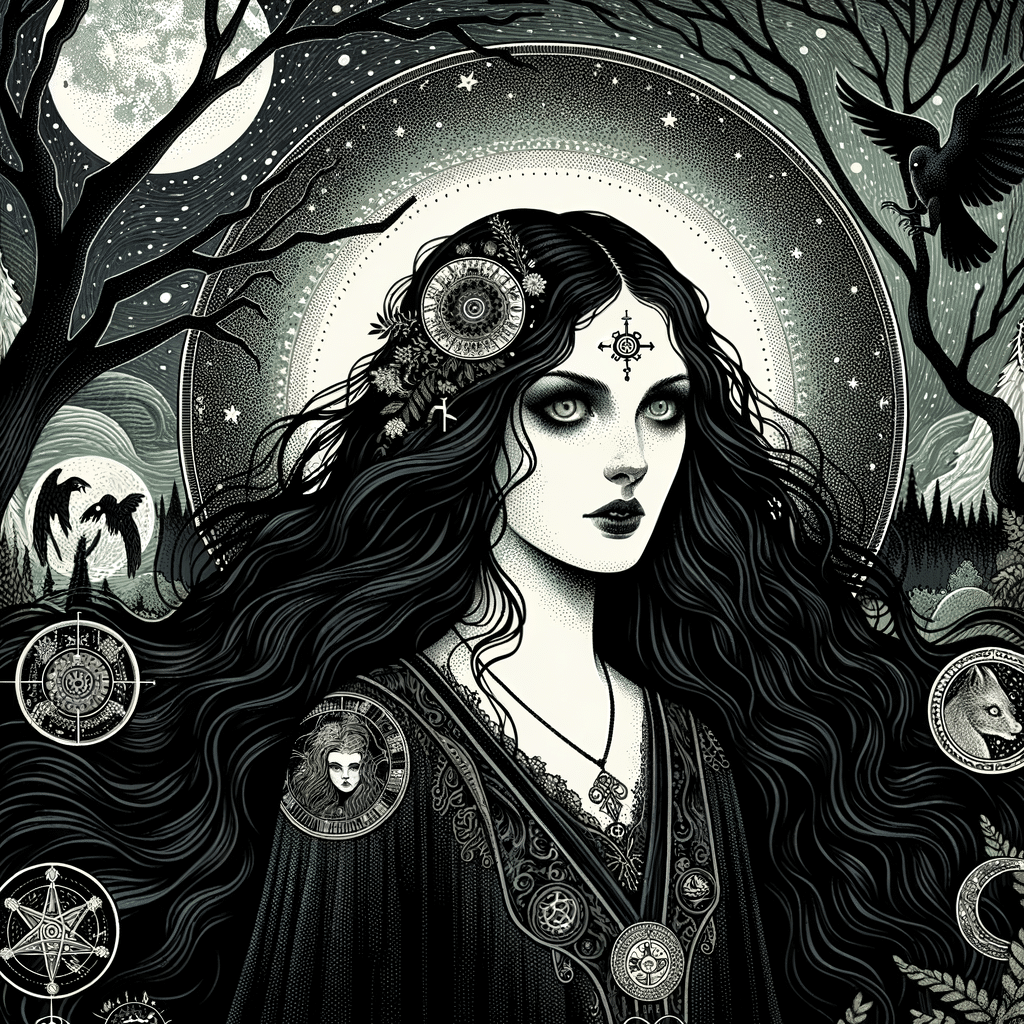
Lilith personified the dreadful beauty that would define literary vampires millennia later. Her alabaster complexion never saw daylight, her eyes shone like amber coals in darkness, and her fingers strangely expanded into talon-like appendages depicted in ancient Sumerian and Babylonian images as tools for grabbing her victims. Her hair was wild—wild, uncontrolled locks running freely down her back in defiance of the modest coverings expected of women; its hue was reported variously as midnight black or the deep crimson of recently spilled blood. Hebrew mystical writings added to this picture described her with wings of darkness carrying her across the night, full sensual lips stained permanently red, and teeth that appeared normal until the moment of feeding, when they would elongate into deadly points capable of puncturing the flesh of sleeping men and innocent infants both.
The predatory pattern Lilith’s actions established would define vampire folklore across civilizations. She built her home in the barren areas close to the Red Sea, rising only at night to hunt after refusing to submit to Adam and running out of Eden by speaking the prohibited name of God. Unlike later vampires limited by complex laws, Lilith functioned with primordial simplicity — she hungered for life essence contained in blood and sexual energy, especially liking men in their slumber and newborn children not yet shielded by heavenly benediction. The Talmudic customs tell of her hovering over sleeping men, causing sensual dreams while taking out their semen and blood, thus weakening or killing them by morning. More horrific still were her attacks on the unprotected—pregnant women and newborns—as she sought retribution for God’s judgment, a hundred of her demon progeny dying every day.

Lilith and Vampirism
Medieval Jewish mystical books, which characterize Lilith as “the sucking demon” who must eat human blood to preserve her immortality, clearly link her with vampirism. The Zohar and other Kabbalistic traditions portray Lilith as the mother of demons and the bride of Samael, a character akin to Satan, who together produce generations of violent progeny that plague mankind. This representation sets the stage for vampire reproduction, which would later appear in European mythology as the birth of more vampires through a form of dark procreation beyond human limits. Her approach of attack matches later vampire customs with amazing accuracy: attacking at night, focusing on the weak, causing a trance-like state in her victims, and ingesting blood, especially from the neck and sexual areas—areas that would become regular feeding sites in vampire literature.
The development of Lilith’s narrative into contemporary vampire mythology shows amazing millennia continuity. Originally Lilitu, from Mesopotamia, she entered Hebrew tradition during the Babylonian exile and changed from storm demon to Adam’s rebellious first wife. Medieval demonology continued this story thread, connecting her with succubi—female demons that lured men and drained their life force. Eastern European folklore adopted this idea when similar female spirits, like the Russian Rusalka, Polish Strzyga, and Romanian Strigoi, carried on the legacy of beautiful female creatures who preyed on the living. These several streams came together in the 18th and 19th centuries as vampire folklore—carrying Lilith’s fundamental traits: immortality maintained through blood consumption, nocturnal habits, seductive power, and exile from normal human society—was codified and entered the Western literary tradition.
Particularly, the female vampire in Victorian literature bears a distinct resemblance to Lilith. Published in 1872, Sheridan Le Fanu’s Carmilla has a female vampire whose seductive strength, aristocratic manner, and emotional complexity reflect Lilith’s historical portrayal as both predator and outcast. The female vampires in Bram Stoker’s Dracula likewise mirror Lilith’s predatory sexuality: beautiful women whose hunger spans more than just blood to embrace a forbidden sexual yearning that Victorian society considered both alluring and terrible. Though masculine, even Dracula has elements of Lilith’s mythology: his capacity to command nocturnal creatures, his rejection of heavenly authority, and his existence as a black parody of proper creation. Maintaining her fundamental essence while adjusting to the psychological requirements and social concerns of a new era, the literary vampire therefore became a secularized version of Lilith.
Drawing from Lilith’s basic mythology, modern versions of vampirism often return to her feminist elements buried in past times. With her Interview with the Vampire series and strong female vampires like Akasha—notably referred to as the Queen of the Damned—Anne Rice helps to reinterpret the vampire mythology in line with its Lilithian roots by showing immortal female beings whose power comes from their readiness to challenge limits and reject conventional morality. Other modern works, such as Octavia Butler’s Fledgling, clearly link vampirism with concerns of consent, autonomy, and power relations that reflect Lilith’s original revolt against patriarchal control. These new interpretations show that people are aware that beneath the layers of myth and literature, the vampire’s basic character is still linked to Lilith’s original story: she is an outsider who refuses to follow the rules that have been put on her life.
Conclusion
The ongoing link between Lilith and vampire legend exposes the psychological power of this ancient archetype and its capacity to change with the times while preserving its basic nature. From ancient Mesopotamian demoness to medieval succubus to Victorian literary monster to modern pop culture icon, Lilith’s path as the first vampire shows how fundamental stories still have profound impact on our shared imagination. Her continuous presence in our cultural consciousness refers to something basic in our nature: our simultaneous curiosity and horror for entities who exist beyond death, beyond societal bounds, and beyond the moral limitations that control normal life. We are in many ways still recounting Lilith’s original story—the tale of the eternal outsider who chooses freedom over subserviency, even at the price of exile from paradise— as we keep reimagining and reinventing the vampire in literature, film, and other media.
References
Brontë, C. (1847). Jane Eyre. Smith, Elder and Co.
Butler, O. E. (2005). Fledgling. Seven Stories Press.
Le Fanu, J. S. (1872). Carmilla. In In a Glass Darkly. R. Bentley & Son.
Patai, R. (1990). The Hebrew goddess (3rd ed.). Wayne State University Press.
Rice, A. (1976). Interview with the vampire. Alfred A. Knopf.
Rice, A. (1988). The queen of the damned. Alfred A. Knopf.
Scholem, G. (1974). Kabbalah. Keter Publishing House Jerusalem Ltd.
Stoker, B. (1897). Dracula. Archibald Constable and Company.
The Alphabet of Ben Sira. (c. 700-1000 CE). [Anonymous medieval text].
The Book of Zohar. (c. 1280). [Medieval Kabbalistic text].

Leave a Reply