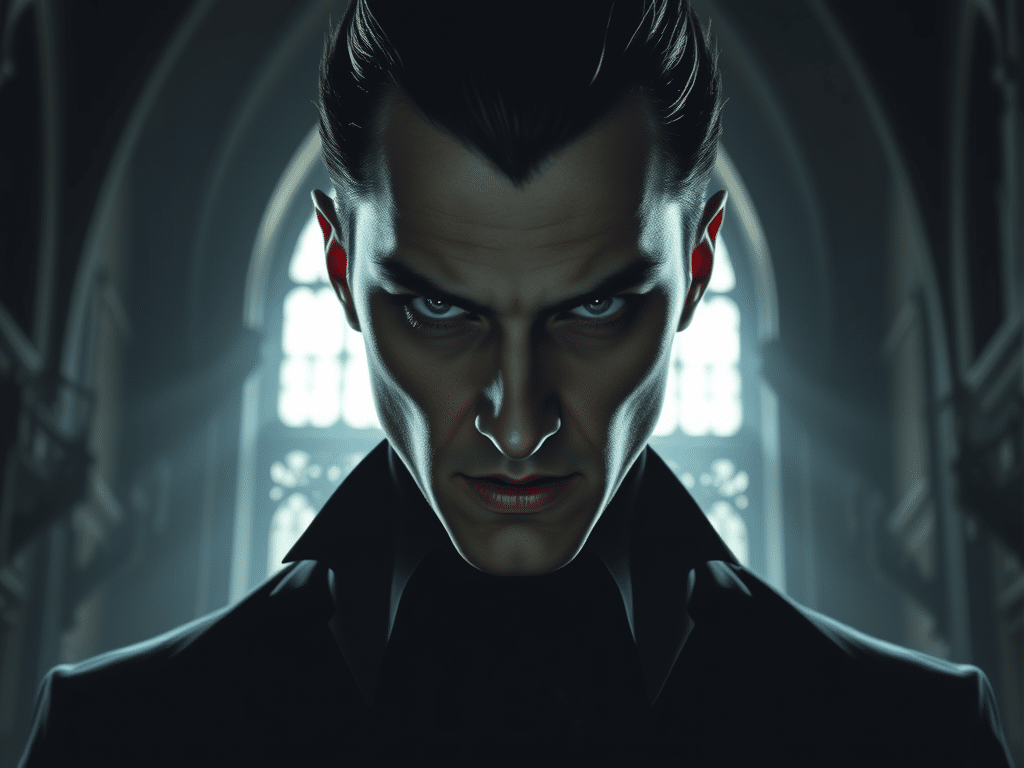
Vampires and the Dark Triad: Key Points
-
Vampires embody the Dark Triad personality traits—narcissism, Machiavellianism, and psychopathy—in their most extreme forms.
-
The Dark Triad consists of narcissism (inflated self-importance), Machiavellianism (manipulative exploitation), and psychopathy (antisocial behavior without remorse).
-
Psychological theories explain why vampire narratives resonate, suggesting they represent our fears about abandoning human morality for immortality.
-
Vampire stories help people recognize that dangerous individuals with Dark Triad traits can appear charming rather than overtly threatening.
-
Modern sympathetic vampire fiction reflects cultural optimism about change but has been criticized for normalizing abusive behaviors in relationships.
-
Vampires serve as cultural mirrors for exploring Dark Triad traits, helping us recognize and protect ourselves from predatory individuals.

Introduction
People have been scared of vampires for hundreds of years. They started out as creatures from myth and have become cultural icons that people still consider interesting today. These immortal beings, who usually need to eat human blood, don’t like the sun, and have supernatural abilities, are more than just scary monsters that only come out at night. Vampires may have always been intriguing because they embody what psychologists call the “Dark Triad.” This is a group of three evil personality traits that, when looked at through the lens of vampire lore, can teach us a lot about both real monsters and real people. This look at how vampire traits and the Dark Triad relate to each other sheds light on why these creatures are captivating to us and what they can teach us about the darker sides of human nature.
The Dark Connection
Vampires in books and movies are usually portrayed as dangerous creatures that live on the edges of society and eat people while looking almost exactly like humans. Their malevolent side extends beyond merely seeking blood; it encompasses subverting human morals and social bonds. When a vampire knows they will live forever, they often lose compassion for people who are suffering, because their lives will seem pointless in comparison to eternity. Vampires from the past, like Dracula, take advantage of and hurt families, seduce innocent people, and don’t feel bad about the death trail they leave behind. They have a strange moral code that puts their survival and wants above all else. Vampires have a disturbing double nature: they can seduce their victims while also seeing them as prey. This dual nature has made them long-lasting symbols of evil that hides in noble grace (Barber, 1988).
There are three different but linked personality traits called the “Dark Triad” (Jones & Figueredo, 2013). They are narcissism, Machiavellianism, and psychopathy. Narcissistic people have a distorted view of themselves as better than others and deserving of special treatment. They are constantly seeking praise and aren’t concerned about other people. If you have a negative view of the world, don’t care about other people, and are willing to use others for your gain without any moral concerns, you might be a manipulative person. Psychopathy is a pattern of acting badly toward others, lacking remorse or pity, acting impulsively, and disregarding other people’s rights or feelings. Each character can exist on its own, but people who are high on all three show a particularly troubling pattern of taking advantage of others, being emotionally cold, and not caring about what’s right or wrong. These individuals can do a lot of harm to the people around them.
The similarities between classic vampire traits and Dark Triad traits are strong, which is why vampires are such beneficial symbols for evil people. Vampires have a narcissistic personality trait because they think highly of themselves, believe they are better than humans, and feel entitled to take what they need. In many vampire stories, these creatures see themselves as grown beings who don’t have to follow human morals. Machiavelli’s ideas can be seen in the way vampires plan their attacks, how they manipulate their victims to get to them, and how they see people as tools they can use for their purposes. The vampire’s inability to make real emotional connections, lack of regret for killing, and impulsive pursuit of their goals no matter what show that they are clearly psychopathic. This alignment is so complete that vampires can be considered the most extreme form of the Dark Triad personality type. The traits are not just personality traits; they are important to the vampire’s nature.

Theories
Several psychological theories try to explain why the link between vampires and the Dark Triad is so strong with audiences and what it says about how people are. According to terror management theory, people build cultural worldviews to address their fear of dying. Vampires are seen as a transgressive way to confront death because they achieve immortality by embracing their animal nature instead of transcending it. The vampire’s Dark Triad traits may represent our fear that to escape away from death, we have to give up our morals and relationships with other people. Evolutionary psychology offers a different view, saying that some Dark Triad traits may have helped people survive in competitive settings. However, vampires have these traits heightened to harmful levels that make them both attractive and repulsive to humans. According to social identity theory, vampires are the ultimate outgroup because they look like humans but have completely unique values and motives. This approach lets us explore the limits of what it means for someone to be truly human versus just human-shaped. These theoretical frameworks help explain why the vampire myth lives on across countries and changes as new generations worry about power, sexuality, and breaking the rules.
There is a link between being a vampire and having a personality problem that goes beyond fiction and into self-help books and popular psychology. Vukomanović (2024) looks at self-help books that talk about “emotional vampires,” “toxic” people, “psychopaths,” and “narcissists.” This study shows how the neoliberal self is made by excluding and labeling unwanted subjectivities. Albert Bernstein’s grouping of emotional vampires is based on mental personality disorders, such as antisocial, histrionic, narcissistic, obsessive-compulsive, and paranoid types. Another book shows how vampires are used as a metaphor in psychological writing. According to Pollard (2016), psychologists have found a link between being a vampire and several personality disorders, such as criminal psychosis and borderline personality disorder. He looks at how vampires in pop culture are used to represent the “dark side of human behavior.”
More and more, psychological models are being used to look at how vampires are portrayed in modern popular culture, mainly in terms of personality disorders and the “dark triad” of personality traits. Martínez Andrés (2020) looks at how the minds of the female monsters in American Horror Story: Hotel have changed over time by comparing their traits to those of people with malignant narcissistic personality disorder and borderline personality disorder. In this study, the extremely evil behavior of the Countess in the TV show is analyzed using the psychological idea of the “dark triad,” which includes psychopathy, narcissism, and Machiavellianism. Even though some female characters develop Machiavellian and narcissistic traits that put them in the dark triad framework, they eventually go back to being victims of a patriarchal system. This experiment shows that there is a complex relationship between being a monster and being a victim (Martínez Andrés, 2020).
Stories about vampires have had a big and varied effect on how we understand and talk about Dark Triad characters in real life. The way charismatic vampires are portrayed in pop culture has made people realize that dangerous people don’t always look directly scary—they can be charming, attractive, and good with people, just like real people who are high in Dark Triad traits. Vampires are attractive even though they are predators. This phenomenon is similar to how people with Dark Triad traits can attract followers, romantic partners, and friends even though they are hurting others. This illustration shows how superficial charm can hide a cruel nature. Clinical psychology has found that talking about “vampiric” behavior patterns can help people who have been abused or manipulated see when they are in a harmful relationship. This conclusion is because the metaphor makes it easier for victims to understand how abusive relationships work. The vampire story focuses on the monster’s inability to change or feel real regret. This conclusion is similar to psychological research that shows Dark Triad traits, especially psychopathy, are very hard to treat and intervene with. This means that protecting potential victims may be the best option rather than rehabilitating them.
Modern Vampires
New ideas about vampires have made the traditional link to the Dark Triad more complex. This shows how our ideas about right and wrong have changed over time. Modern vampire fiction often has main characters who fight their nature and try to develop empathy and morals despite their vampire urges. This approach goes against the idea that Dark Triad traits are fixed and can’t be changed. There is a cultural hope that things can change, and these sympathetic vampires may represent that hope. These vampires may also represent wish fulfillment fantasies that suggest dangerous people can be changed through love and understanding, a notion that psychological research indicates is often unrealistic and potentially harmful. There is some criticism that the romanticization of vampire-human relationships in popular media might teach people to accept controlling and manipulative behavior in romantic partners as passionate rather than abusive. There are tensions in how we confront harmful personality patterns: do we see them as monster-like traits that can’t be changed, or do we hold out hope for change and forgiveness even when evidence points in a different direction?
It is now common knowledge that vampires in modern media belong to a group called the “dark triad.” Mace (2022) examines the Dark Triad as a collection of personality types associated with dark psychology. He talks about how it shows up in popular culture, such as in romantic comedies and dramas. Krüger (2020) says that both Gothic villains and modern vampires have the dark triad traits: a tendency to lie and control others, selfishness shown as narcissism, and acting without thinking. For example, Lord Byron’s Giaour and Emily Brontë’s Heathcliff are likeable bad guys who have a lot of the same traits that people find beautiful in modern vampires and other undesirable guys (Krüger, 2020).
Modern vampire stories for young adults have put a lot of emphasis on the link between being a vampire and having dark triad mental traits. Weckerle (2013) talks about how the main bad guys in popular YA books, like the vampires in Twilight, represent social problems like narcissism, lack of self-control, and lack of empathy. As a character in Twilight, Aro of the Volturi breaks other people’s rules for personal gain, which represents the wild, selfish self (Weckerle, 2013). Vampires today, like Edward Cullen in the Twilight series and the characters in The Vampire Diaries, are portrayed as intriguing bad guys, following a pattern that began with the Gothic villain (Krüger, 2020).
Because vampire characters aren’t heroic, there is a lot of academic discussion about how to classify them psychologically. Crusie et al. (2011) look at what makes Damon Salvatore from The Vampire Diaries an antihero and say he is a likeable bad guy or “dark hero.” Edward Cullen from Twilight could be a sociopath with antisocial personality disorder, which is very different from how people see him as a love hero. This issue shows how complicated it is to portray vampires in modern fiction. Jean-Claude, a vampire from the Anita Blake series, has some Machiavellian qualities. He is called a tragic antihero and a Machiavellian politician (Crusie et al., 2011). In popular culture, moody vampires are a way to show traits that people want, and they often show up in romance stories with selfish traits (Mace, 2022).
Conclusion
People have always been interested in and afraid of the Dark Triad personality cluster, and the vampire is a dark reflection of this. These eternal predators represent narcissism, Machiavellianism, and psychopathy in their purest, most unrestrained forms. They provide us a safe way to explore the effects of not caring about other people’s feelings and taking advantage of them through fiction. When vampire legend and Dark Triad psychology meet, it presents us useful information about both the allure of these monsters and the real dangers posed by people who look like them but are human. Examining vampires through the Dark Triad and vice versa helps us identify, comprehend, and guard against predatory people who may not have fangs or supernatural powers but can still drain the life out of those around them with their unhealthy behavior patterns and relationship dynamics.
References
Barber, P. (1988). Vampires, burial, and death: Folklore and reality. Yale University Press.
Crusie, J., Castro, A. T., & Borsellino, M. (2011). Antiheroes: Heroes, villains, and the fine line between. BenBella Books, Inc.
Jones, D. N., & Figueredo, A. J. (2013). The core of darkness: Uncovering the heart of the Dark Triad. European Journal of Personality, 27(6), 521-531.
Krüger, S. (2020). Handsome, rich, dangerous: The attraction of Gothic villains in nineteenth-century literature. In The real and the reflected: Heroes and villains in existent and imagined worlds (pp. 131-137). Brill.
Mace, R. (2022). Dark psychology and gaslighting manipulation: Influence human behavior with mind control techniques: How to camouflage, attack and defend yourself. Ryan Mace.
Martínez Andrés, A. (2020). Monstrous victims: The representation of female vampires in Ryan Murphy’s “American Horror Story Hotel”. https://addi.ehu.es
Pollard, T. (2016). Loving vampires: Our undead obsession. McFarland.
Vukomanović, B. (2024). Vampires, narcissists, and psychopaths: The psychopolitics of stigma in self-help books. Etnoantropološki problemi/Issues in Ethnology and Anthropology, 19(4), 1237-1264.
Weckerle, L. (2013). Individuality and collectivity in the Hunger Games, Harry Potter, and Twilight. In The Twilight Saga: Exploring the global phenomenon (pp. 213-226).

Leave a Reply