Baobhan Sith: Key Points
-
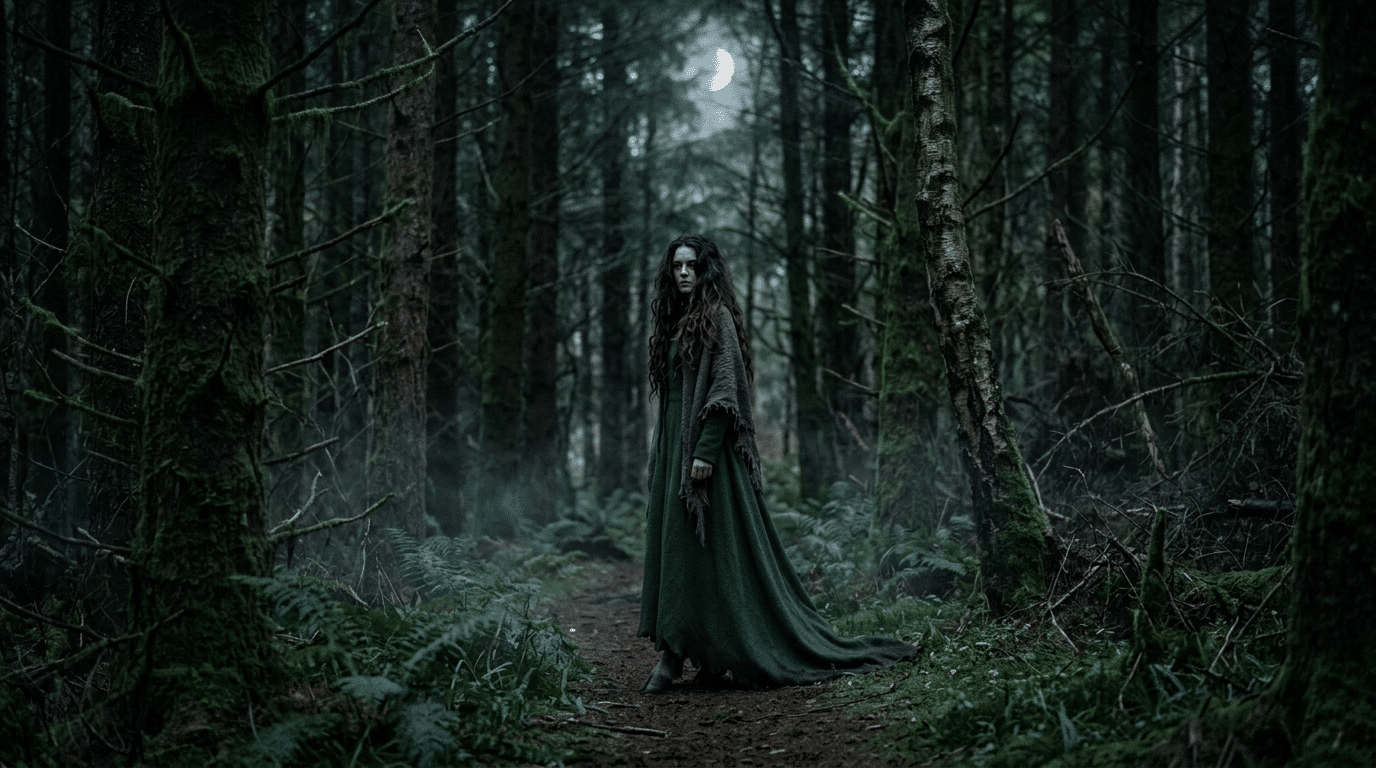
The Baobhan Sith are supernatural beings from Scottish Highland folklore who appear as beautiful women in green dresses, concealing deer hooves, and lure men before draining their blood.
-
The case for classifying them as vampires rests on their blood-drinking, their nocturnal nature, their seductive predatory behavior, and parallels with vampire myths from other cultures.
-
The case for classifying them as fairies is rooted in the word “sith,” which directly connects them to the Celtic fairy folk, and their green clothing and deer hooves are distinctly fairy traits.
-
Many folklore scholars argue the fairy interpretation is the older and more culturally authentic one, and that the vampire comparison came later through outside influence.
-
Some researchers suggest the debate is somewhat false, as vampires and deadly fairies across world mythology may simply be different cultural expressions of the same universal archetype.
-
The Baobhan Sith has had a significant impact on modern horror and fantasy media, and is best understood not as neatly fitting one category but as a creature that reveals how fluid supernatural classifications have always been.

Introduction
For thousands of years, academics, storytellers, and enthusiasts of the strange and scary have been interested in the Baobhan Sith, a mythical monster. Scottish folklore says that it is one of the most terrible and ambiguous beings. These strange beings occupy a unique position between two of the most common types of supernatural entities in Western tradition: the vampire and the fairy. It’s not just an intellectual inquiry to ask which category matches them best; it also makes us contemplate how civilizations define evil, terror, and the supernatural.

The Vampire Connection: Blood, Night, and Iron
Highland tradition says that the Baobhan Sith are beautiful women who appear to travelers, hunters, or young men who are alone or in small groups in the woods (Dearnley, 2026). They frequently wear long green skirts, which some say disguise their deer hooves. This characteristic is one of the most evident signs that they are not human. They are beautiful and sexy, and they often approach men who are singing, dancing, or wishing for a girl. They use their looks to attract men interested before revealing their true, deadly nature. The Baobhan Sith attacks and takes the victim’s blood, killing them or leaving them very close to death by morning (Curran, 2009).
There are a lot of strong and clear connections between the Baobhan Sith and vampire legends that make it likely that they are vampires. The most obvious thing about vampires is that they drink blood. This is what makes them vampires in practically every culture that has a narrative about them. Many people think that the Baobhan Sith are like vampires since they come out at night and lose their power or disappear as the sun comes up (Enright, 2011). There are also stories that indicate iron can keep them away, similar to how iron is believed to ward off other supernatural beings in various folklore traditions. Iron is very important to Scottish and Celtic culture, and some stories imply that the people who use it are undead or at least partially alive in an otherworldly sense.
Seduction, Predation, and the Gothic Scottish Landscape
The stories about them also feature the characteristic vampire mix of seduction and predation, which is a frequent motif in vampire myths from Eastern Europe, the Middle East, and other areas (Hodges, 2020). The Baobhan Sith doesn’t just attack; she also seduces and enchants, which is like how vampires like the Greek Lamia or the Slavic strigoi act. A group of hunters sets up camp for the night and wishes for women to join them. This tale is one of the most common legends. Then the Baobhan Sith show up and dance with them before they start their terrible feast. Many vampire stories have this kind of setup, where the creature is invited in or welcomed before it attacks. These stories are more like vampires than fairies, which people normally think of as fun or unpredictable.
Scottish landscapes frequently function as Gothic or alienating backdrops that amplify female vampiric figures or vampire-like seduction. Maurer’s analysis of Under the Skin (set in Scotland) describes the Scottish moors and coastline as a special space that highlights differences and fragile femininity in a male-dominated society, where the alien female’s sexuality causes fear and breaks boundaries (Maurer, 2020). This interpretation aligns with predominant Gothic themes, where Scottish locales function as sites of otherness and transformation, as demonstrated by female vampiric iconography. The same post talks about how the beach scene and Scottish accents might make matters worse when people don’t understand each other. This phenomenon can be considered a modern vampire phobia that is based on Scottish culture.
Celtic Roots and the Fairy Classification
Despite similarities, the Baobhan Sith is firmly categorized as a dangerous fairy in Celtic mythology due to strong traditions (Daimler, 2020). In Scottish Gaelic culture, the word “sith” clearly links these beings to the sídhe, a mythical race that lives in a hidden world that is close to but separate from humans. This connection between languages and cultures is not a coincidence. It suggests that the Baobhan Sith are part of the same group as banshees, kelpies, and other entities that are thought of as fairies instead of undead people or monsters that take blood from outside the fairy tradition. This description is even stronger because they wear green, which is a color that is often associated with fairies in Celtic culture.
Many experts who study Celtic mythology argue that the fairy version is actually the older and more culturally ingrained one. They argue that the vampire comparison was inserted later by people from outside the culture or by later generations who were influenced by horror traditions in continental Europe. In Highland Scottish faith, fairies were not the friendly, funny beings that people thought they were in the Victorian era. They were powerful, deadly, and frequently wicked spirits who could slay, steal souls, and lead humans to their deaths. The Baobhan Sith’s activities fit perfectly with the image of a dangerous fairy who chases people not because they want blood like vampires do, but because they have no regard for human life like the worst fairies do. Fairies in Celtic tradition are said to have deer hooves, which connects them to the wild, untamed nature they reside in.
Scottish fairy tales happen in borderlands and remote areas, where people meet faeries at the limits of the human world, such as in forests, lakes, hills, and islands. The wide discourse on fairies within British-Scottish contexts highlights a rural, liminal anthropology of the fairy as an important component of ordinary life and landscape, rather than solely a domain of entertainment (Russell, 2020; Sikdar, 2024; Carrassi, 2023). This aligns with scholarly research that considers fairy legend as a driving force for national identity and cultural memory within Celtic and Scottish contexts (Yoon, 2012; Painark, 2019; Ameer, 2010).
Theoretical Implications and the Baobhan Sith in Contemporary Culture
The theoretical discourse over their classification has substantial implications for academics’ understanding of the transmission and evolution of folklore. Certain historians, especially those engaged in comparative mythology, claim that vampires and dangerous fairies represent the same deep psychological archetype: the seductive, lethal outsider who lures and destroys. If you read it this way, asking if the Baobhan Sith is a vampire or a fairy is like asking if an animal is more of a predator or a nocturnal animal; the two groupings describe different portions of the same thing instead of having separate identities. This viewpoint is supported by the existence of vampire-like beings in the folklore of nearly all cultures globally, often overlapping with fairy or spirit entities, suggesting that the inherent fear these creatures embody is universal, despite cultural differences in expression.
The Baobhan Sith narrative has influenced a significant number of modern horror stories, games, and fantasy media that employ Celtic mythology. It has grown considerably from its beginnings in Highland Scotland. Writers and game designers often use them as examples of fairy beings that don’t fit into any one genre, illustrating their unique characteristics and the blending of horror and fantasy elements in contemporary storytelling. People all around the world have learned about them through diverse supernatural encyclopedias and bestiaries, even if they might not have heard of Scottish Highland folklore. Their current prevalence has intensified the debate regarding their true nature. Folklore purists may be annoyed that different creative works have made varied decisions about whether to emphasize the vampire or fairy features, as they believe the creature’s cultural identity is being lost or transformed.
Conclusion
In the end, the Baobhan Sith is perhaps best understood as a being that highlights how fluid and overlapping contemporary genre divisions have always been, rather than as a monster that needs to be classified into one of those categories. She originates from an era when the fairy realm was quite terrifying, making it difficult to distinguish between death magic, supernatural predation, and the perilous allure of the otherworld. There is no right or incorrect way to call her a vampire fairy or a fairy vampire; it all depends on what the person asking the question wants. In all versions of the story, her power remains the only constant element. She is beautiful, deadly, and has lived on in people’s thoughts for a very long time for a very noble reason.
References
Ameer, S. (2010). Mythology in W. B. Yeast’s Early Poetry. Kufa Journal of Arts, 1(6), 27-46. https://doi.org/10.36317/kaj/2010/v1.i6.6110
Carrassi, V. (2023). Yeats as a Folklorist: The Celtic Twilight and the Irish Folklore. Studi Irlandesi a Journal of Irish Studies, 13. https://doi.org/10.36253/sijis-2239-3978-14621
Curran, B. (2009). Encyclopedia of the undead: a field guide to creatures that cannot rest in peace. ReadHowYouWant. com.
Daimler, M. (2020). A New Dictionary of Fairies: A 21st Century Exploration of Celtic and Related Western European Fairies. Simon and Schuster.
Dearnley, E. (2026). The Fairy Spotter’s Guide: Where to find Banshees, Bigfoot and other Creatures from Folklore.
Enright, L. (2011). Vampires’ Most Wanted: The Top 10 Book of Bloodthirsty Biters, Stake-wielding Slayers, and Other Undead Oddities. Potomac Books, Inc.
Glazer, J. (Director). (2013). Under the Skin [Film]. Film4; BFI.
Hodges, K. (2020). Warriors, Witches, Women: Celebrating mythology’s fiercest females. White Lion Publishing.
Maurer, Y. (2020). Consuming Desire in Under the Skin. Humanities, (2), 39. https://doi.org/10.3390/h9020039
Painark, W. (2019). “Remember Me, in Your Stories and in Your Songs”. Manusya Journal of Humanities, 22(1), 90-107. https://doi.org/10.1163/26659077-02201005
Russell, J. (2020). Spenser’s Sprites: Platonic Daemons in The Faerie Queene. Renaissance and Reformation, 43(1), 105-134. https://doi.org/10.33137/rr.v43i1.34081
Sikdar, M. (2024). Homely Pastorals versus the Unhomely Forest in The Lord of the Rings Trilogy and The Hobbit. Literary Studies, 84-91. https://doi.org/10.3126/litstud.v37i1.63024
Yoon, I. (2012). Folklore and Nationalism in Yeats and Sowol: Nation as an “Imagined” and “Melancholy” Community. The Yeats Journal of Korea, 3(0), 95-127. https://doi.org/10.14354/yjk.2012.39.95
Leave a Reply