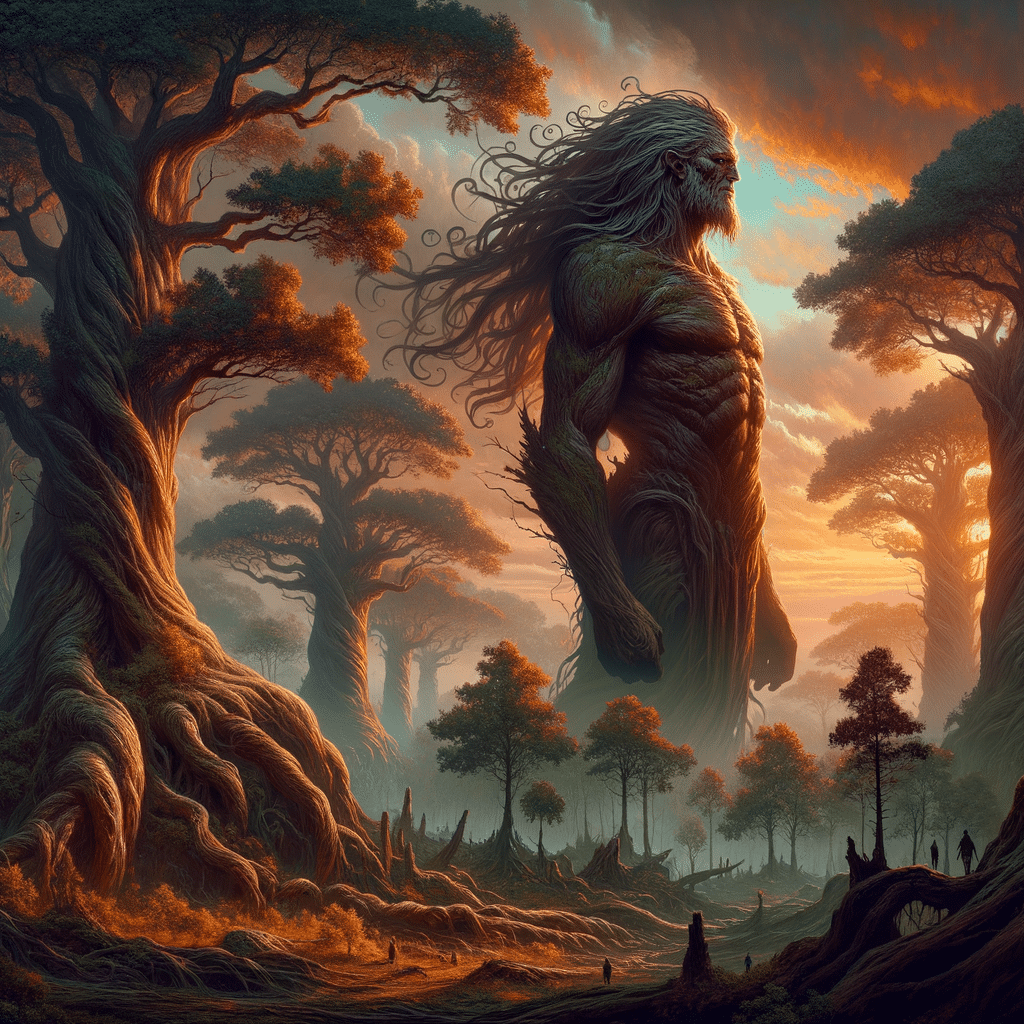
Across the world, societies have been fascinated by stories of people who surpass normal human boundaries all through time. From the biblical Nephilim to enigmatic forest-dwelling hominids, these beings have inhabited our mythology, religious texts, and folklore for millennia. Often, these beings reflect people’s efforts to comprehend natural processes, justify past events, or personify our most intense anxieties and obsessions with the unknown. Modern science provides explanations for many of these legends, but the timeless attraction of these mythical beings still shapes our shared imagination, literature, and popular culture, speaking to something basic in the human psyche that wants to fill the shadows of our world with beings both horrible and awe-inspiring.

Nephilim and Giants
The Nephilim, described as the “sons of God” and “daughters of men,” first appear in Genesis as powerful giants. Extracanonical writings like the Book of Enoch expand on these enigmatic beings, which are depicted there as the offspring of fallen angels called the Watchers and human women. Biblical narratives imply these hybrid creatures had enormous physical strength and caused destruction and depravity in the antediluvian era. Many people saw their existence as one of the triggers for the Great Flood, which signifies divine purification of a world tainted by unnatural entities and forbidden knowledge (Roberts, 2012).
Similar to the Nephilim, giants fill myths all around, implying a common human interest in entities of enormous size and strength. Greek mythology has the Titans, primordial beings who came before the Olympian gods and were finally imprisoned in Tartarus after being overthrown. Norse mythology speaks of the Jötunn, frost and mountain giants that always menaced the domain of gods and people alike. While Celtic customs speak of the Fomorians, deformed giants who symbolized chaos and ruin, Japanese legend tells of the Oni, demonic giants usually shown with horns and fangs. These parallel customs imply that big legends might mirror ancestral memories of disastrous events or run-ins with vanished megafauna (Haze, 2018).
In myth, the relevance of giants sometimes transcends their physical qualities to their symbolic connotation. Across societies, giants often symbolize primordial chaos, the wild natural environment, or powers predating human civilization. Often, their defeat or containment by gods or heroes signifies the victory of order over chaos, civilization over wilderness, or divine law over primeval powers. Whether by their hybrid beginnings, their breach of divine orders, or their threat to established cosmic hierarchies, giants usually represent transgression of natural boundaries. This trend implies that giants serve as warning signs in cultural stories, advising against arrogance and the risks of defying established natural or divine orders.
One of the most fascinating features of these stories is the link between the Nephilim and the Watchers. The Book of Enoch claims the Watchers were angels sent to watch over mankind who fell to Earth in love with human women. Besides creating the enormous Nephilim, they also educated people on prohibited knowledge covering metallurgy, cosmology, wizardry, and astronomy. This story is similar to other legends, such as the serpent delivering knowledge in Eden legends, such as Prometheus giving fire to people. The Nephilim so represent not only physical transgression but also intellectual boundary-crossing, reflecting the results of knowledge acquired via inappropriate means.
Bigfoot, Hairy Wild Men,and Dinosaurs
Another kind of mythical entity that traverses cultural boundaries is the representation of Bigfoot, which traverses comparable wild man characters. Almost every continent is home to legends of hairy, humanoid beings living in distant woods. North America has Bigfoot or Sasquatch, the Himalayan areas speak about the Yeti or Abominable Snowman, Australia has the Yowie, and Russia narrates stories of the Almasty. Many customs about wild forest people predating European colonization belong to Pacific Northwest Indigenous peoples. Usually, these beings exist in a transitional area between humans, animals, civilization, and nature. Their regular presence across many societies indicates they may be a universal human archetype—maybe reflecting our connection to our evolutionary history or with the wild natural environment.
Stories of wild, hairy humanoids show astonishing parallels across societies without known contact. Though originating from very distinct cultural backgrounds, the Chinese Yeren, the Sumatran Orang Pendek, and the North American Sasquatch all share comparable descriptions. Usually described as elusive, solidly built, and covered with hair, these beings are rarely hostile but would rather avoid human interaction. Unlike the menacing giants of legend, these wild humanoids generally reflect a more equivocal connection with humanity—neither completely scary nor friendly, but mysterious and distanced from human culture. Some anthropologists believe these stories could be cultural memories of living with now-extinct human ancestors like Neanderthals or reflect early interactions with relict hominid species.
Misunderstood natural events or interactions with strange animals could have founded what some ancient societies saw as mythological beings. Dinosaur fossils may have inspired the legends of dragons and other mythical beasts in cultures worldwide. Ancient Greeks finding mammoth or elephant skulls, with their big nasal holes, may have seen them as the remains of cyclopes. Isolated cultures seeing gorillas or strange bear species would have likewise produced stories about forest-dwelling humanoids. These readings imply that mythical beings could represent efforts by premodern societies to understand data outside their current knowledge system (Motz, 1982).
Claims from archaeology on enormous skeletons have fueled debate on the historical veracity underlying fabled stories. Many newspaper stories in North America and elsewhere described finds of unusually big human remains during the late 19th and early 20th centuries. Modern archaeological opinion, on the other hand, has mostly rejected these reports as misidentifications, frauds, or sensationalism. Usually, extraordinarily tall human bones indicate people with conditions like gigantism rather than proof of a distinct race of giant beings. These ongoing assertions show, then, how strong the idea of giants still is in the human mind, thereby motivating individuals to look for physical proof of ancient stories (Dewhurst, 2013).

Theology
The most thorough ancient record of the Nephilim is found in the Book of Enoch, which vividly depicts their perversion and cruelty. This book claims that as supplies became limited, these entities ate enormous amounts of food until they became cannibalistic. They caused sorrow and violence for mankind, thereby inspiring divine action. Extra-biblical writings depict the Nephilim as the outcome of a cosmic sin: angels forsaking their appropriate position to mingle with mankind. The precise character of these narratives implies they were moral lessons about keeping appropriate boundaries between the supernatural and human spheres and about the terrible results when such boundaries are crossed (Scodel, 2021).
One of the most important features of Nephilim mythology is their link to the biblical flood. Genesis implies that the damage these entities caused was so great that God decided to purify the Earth by worldwide deluge. This story is similar to flood legends worldwide, including the Mesopotamian Epic of Gilgamesh, which likewise depicts divine retribution for human sins. The flood lets mankind start over and removes the Nephilim’s corrupting influence, therefore serving as both destruction and purification. Repeatedly seen across global mythology, the purification of catastrophic cleansing implies old cultural memories of terrible natural catastrophes interpreted through religious perspectives.
Impact
Modern readings have turned these old stories into mainstays of modern entertainment. Often reinterpreted as magical entities with exceptional powers, the Nephilim show up in many video games, books, and movies. From legend to a pop culture icon, Bigfoot has appeared in everything from humorous movies to serious documentaries. Often depicted with skills and behaviors that differ from paleontological facts, scientifically documented dinosaurs keep a mythical element in popular culture. The Chinese Yeren and other wild humanoids have served as inspiration for numerous books, TV series, and travel adventures. These modern interpretations show how legendary beings keep changing to fit current anxieties, wants, and philosophical inquiries on humanity’s position in the natural world.
The ongoing existence of these myths across cultures and history prompts inquiry into their psychological and social roles. Giants like the Nephilim could stand for society breakdown, outsider anxiety, or natural catastrophes. Bigfoot, like wild humanoids, might reflect people’s complicated relationship with nature and wildness, hence symbolizing what we have abandoned in being “civilized.” The thunderbirds of Native American mythology and Chinese dragons could represent natural forces without human control. These beings often mark borders between order and chaos, civilization and wilderness, and the known and unknown, offering narratives and metaphors to help one grasp complicated natural and social events. Their lasting attraction implies they satisfy significant psychological and cultural demands outside of simple pleasure.
What messages could these myths provide to contemporary audiences? The Nephilim stories advise against arrogance and crossing natural limits, implying disastrous results when appropriate constraints are disregarded. Legends about Bigfoot reflect the shrinking wilderness and human interaction with nature in an ever more advanced society. Stories of the Australian Bunyip serve as a reminder of the hazards water may create in dry settings. These narratives taken together usually highlight the need for balance—between development and restraint, knowledge and wisdom, and human ambition and natural boundaries. They imply that for survival and prosperity, one must always know his position inside greater natural and cosmic systems.
These old stories inspire curiosity and creativity in ways that purely logical justifications sometimes cannot. They offer story structures for thinking on issues including human beginnings, the character of evil, and our relationship with the unknown. Though science has clarified many of the events that could have motivated these legends, the beings themselves still can enthrall and motivate. This timeless interest implies that mythological creatures serve psychological and cultural demands beyond only explanatory purposes. They provide symbolic language to discuss complex emotions, social dynamics, and cosmic issues, enabling communities to communicate ideals and collective wisdom through memorable narratives rather than abstract concepts.
Conclusion
The study of Nephilim, Bigfoot, dinosaurs, and other mythical creatures continues to be a conversation between past and present, between many cultural traditions, and between rational knowledge and creative discovery. Modern academics keep uncovering fresh readings of historical writings; archeological discoveries often call into question accepted beliefs; modern storytellers recreate these entities for future generations. Rather than losing significance, these myths appear to acquire new aspects as people confront new difficulties, including social upheaval, technological change, and environmental crises. These beings remind us that even in our scientific era we still occupy the frontiers of our knowledge with beings that represent our greatest concerns, highest hopes, and most fundamental inquiries about our position in the cosmos.
References
Dewhurst, R. J. (2013). The Ancient Giants who Ruled America: The Missing Skeletons and the Great Smithsonian Cover-Up. Simon and Schuster.
Haze, X. (2018). Ancient Giants: History, Myth, and Scientific Evidence from Around the World. Simon and Schuster.
Motz, L. (1982). Giants in folklore and mythology: A new approach. Folklore, 93(1), 70-84.
Roberts, S. A. (2012). The Rise & Fall of the Nephilim. Genesis, 6, 1-4.
Scodel, R. (2021). Heroes and Nephilim. Gods and Mortals in Early Greek and Near Eastern Mythology, 6, 169.



Leave a Reply