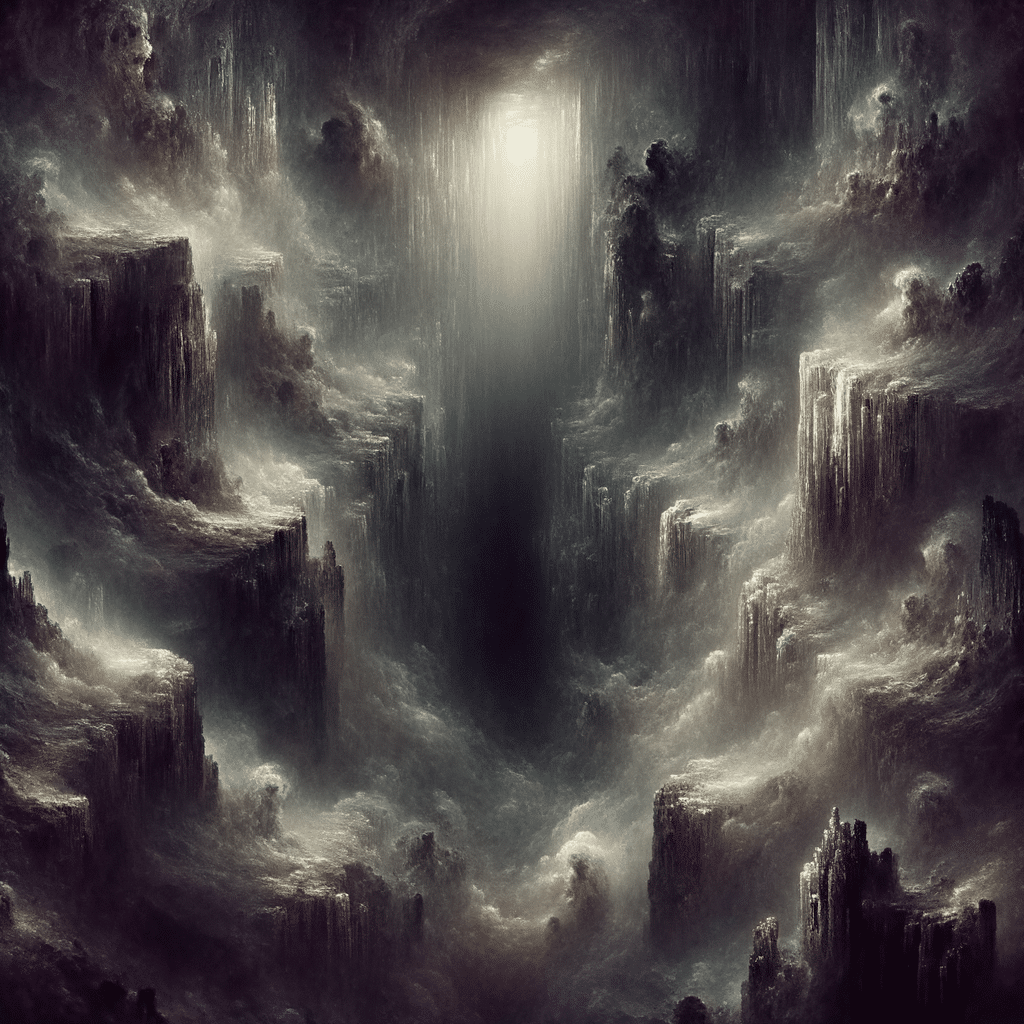
Representing one of the earliest generations of supernatural beings in the ancient Greek religious tradition, the Titans of Greek mythology predate the more well-known Olympian gods who would finally come to rule the pantheon. These potent primordial gods, forming the second generation of divine beings after the primordial deities, were the offspring of Uranus (Sky) and Gaia (Earth). The Titans ruled during the Golden Age, a period of wealth and harmony that preceded the rise of Zeus and his siblings. Known as the Titanomachy, their final struggle with the younger Olympian deities would change the cosmic order and create the divine hierarchy that would stay core to Greek religious thinking all through antiquity.

History
The Titans’ beginning is the result of the coupling of the primordial gods Uranus and Gaia, who together bore twelve offspring known collectively as the Titans. These first twelve were six males—Oceanus, Coeus, Crius, Hyperion, Iapetus, and Cronus—and six females—Theia, Rhea, Themis, Mnemosyne, Phoebe, and Tethys. Hesiod’s Theogony, composed about the 8th century BCE, claims Uranus imprisoned his children inside Gaia since he dreaded their strength, hence inflicting enormous suffering on her. In response, Gaia crafted a sickle and urged her children to rebel against their father. Only Cronus, the youngest and most ambitious of the Titans, was ready to defy his father, finally castrating Uranus with the adamantine sickle and releasing his siblings from confinement (Dougherty, 2023).
The Titans created their own cosmic order with Cronus as king and his sister-wife Rhea as queen following Uranus’s fall. Unmarked by the pain that would define succeeding ages, these events started what later Greek poets called the Golden Age, a period of peace and plenty. Having deposed his father, Cronus began to worry about a prophecy that one of his own offspring would depose him. Desperate to avoid this destiny, Cronus devoured every one of his Rhea-born offspring when they were born: Hestia, Demeter, Hera, Hades, and Poseidon. Rhea, fearing to lose another child, hid the baby and gave Cronus a stone wrapped in swaddling blankets when Zeus was about to be born; he then quickly swallowed it without question.
Undoubtedly, their conflict with the younger generation of gods headed by Zeus, known as the Titanomachy, was the defining event in Titan history. When Zeus grew up, he came back to fight his father, driving Cronus to vomit his siblings using a cunning emetic concoction made by the goddess Metis. Once liberated, Zeus and his brothers waged war on the Titans in a battle that would remake the universe. According to ancient texts, the ten-year conflict between the two divine sides was so violent that it threw the cosmos itself into chaos. Divine warfare shook the very basis of reality; this cosmic conflict included mountains deployed as weapons, lightning bolts thrown over the skies, and more (Arcari, 2018).
Ultimately, the Olympians won against the Titans with the help of vital allies such as the Hekatonkheires (hundred-handed giants) and the Cyclopes, who gave Zeus his legendary thunderbolts. Most of the Titans were imprisoned in Tartarus, a deep chasm beneath the underworld described as being as much below Hades as Earth is below Heaven, following their defeat. The Hekatonkheires watched after them there to make sure they could never again endanger cosmic order. Especially not all Titans shared this fate; those who had stayed neutral or sided with the Olympians, such as Oceanus, Themis, and Mnemosyne, were spared punishment and even included in the new divine order created by Zeus (Lamont, 2021).

Description
Though ancient Greek art seldom showed them in the particular anthropomorphic detail afforded to the Olympians, physically the Titans were usually shown as giant beings of great power and imposing size. Titanes, their name in Greek, may come from the Greek verb teinō, which means to stretch, implying their great immensity spanning the universe. The earliest accounts stressed their immense might and primeval character; later artistic traditions sometimes depicted them as giants with serpentine lower bodies or with many arms. Unlike the later, more humanized Olympians, the Titans represented basic cosmic forces—Oceanus embodying the world-encircling oceans, Hyperion connected with the sun’s brightness, and Coeus symbolizing the heavenly axis around which the heavens seemed to spin.
In Greek mythology, the Titans’ behavior and personality differed greatly. Some Titans, such as Oceanus and Tethys, exhibited kindness and remained neutral during their later battle with the Olympians. Others, like Cronus, showed more complicated and occasionally disturbing traits. Cronus’s eating of his children exposed a cruel will to keep power at whatever price. By contrast, people like Prometheus (a second-generation Titan and son of Iapetus) had tremendous empathy for mankind, even taking fire from the gods to support human growth—an act that would cause Zeus to severely punish him. This variety of personality implies that the Titans embodied complicated moral and cosmological ideas as well as physical might.
Impact
Reflecting shifting religious views and societal demands across Greek history, the mythology surrounding the Titans changed greatly with time. In the oldest customs recorded in Hesiod’s Theogony, the Titans stood for a former cosmic order that had to be transcended for society to move forward. By the Classical era (5th-4th centuries BC), more complicated depictions emerged, especially of Titans like Prometheus, who came to represent revolt against despotic power in works like Aeschylus’s Prometheus Bound. Philosophical readings from the Hellenistic era allegorized the Titans as reflecting basic human urges that had to be governed by reason, symbolized by the Olympians. Still later, Orphic mystery traditions created a whole other story in which people were created from the ashes of the Titans following their consumption of the baby Dionysus, implying that humanity possessed both divine and Titanic qualities (Osgood, 1901).
Identifying some Titans with their own national gods, the Romans embraced and modified Titan mythology. Cronus, for example, got conflated with the agricultural god Saturn, and the Golden Age under his rule became an important aspect of Roman cultural identity commemorated during the Saturnalia festival. The Titans stayed strong symbols in Western art and literature by means of Roman transmission and later European Renaissance interest in classical mythology. By the Romantic era of the 18th and 19th centuries, the Titans—especially Prometheus—had been changed into emblems of noble revolt against arbitrary power, with writers like Percy Shelley lauding the Titan’s spirit in works such as Prometheus Unbound (Torjussen, 2016).
Conclusion
The Titans of Greek mythology are more than just an older generation of gods toppled by their offspring; they also reflect basic natural forces and primordial features of reality that are crucial for grasping the Greek view of the universe. Though many Olympians who trace their ancestry to Titanic parents survived, their legacy lived on via their offspring and descendants despite their loss in the Titanomachy. Representatives of an earlier, more elemental world order, the Titans stayed potent symbols of both the raw creative and destructive energies that formed reality. Whether in the universe or in human societies themselves, their narratives speak to basic human concerns about cosmic order, succession, power, and the sometimes violent changes required for new phases of evolution. Their stories still resound across millennia.
References
Arcari, L. (2018). Giants or Titans? Remarks on the Greek Versions of 1 Enoch 7.2 and 9.9. Deuterocanonical and Cognate Literature Studies, 38, 15-23.
Dougherty, M. J. (2023). Greek Myths: From the Titans to Icarus and Odysseus. Amber Books Ltd.
Lamont, J. L. (2021). Cosmogonies of the Bound: Titans, Giants, and Early Greek Binding Spells. Classical Philology, 116(4), 471-497.
Osgood, C. G. (1901). Milton’s Classical Mythology. Modern Language Notes, 16(5), 141-143.
Torjussen, S. S. (2016). Release the Kraken!”–The Recontextualization of the Kraken in Popular Culture, from Clash of the Titans to Magic: The Gathering.

Leave a Reply