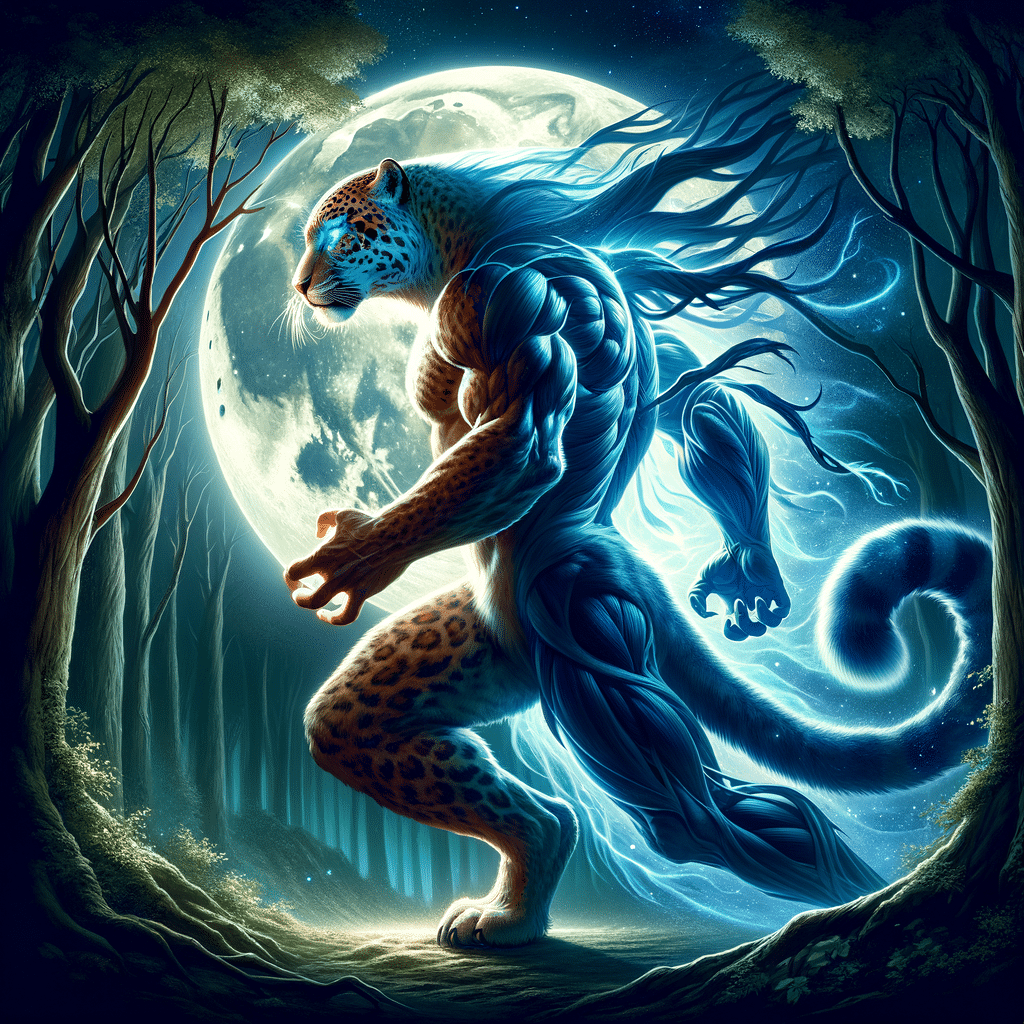
One of the most potent and lasting legendary characters in Mesoamerican cultural legacy, the werejaguar combines the terrible traits of two apex predators—human and jaguar—into a single horrifying being that has enthralled humans over millennia. Unlike the werewolf of European mythology, which frequently symbolizes a curse or punishment, the werejaguar has immense spiritual relevance since it symbolizes the link between ordinary reality and heavenly power in ancient civilizations such as the Olmec, Maya, and Aztec. These shapeshifting entities reflected the enigmatic character of Mesoamerican cosmology, where borders between human and animal and mortal and divine were permeable and frequently crossed by ritual, spiritual practice, and divine intervention. Spanning thousands of years, their presence in art, ritual artifacts, and oral traditions exposes the vital significance of jaguars in the spiritual imagination of pre-Columbian peoples, who saw these enormous cats not only as creatures but as representations of cosmic energies. The jaguar’s unique strength, nocturnal hunting patterns, and solitary disposition made it the perfect vehicle for ideas of metamorphosis and spiritual power surpassing normal human experience.

Description
Physically, the werejaguar appears as a hybrid creature in many disturbing mixes of human and feline traits, reflecting the fluid flux of form in Mesoamerican religious belief. Most portrayals show a humanoid figure with clearly jaguar-like traits: long fangs sticking out of a snarling mouth, almond-shaped eyes with vertical pupils cutting the darkness, and spotted or patterned skin resembling a jaguar’s unique coat with its rosettes representing the stars against the night sky. While the body usually keeps a strong, muscular human shape, implying the preservation of human intelligence improved by bestial strength, clawed hands take the place of human fingers and can rip through bone and skin with magical ease. Capturing the transitional moment between states of being, some creative depictions highlight a transformation in progress with the face especially impacted by feline traits while the body stays human. Depending on the period of metamorphosis or the specific features of jaguar power being highlighted by the artist or storyteller, the creature may stand straight on two legs or have a four-legged posture. Often showing babies with downturned lips and almond-shaped eyes, ancient Olmec relics show the fascinating were-jaguar baby theme that scholars think reflects the progeny of human-jaguar unions or babies born with unique ties to jaguar gods. Physical appearance differs greatly throughout cultures and eras, sometimes displaying minor jaguar traits combined with human form and other times more extreme hybridization with noticeable feline heads on human bodies (Gonzalo & Milton, 1974).
The werejaguar’s behavior reflects its dual nature, a hazardous mix of human intellect and predatory feline impulses that made it a powerful figure in Mesoamerican mythology and religious practice. These entities were believed to have supernatural strength, speed, and senses far beyond human capacity, which let them hunt with unmatched effectiveness and escape any efforts by humans to capture or contain them. Hunting at night, when jaguar strength peaked with the fall of darkness and ordinary people were most vulnerable, fleeing to caves or woodland lairs during daylight hours, they hunted. They pursued victims with studied accuracy and then struck with enormous ferocity, embodying the true hunting behavior of jaguars but adding the frightening aspect of human strategic thought. Unlike mindless monsters, werejaguars kept human consciousness and cunning, which made them particularly formidable opponents who could scheme, lie, and exploit their victims’ flaws with deliberate brutality. Believed to glide seamlessly between human society and forest, they passed as regular people during the day and changed to hunt under moonlight, rendering them undetectable until it was too late. Some stories suggest that they possessed magical powers beyond shapeshifting, such as weather control, healing abilities, or divination skills, which further emphasized their connection to the supernatural forces governing the universe. Though their acts were considered to defend societies, punish wrongdoers, and preserve cosmic equilibrium, their conduct was not universally evil.
Werejaguars, according to Mesoamerican cosmology, were intermediates between the human and divine spheres, able to cross cosmic levels inaccessible to regular mortals without special preparation or divine help. Supposedly, shamans and priests turned into jaguar shapes to travel between realms, therefore gaining supernatural knowledge and power they would later utilize to heal, predict, or perform vital rites for their communities. The jaguar, a symbol of the night sun moving through the underworld, made the werejaguar a personification of this cosmic journey through darkness into rebirth and renewal in the cyclical perception of time fundamental to Mesoamerican thought. Emerging approximately 1500 BCE, Olmec culture, the “mother civilization” of Mesoamerica, emphasized werejaguar imagery especially, implying these beings would have stood for elite rulers who asserted divine jaguar ancestry as grounds for their political power over common people. Wearing jaguar pelts and trying to embody the animal’s ferocity in combat, Aztec warriors of the jaguar knight military order imitated these species, therefore changing themselves symbolically into these potent hybrid beings. Across Mesoamerican societies, the capacity to become a jaguar indicated immense spiritual power; shamans performed ceremonies involving hallucinogenic drugs like peyote or sacred mushrooms to enable this transformation in visionary experiences, confirming their standing in their communities. The werejaguar therefore symbolized not just a legendary beast but also a spiritual ideal—the ultimate combination of human awareness with natural force surpassing conventional boundaries (Barabas, 1985).

Development of Myth
Dating to the Olmec culture from 1200 BCE, the oldest archaeological proof of werejaguar mythology shows several items portraying people with jaguar traits in settings implying religious relevance and ties to political power in this early complex society. Massive basalt skulls, which exhibit clearly feline characteristics and are carved with exceptional craftsmanship, suggest that this idea was relevant to Olmec religious and political power systems, possibly depicting kings who claimed jaguar transformation powers or divine jaguar heritage. Excavations at Olmec sites have turned up detailed jade sculptures depicting human-jaguar hybrid babies, implying rich stories about divine birth and metamorphosis that supported their religious perspective. The symbolism changed as it migrated to other Mesoamerican cultures; the Maya included werejaguar images into their rich pantheon during their heyday between around 250 and 900 CE. In Maya art, the rain god Chaac and the lord of the underworld both displayed jaguar features, thereby linking the animal to life-giving water as well as the mysterious realm of death. Later, Aztec mythology included Tepeyollotl, a jaguar deity linked to earthquakes and the underworld who represented the inner force of the earth shown via feline form. Throughout these empires, rulers wore pelts during ceremonies and used titles alluding to the sacred animal to strengthen their link to supernatural power; therefore, they adopted jaguar symbolism. These repeated images in different cultures and times highlight how important the werejaguar was in Mesoamerican spirituality, going beyond individual cultural meanings while keeping its main symbols of change, strength, and a connection to the divine.
Ranging from massive sculpture to personal adornments, the material culture around werejaguar mythology exposes the deep integration of this idea into daily life and ritual practice across ancient Mesoamerica. Temple complexes commonly included jaguar figures at entrances, suggesting the passage between realms that these sacred locations permitted, with snarling jaguar jaws representing cave entrances—portals to the underworld in Mesoamerican cosmology. Ritual ingredients, including hallucinogenic preparations, blood offerings, and sacred foods eaten during changing rites meant to enable contact with otherworldly domains, were found in ceramic containers adorned with werejaguar images. Suggesting that the link with jaguar power transcended death into the afterlife journey, elite people were buried with jaguar-themed grave goods—fanged pendants, spotted fabrics, and ceremonial items adorned with transformation scenes. Stone sculptures of werejaguars guarded sacred precincts, their imposing presence warning unauthorized people against trespassing into areas set aside for priests and kings with rightful access to magical powers. Unfortunately, most of the codices created by Maya scribes were destroyed during Spanish colonization, so modern academics must piece together intricate mythological stories featuring werejaguar transformations from remaining fragments and archaeological data. The prevalence of werejaguar images across settings and materials reveals how much this idea pervaded Mesoamerican thought as a core organizing element rather than a peripheral mythological interest (Benson, 2013).
The werejaguar myth changed a lot over thousands of years in Mesoamerican history, fitting into different cultures while keeping key symbols that show its ongoing importance in indigenous beliefs. Emphasizing change and divine birth, the Olmec depictions implied foundations for the idea in creation mythology and fertility symbolism, linking cosmic regeneration with human reproduction. Later Maya images showed werejaguars more clearly connected to royal power and journeys to the underworld, highlighting the complex political and religious systems of Classic Maya culture, which focused on royal bloodlines and ritual battles. In the fifteenth and early sixteenth centuries, during the Aztec empire, jaguar warriors formed an elite military class that transformed spiritual ideas into political and military organizations to support the expansionist agenda of this powerful state. Spanish colonization forced werejaguar mythology underground, where it mixed with European werewolf legends brought by the colonizers, creating syncretic narratives that preserved ancient ideas under new guises that would not draw persecution from religious authorities. Christians demonize indigenous beliefs. With saint figures occasionally adopting qualities formerly linked with jaguar deities in a process of cultural adaptation and resistance, folk Catholicism in areas like southern Mexico and Guatemala preserves aspects of these beliefs to this day. Many indigenous communities continue the nahual tradition, whereby people have animal counterparts or can change into animals; the jaguar stays a particularly strong form linked with spiritual leadership, healing powers, and defense of community borders against outside forces.
Modern Impact
Modern indigenous tribes across Mexico and Central America preserve intricate links with jaguar iconography that link current practice with old beliefs even under altered conditions and environmental concerns. Still using jaguar shape, ritual experts in Maya communities speak of spiritual travels reflecting ancient art but reinterpreted via centuries of cultural transformation and theological syncretism. Community celebrations create living links with historical traditions by including dancers who wear jaguar masks and perform traditional movement patterns believed to channel the power of these creatures for collective benefit. Textile patterns have been handed down through generations, incorporating jaguar markings and facial traits; their symbolic meanings may have faded but their relevance as cultural markers stays unaltered. Traditional legends taught to children still include werejaguars as strong figures representing both danger and protection, teaching lessons about human relationships with the natural world and the repercussions of violating sacred boundaries. Sometimes indigenous community environmentalists use werejaguar symbolism in their fight to save forest environments, using ancestral ties to this apex predator as rationale for conservation initiatives that safeguard both cultural and natural legacy. These modern expressions show the durability of werejaguar mythology, which has endured centuries of suppression and alteration to remain a crucial component of Mesoamerican cultural identity.
Although archaeological finds, cultural revitalization initiatives, and popular media portrayals vary in their accuracy and respect for the original context, they have collectively brought the werejaguar back into modern relevance by highlighting this ancient symbol to a global audience. Spectacular archaeological discoveries, such as the finding of jade-like jaguar figurines in previously undisturbed graves, continue to enhance academic understanding of how these entities functioned within ancient social structures and cosmic contexts. Though often in ways affected by centuries of cultural synthesis, displacement, and adaptation to altered environmental conditions as jaguar numbers have plummeted across their historical range, modern indigenous tribes nonetheless respect the spiritual importance of the jaguar. Sometimes, efforts to protect endangered jaguar populations reference this cultural history, making it important to highlight indigenous knowledge of this top predator for both keeping their culture alive and ensuring the health of endangered forests. Although creators often lack a deep understanding of the original cultural background, movies, literature, and games frequently use werejaguar imagery, transforming these intricate spiritual beings into simplistic monsters or exotic oddities that are disconnected from their profound cosmic significance. Tourism businesses throughout Mexico and Central America promote werejaguar artifacts and images as symbols of pre-Columbian heritage, generating economic opportunities while sometimes compromising the rich cultural legacy to sell entertainment to visitors seeking “genuine” experiences. Academic studies still show that the ideas about werejaguars varied in different regions and times, challenging earlier simple interpretations and revealing the complex beliefs and philosophies these figures represented in their original cultures. This mythological character, therefore, is anchored in the unique interaction between Mesoamerican people and the strong jaguar that has affected cultural development in this area for thousands of years, spanning the ancient past and modern imagination (Becker, 1996).
The connection between shamanic activities and werejaguar metamorphosis highlights significant aspects of this tradition, illustrating how spiritual specialists asserted their ability to achieve the seemingly impossible task of bridging the realms of humans and animals. Historical records and ongoing indigenous practices point to certain procedures in transformation rituals meant to let the practitioner travel between forms and domains of existence. Specialized ceremonial objects, including certain kinds of incense, drums painted with jaguar iconography, rattles made from jaguar claws, and clothes adorned with spotted patterns, created sensory conditions that were favorable for transformative experiences. A boundary-crossing event that would momentarily free the human spirit from its normal limits was prepared by fasting, sleep deprivation, bloodletting, and the use of psychedelic drugs. The transformation process was characterized not as merely putting on a jaguar’s appearance but as a profound ontological change in which the practitioner’s fundamental essence took on feline traits while preserving human consciousness. These practices were only done during special rituals that required contact with other worlds for the good of the community, and they weren’t done often or without serious thought; they were meant to help with tough illnesses, find important lost things, predict weather that could impact farming, or connect with strong ancestral spirits. The risky nature of transformation was recognized with careful measures, since someone who changed too much could completely lose their human identity and become stuck between forms or fully turn into a jaguar—this warning appears in many traditional stories that stress the importance of proper training and preparation before trying such spiritually dangerous journeys.
The gendered aspects of werejaguar mythology reveal the complicated views of Mesoamerican society regarding power and transformation, showcasing fascinating diversity across different cultures and historical eras; thus, they challenge simplified interpretations of these traditions. Many stories of jaguar metamorphosis emphasize the roles of male shamans and kings, but there is also evidence of female werejaguars, particularly in connection with fertility, midwifery, and protective magic. Midwives are occasionally characterized as having jaguar qualities that allow them to safely lead new souls into the world; thus, childbirth—an inherently transformative process spanning life and death—holds particular links to jaguar iconography. Instead of solely emphasizing male political leadership, Olmec were-jaguar baby figurines may also reflect the connection between birth, transition, and jaguar power. Some female goddesses showed jaguar traits, including those of the moon goddess, who, like the jaguar, governed the night domain and had changing effects on the human body via her control over reproduction cycles and water. Archaeological data from elite female burials reveal jaguar imagery alongside symbols of political and religious power, suggesting that high-status women may have had access to werejaguar symbolism and possibly transformation powers. The way male and female qualities work together in Mesoamerican beliefs indicates that werejaguar transformation probably included traits from both men and women, instead of being limited to just one gender, with the right mix of these energies making someone a skilled spiritual practitioner who can navigate different realms and forms safely (Castex, 2014).
The understanding of jaguar traditions shows that people carefully watched how real jaguars act, and then turned those observations into myths that shaped how humans interact with the environment throughout Mesoamerica. Indigenous wisdom acknowledged the jaguar’s vital role as an apex predator in preserving ecosystem equilibrium, noting how its mere existence affected the behavior of other forest creatures and managed prey numbers. In jaguar mythology, these creatures were viewed as keepers of spiritual balance who punished sins against the sacred order, thereby extending their natural role to cosmic proportions. Traditional ecological knowledge encompassed a comprehensive understanding of jaguar hunting methods, territorial habits, and habitat preferences—information that is essential for both avoiding hazardous encounters and mimicking the animal’s successful adaptations to challenging environments. Views of jaguars as rulers of several domains—a quality passed to werejaguars who also crossed borders between worlds—were shaped by their swimming, climbing, and comfortable movement across several environments. The extraordinary adaptation of the jaguar across various settings, from rainforests to scrublands, reflects the werejaguar’s ability to traverse cosmic domains, suggesting fundamental connections between ecological and spiritual knowledge in Mesoamerican thought. Modern conservation projects can leverage these historical links to emphasize the jaguar’s cultural significance alongside its environmental importance, thereby generating support for habitat preservation programs among individuals with ancestral connections to the werejaguar legacy. This mix of spiritual significance and practical ecological understanding reveals the deep environmental awareness that might seem like simple superstition to outsiders, highlighting how myths often contain valuable insights about how humans relate to nature.
Conclusion
Embodying truths about existence that cross cultural borders while still anchored in the specific ecological and social settings of Mesoamerican civilizations, the werejaguar testifies to humanity’s complicated relationship with the natural world and our unrelenting interest in transformation. Unlike European werewolves, usually depicted as cursed or monstrous characters reflecting concerns about the bestial nature lurking inside humanity, the werejaguar symbolized spiritual power and cosmic awareness within Mesoamerican worldviews, which acknowledged transformation as a natural part of life rather than an anomaly to be feared. These shapeshifters challenged strict classifications and suggested more fluid perceptions of reality, which modern science sometimes rediscovers through concepts such as ecological interconnection and energy transformation. This phenomenon reflects the permeable boundaries between categories: human and animal, earth and sky, life and death, and material and spiritual. Their continued existence in cultural memory highlights the strength of indigenous knowledge systems, even after many years of colonization and cultural changes that tried to replace these intricate worldviews with European religious and philosophical ideas, which often overlooked their depth and validity. As modern societies reconsider our relationship with nature and indigenous wisdom in light of environmental crises and cultural reevaluation, the werejaguar serves as a powerful reminder of alternative ways to understand our place within the cosmos—not as masters separate from nature but as participants in complex systems of transformation and exchange that connect all living beings. This ancient symbol offers insights into both our history and potential futures as we negotiate our changes in an ever more linked global environment, spanning worlds just as it has done for over three thousand years and prowling across collective imagination.
References
Barabas, B. M. (1985). The were-jaguar motif and the Olmec chiefdom.
Becker, K. A. (1996). The Olmec were-jaguar in transformation: An examination of the image of the jaguar in Olmec art and culture. California State University, Long Beach.
Benson, E. P. (2013). The lord, the ruler: Jaguar symbolism in the Americas. In Icons of Power (pp. 53-76). Routledge.
Castex, A. D. (2014). Jaguar Manifestation in Mesoamerica and Peru (Doctoral dissertation, San Francisco State University).
Gonzalo, R., & Milton, G. (1974). Jaguar Cult-Down’s Syndrome-Were-Jaguar. Expedition, 16(4), 33.



Leave a Reply